How to Write a Compare and Contrast Essay (Step-by-Step Guide)
A compare-and-contrast essay systematically examines two subjects and shows how they are similar, how they are different, and what those similarities and differences reveal.


One of the most essential skills you will need to master in your academic career is the ability to place two ideas or topics side by side and analyze them through comparison. This skill is essential regardless of the essay style you have been assigned.
Teachers love to assign compare and contrast essays because it is, as the UNC Writing Center says, “encouraging you to make connections between texts or ideas, engage in critical thinking, and go beyond mere description or summary.”
If you have a compare-and-contrast essay to complete, you’ve come to the right place. In this guide, we will show you exactly how to write a compare and contrast essay step by step. We will also go over the structure of a compare and contrast essay, examples, and tips to make yours a success.
TL;DR
- A compare and contrast essay examines the differences and similarities between two subjects, topics or pieces of text.
- Compare and contrast essays follow three major structures: Block, Point-by-Point, and Similarities and Differences.
- The most common mistake students make is listing many astute observations without tying them back to the thesis or explaining why they matter.
What Is a Compare and Contrast Essay?
A compare and contrast essay examines two subjects or topics side by side. It outlines their similarities (compare) and their differences (contrast). Whether you are comparing two presidents, two novels or two political ideologies, the goal of the compare and contrast essay is to go beyond a simple list of attributes and give the reader a deeper understanding of both subjects.
A successful compare and contrast essay shows your thinking. That is precisely why teachers love to assign these. The ability to analyze two things and show the implications of that relationship is a skill that carries over to almost every discipline. Master the compare and contrast essay and you will have a skill that will keep paying off.
How to Write a Compare and Contrast Essay Step by Step
Step 1: Pick Two Subjects Worth Comparing
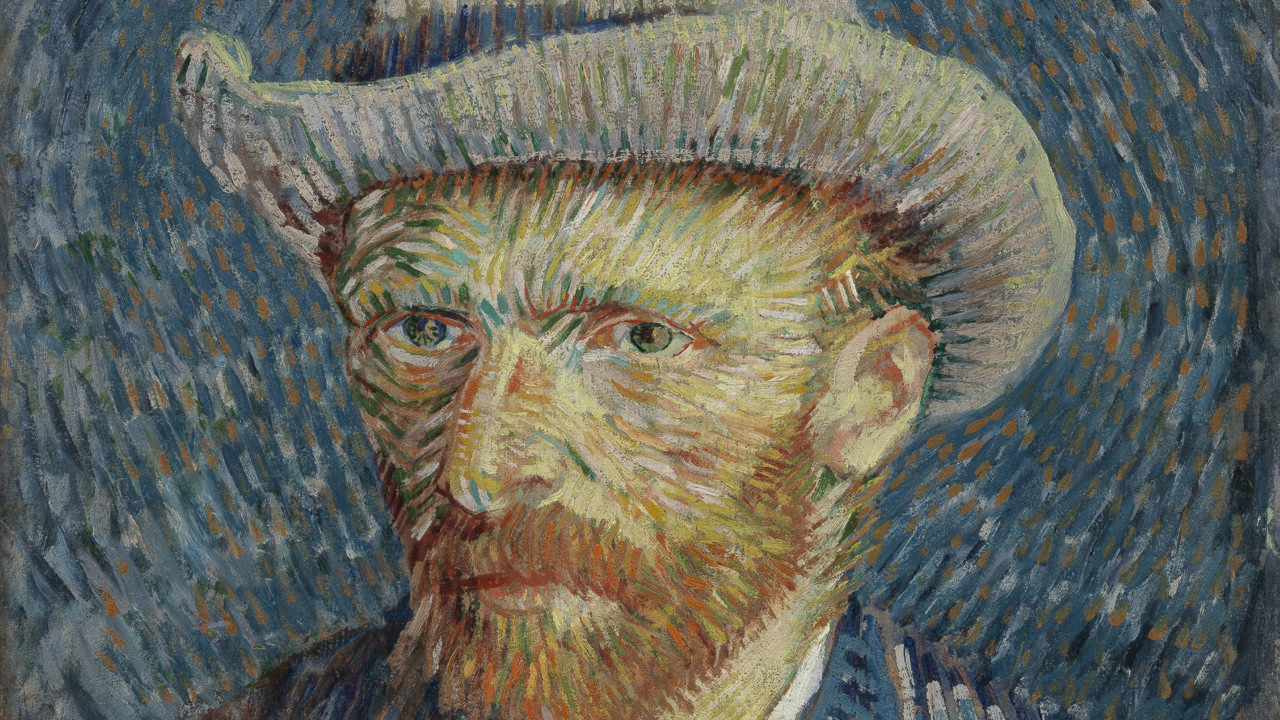
If your topic or subject has not been pre-assigned, it's important to spend some time choosing a worthy subject. To do this, you will need to pick two subjects that have something in common but vary in other ways. For example, a comparison of the figurative works of VanGogh and Gauguin. They were contemporaries and painted together, but their work is quite different.
Tip: Pick a topic you are interested in. Genuine curiosity in a subject will make your essay stronger.
Step 2: Brainstorm Similarities and Differences
Before you draft anything resembling a paragraph, you want to brainstorm ideas. The Venn diagram is a great structure for this step. Draw two large, overlapping circles on a piece of paper. List as many similarities as you can think of in one circle, and do the same with the differences in the other. Get everything out of your mind, and you can pick the points that matter later.
Tip: If you are using AI as a brainstorming partner, it's worth checking your work for accidental plagiarism.
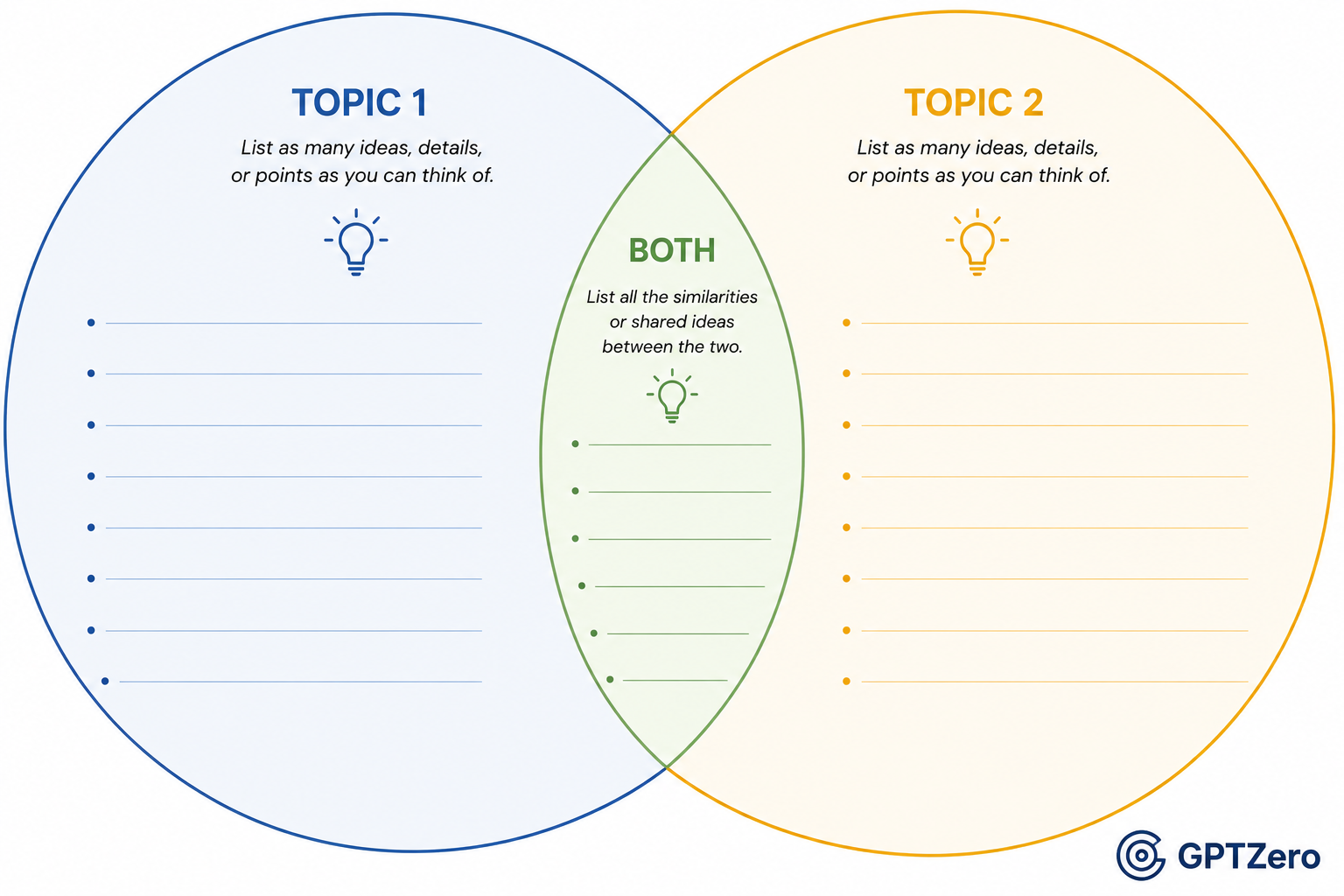
Blank compare-and-contrast Venn diagram worksheet featuring two large overlapping circles.
Step 3: Develop a Thesis
A solid thesis makes a strong statement that the rest of the essay then tries to prove. It is normal for thesis development to take some time. You may stumble upon your thesis while researching and outlining the similarities and differences.
A handy thesis template to get you started:
Although X and Y share [something], they differ in [specific way], and that difference reveals [larger point].
Tip: Check out this guide for help with your introduction, including your thesis statement.
Step 4: Choose Your Structure
We cover the three main structures a little further along in this guide. These structures organize your thinking and are the hallmark of compare and contrast essays. It's important to pick a structure that matches your essay.
Tip: Even though compare and contrast essays follow specific structures in the body paragraphs, how you outline your essay is similar to other essay formats.
Step 5: Draft the Essay
Begin drafting with your body paragraphs. It can be easier to write the introduction and conclusion after the bulk of your argument has been presented. Focus on finishing rather than perfecting, and let your favorite grammar checker do the tedious work later.
Step 6: Revise and Verify
The most important revisions will be those that focus on your argument and the flow of your paper. Revising your ideas is much more challenging than fixing spelling and punctuation. During this pass you want to focus on:
- The transition sentences between paragraphs
- Whether or not you stay focused within each paragraph
- Your citations and making sure they are legitimate as well as cited properly
- Cleaning up your draft form AI text prior to submission
Compare and Contrast Essay Structure Methods
The structure you choose changes how the essay reads. Three options come up most often.
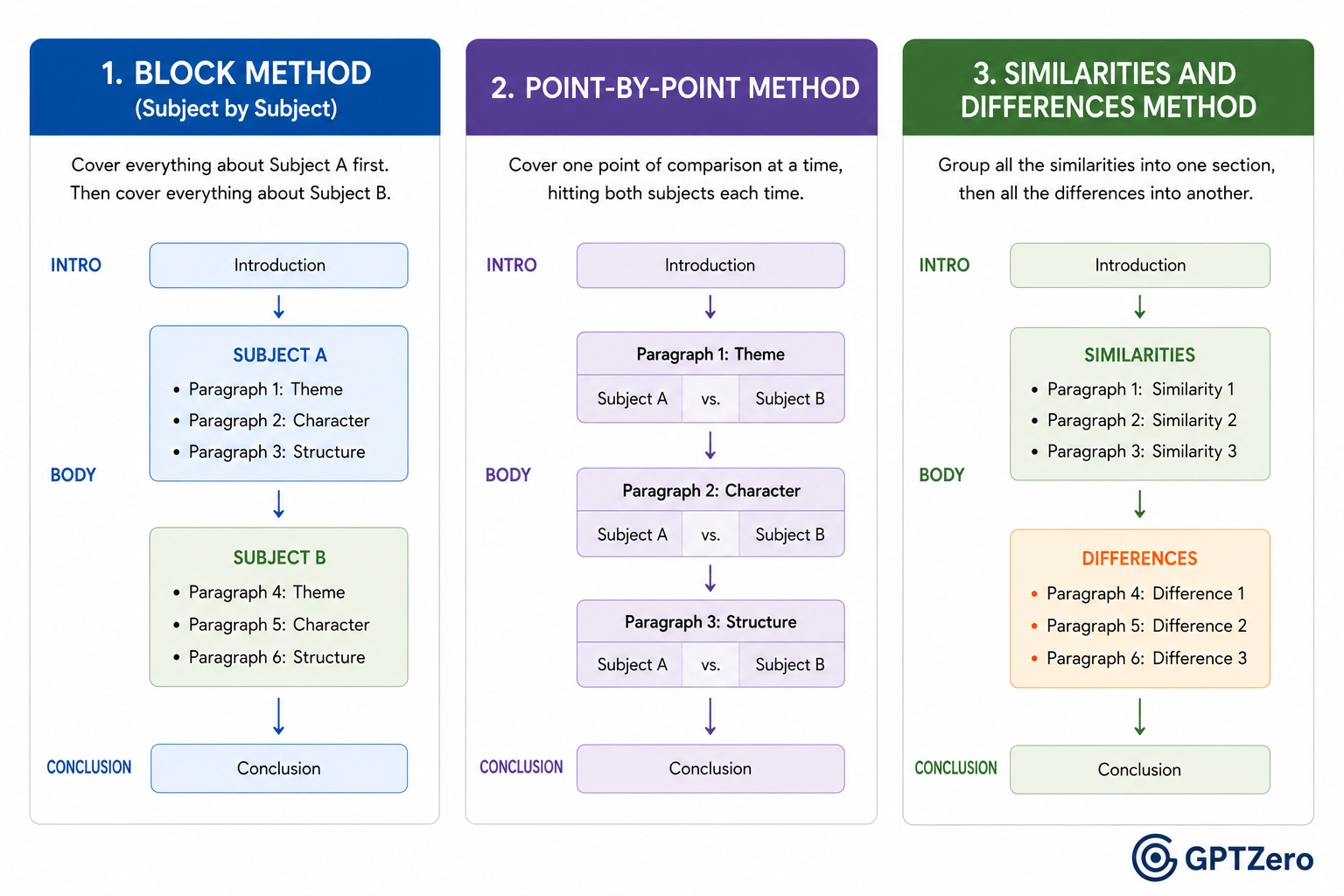
Block Method (Subject by Subject)
When it works: Works well for short essays and comparisons where each subject has to be understood further before the comparison makes sense.
What to watch for: A strong thesis is key to this type of essay. As the comparison might not be obvious at first, you need a good thesis to tie it all together.
Point-by-Point Method
When it works: This method is great for longer essays and very direct, granular comparisons.
What to watch for: The way ideas are presented here can appear more fragmented to the reader. A strong outline will help you organize your thoughts before you begin drafting.
Similarities and Differences Method
When it works: When the similarities and differences are clear and easy to distinguish, or when you are a complete beginner at this format.
What to watch out for: The simplest of all three structures to execute, but you want to make sure you aren’t just listing the similarities and differences and are able to go beyond that in your work.
Compare and Contrast Essay Example
A short excerpt using the Point-by-Point method, comparing two novels:
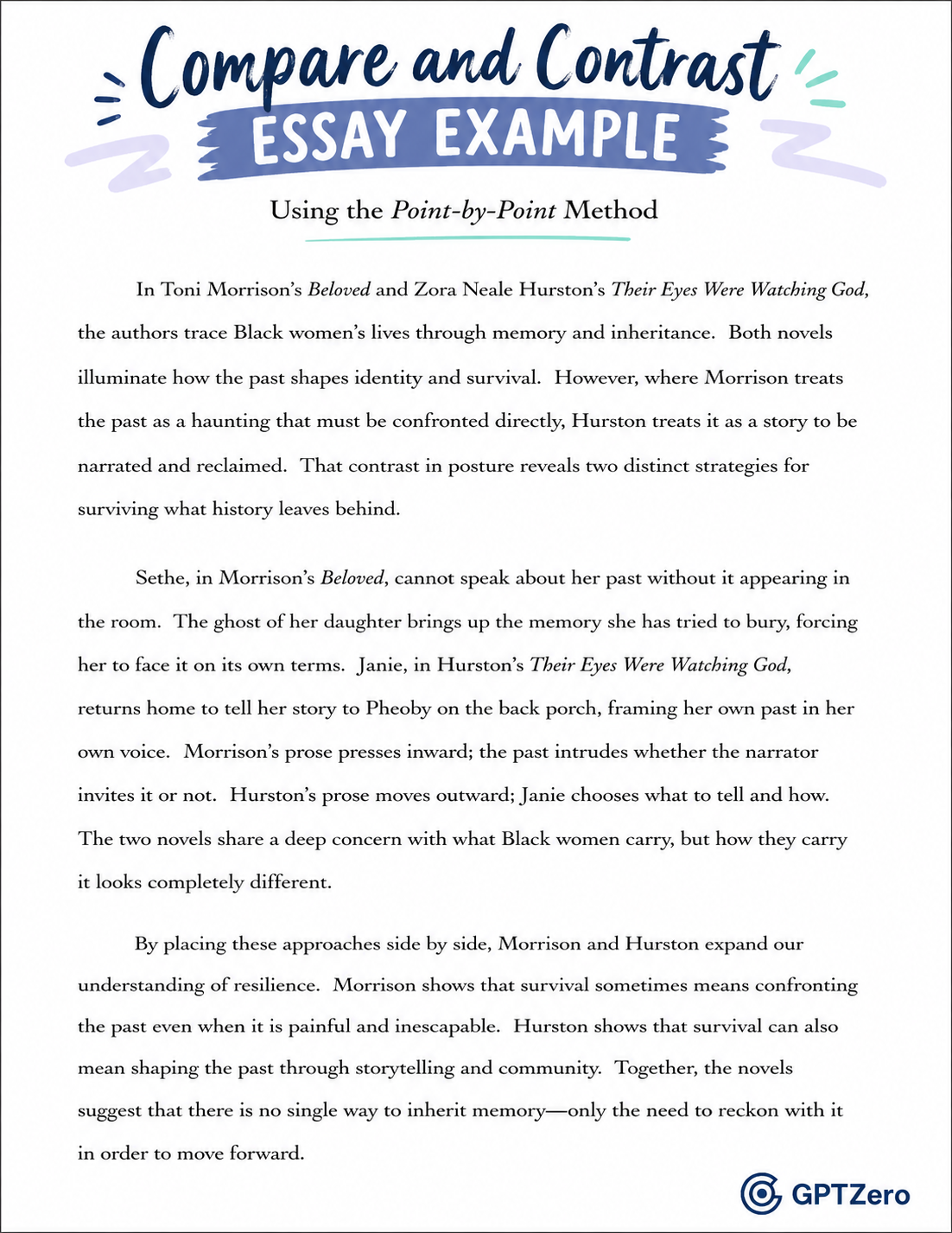
Notice that the above example goes beyond just listing the similarities and differences, but makes meaning and draws conclusions from the contrast.
Tips for Writing a Better Compare and Contrast Essay
- Pick your topic carefully. Make sure that it’s genuinely comparable. The two things have to share enough context.
- Incorporate these words into your essay for more impact: Similarly, by contrast, however, likewise, on the other hand. These words are called breadcrumbs that help your reader follow your thinking. UNC has a whole list.
- If you use AI to gather your research and assemble your writing from multiple sources, it's a good idea to verify the originality of your essay before submission, and to run it through an AI detector.
- What you end with stays with the reader. Save your strongest point for the end.
- A strong thesis will carry your paper. Spend some time crafting a compelling argument before you outline the essay.
FAQs
When do you write a compare and contrast essay?
You can be asked to write a compare and contrast essay in an assignment. You can also incorporate this technique within border research. The skills of comparing and contrasting two things carry over into many disciplines and formats.
How do you start a compare and contrast essay?
Good essay introductions open with a hook. It could be a surprising similarity, a deceptive difference, or a quick question that can all work. Avoid generic openers like “throughout history.” They have been overused in academic writing and can sound “AI-generated”. Consider using an AI sidekick to improve your writing.
How do you write a compare and contrast essay introduction?
Three moves: hook the reader, briefly introduce the two subjects and their relevance, then state a thesis that names both subjects and previews the larger point your comparison will reach.
How do you organize a compare and contrast essay?
Pick one of the three main structures: Block, Point-by-Point, or Similarities and Differences. Choose based on the length of your essay and how your evidence clusters. Point-by-point works best for longer essays. Block works better when each subject needs to be understood as a whole.
Are compare and contrast essays related to argumentative essays?
Often, yes. A compare and contrast essay frequently builds toward an argument: this novel is more effective than that one, this policy worked better than that one. If your essay leans that direction, our guide on writing an argumentative essay covers the moves. For purely descriptive comparisons, our informative essay guide is closer to the format you want.