How to Write a Good Introduction (Guide, Tips, and Examples)
A strong introduction grabs readers’ attention, provides essential context, and presents a clear thesis. This guide explains how to write effective introductions using hooks, background information, examples, editing tips, and strategies for essays, articles, and research papers.


Reading an introduction is like crossing a bridge into another world. A good introductory paragraph lets your mind transition from thinking about daily life to focusing on the topic and framework of the paper.
Writing an introduction, however, can feel like entering “a state of writing purgatory.”
While introductions are notoriously high-pressure sections of a document, you’re not alone in seeking to improve your introduction writing. Most common writing formats need introductions; essays, reports, blogs, research papers, presentations, and articles all benefit from a strong opening paragraph.
This guide will show you how to write an introduction paragraph by analyzing and explaining strong examples of good introductory paragraphs. Review exemplary paragraphs, follow step-by-step instructions, consider key tips and an FAQ, and proceed with confidence to write your own effective introduction.
TL;DR
Introductions grab readers’ attention and prepare them to understand the paper’s topic and main claims. Follow this guide to: draft a strong hook, context, and thesis; pick up some new tips, tricks, and tools for editing; and take inspiration from strong examples of undergraduate essay introductions.
What is an Introduction?
Definition and main components
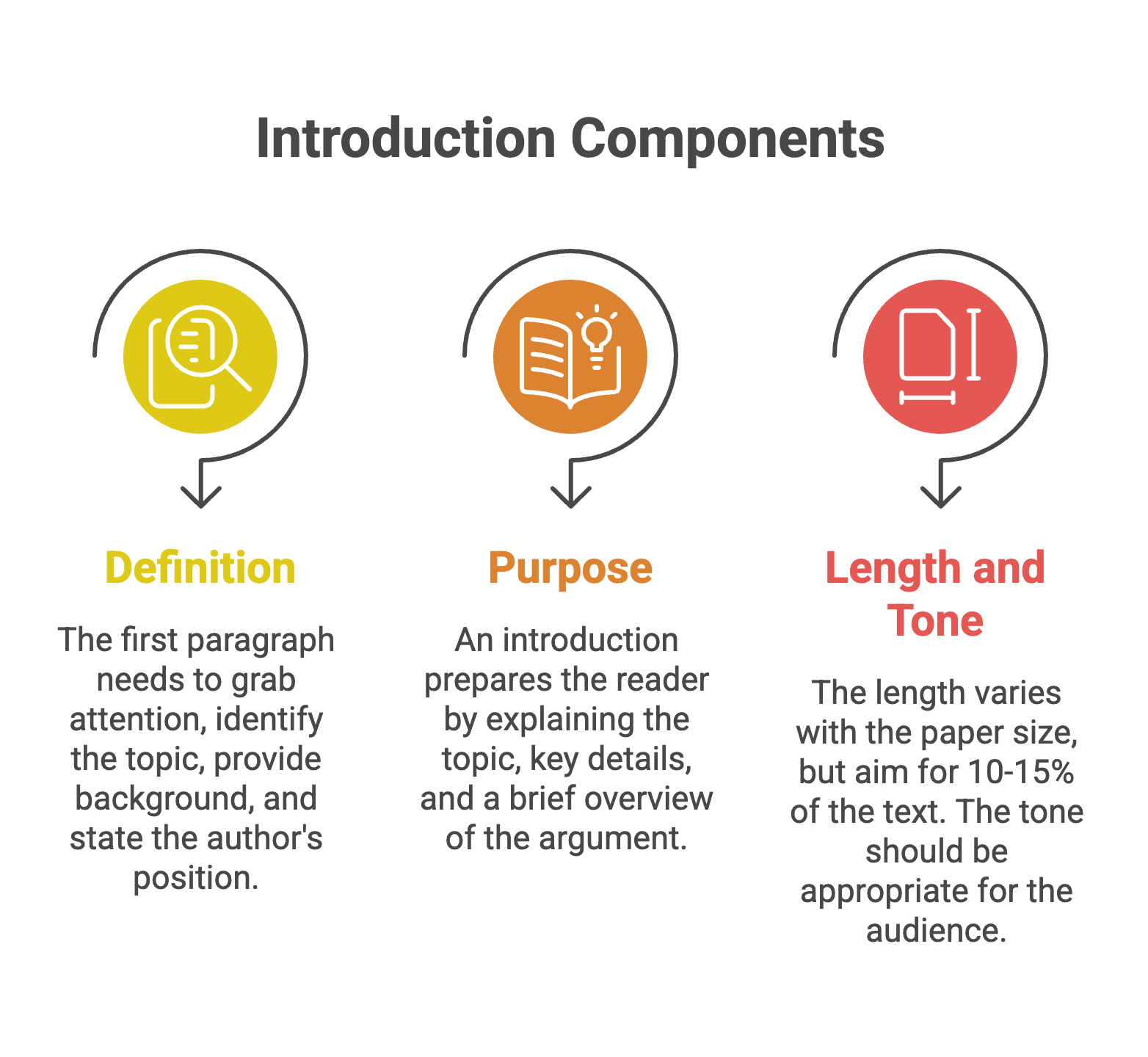
The first paragraph in a paper needs to get the reader’s attention, identify the paper’s topic, provide necessary background information, and indicate the author’s position in the paper. As the following section will explain in greater detail, the introduction paragraph structure generally follows the formula of hook, context, and thesis.
Purpose and importance
An introduction prepares the reader to accept what you’re about to say in your paper. Tell them what your topic is, explain the key details they need to know in order to follow along with your perspective, and give a brief overview of the argument or explanation you’re about to make throughout the body of your paper.
Ideal length and tone
The length will vary according to the size of the overall paper, but the University of Waterloo recommends that you aim for “about 10-15% of the text.”
Regarding the ideal tone for an introduction paragraph, Brandeis University offers this advice:
“While reading your introduction, your reader will begin to make assumptions about you as an author. Be sure to project yourself as a thoughtful, knowledgeable and nonbiased writer capable of dealing effectively with the complexities and nuances of your topic. Your introduction should set the tone that will remain consistent throughout your essay.”
Step-by-Step Guide with Examples
Understand the topic
What is the writing goal? If you’re writing an essay for a class, make sure you understand the assignment instructions back-to-front. You will likely want to keep your paper’s focus relevant to topics from course readings and lectures.
What have people said about the topic already? Conduct preliminary research to find significant studies and publications on the topic. For assistance finding and verifying sources, GPTZero’s Citation Checker can flag suspicious citations and recommend credible academic sources.
Hook
There are many ways to grab a reader’s attention. Indeed’s editorial team identifies four major approaches to hook writing:
- Pose a question
- Use a credible quotation (but avoid confusing jargon)
- Provide a compelling statistic or interesting fact
- Give an anecdote (but keep it short)
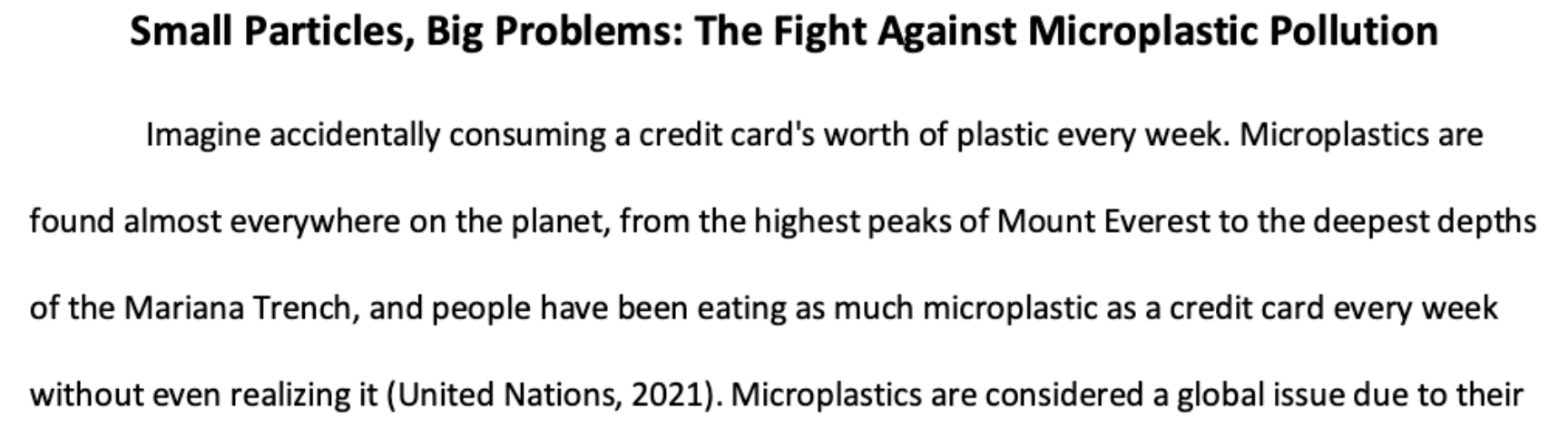
Here’s an excellent example of an eye-catching, on-topic hook in an undergraduate essay by Tuan Nguyen at Douglas College. This first sentence is not only shocking, it’s also immediately supported by a citation:
Background information
Provide the information necessary for a reader to understand and appreciate your main point. Be selective. You need to make firm decisions about what information is relevant and necessary, and what information is merely interesting.
In this winner of Best Student Essay from the University of New Mexico, Samantha Moya provides enough background information to understand her thesis:
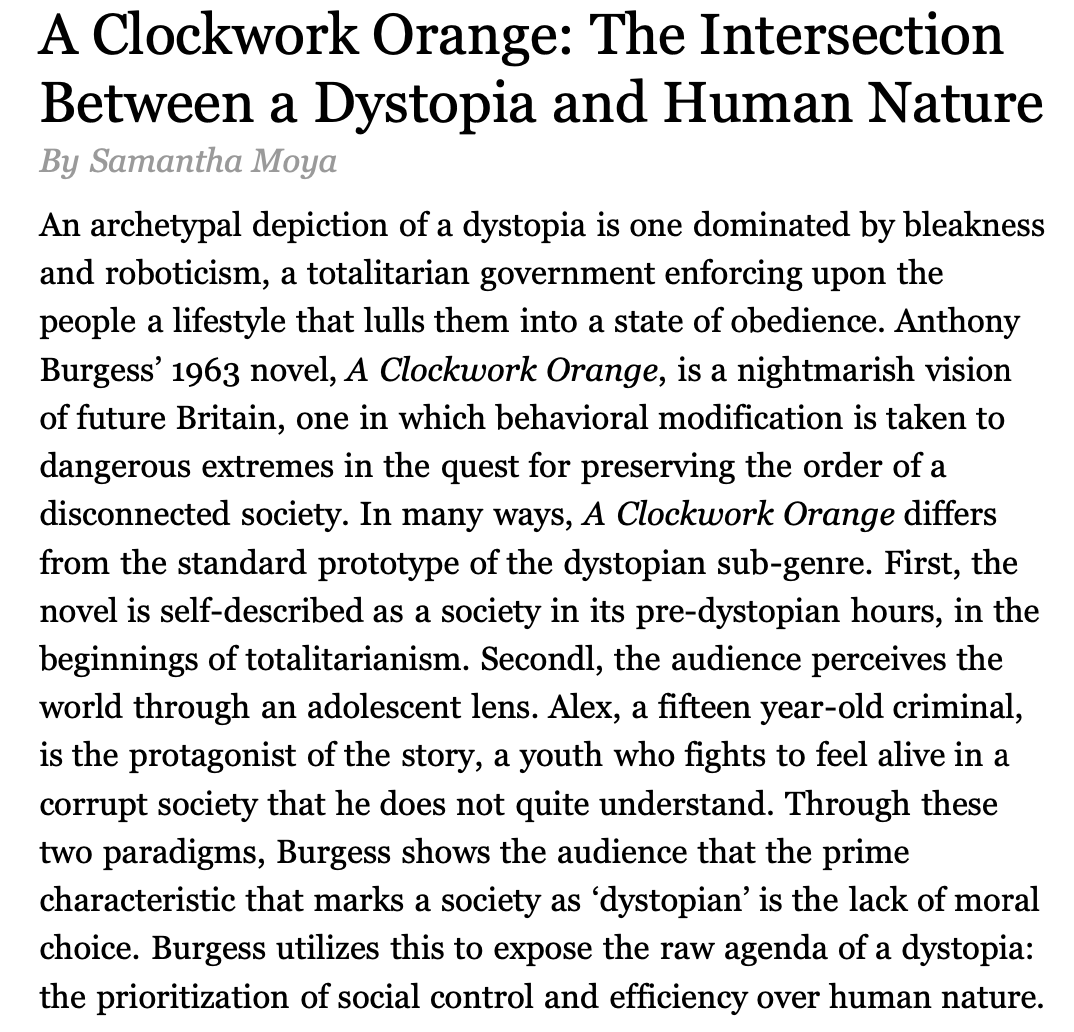
Before stating her thesis about a lack of moral choice as a defining feature of Burgess’ dystopia, Moya gives necessary background information about dystopias, key plot points in Burgess’ novel, and what is unique about Burgess’ approach to the subgenre of dystopic fiction.
Thesis
A thesis is the main idea you’ve arrived at after conducting your research, experiment, or analysis. Harvard University defines a thesis as “the central claim in your essay—your main insight or idea about your source or topic.”
Theses will vary in structure and appearance according to the discipline and style of the paper, but they are always 1-2 sentences that sum up the argument your paper is defending.
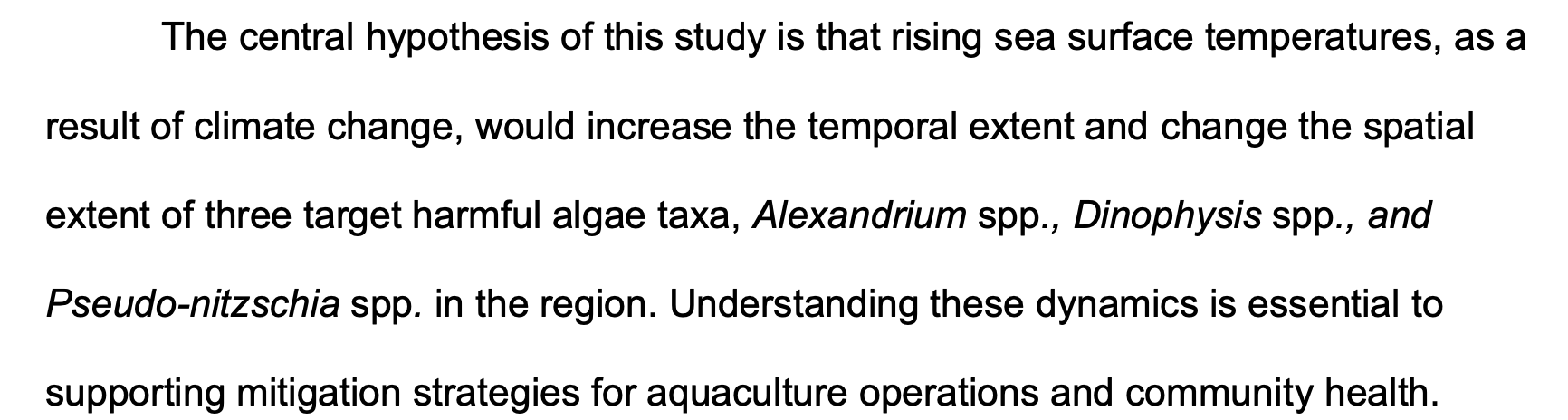
This essay about harmful algae blooms by Barlow et. al at the University of Washington Tacoma frames its thesis as a hypothesis, and gestures toward the significance of the authors’ findings:
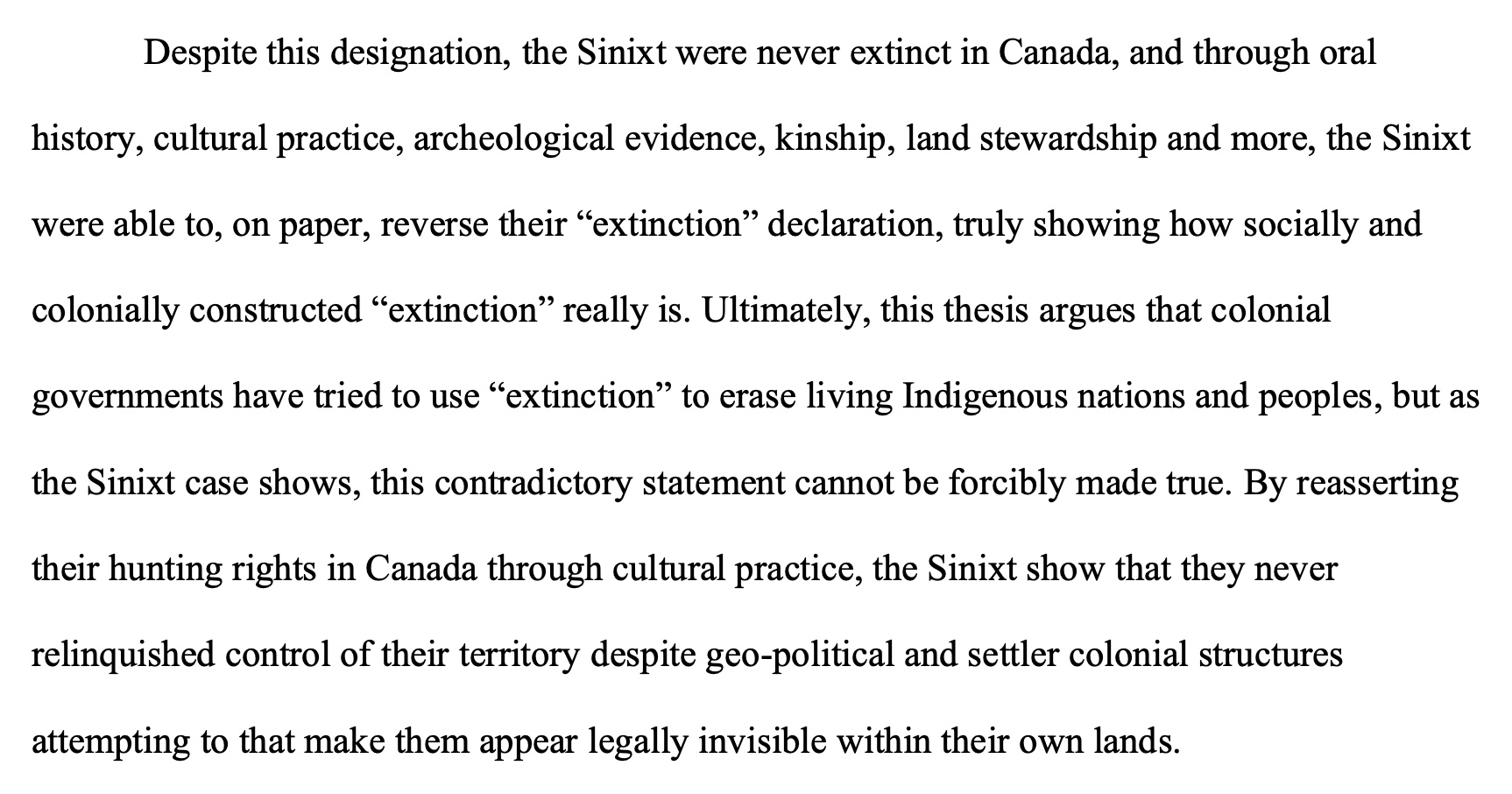
The essay below, by Joaquin Mattick at the University of British Columbia, presents its thesis as a statement, and flags it to the reader with the time-honoured phrase, “This thesis argues that…”
Edit
Check for errors and make sure your introduction has conveyed your main point with enough background information for the reader to understand what you’re saying.
There are many facets to editing, and GPTZero offers a number of tools to help streamline your process and write more effectively. Catch everything from grammar mistakes to muddled arguments with a grammar checker, revise your word choice by scanning for AI vocabulary, and receive polished final edits on your draft from an AI detector specially designed for writers.
Tips
Put yourself in your reader’s shoes
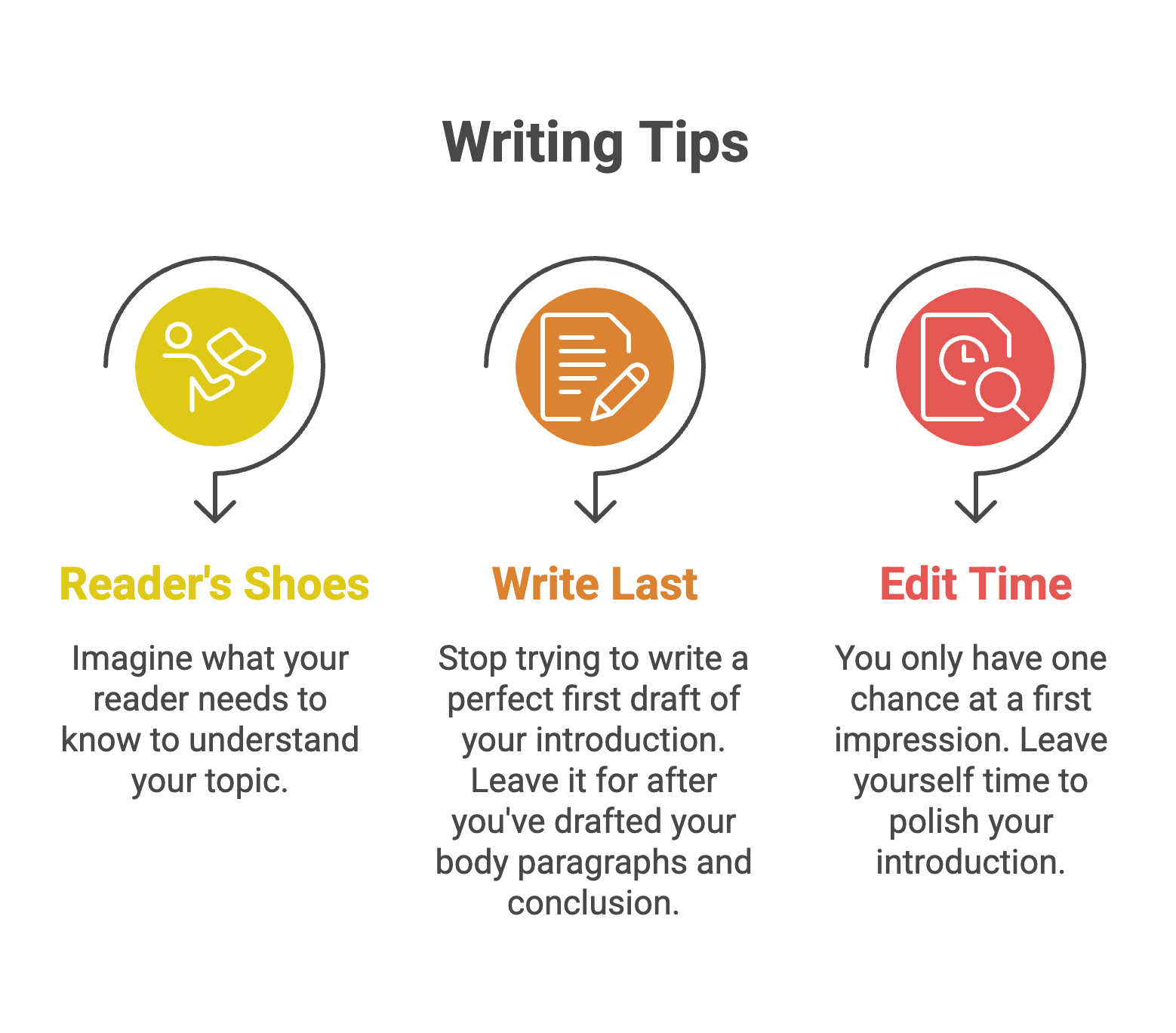
Imagine what your reader needs to know in order to understand your topic and come to the same conclusion about it as you have. As the University of Concordia Irvine puts it, “The introduction is a place of transition for the reader between their world and the world of your essay.”
Write your introduction last
Here’s your permission to stop trying to write a perfect first draft of your introduction. If you’ve already outlined your paper to sort out your thesis and subarguments, you can leave the hook and background information for after you’ve drafted your body paragraphs and conclusion.
Leave time to edit
You only have one chance at a first impression. If your professor is grading a batch of 30+ other essays, keeping their attention and offering a clear outline of your argument is key. Leave yourself time to polish your introduction so that it properly presents your topic and the argument you’re about to make.
FAQ
Can I cite sources in my introduction?
Yes. A catchy quote can be a great hook. A specific fact or claim can also provide key background information and help set up your thesis. Make sure your introduction is written in your own voice, but don’t hesitate to bolster an introductory paragraph with a carefully selected citation or two.
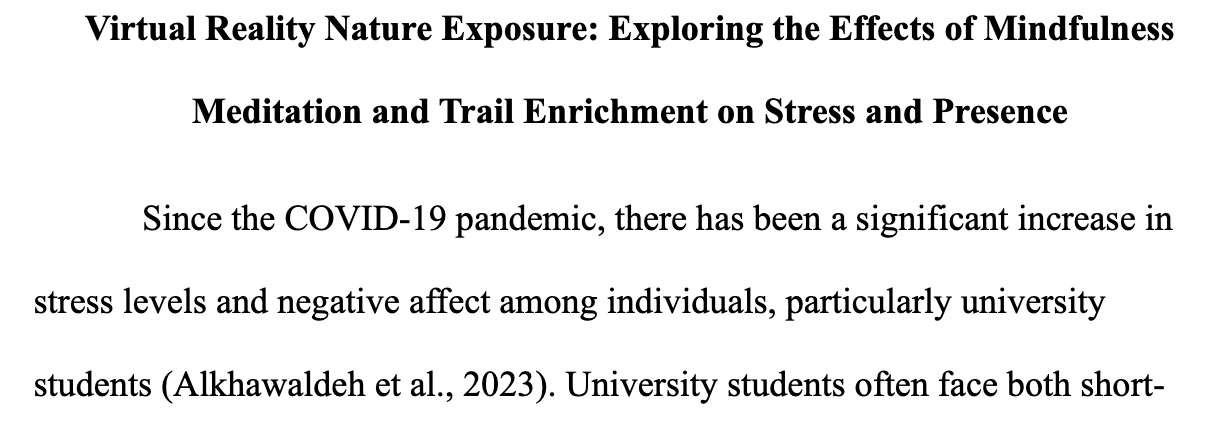
Consider how Emma Radford at Mount Royal University uses a compelling quotation to grab readers’ attention and indicate the topic of her paper:
Do I need a catchy hook?
If you’re about to tear your hair out trying to think of a good hook, let it go. At a minimum, your introduction must present necessary information and explain its central point (thesis). A hook helps to engage the reader’s attention, but a compelling topic and argument will do the same.
Should I use a dictionary definition as a hook?
No. According to the University of Nevada, Reno, “This strategy often misfires because the dictionary definition or a statement of fact is not very nuanced and does not lend itself to discussion or analysis as readily as a structured and research opinion or research question.” Find a discipline-specific definition or, better yet, paraphrase the term in a way that is engaging and specific to your topic.
Should I start with a broad opening statement?
While your high-school teacher may have advised you to start with a broad claim, this approach often leads to poor-quality first sentences that are bland, vague, and/or painfully obvious. Avoid truisms and generalizations. As the University of Toronto puts it, “Get to the point as soon as possible.”