What is Figurative Language? 6 Types with Definitions and Examples
Learn what figurative language is, how it differs from literal language, and why it matters. Explore common techniques like metaphors, similes, hyperbole, and personification, with examples and tips for using them effectively in your writing.


Figurative language is a rhetorical tool that helps readers imaginatively visualize and understand a piece of writing. It’s much more than garnish on a meal you can sweep to the side; it is a key aspect of language and plays an important role in helping us communicate clearly and impactfully.
A survey of academic literature found that despite the belief that academic writing is literal, neutral, and impersonal, “figurative devices do not merely serve a decorative or stylistic function. Rather, they are essential cognitive and rhetorical resources that enable explanation and understanding as well as argumentation,” and this is especially true when topics are complex, abstract, or theoretical.
This guide will dive into defining figurative language with particular emphasis on distinguishing it from literal language. Read our definitions and examples of six common types of figurative language, tips for how to incorporate them into your writing, and frequently asked questions.
What is Figurative Language?
Figurative language includes many different types of literary techniques and devices that convey meanings beyond the words’ dictionary definitions. It goes beyond literal meanings to make a text more multidimensional, creative, and complex.
Rather than flatly delivering facts and plain descriptions, figurative language brings impact and emotion to messages, making it an integral part of speech writing and creative expression. And because figurative language can imbue a lot of meaning into relatively few words, it’s often used in poetry and elevated prose that is conceptually dense.
Figurative Language vs Literal Language
One of the best ways to define figurative language is by understanding what it is not. Literal language is the opposite of figurative language; it says exactly and only what it means without embellishment, exaggeration, imagination, or any creative extensions of meaning.
Misusing the term “literally” can be confusing and sometimes comical. If someone says they “literally died laughing,” then it’s a medical miracle that they’ve come back from the grave to tell you about it.
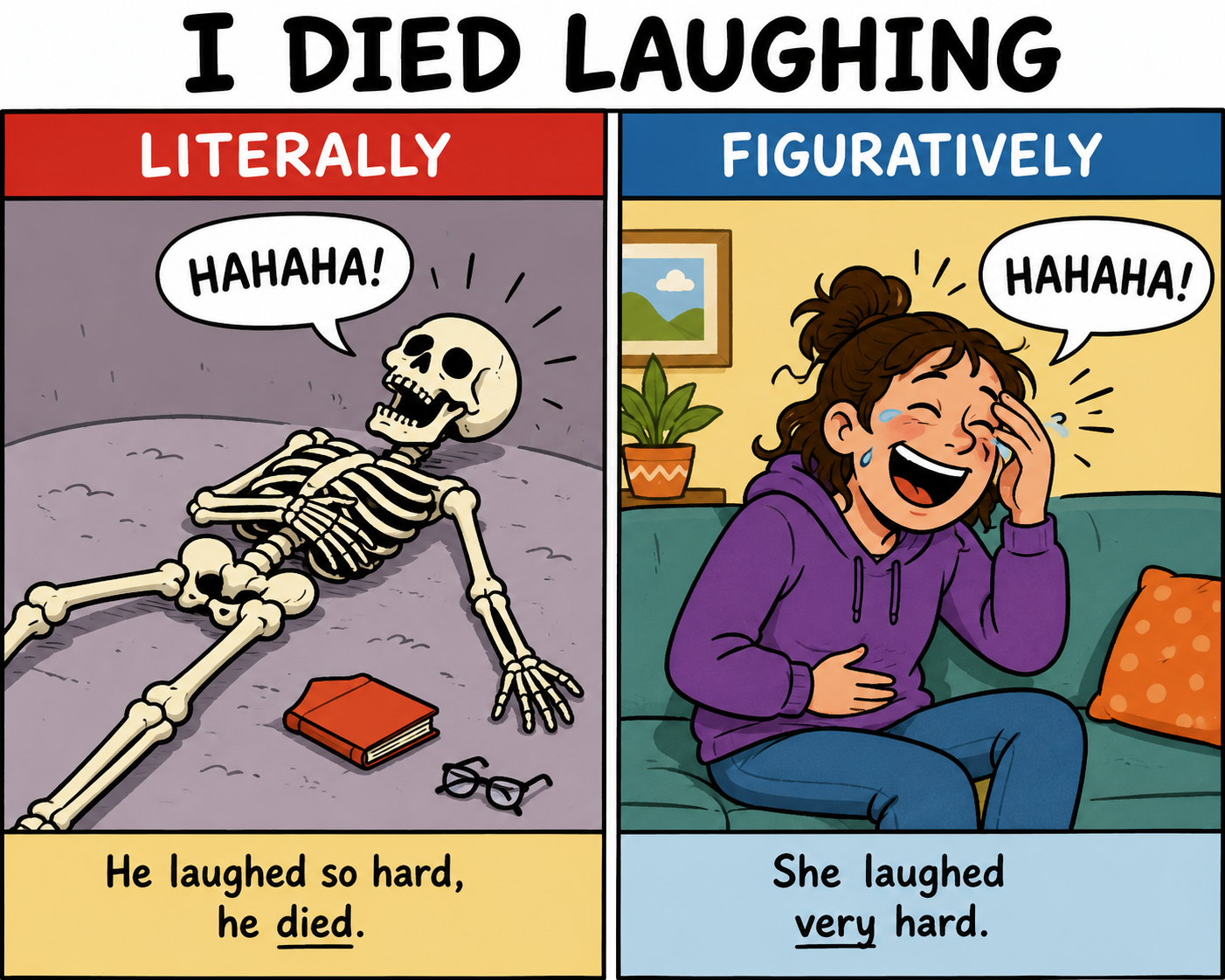
Some phrases can be taken literally or figuratively, and you’ll need to understand the context to understand which meaning is being invoked. Consider the scene from Shrek where Donkey’s confusion between literal and figurative language creates humour:
Shrek: Ogres are like onions!
Donkey: They stink?
Shrek: Yes… No!
Donkey: They make you cry?
Shrek: No!Donkey: Oh, you leave them out in the sun, they get all brown, start sproutin’ little white hairs…
Shrek: No! Layers! Onions have layers. Ogres have layers…You get it? We both have layers.
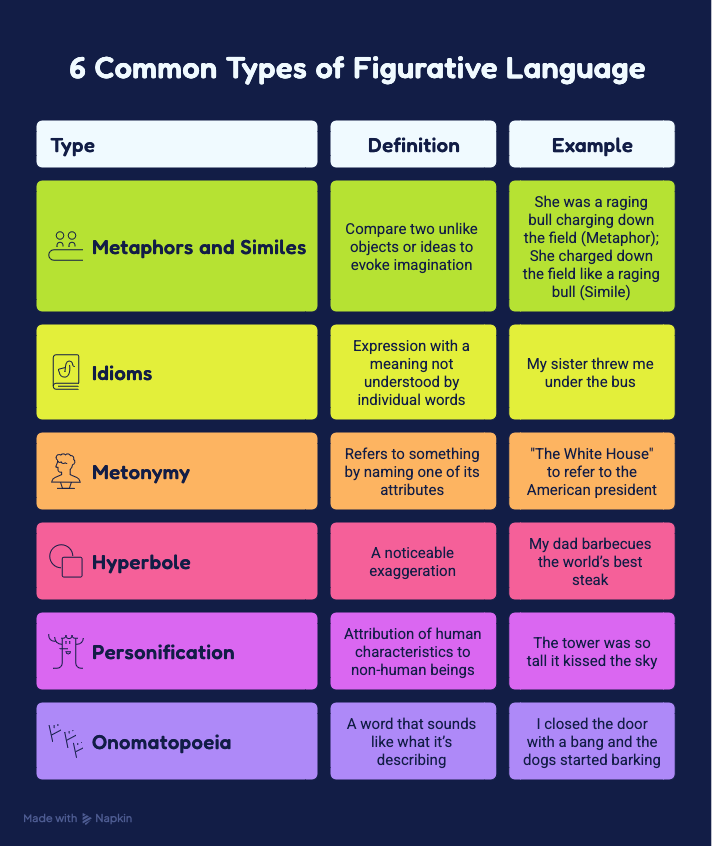
6 Common Types of Figurative Language
Metaphors and Similes
Comparisons can clarify ideas and catch a reader’s interest. Both of these figurative devices compare two unlike objects or ideas to evoke a reader’s imagination. While a metaphor will make a direct comparison, a simile always uses the words “like” or “as.”
Metaphor example: She was a raging bull charging down the field.
Simile example: She charged down the field like a raging bull.
Idioms
With some exceptions, idioms are built on figurative language. An idiom is an expression with a meaning of its own that cannot be understood based on the meaning of its individual words.
Example: When my Mom asked who made a mess in her kitchen, my sister threw me under the bus! (To “throw someone under the bus” is not to violently attempt murder; it’s to point blame at someone.)
Metonymy
Metonymy refers to something by naming one of its attributes. It creates an association between a word and the image it suggests.
Example: “The White House” to refer to the American president
Synecdoche is related and sometimes considered a subcategory of metonymy. It’s when a part stands in for the whole, as in referring to workers as “hands” as in “all hands on deck.”
Hyperbole
A hyperbole is a noticeable exaggeration; it describes something as implausibly bigger, faster, better, etc. than it really is. Using exaggeration and superlative language adds impact and intensity to what’s being said.
Example: My dad barbecues the world’s best steak.
Personification
Personification is the attribution of human characteristics to non-human beings, objects, or concepts. It often attributes agency to inanimate things and can be used very playfully or descriptively.
Example: The tower was so tall it kissed the sky.
Onomatopoeia
An onomatopoeia is a word that sounds like what it’s describing. Animal sounds and words describing noises are often onomatopoeiae.
Example: I closed the door with a bang, and the dogs started barking.
Read more about further forms of figurative language, including alliteration, puns, paradoxes, and irony.
How to Use Figurative Language in Your Writing
Find a balance between the figurative and the literal
Too much figurative language can create confusion, with different metaphors and allegories running into one another and mixing their meanings. It can make your writing feel very abstract and descriptive. On the other hand, too much literal language can flatten and simplify your writing, giving it an unemotional, factual tone.
Avoid mixed metaphors
Also known as catachresis, mixed metaphors blend two metaphors in a way that is mismatched, confusing, or doesn’t make sense.
Example: She fluttered around the party like a butterfly and entertained her guests with puppyish enthusiasm, friendly as a golden retriever.
Beware of extended metaphors
The longer a comparison lasts, the less it will engage a reader because it will grow less novel and more redundant. A metaphor has the most impact as a quick and perhaps unexpected comparison that adds clarity or emotion.
In poetry, however, a conceit or an allegory often functions as an extended metaphor. The power of a conceit is that it continues to develop and interrogate the comparison in new and unusual ways, which can add complexity and depth to a theme or topic.
Practice
The one way to become truly skillful at using figurative language is to immerse yourself in it. Read talented writers and listen to eloquent speakers, note how they use figurative language, and try it for yourself. Develop a habit of noticing figurative language and try your hand at incorporating interesting styles and techniques into your own mode of expression.
FAQ
How can you identify figurative language?
Ask yourself: can I take this meaning literally, or is the meaning derived from interpreting words beyond their literal definitions? Usually, the topic and context will give clues about whether certain phrases should be taken literally or figuratively.
Consider the 6 types of figurative language outlined above and look specifically for metaphors, idioms, metonymy, hyperbole, personification, and onomatopoeia.
What is the difference between a simile and a metaphor?
According to Aristotle, a simile is a type of metaphor. They are, however, treated as distinct elements of figurative language, with the difference resting on the use of “like” or “as” in a simile, while metaphors directly equate two unlike things.
One study reports that people feel that metaphors “express stronger claims” than similes do. For example, “Her heart is a stone” seems to make a more profound statement than “Her heart is like a stone.”
Try out this short quiz to see if you can tell the difference between a simile and a metaphor.
Is figurative language the same as a figure of speech?
The terms “figurative language” and “figure of speech” are often used interchangeably, but they are not exactly the same. Figurative language is a larger category that includes figures of speech. A figure of speech is a rhetorical device where words’ meanings are used in unconventional ways. Metaphors, similes, and idioms are examples of figures of speech. An onomatopoeia, however, is figurative language but not technically a figure of speech because the meaning is not being used unconventionally.
Why do writers use figurative language?
Variety is the spice of life! Figurative language adds layers of meaning and significance. Using language in creative but comprehensible ways helps writers make their writing less boring and stiff and more expressive and natural. Figurative language is used extensively in poetry because it not only allows writers to pack a lot of meaning into a few words, but it can also create unusual or surprising comparisons and draw a reader’s attention to a topic in an unexpected way, leading to new understandings and insights.