
How to Start an Essay: 7 Effective Tips
Learn how to start an essay with confidence using proven planning strategies, practical writing tips, and techniques for overcoming writer's block.


What are the first steps to writing an essay? What section should you write first? And how can you avoid Blank Page Syndrome?
Researchers have found that expert writers spend more time understanding what their writing is meant to achieve and what their audience needs than novice writers do. The evidence is clear: planning before writing produces higher-quality outputs.
Find out how to start writing your essay by pre-planning and thoroughly understanding the aims of your paper. This guide will prepare you to write effectively with a helpful pre-writing checklist and 7 practical tips to help you start your essay draft and troubleshoot challenges.
What to Do Before Writing an Essay
Avoid extensive rewriting and editing by preparing yourself before writing. Review these preparatory steps and complete the checklist below to ensure you’re prepared to write effectively.
Understand the assignment
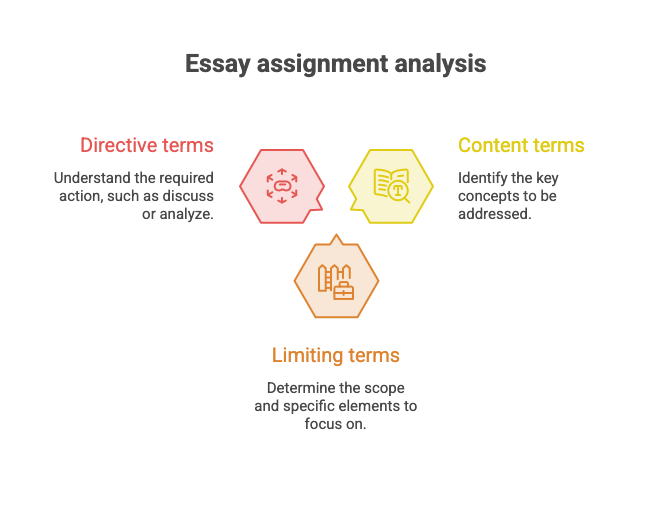
Essay assignments may instruct you to write in a specific style about a predetermined topic, or they may simply prompt you to address a topic related to the course. If you’re starting from an essay question, follow the University of Melbourne’s advice and analyze the question by identifying these features:
- Content terms: What key concepts are you being asked to address?
- Limiting terms: What is the scope of the topic? What features or elements of a topic should you address?
- Directive terms: What are you meant to do with the topic? You may be asked to discuss, analyse, define, compare, evaluate, or follow other directives.
Choose a topic
If your essay instructions allow you to choose your own topic, avoid the paralysis of too many options by considering the course topic, lecture content, and your personal interest in the course. Carleton University recommends:
- Check assigned readings for topics
- Think about your class discussions
- Browse journals in your field of study
- Explore your personal interests
Conduct research and initial analysis
Even if you’re not writing a research essay, you will need to do initial assessments of your topic to determine a strong thesis and its supporting arguments.
This early stage of essay creation often involves brainstorming. Use a brainstorming process that works for you: try mind mapping, listing, or freewriting to get your ideas flowing.
Identify a thesis
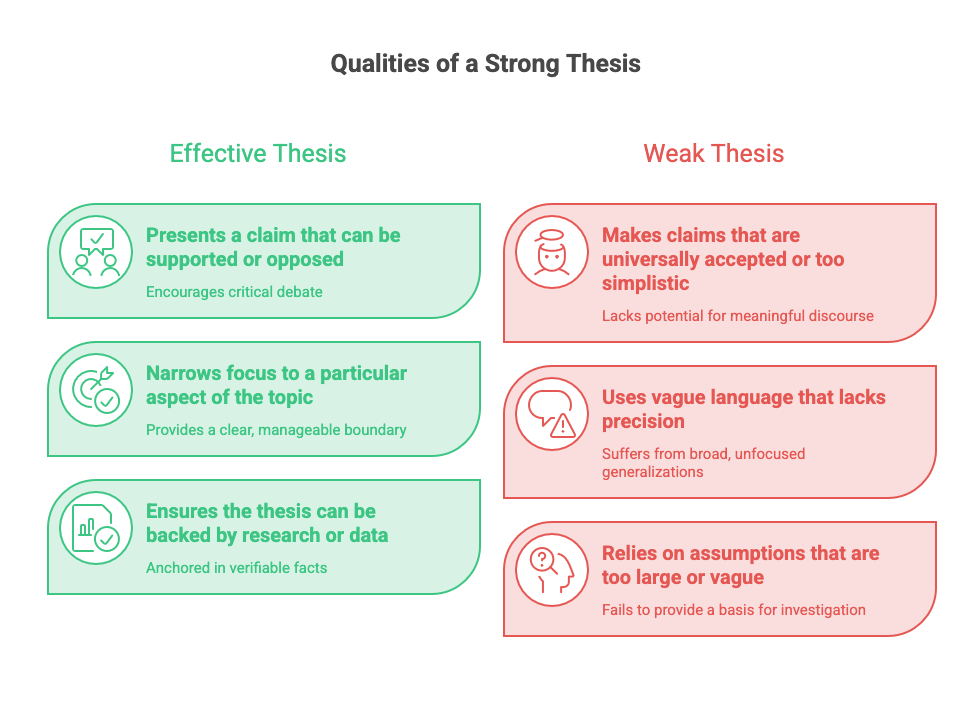
A thesis is the central claim of your essay. A strong thesis should be specific, arguable, and supported by evidence.
Outline the sub-arguments
There are two main steps to outlining your supporting points:
- Make logical groupings of evidence and analysis
- Consider the main supporting arguments for your thesis and collect evidence and analysis around those subtopics.
- Outline body paragraphs
- Brush up on how to write a body paragraph and outline its core elements: topic sentence, evidence, analysis, and transition to the next topic.
Outline introduction and conclusion
These two sections often make the most sense to outline last because they require a clear thesis and sub-arguments.
Checklist
- Understand the assignment
- Choose a topic
- Conduct initial research and analysis
- Identify a thesis
- Outline sub-arguments
- Group evidence and analysis
- Outline paragraphs
- Outline introduction and conclusion
7 Tips to Start an Essay Effectively
Here are 7 tips for writing a successful essay. Familiarize yourself with the purpose and features of an introduction, and consider several techniques to get into the flow of writing.
Understand the purpose of an introduction
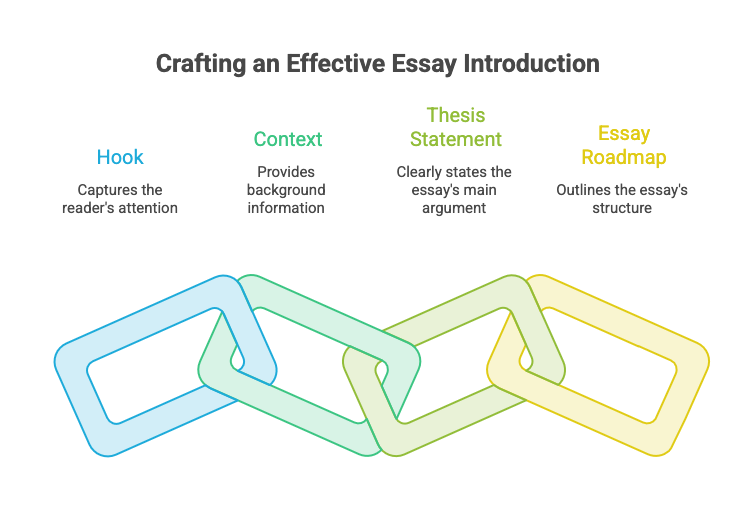
Start at the beginning. If you’ve outlined your essay, you already have the key components for your introductory paragraph. Write this section to guide your reader into the essay: present the main topic, briefly describe its importance, state your position, and give a short overview of how you'll support it.
Review how to write a good essay introduction and assemble your hook, context, thesis, and essay roadmap.
Keep it concise
An introduction should be no more than 10–15% of an essay’s total length. If you’re stuck at the beginning, you may be trying to do too much in the introduction.
A good introduction contains only the key details necessary to understand the core topic and main claim. Most facts, arguments, and analysis belong in the essay’s body paragraphs.
Know your audience
Are you writing for a general audience or an expert in the field? If you’re writing for a literature professor, introducing Shakespeare is a waste of words and may offend your reader.
As Harvard University advises, if you’re addressing sources you’ve researched, don’t assume your reader is familiar with them. Give context and a brief overview of those sources. If you’re writing about assigned sources, provide just enough context so your reader knows what part of the text you’re discussing.
Request feedback
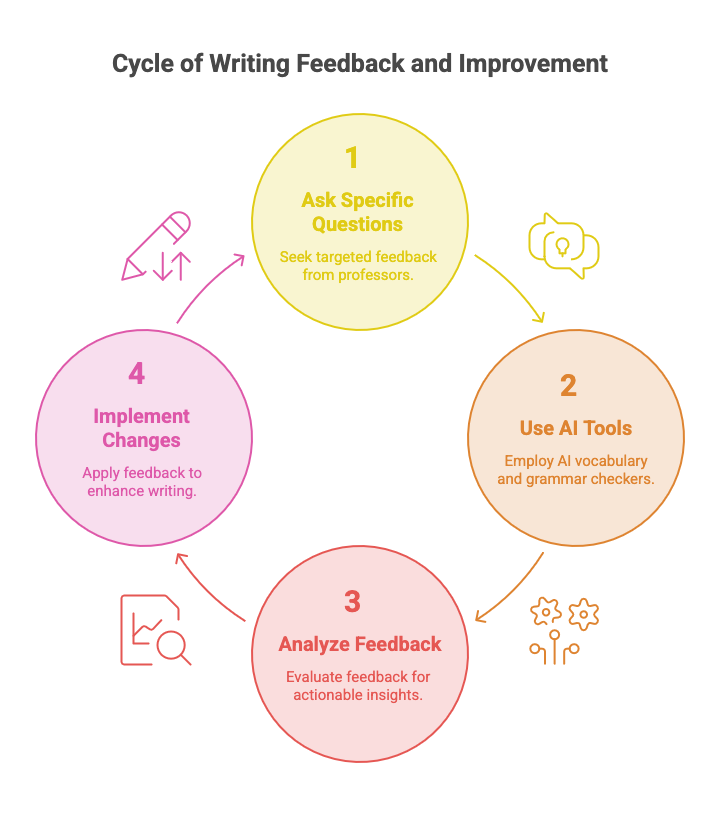
Asking for feedback signals that you’re curious and actively engaged with your assignment. Early feedback on your outline or introductory paragraph can be especially helpful.
However, keep in mind that your professor is likely teaching multiple courses—ask specific questions so you can gain targeted, actionable feedback. Are you concerned about how you’re using your evidence? Your transitions between paragraphs? Overall organization? Grammar? Guide your reader toward the feedback you need.
If you’re looking for feedback on your writing, use an AI vocabulary checker to assess your word choice or try out a free grammar checker to polish your sentences.
Start in the middle
Write what you know. Is there a section you’ve thoroughly outlined? Is there a secondary source you’re itching to argue against? Write the section you’re most energized about or the most certain you will ultimately need in the essay.
It’s common practice to write the body paragraphs first. Summarize a key research source, analyze a passage of a book, or explain the significance of a statistic. Don’t be constrained by the idea that you have to write your paper in a linear sequence—jump in where your ideas are clearest.
Start at the end
What argument do you want the reader to accept? How are you going to convince them? Identify the conclusion you’re bringing your reader to, and work backward to figure out how to make that conclusion compelling.
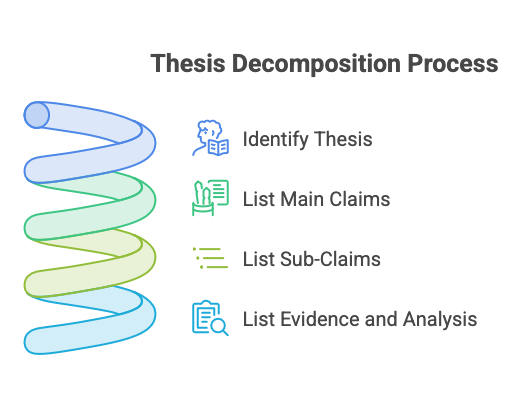
One way to do this is by decomposing your thesis:
- Write down your thesis and list out the main claims necessary to argue that thesis.
- Under those main claims, write out the sub-claims you will need to make to support those claims.
- List out the evidence and analysis tied to each sub-claim.
Edit your outline
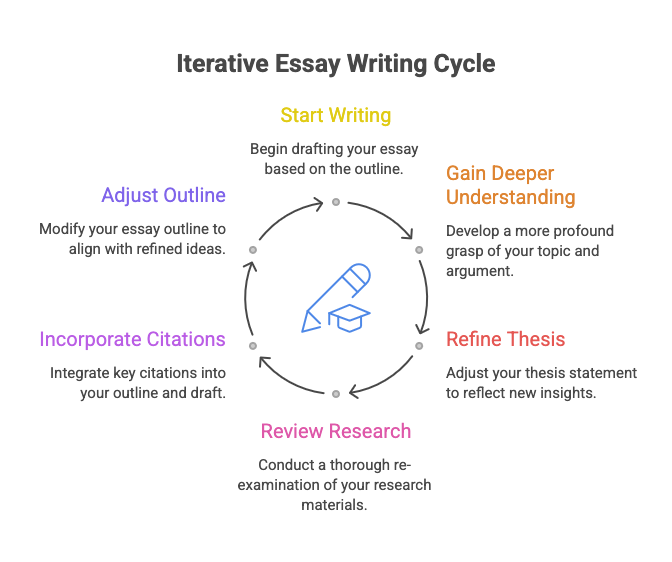
Your essay outline is not written in stone. As you begin writing, you may realize that your outline is lacking key details or that you’re unsure of the overall structure of your essay. You may experience the iterative qualities of essay writing: the writing process itself gives you a deeper understanding of your topic and argument, so your argument begins to change.
Be open to incorporating the feedback you get from the writing process. Adjust the outline of your essay by refining your thesis, conducting a deeper review of your research, and pulling key citations into your outline.
Common Mistakes When Starting an Essay
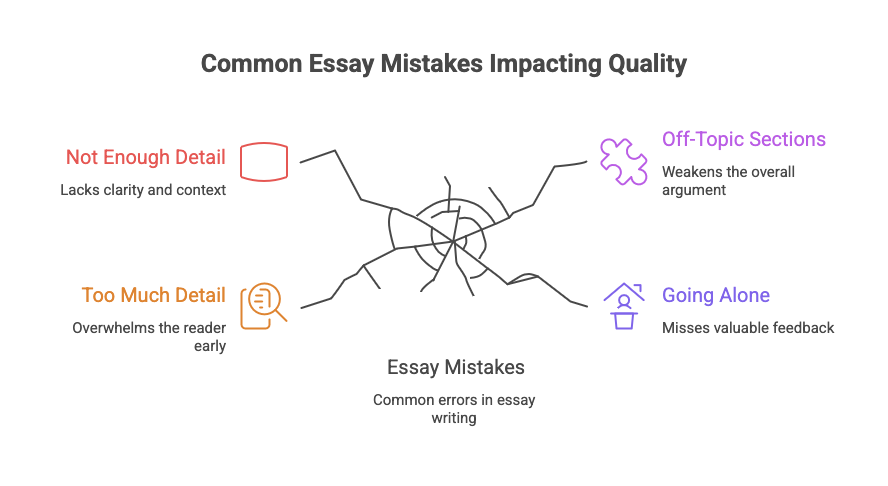
Too much detail
Save it for the body paragraphs. The start of your essay should be streamlined to tell the reader what you’re arguing and how. Do not include details and in-depth explanations. Background materials and secondary sources usually belong in body paragraphs.
Not enough detail
Edit and add vague or missing sections. Your thesis should not be the very first sentence; it should come after the hook and context so that the reader understands the topic before they try to understand your position on the topic.
Off-topic sections
Link all topics to your thesis. Review your paragraphs, either after they’re written or in your outline, and ask: does this directly support my argument? You may need to make the paragraph’s connection to the thesis clearer, or you may have to make the hard decision to cut the section entirely.
Going it alone
Get feedback early and often. Be open to new ideas, ask questions to make sure you understand the feedback, assess the value of the comments, and then decide how much or how little to incorporate.
Conclusion
Set yourself up for success by thoroughly understanding your assignment, familiarizing yourself with your topic, and outlining the essay you want to write. Prepare yourself with time-honored writing techniques like starting in the middle, writing from an outline, and seeking and incorporating feedback.