Topic
Case Study

How AP Verify is helping combat misinformation with GPTZero
The Associated Press’s AP Verify is an AI-powered tool that helps journalists verify text, photos and videos all in one place. As part of its text workflow, AP Verify integrates GPTZero for generative AI text detection.


Alex Cui, Adele Barlow
· 2 min read
Chasing the Hallucinations: KPMG's AI-Powered Attempt at "Redefining Excellence"
Over the past year, a team of GPTZero investigators has used our Hallucination Check tool to uncover hallucinated citations in government reports, academic papers submitted to prestigious machine learning / artificial intelligence conferences like ICLR and NeurIPS, and research products from two of the big four consulting firms: Deloitte and Ernst & Young. This is the second in a series of investigations into reports containing hallucinated citations surfaced by an automated search pipeline. Th


Paul Esau, Om Ogale, Alex Cui
· 18 min read
GPTZero finds 100 new hallucinations in NeurIPS 2025 accepted papers
GPTZero's analysis 4841 papers accepted by NeurIPS 2025 show there are at least 100 with confirmed hallucinations


Nazar Shmatko, Alex Adam, Paul Esau, Alex Cui, Edward Tian
· 26 min read
GPTZero Partners with HackerNoon to Preserve What’s Human in Tech Publishing
Today, we’re excited to announce a partnership with one of the largest independent tech publishing platforms in the world. HackerNoon is integrating GPTZero directly into its editorial workflow, meaning our AI detection technology will now analyze over 5,000 submissions every month before they reach publication. With this partnership, GPTZero’s detector will be integrated into HackerNoon’s Editing Protocol to evaluate and review all new HackerNoon blogs. Additionally, HackerNoon will also use m

GPTZero Team
· 1 min read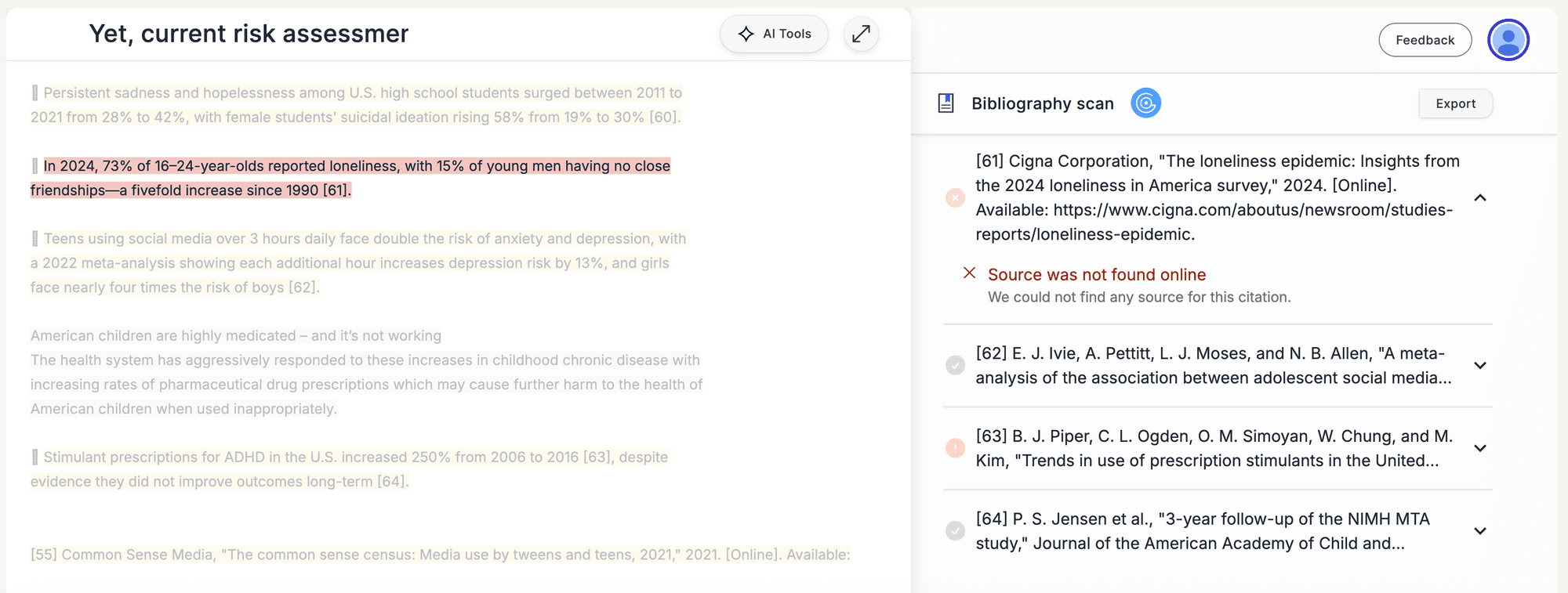
Making America Hallucinate Again? GPTZero Detects New Errors in Major Government Report
On May 22, the U.S. Presidential Commission to Make America Healthy Again (MAHA), led by health secretary Robert F. Kennedy Jr., released a major report on the causes of chronic diseases in children. Yet within a week, news outlets including NOTUS, the New York Times and Washington Post reported that some of the publication’s hundreds of footnotes appeared garbled or fabricated, suggesting they’d been generated by AI. Using GPTZero’s Bibliography Scan tool, we identified nine fabricated sources
Paul Esau, Alex Cui, Nazar Shmatko
· 11 min read
In This Professor’s Classroom, AI Is a Teaching Tool
Geri Sawicki shares her insights on making AI a deliberate part of her curriculum.
Adele Barlow
· 5 min read
From Catching to Coaching: How One Professor Added GPTZero to the Classroom
In most classrooms today, AI tools are kept behind the scenes. They’re used behind the scenes, often for lesson prep, grammar checks, or plagiarism detection. But Eddie del Val took a different approach: he brought AI right into the learning process.
Adele Barlow
· 7 min read
How AI Detection Benchmarking Works at GPTZero (2025)
An overview of how AI detectors like GPTZero, TurnitIn, and Copyleaks compare in terms of accuracy rate, error rate, false positives and negatives for identifying AI-generated content.
Edward Tian, Alex Cui, Alex Adam
· 6 min read
GPTZero 2025 Benchmarks: How we detect ChatGPT o1
GPTZero expands its AI detection coverage of LLMs to OpenAI’s latest reasoning models; see our internal benchmarking on how we compare to other AI detectors.


Alex Adam, Edwin Thomas, Vivienne Chen
· 5 min read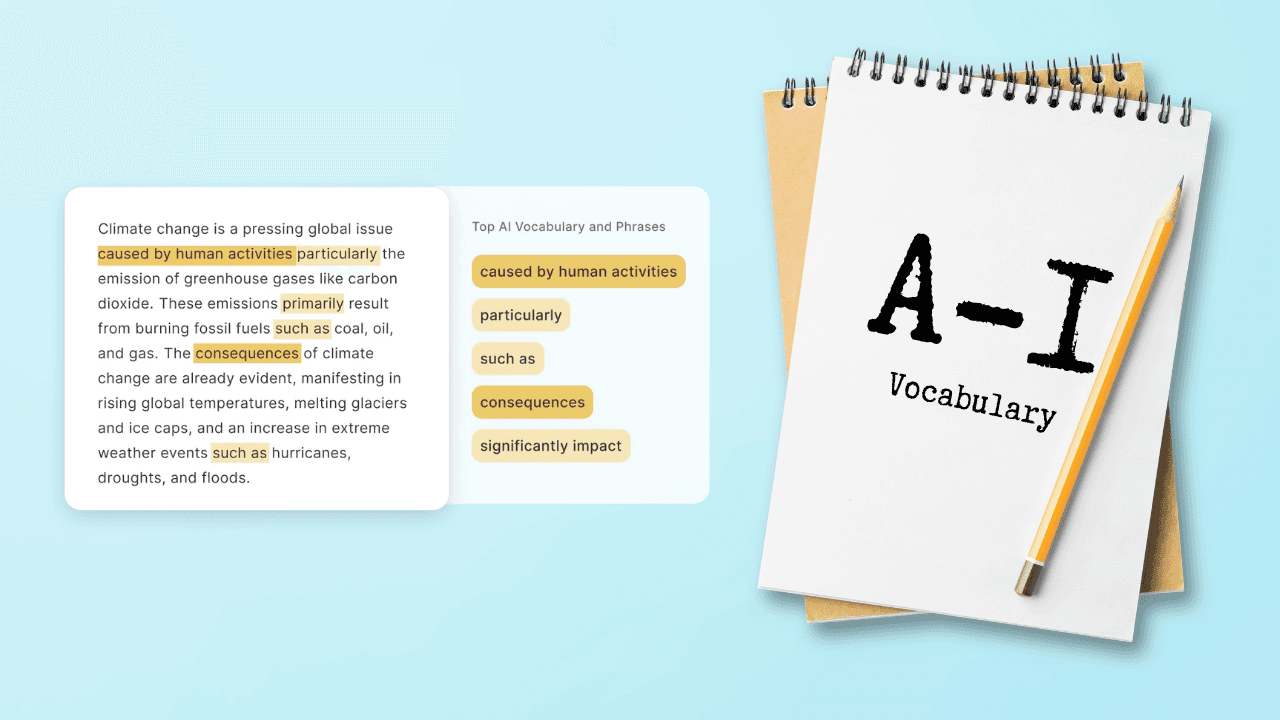
10 Phrases Most Overused by AI
Uncover the most frequent words that generative AI tools like ChatGPT overuse, so you can avoid sounding like a bot.
Vivienne Chen
· 4 min read