How to Write a Sick Leave Email in 6 Steps, With Examples
Need to call in sick? Learn how to write a clear, professional sick leave email that gives your employer the information they need, helps your team plan for your absence, and lets you focus on getting better.


“Sick leave was the bane of my life,” writes one manager on Quora, “and not for the reason most of you will think.” While yes, it can be a hassle to cover missed shifts, they claim the real problem is when sick people don’t take sick leave, come in to work anyway, “and then merrily proceed to spread the infection to the rest of the staff.”
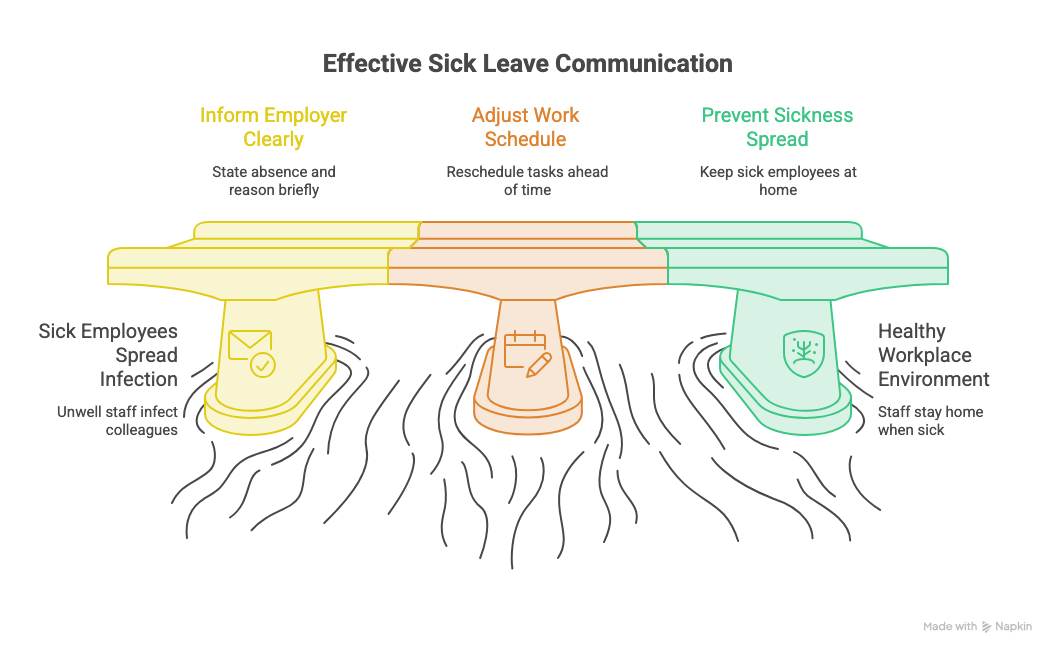
If you’re unwell and unable to do your job, do your workplace a favour, and clearly communicate your decision to stay home and recover. A sick leave email helps your employer: it informs them of why you’re not at work so they don’t have to waste time contacting you; it gives them the forewarning necessary to adjust and reschedule tasks ahead of time; and it prevents sickness from spreading through the workplace.
A sick leave email should tell your employer or manager that you will not be coming in to work and clearly but briefly indicate why that is. These communications typically follow professional standards, though the practical (and sometimes last-minute) nature of a sick leave request means that some features of formal language may be relaxed, like avoiding contractions.
This article identifies and explains the must-have elements for an email requesting sick leave, provides useful tips for refining your message, and shows easy-to-use examples of sick leave emails for different situations.
How to Request Sick Leave in 4 Steps
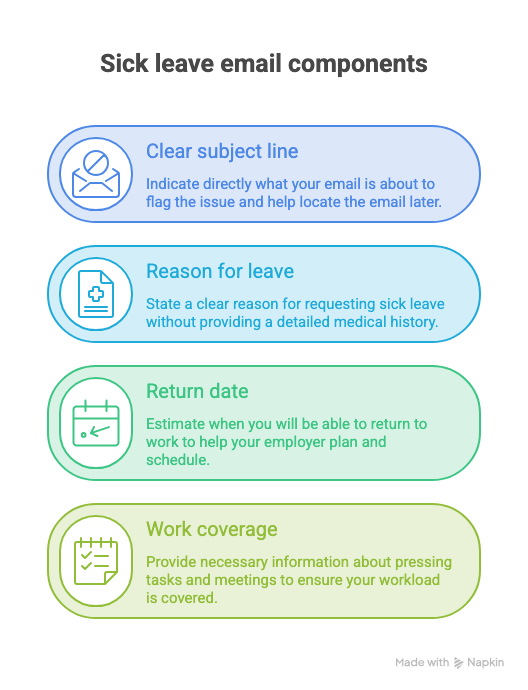
A sick leave email requires a clear subject line, the reason sick leave is needed, a timeframe for return to work if possible, and job details if needed to cover or reschedule important tasks.
Clear subject line
Write a subject line that indicates directly what your email is about. This will help flag the issue right away and will also help the recipient locate your email later.
Example: Sick Leave Request
Why you need sick leave
State a clear reason why you are requesting sick leave. It’s unnecessary to give your employer a detailed medical history. Provide a “short, honest description,” and that will usually give enough context for your manager to agree to give you the day.
Example: I’m dealing with a severe migraine today, or; I woke up with a stomach bug.
When you anticipate returning to work
It’s not always possible to know when the flu will release you from its horrible grip, but some illnesses and injuries have predictable or doctor-advised timelines. If you can estimate when you’ll be able to return to work, it can help your employer plan and schedule.
Example: My doctor said there will be a 2-week recovery period following my surgery on the 12th, so I will be back in the office on the 26th.
Work coverage
You may have important or time-sensitive tasks that need to be addressed while you’re out sick. Give your colleagues what they need to cover your workload; provide necessary information about pressing tasks, flag meetings to reschedule, and make sure your team understands what needs to be done.
Example: The application form and the signed contract need to be submitted by the end of the day tomorrow, so make sure they get reviewed today.
Sick Leave Email Examples
General request
This example provides a standard reason for sick leave, includes the stipulation that a “paid sick day” will be used, and gives instructions on how to handle the employee’s absence:
Hello Jennifer,
I’m sending this email because I cannot make it to work today, July 7, 2023, due to illness. I want to use a paid sick day.
I will be available by email if you need me for anything urgent. However, for anything else, please refer to David Smith, who will manage my workload today to meet deadlines. I plan to return to the office tomorrow, but I will let you know if that changes.
Thank you,
Hannah Rogers
One element to note is the offer of availability for urgent matters. It may be best to “resist the urge” to invite people to contact you while you’re sick, or strike a balance by informing them you will check your email once in the afternoon. Consider whether your situation really requires such an offer, or whether your time would be better spent resting and recovering so you can perform at full power sooner.
For part-time and hourly employees
This template is specifically for people who work shifts and may be responsible for securing coverage for the hours they’ve been scheduled:
Subject: [Your Name] – Sick Day Request [Date]
Hi [Manager’s Name],
I’m feeling unwell and won’t be able to work my scheduled shift on [Date and Time]. I’ve already reached out to [Colleague’s Name], who is available and willing to cover for me. I’ll make sure to provide them with any necessary handover information.
Thank you for understanding, and I’ll keep you updated on my recovery.
Best regards,
[Your Name]
For COVID-19
Some companies still have policies regarding COVID-19. Check company guidelines around testing, isolating, and return-to-work protocols.
Hi Brent,
I tested positive for COVID-19 this morning and will need to isolate starting today. Based on our current policy, I expect to be out for the rest of the week, and I’ll keep you posted if anything changes.
I’ve let Brenda know about my open tasks, and I’ll be reachable by email if anything urgent comes up.
Thank you for understanding.
Best,
Brad
General contagious illnesses
You may have a stomach flu, pink eye, unconfirmed COVID-19, or some other contagious illness – in all cases, it’s best to stay away from your workplace while you are experiencing symptoms and avoid infecting your colleagues.
Subject: Sick Day – [Your Name]
Dear [Supervisor’s Name],
Unfortunately, I woke up this morning with [symptoms of your contagious illness]. Since this may be contagious, I believe it’s best for me to take a sick day and focus on recovery to avoid spreading the illness at the office.
I’ll make sure my tasks are covered and will monitor my emails in case of any urgent situations.
Thank you for your understanding.
Sincerely,
[Your Name]
Tips for Writing a Better Sick Leave Email
Send it as soon as you know
Don’t delay sending your sick leave email. While no one plans to be sick, the more notice you can give, the better your coworkers will be able to plan around your absence. A very quick message before your shift starts can be more useful than a lengthier explanation later in the day.
Avoid too much detail
Strike a balance when you discuss what you’re experiencing; don’t be too vague about why you’re not coming to work, but don’t go into overly detailed explanations or nauseating descriptions.
Guilt is unnecessary
People experience illness, injury, and disease. “Don’t feel guilty about calling out sick.” Apologizing once for any inconvenience your coworkers may experience is fine, but you do not need to seek forgiveness for being human.
Know company policies
Check the policies and guidelines that your workplace has in place around sick leave. This may include: documentation (like doctor’s notes) to prove your illness, paid or unpaid sick leave policies, sick day allowances (number of sick days permitted), and coverage (you may be responsible for contacting coworkers to cover your job tasks).
Knowing what is expected of you when you request sick leave will help you know what to write in your sick leave email, who to send it to, and what additional tasks you may need to perform in addition to sending the email.