What are Contractions in Writing? Definition, Types, and Examples
Learn what contractions are, how they’re formed, and when to use them. This guide covers standard, irregular, three-word, and archaic contractions, common mistakes, apostrophe rules, and contractions in formal writing.


A contraction is a shortened form of words where one or more letters have been omitted. By removing letters and adding an apostrophe, I am becomes I’m, which is simpler and more closely resembles the way we speak.
Writers tend to debate not only when to use contractions and when not to, but also what purpose they serve in writing. Generally, they should be used with some restraint in formal writing, but as one Redditor notes, “Refusing to use contractions will make you sound like you're a time traveller from Victorian London.”
This guide explains the different types of contractions, reviews common mistakes and a list of common contractions, and answers frequently asked questions on the topic. Learn what contractions are, how to form them, when to use them, and how to use them properly.
What is a Contraction?
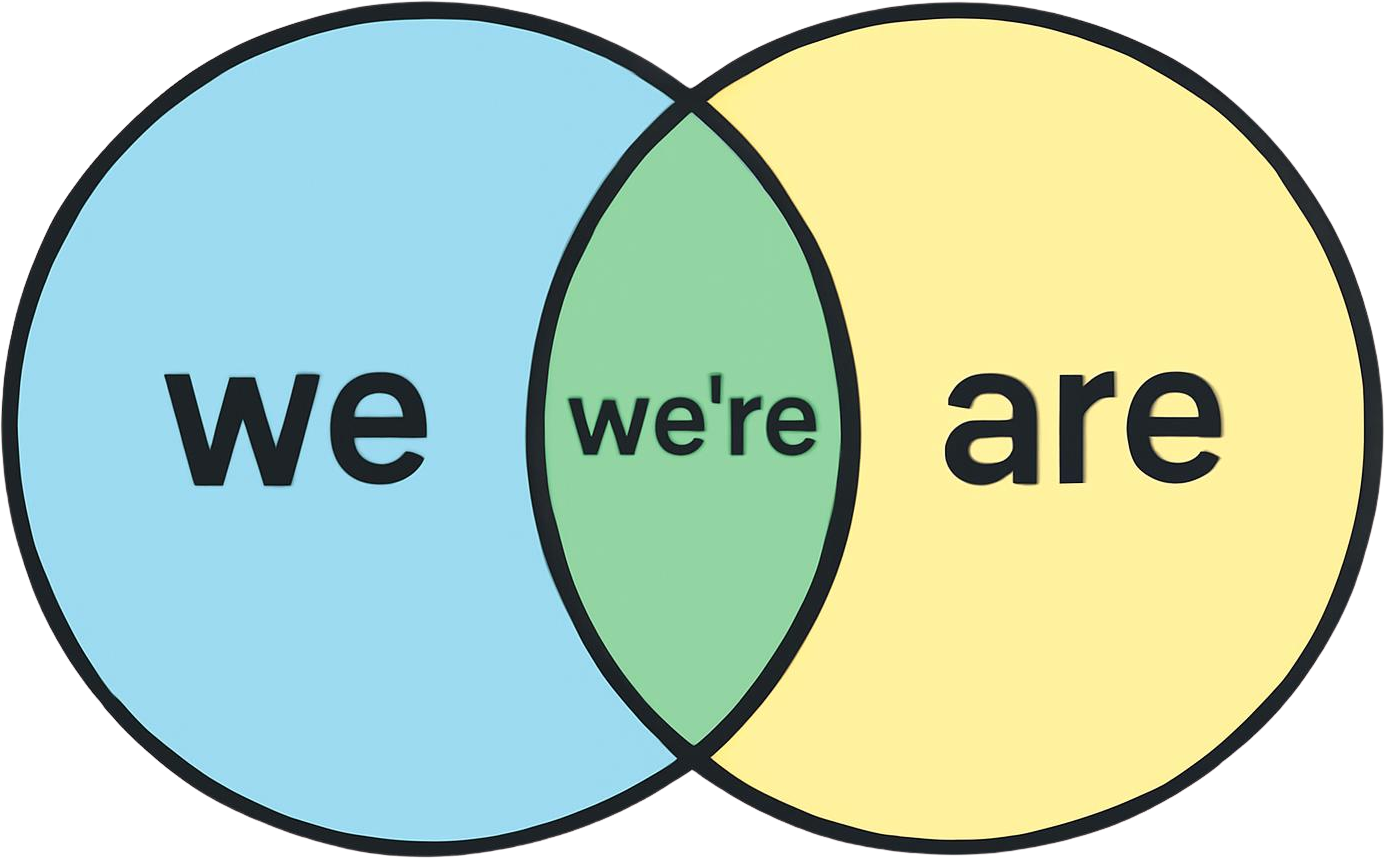
A contraction takes 2-3 words and uses apostrophes to merge them into one word. Not all words can be combined into contractions. As the University of Sussex explains, “this generally happens only with a small number of conventional items, mostly involving verbs.”
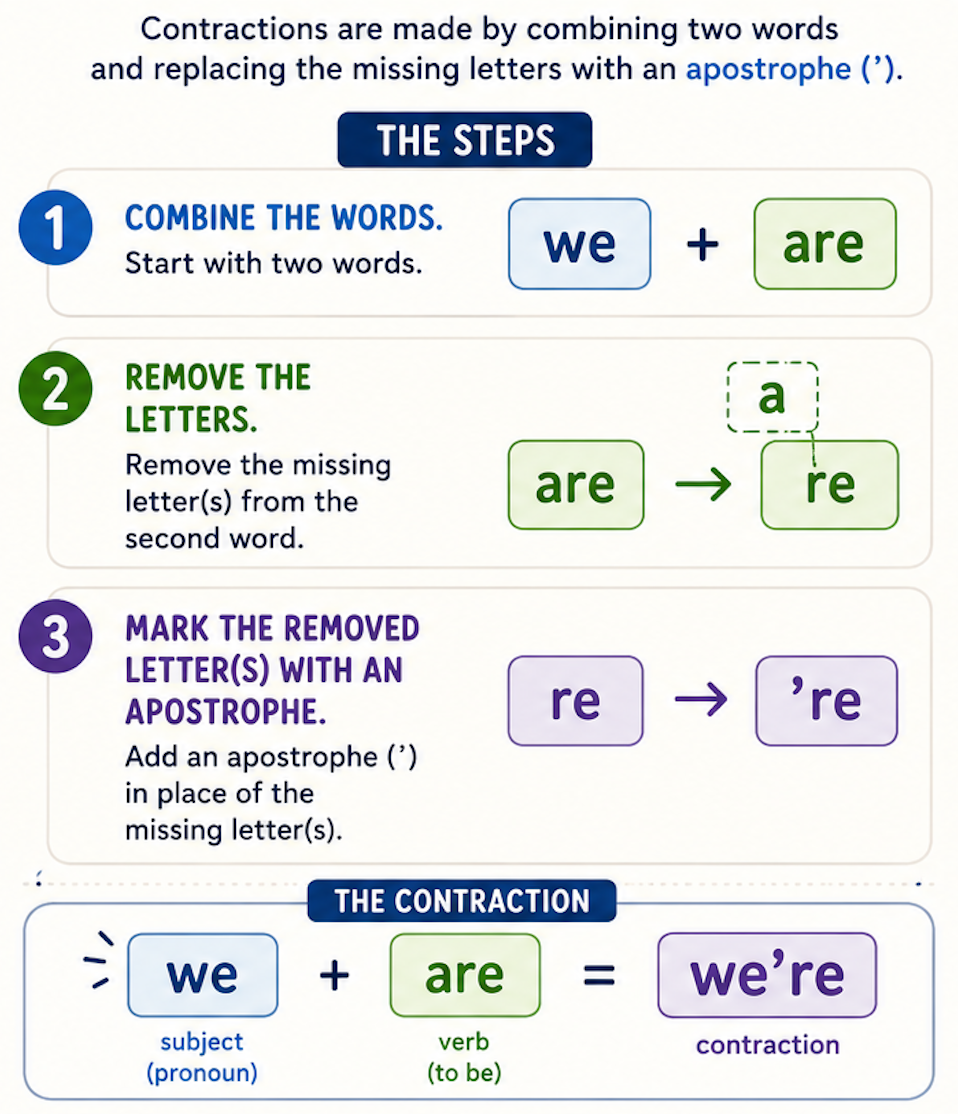
The common contraction we’re is made of we + are:
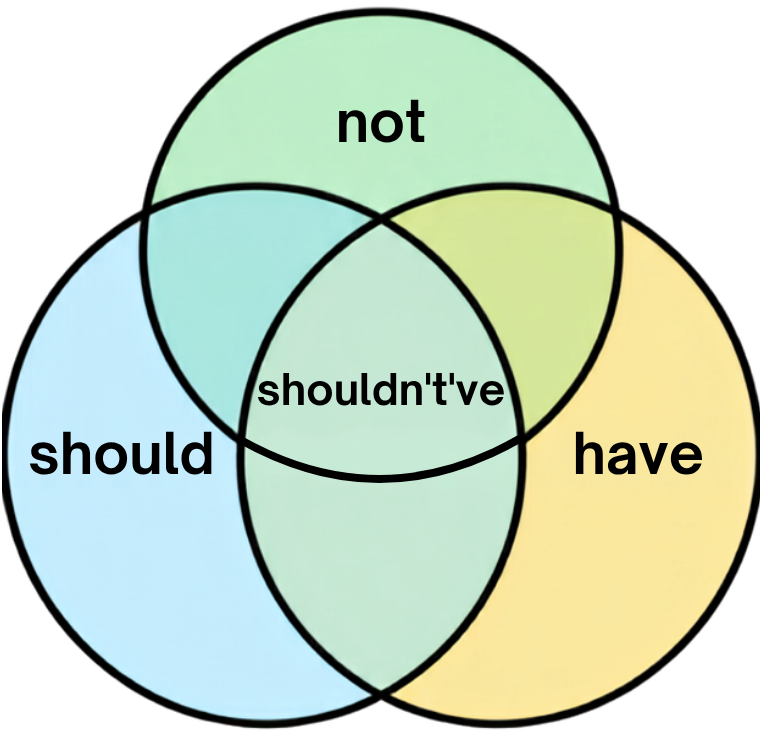
Though rarer and more informal, 3 words can also form a contraction, as in the case of shouldn’t’ve:
Contractions vs Possessive Pronouns
There are a number of commonly confused homophones (words that sound the same but are spelled differently and have different meanings), where one is a contraction, and the other is a possessive pronoun.
The CDC’s Writing Hub offers a short quiz to see if you know the difference between contractions and possessive pronouns.
Types of Contractions
Standard contractions
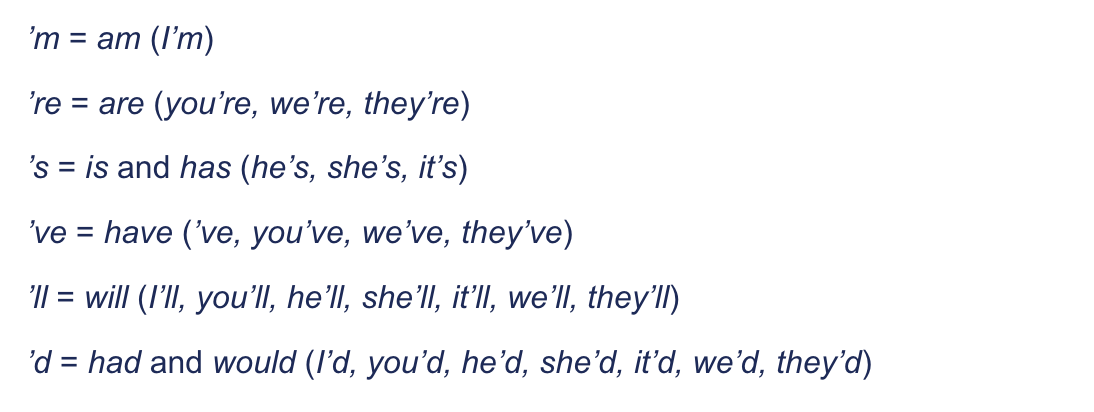
Most contractions are formed by combining two conventional items, usually a pronoun and a verb. Common examples include: can’t, she’d, I’ll, we’ve, he’s, you’re, let’s and more. These standard contractions combine two words and use a single apostrophe to mark the removal of letters.
These are some of the most common contractions that use pronouns I, you, he, she, it, we, and they:
Irregular contractions
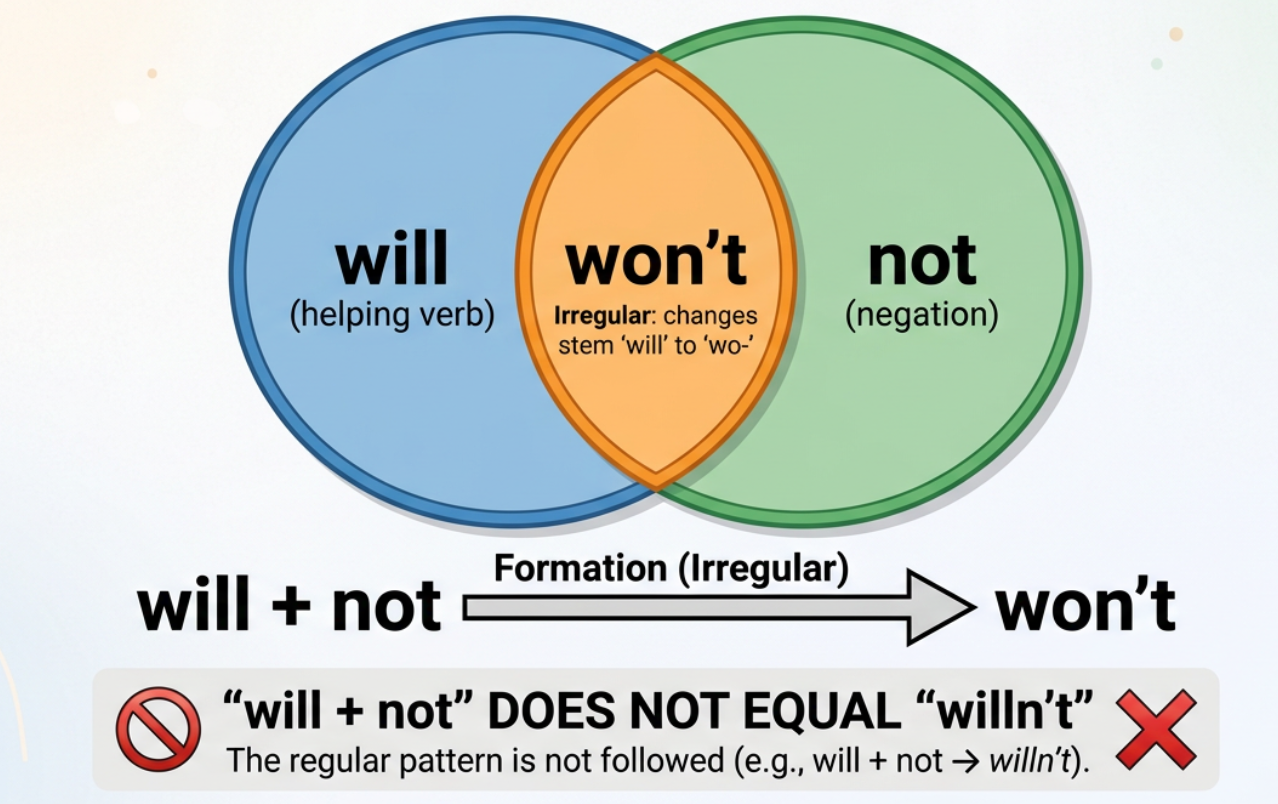
There is a small number of common but irregular contractions that don’t follow the basic rules of standard contractions. Won’t is the most common example. If it followed the standard pattern for contractions, will + not would likely create willn’t, which is not a word.
3-word contractions
Contractions that combine 3 words are less common and even more informal than standard contractions, so be sure to avoid them in formal writing. Common examples of 3-word contractions include:
- Wouldn’t’ve = would not have
- Shouldn’t’ve = should not have
- Couldn’t’ve = could not have
- He’d’ve = he would have
Be aware that most 2-word contractions cannot simply have a third part added on. He isn’t is grammatical, as is he’s not, but trying to cram he + is + not together into “he’sn’t” is incorrect.
Archaic contractions
There are a number of contractions that are no longer commonly used in English, though you may still encounter them when reading an older text or historical fiction, as they were routinely used in the past.
- ‘Twas = it was
- O’er = over
There are also words that were formed through contraction but now stand alone because we no longer use the full form.
- O’clock = of the clock
- Goodbye = God be with ye
List of Common Contractions
Here is a list of common contractions with their full forms and examples of how they’re used in a sentence.
For a longer list of common contractions, along with practice exercises to verify comprehension, try the University of San José’s resource on contractions.
How Are Contractions Formed?
Contractions shorten and combine two or more words into one word. Generally, they remove some letters and mark those removals with an apostrophe.
Did not becomes didn’t in three stages:
- Combine the words = didnot
- Remove one or more letters = didnt
- Mark the removed letter(s) with an apostrophe = didn’t
Similarly for shouldn’t’ve:
- Shouldnothave
- Shouldntve
- Shouldn’t’ve
When to Use or Avoid Contractions
Contractions are not appropriate in all written documents. Contractions are considered informal language, so formal writing will usually avoid them. The purpose of formal language is to elevate your writing to convey authority or impersonal distance, so writing in professional and academic contexts often requires removing contractions.
Here are some document types that do and do not permit contractions:
Errors in contractions can be easily caught by a free grammar checker. Select the best grammar checker for your needs.
FAQ
Are contractions grammatical mistakes?
No. Using a contraction is perfectly grammatical; it’s just informal. There are, however, some situations where a contraction is ungrammatical because it’s been improperly placed in a stressed or emphasized position. In the following dialogue, the contraction is ungrammatical because “have” is the stressed word in the response, so it needs to appear in its full form:
Doctor: Have you been exercising regularly?
Patient: Yes, I’ve.
Can contractions be used in essays?
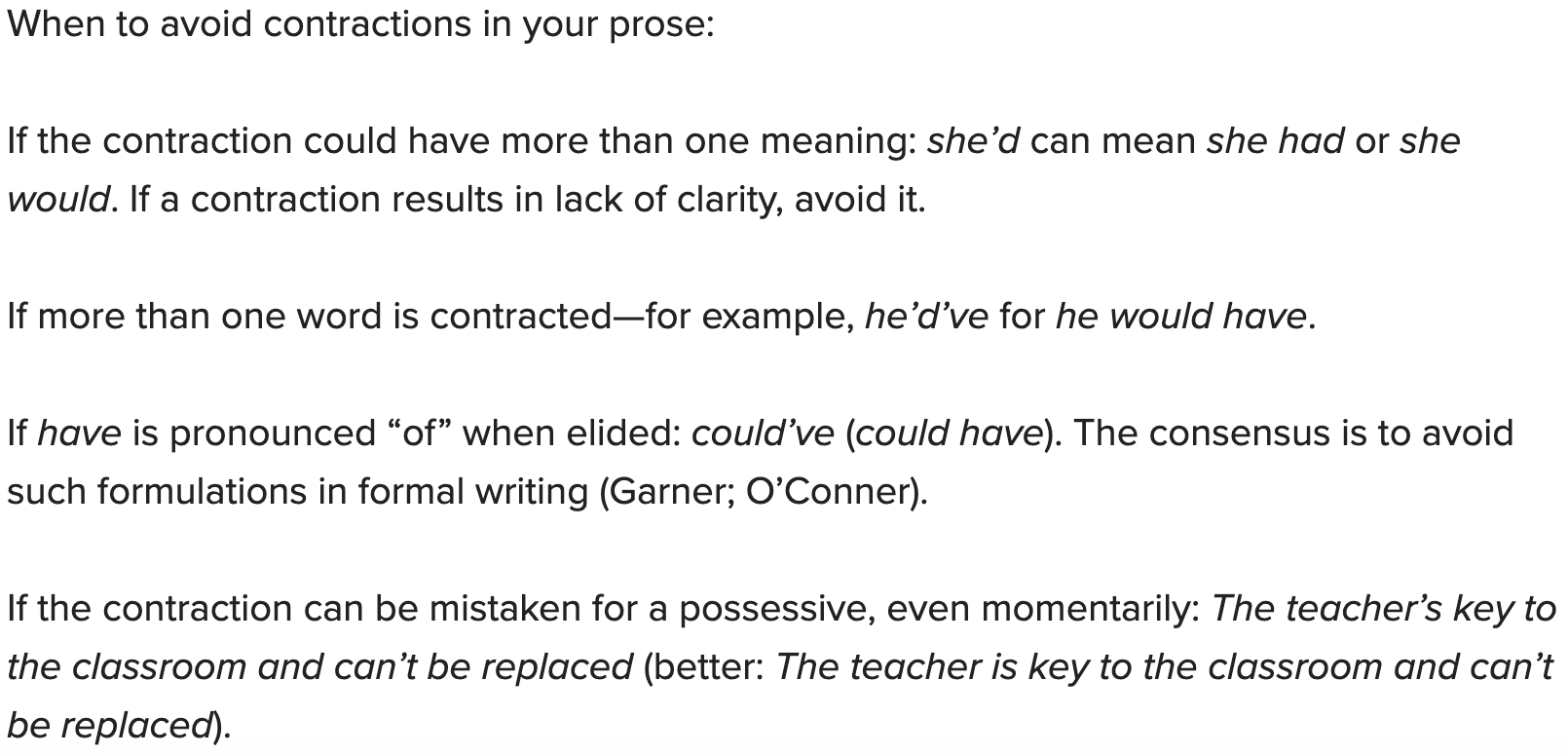
This is a grey area. The safest approach to essay writing is not to use contractions; they are an informal feature of language, while an essay requires formal language.
There are, however, situations where informal language features, such as contractions, can make a formal text more readable and natural-sounding, although the general rule is to use them sparingly. The Modern Language Association offers these guidelines:
Why do contractions use apostrophes?
The basic rule is that apostrophes mark omitted letters in contractions. The apostrophe in can’t appears between the “n” and the “t” where the letter “o” has been removed. In rock’n’roll, the two apostrophes mark the missing “a” and “d” from and.
In many cases, the apostrophe distinguishes the contraction from an entirely different word.
- She’d = she would
- Shed = small storage building
- She’ll = she will/shall
- Shell = hard outer layer
There are some contractions that don’t use apostrophes even though they combine words. Gonna, wanna, and shoulda are highly informal contractions that forego the apostrophe.