
Author
Faizan Mehdi

Techniques for Achieving Natural Time Transitions in Writing
AI Writing Tip: To sound more human in your writing, travel through time. Human writing can flow naturally between past, present, and future. AI writing tends to be chronologically linear. 0:00 /1:41 1× Human writers tend to weave through different time frames, much in the same way a human mind can wander. Writers have no problem traveling between past, present, and future. By contrast, ChatGPT often struggles with fluidity. It feels better to stick

Faizan Mehdi
· 1 min read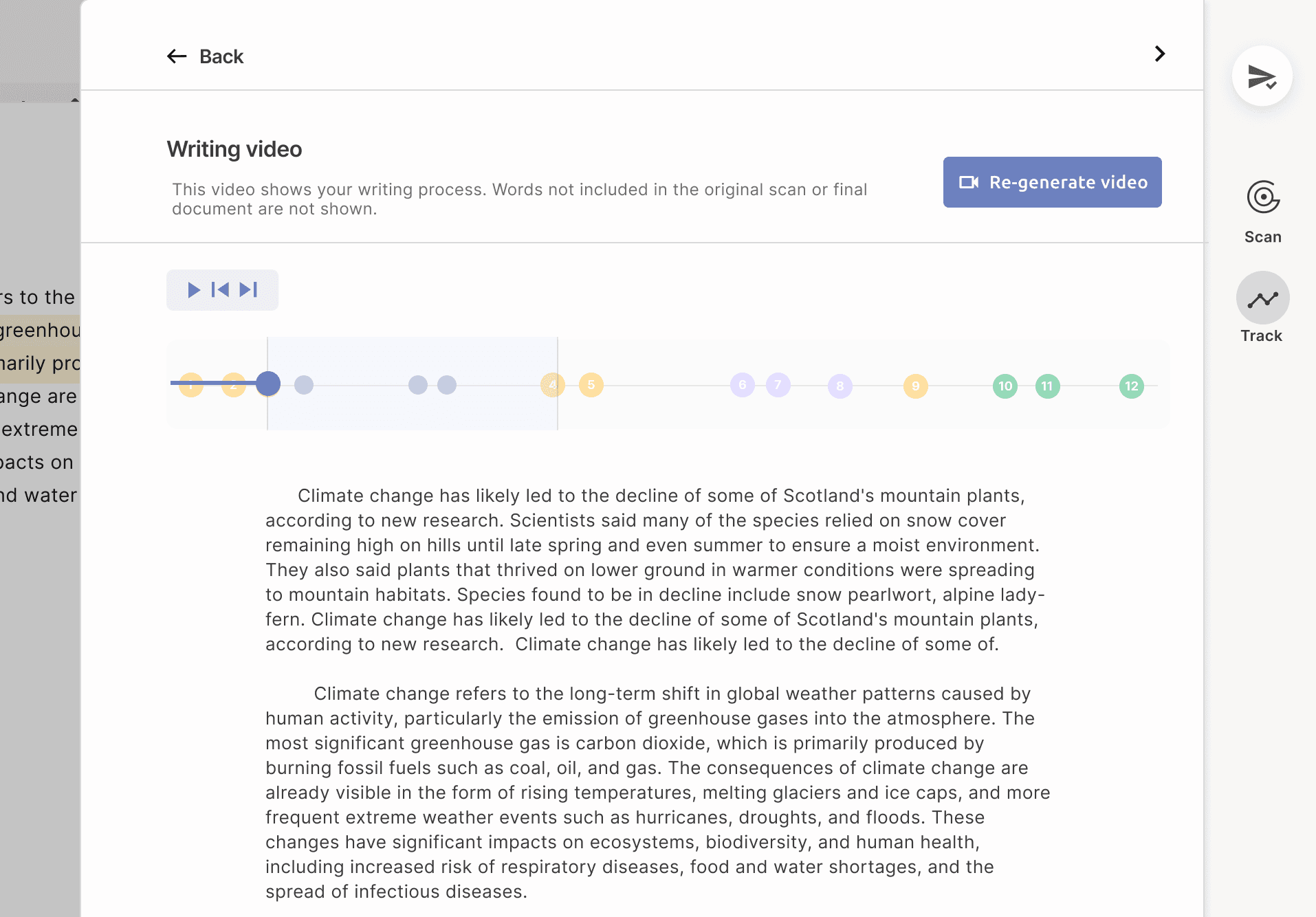
Announcing: GPTZero Docs, the Future of Transparent Writing
Today we’re unveiling our latest feature – GPTZero Docs. Docs integrates an advanced editor platform with embedded AI, and it is the future of transparent writing. Here’s exactly what you can expect with GPTZero Docs. Writing Replays In Docs, you can recreate the entire document creation process, from start to finish. A writing replay allows you to watch a document come to life, almost as if you're observing the writer in real time. A video replay captures the entire typing process. Words p
Faizan Mehdi
· 2 min read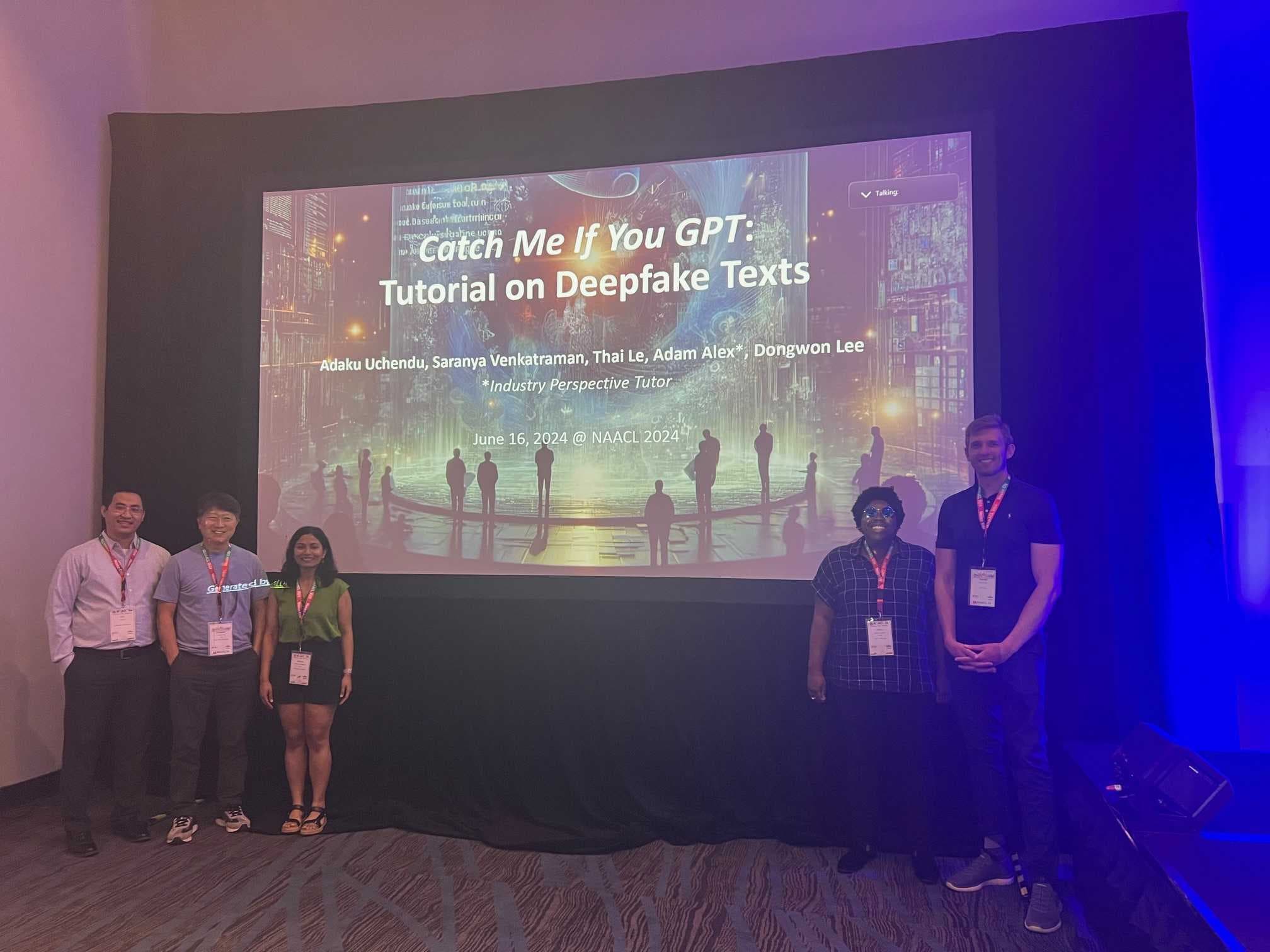
GPTZero at NAACL 2024: Key Takeaways and Highlights From Our Talks
Every year, the North American Chapter of the Association for Computational Linguistics (NAACL) conference is one of the most important gatherings in the computational and scientific communities. This year’s conference covered exciting topics like large language models (LLMs) and indigenous languages, LLMs and education, robotics, and neuroscience, to name a few. Alex Adam from our ML team and our advisor Dr. Dongwon Lee spoke at the conference this year. If you missed 2024’s NAACL, here are so
Faizan Mehdi
· 5 min read
Shifting from Fear to Curiosity — GPTZero conversation with a Catholic School Board Director
Tom D’Amico, the Director of Education at the Ottawa Catholic School Board (OCSB), recently shared on CBC News a balanced approach OCSB is taking to integrating AI with the educational fabric. While we’ve chatted with many schools, we found D’Amico’s approach to be an especially forward-thinking one, and we were thrilled to sit down with him to discuss it. The OCSB, guided by D’Amico, takes an exploratory approach to the potential of AI, rather than a reactionary stance. D’Amico explains a phi
Faizan Mehdi
· 11 min read
How to Make Your Writing Interactive and Engaging
AI Writing Tip: AI lacks the critical engagement made possible by human writing. AI won’t ask questions or challenge their audience. So, prompt reflection directly with your reader. Pose a tricky hypothetical, and implore them from the page to consider how they’d respond. Ask a question. Present a conundrum. Catalyze a deeper level of thinking. Robots were not trained to do that, but humans can. Engagement is a key component of effective writing, especially when it comes to connecting with rea
Faizan Mehdi
· 1 min read
The Evolution of AI Detection — and a GPTZero and Turnitin Rematch
ASU+GSV Summit 2024 kicked off April 14-17, 2024 in San Diego to bring together thought leaders with a common goal: elevate the scope and scale of innovation in the education sector. In a packed room and much anticipated session, GPTZero CEO Edward Tian sat down with Turnitin CPO Annie Chechitelli to debate the role of AI in academic integrity, and their differing philosophies. The moment marked a year since Edward sat across Turnitin CEO Chris Caren in San Diego, which catalysed the start o
Faizan Mehdi
· 2 min read
Ways to Embrace Imperfection in Your Writing
AI Writing Tip: Humans can embrace imperfection and vulnerability. AI writing doesn’t have that capability. To sound more human in your writing, be “imperfect.” Embrace a distinctive, relatable voice. After an AI is prompted, it outputs meticulously polished and perfectly organized language. That’s because AI algorithms adhere to rote grammatical norms and stylistic conventions. Perhaps with a bit of creative prompting, you can get AI to mimic a certain tone of voice or a more creative personal
Faizan Mehdi
· 1 min read
Tips to Avoid Creating Static, One-Dimensional Characters
AI writing tip: In order to differentiate your writing from AI, imbue your characters with rich inner lives and allow them to grow and change in response to the events of your story. Pay special attention – not just to their exterior journey – but also their motivations, fears, and hopes, and how those evolve as the narrative does. If you’re trying your hand at fictional writing supported by AI, you’ll find yourself coming up woefully short on character construction. That’s because when AI con
Faizan Mehdi
· 1 min read
Embracing Controversy to Differentiate Your Writing from AI
Writing Tip: AI writing shies away from controversy. It will never default to serving as a platform for advocacy or debate. To make your writing sound differentiated from ChatGPT, take a stance. AI writing stands out for its cautious approach, particularly when it comes to “controversial” or contentious issues. AI systems are programmed to maintain neutrality and avoid inflammatory rhetoric. While this tendency probably helps the organizations creating these AI systems to avoid legal issues
Faizan Mehdi
· 1 min read
Summarizing Your Points Without Using AI-Like Phrases
Writing Tip: Steer clear of phrases like “In conclusion” when you’re wrapping up your thoughts in a paper. These phrases are hallmarks of AI writing tools, which use very obvious, formulaic transition phrases to signal the end of a thought. Instead, opt for something more nuanced or personal to summarize your points. ChatGPT tends to put a summary sentence at the end of any response, even if it's just writing a few simple sentences. For example, if you ask: “Why is the sky blue?”, it will give
Faizan Mehdi
· 1 min read
Avoiding Unnecessary Explanations To Keep Your Writing Engaging
Writing Tip: To differentiate your writing from AI, skip the detailed explanations of everything, and save them for the subjects that require them. Thoroughness across the board is robotic; applying selective, strategic thoroughness is a valuable human skill. If asked a simple question, like "Why is the sky blue?" ChatGPT doesn't just answer with an equally short explanation. It will defer back to that listicle-style response. AI writing tools default to an in-depth, robust explanation for thi
Faizan Mehdi
· 2 min read
Adding Depth to Your Writing Without Repeating Ideas
Writing Tip: If a body of writing repeats ideas and lacks a genuine progression of the thesis, it sounds like AI. Make sure your “new” ideas are actually new, and aren’t just the same idea with reordered phrasing. Insert research, opinions, quotations, and/or references to deepen your argument. Go further into the context of what you’re presenting. One characteristic of ChatGPT is its propensity for repetition. This isn’t just about using the same word too many times, although that’s certainly
Faizan Mehdi
· 2 min read
How to Add Vivid Details to Your Writing Without AI
Writing Tip: ChatGPT lacks the sensory details that humans bring, since it doesn’t technically have “senses.” To differentiate your writing from AI, inject sensory details about what something feels like, sounds like, or looks like. Be creative, and draw on your own memories and experiences. One of the more subtle but telling distinctions between human and AI-generated text lies in the absence of sensory detail. Humans experience the world through senses —sight, sound, smell, touch, and taste.
Faizan Mehdi
· 2 min read
How to Use Slang in Writing to Avoid Sounding Like AI
Writing Tip: Incorporate slang into your writing. Reference cultural phenomena that anchor your writing in a specific place and time. If done correctly, you can transport your reader to another place, and encourage them to see things from a different perspective. ChatGPT doesn't use regionalized language, slang, or any quirky wording; even to the degree that it seems totally impersonal and inauthentic. But cultural references and slang are powerful tools in a writer’s arsenal. They reflect t
Faizan Mehdi
· 2 min read
How to Break Free from GPT's Rule of Three in Writing
Writing Tip: Embrace unpredictability in your sentence structure. Sure, say three things in a sentence sometimes. Other times, just stick to one thing. Consider the rhythm of your writing as music. Embrace tempo changes and emotional swells and contractions, rather than following a metronome's unchanging beat. When AI writing tools write long-form responses, they tend to favor sentences with three objects. They like to say three things per sentence. For example, "OpenAI continues to develop a
Faizan Mehdi
· 2 min read