How to Write an Annotated Bibliography: Step-by-Step Guide (With APA, MLA & Chicago Examples)
Learn how to write an annotated bibliography step by step, from choosing sources to writing strong annotations in APA, MLA, or Chicago style.

An annotated bibliography is a list of books or other works, like a regular bibliography, except there is an added short paragraph after each citation.
Have you been tasked with putting together an annotated bibliography? If your first reaction was a small wave of dread, you are not alone. Putting together an annotated bibliography is a precise task. To add to the overwhelm, each of the three major citation styles (APA, MLA, and Chicago) has its own set of rules to consider.
Success with annotated bibliographies comes down to planning and following a specific structure. At GPTZero, we work with thousands of students and educators who have the same struggles with annotated bibliographies. We’ve put together a comprehensive guide to show you the way, stress-free.
By the end of this guide, you will be able to confidently and expertly write an annotated bibliography from start to finish. The guide also includes helpful examples, videos, and templates to help you along the way.
Key Takeaways
- An annotated bibliography is like a regular bibliography, but with a short 120-word explanatory paragraph added to each source.
- There are three main types of annotations (descriptive, evaluative, informative), but most instructors ask for a mix.
- The strongest and most successful annotated bibliographies combine description with analysis.
- Annotated bibliographies have two parts: the citation and the annotation. The citation follows either APA, MLA, or Chicago styles.
What Is an Annotated Bibliography?
An annotated bibliography is like a regular bibliography, but with a short 120-word explanatory paragraph added to each source. The added note after each citation is meant to add context and even argument, demonstrating that you have read, understood, and can think critically about the topic.
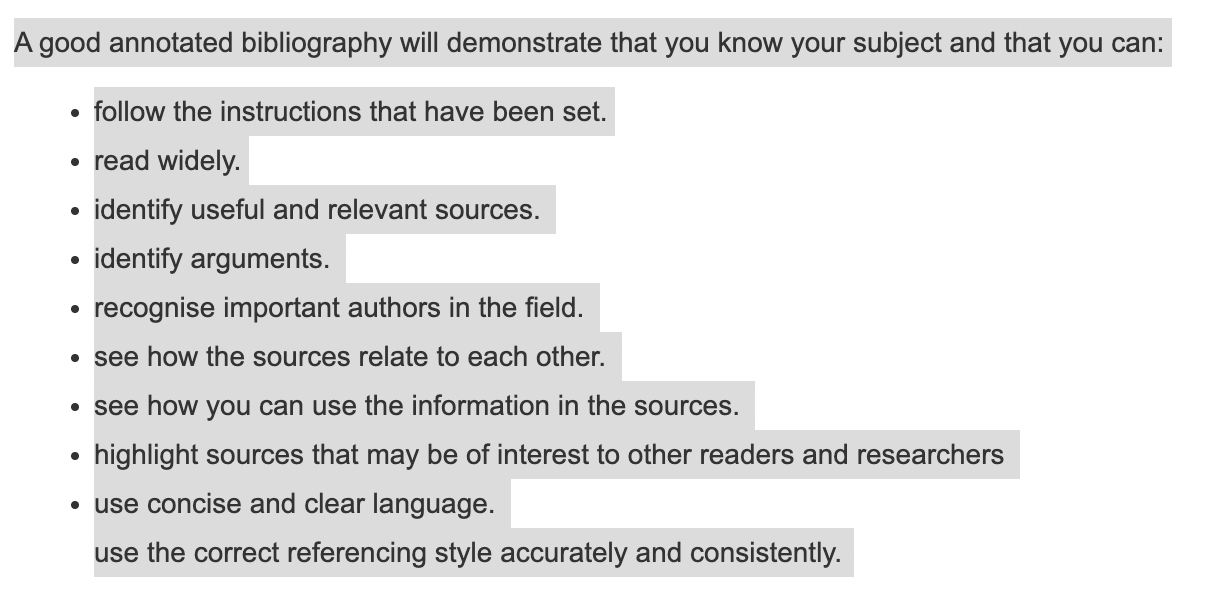
Annotated bibliographies are more than just academic checkbox exercises assigned by professors. They are actually very useful in evaluating a student. A good annotated bibliography will demonstrate that you know your subject, and as the University of Birmingham points out in their guide to writing an annotated bibliography:
How is it different from a regular bibliography?
An annotated bibliography has two components: the citation and the annotation. The citation is identical to a regular bibliography and will follow a prescribed citation style (APA, MLA, Chicago). The only difference is the added paragraph or “annotation” to each citation.
How is it different from a literature review?
A literature review is a narrative argument that weaves sources together. An annotated bibliography is a list. It could be the springboard for a literature review or other academic paper, but the ideas are not woven together into a narrative.
Types of Annotations (and When to Use Each)
There are three main types of annotations, and the one you choose depends on what your assignment is asking for.
Descriptive
Summarizes the main thesis of the source without adding critical analysis. For example: "Smith examines the rise of online learning platforms between 2015 and 2023, focusing on student engagement metrics."
Evaluative
Assesses the source's strengths, weaknesses, and usefulness in the context of the topic. For example: "Although Smith's data set is robust, the study draws only from North American institutions, which limits its global applicability."
Informative
This type combines summary and evaluation and often adds additional notes on how a source fits into the research or why it was selected. Example: "Smith's findings on engagement metrics directly support my argument about hybrid learning, though his sampling raises generalisability concerns."
A good rule of thumb is to aim for a combination of types. You need to ensure you summarize the source, but it is a good idea to go beyond a simple summary and add some context, and if appropriate, critical insight. If in doubt, check with your instructor.
How to Write an Annotated Bibliography: Step-by-Step
Step 1: Choose your sources
Begin collecting sources on your topic. Look for credible sources like peer-reviewed articles, academic books, government reports, and reputable news outlets.
AI Research Tip: AI tools are amazing at surfacing interesting and, in many cases, credible sources. Sometimes citing digital sources can subtly cross the line into plagiarism. To avoid plagiarism, always run your work through an advanced plagiarism checker. Not only can these tools detect plagiarized text, but they can also ensure your sources exist in the first place with tools like hallucination detectors.
Step 2: Know your citation style
In most instances, your citation style will be specified by your assignment. You will be using APA, MLA, or Chicago. If your assignment does not specify, ask your instructor or assume the default citation style for your discipline. APA for social sciences, MLA for humanities, and Chicago for history and the arts.
Step 3: Write the citations
Don’t worry about the annotations yet and simply compile your citations as you would a regular bibliography. Follow your style guides closely and triple-check your capitalization, indenting, page numbers, titles, and punctuation.
Step 4: Write the annotation
Your annotation should be a short 3-4 sentence paragraph. The length usually falls somewhere in the 100–200-word range, but your professor might have more specific instructions. The annotation should answer these questions:
- What is this source about?
- What is the main argument?
- How does it fit into the research?
Writing tip: You should write using the present tense, third person, and active voice. Use academic vocabulary as you would in an essay.
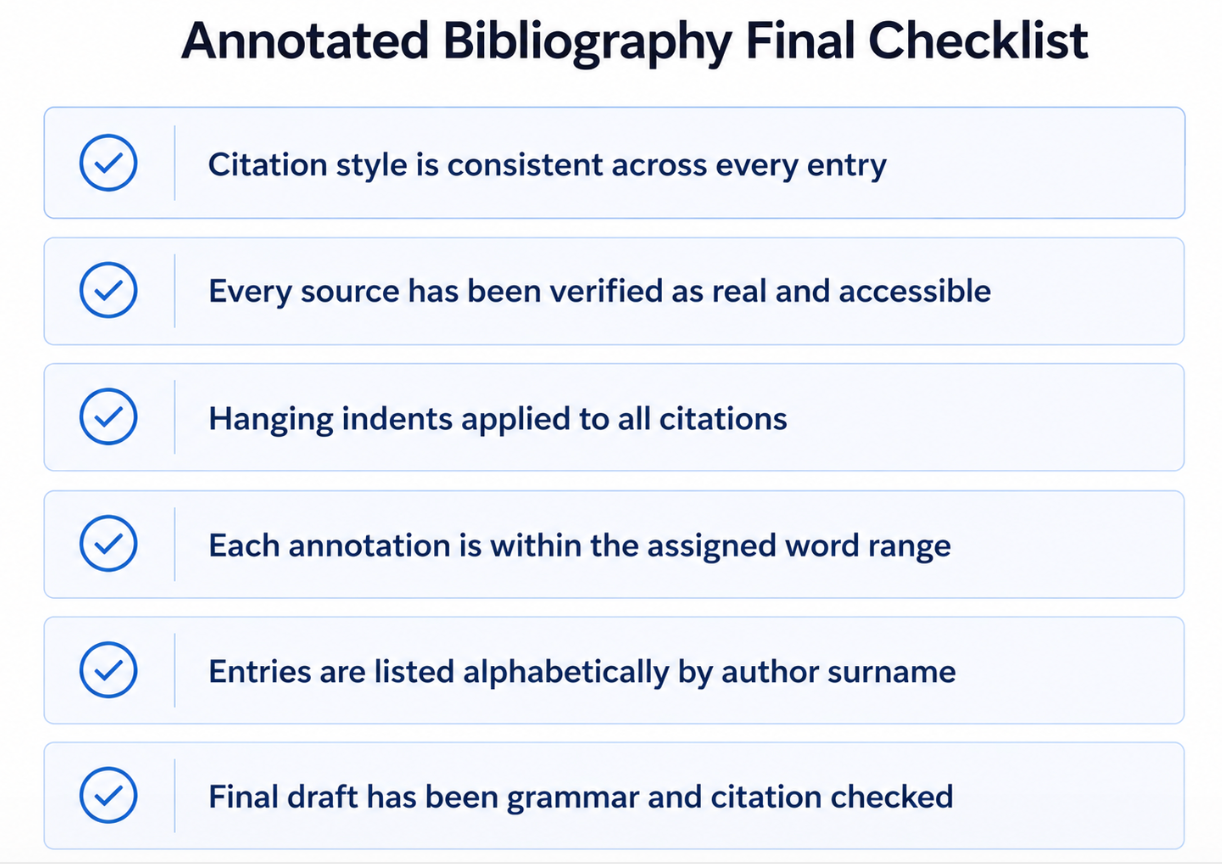
Step 5: Review, verify, and organise alphabetically
Entries should be arranged alphabetically by author surname. Once you have the core citation in place, run it through your favorite grammar checker for typos. Sometimes AI-sourced materials can be fabricated. Running your work through a citation checker at this stage is also a good idea. If you’ve used AI to draft, also ensure you are passing the human test by scanning your work through a reputable and accurate AI detector.
The final polish is when a lot of mistakes are caught, so it’s an important last step before submission.
Annotated Bibliography Template + Example
Here’s a simple structure for an annotated bibliography you can follow:
[Full citation in chosen style, hanging indent]
[1–2 sentences summarizing what the source is about.]
[1–2 sentences summarizing the main argument]
[1 sentence on how the source relates to your research]
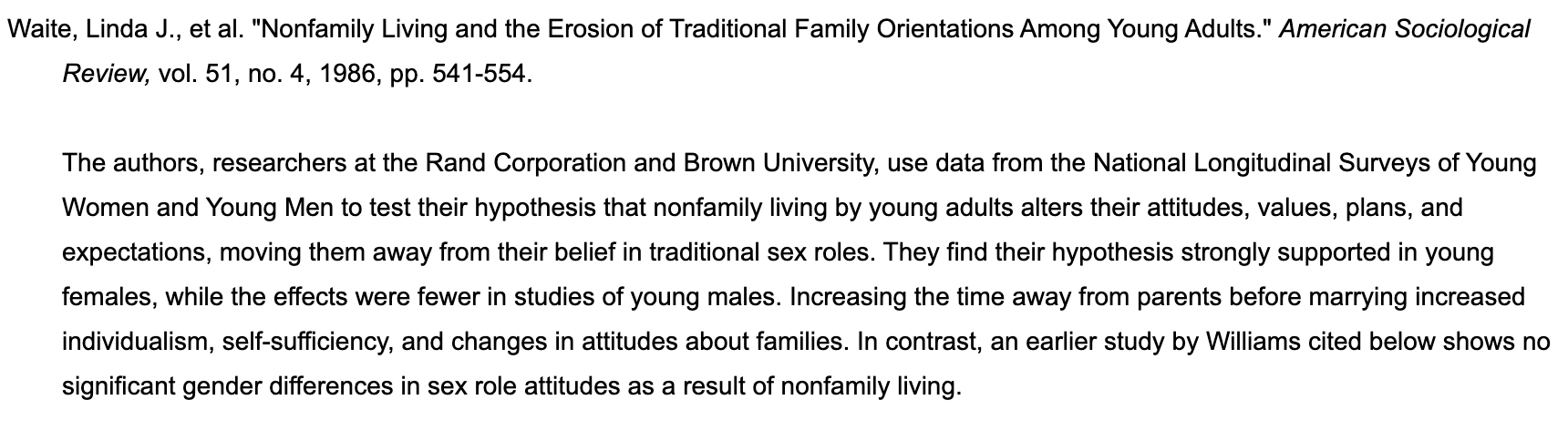
Sample Annotated Bibliography formatted in APA
Sample Annotated Bibliography Formatted in MLA
APA vs MLA vs Chicago Formatting Rules
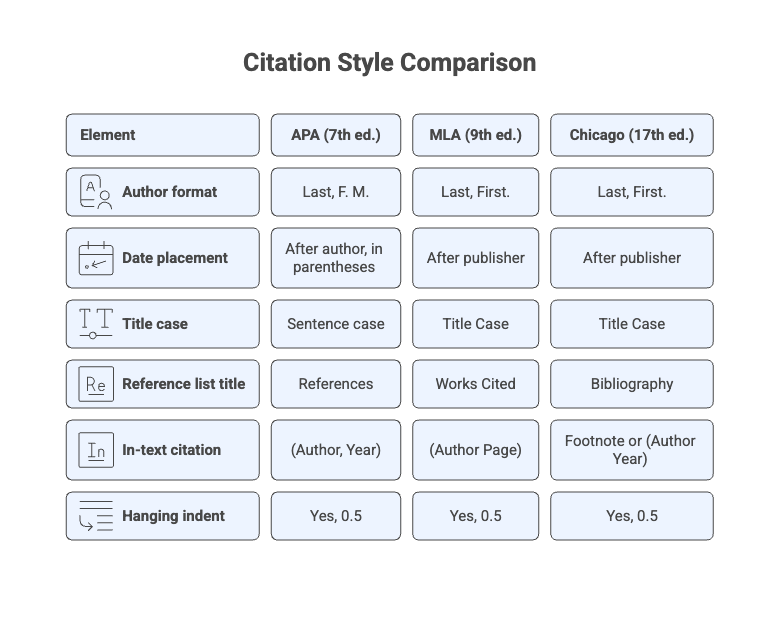
APA Citation Example:
Smith, J. R. (2022). Hybrid learning outcomes in higher education. Journal of Educational Research, 45(2), 112–130.
MLA Citation Example:
Smith, John R. "Hybrid Learning Outcomes in Higher Education." Journal of Educational Research, vol. 45, no. 2, 2022, pp. 112–130.
Chicago Citation Example:
Smith, John R. "Hybrid Learning Outcomes in Higher Education." Journal of Educational Research 45, no. 2 (2022): 112–130.
Common Mistakes to Avoid
- Trusting every source you get from an AI search. Always verify your citations.
- Straying from your assigned citation style by mixing the rules with other styles.
- Writing annotations that only describe what’s in the material.
- Forgetting to list sources alphabetically and include a hanging indent.
FAQs
What goes inside an annotation?
A typical annotation includes a couple of sentences summarizing the source, a couple of sentences explaining the main argument, and a closing sentence tying it back to the research.
How do you cite sources in an annotated bibliography?
You will be using one of the three main citation styles (APA, MLA, or Chicago). Ensure you don’t mix styles and stick to the one you were assigned or the one most appropriate for your field.
How long should an annotation be?
Most annotations fall in the 100–200-word range or a short paragraph. Your instructor may have a specific requirement, so it’s a good idea to check.
Can AI tools or ChatGPT help write an annotated bibliography?
Yes and no. They can help with finding sources, citation drafts, and outlining, but they are poor writers and can sometimes hallucinate. Always verify your citations.
How does it differ from a regular bibliography?
The only difference is the added paragraph or “annotation” to each citation. The citations themselves are identical to a regular bibliography.