How to Write a Good Conclusion (Tips, Templates, and FAQ)
Learn how to write a strong conclusion with tips, templates, examples, and common mistakes to avoid. This guide explains how to restate your thesis, synthesize key points, highlight significance, and leave readers with a memorable final impression.


You’re exhausted from writing the bulk of your paper, but now you face a final hurdle before the finish line: the conclusion. Wondering what’s left to say? Or worried about clinching a strong final impression?
According to the academic publisher SAGE, studies have shown that readers are affected by the “serial-position effect” and tend to best remember the first (primacy) and last (recency) sections they encounter.
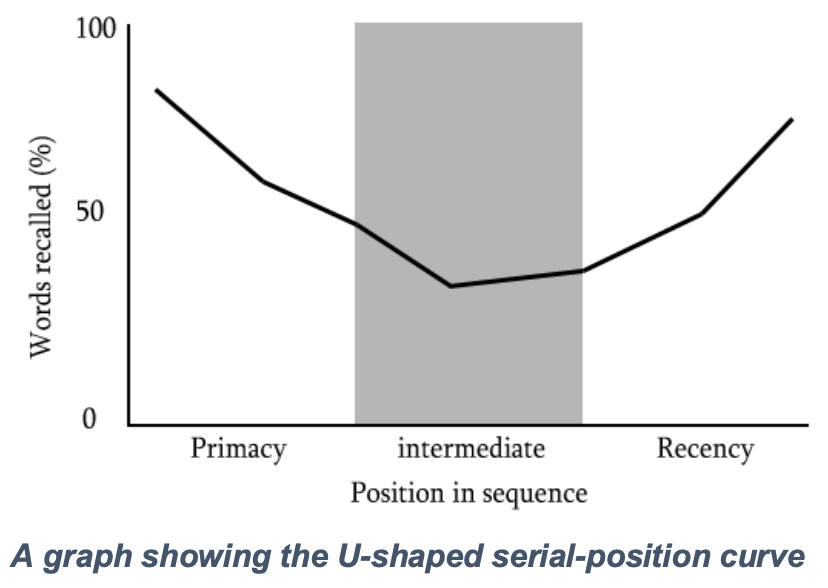
This means that your conclusion paragraph is going to be memorable, so make the most of it! Remind the reader what your paper has argued, why it matters, and what they should ultimately take away from it.
This guide will show you useful conclusion examples, templates and strategies to finish your essays with a strong final section. Review the key components of a conclusion paragraph, compare conclusion sections to introductory sections, and learn to avoid common mistakes.
What is a Conclusion?
A conclusion is your final say on a topic and your last chance to create an impression. Aim to end on a high note that leaves your reader with a clear sense of what you argued, why it was convincing, and why it mattered.
A weak conclusion will end the paper on a sour note if it lacks clarity, introduces doubts or unresolved questions, or fails to make the case for the paper’s significance. As Queen’s University warns, “a poorly written conclusion can undermine the positive impression created by the rest of the essay.”
Elements of a Strong Conclusion
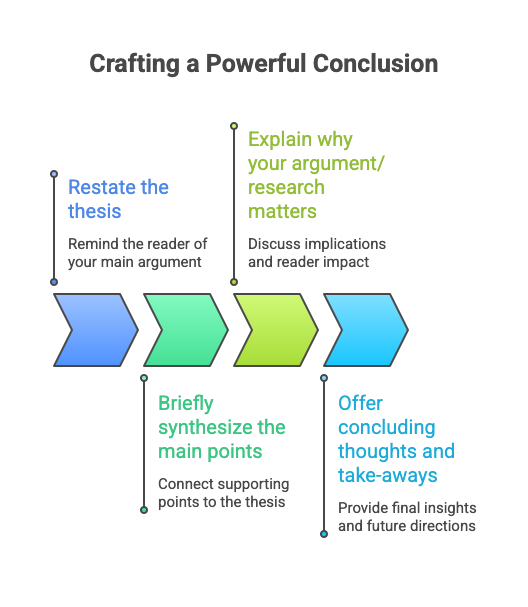
A conclusion paragraph outline should include the following components:
- Restate the thesis: Remind the reader what you’ve just proven through your body paragraphs. Be sure to rephrase your thesis in new wording that is distinct from your introduction.
- Briefly synthesize the main points: Clarify how your supporting points all tie back together to the thesis, and emphasize why this makes your argument credible and compelling.
- Explain why your argument or research matters: Consider the stakes and larger implications of your paper. How is the reader affected if they accept the truth of your argument or the validity of your research?
- Offer concluding thoughts and takeaways: This will vary widely by genre. An argumentative essay on environmental activism may end with a call to action. A research paper on mental health and video games may end by suggesting future avenues of research on the topic. An expository essay on Jane Austen may urge the reader to reassess how they interpret that author.
Conclusions vs Introductions
Avoid submitting a “hamburger essay” where the introduction and conclusion (the top and bottom buns) are essentially the same. Conclusions need to acknowledge and mobilize the fact that your argument has now been fully explained and defended.
Although both sections contain the thesis, main points, and significance of the paper (brush up on introductory paragraph elements with this guide), here are some key distinctions between these sections:
5 Steps for Writing Your Conclusion
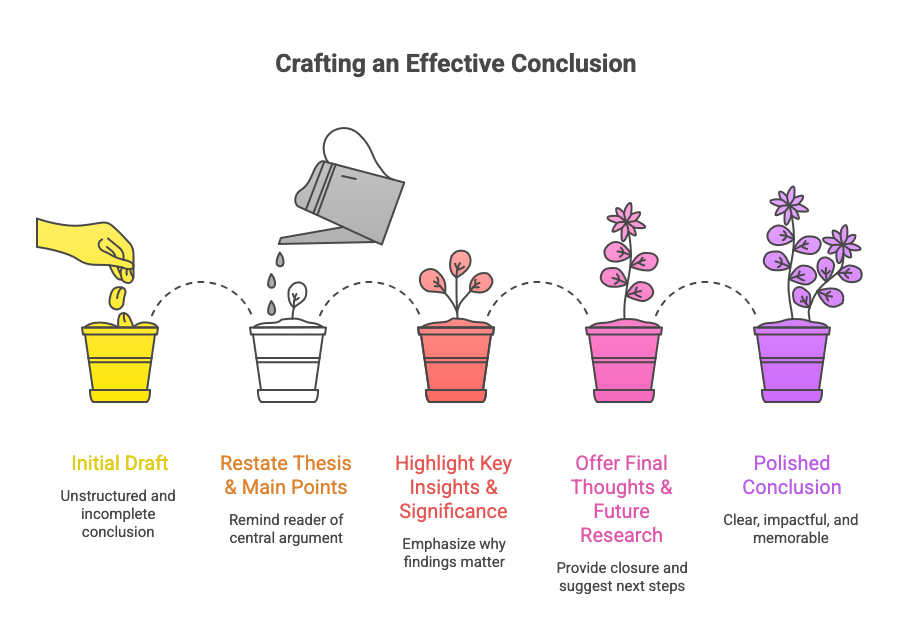
- The rough draft – put together a quick outline or write out a messy version of your conclusion. It’s always good to get something on page to work with.
- Thesis and main points – review your main claim and how your paper proved that main claim with its supporting points.
- The “so what?” – highlight why this topic is important and why your argument should matter to the reader.
- Final thoughts – end with an impactful statement, one that is hopeful or signals future avenues of research.
- Final edit – smooth out errors or awkward phrasing. Polish your conclusion into a concise, simple, and convincing message.
Tip: Use an editing tool like a grammar checker to streamline your revisions. Get actionable feedback from an AI detector specifically for writers.
2 Simple Conclusion Templates
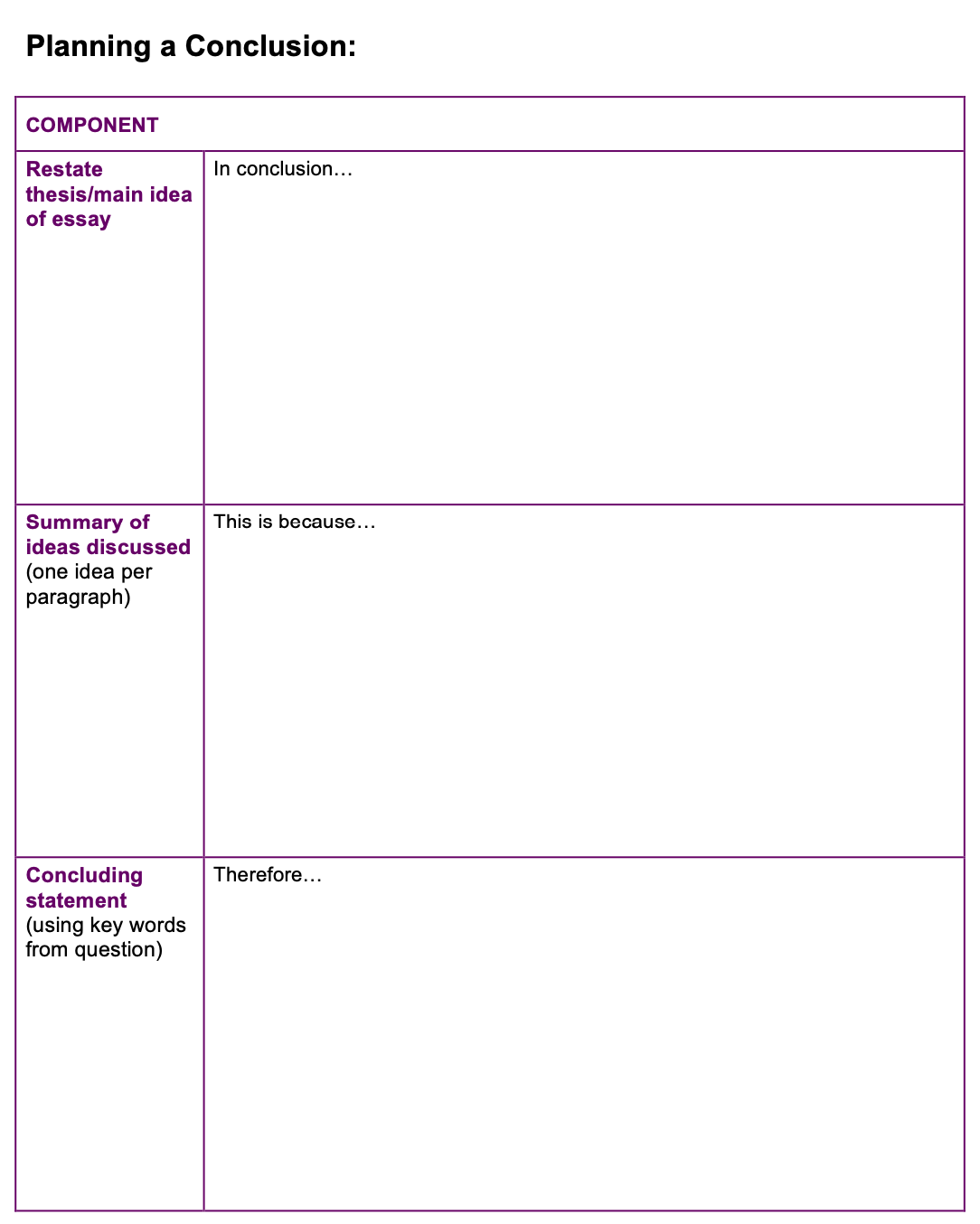
Here are two ways to start a conclusion paragraph with a template. A good conclusion does these basic things:
- Restates the thesis now that it has been proven in the paper
- Reviews how you proved your thesis through your main ideas
- Expresses why your thesis is significant and what the reader should take away
Use this template from the University of Newcastle, Australia:
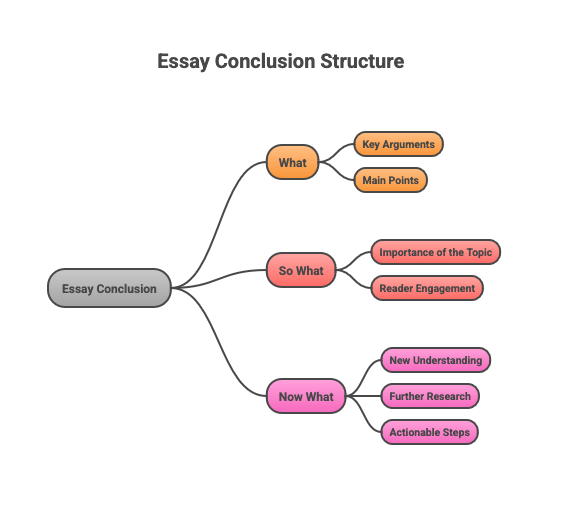
You can also use the following structure from Harvard University, which breaks the closing paragraph into 3 elements:
- “What” – summarize what you have said in the paper: the thesis and main points.
- “So what” – highlight the stakes of the argument and why readers should care.
- “Now what” – leave the reader with final thoughts on what they now understand, what further research should be done, or what action should be taken in light of your argument.
Common Mistakes to Avoid When Writing Your Conclusion
Bringing in new topics or information
“Anything you think is worth discussing should be discussed in the main part of the essay,” says Martin Booker of the University of Edinburgh. Do not introduce new material in the conclusion.
Repeating the introduction
While introductions and conclusions contain many similar elements, readers will notice if you recycle identical phrasing and summaries. Do not create the impression that nothing has been accomplished since the introduction. As the University of Toronto puts it, “If you wish to summarize – and often you must – do so in fresh language.”
Overstating your findings
Tell it like it is. You need to discuss the relevance and importance of your argument, but be realistic and convincing. As Queen’s University advises, “offer your reader measured, thoughtful, and useful final comments that demonstrate your credibility as a writer.”
Using empty phrases
Avoid conclusion starters like, “Therefore, we can confidently conclude that…” or “In arriving at this conclusion it is important to recognize…” These are redundant and overly mechanical phrases that Simon Fraser University refers to as “throat clearing.” They may sound natural in speech, but in writing they appear stuffy and useless. Cut them. Make your sentences more direct and decisive.
Missing or messy conclusions
Don’t skip out on writing strong concluding words. Rather than thinking of the conclusion as a burdensome task, approach it like the University of Hull does: “Your conclusion is the whole point of your essay. All the other parts of the essay should have been leading your reader on an inevitable journey towards your conclusion.”
FAQ for Writing an Effective Conclusion
What is the ideal length for a conclusion?
Conclusions should reflect the length of the essay, so they may range from one well-developed paragraph to 2-3 paragraphs. 10% of the total length of the paper is commonly recommended.
Can I use a quotation in the conclusion?
Not usually. Avoid bringing new information into the conclusion, as you no longer have space in the paper to properly address it. However, a neat and compelling technique is to “book-end” your essay with a pair of quotations that bring you full circle in your argument, or to return to an anecdote or quotation with the added insights gained through the body of your paper.
Should I always end with a call for future research?
Suggestions for future avenues of research are best suited to research papers. It would be jarring for an argumentative essay to end by calling for research. Instead, you might highlight the significance and potential impacts of your argument; if you’re right, then what should be done differently?
How can I get better at writing conclusions?
Access available resources like your university’s writing centre or seek support from your professor. Try reviewing examples of strong essay conclusions. Take the BBC’s short quiz: scroll down to “test your knowledge” on what makes a good conclusion.