Second-Hand Hallucinations: Investigating Perplexity's AI-Generated Sources


Perplexity AI, a generative AI startup building a more accurate artificial intelligence with links to sources, has cemented itself as a serious industry player with a $1 billion valuation and the backing of Jeff Bezos.
Perplexity is one of several startups deploying a technique called retrieval augmented generation to resolve AI hallucinations through real-time references to sources on the Internet. In recent months, however, GPTZero has noticed an increased number of sources linked by Perplexity that are AI-generated themselves.
This result is important because even if Perplexity claims its AI is better than GoogleAI's Gemini or OpenAI's ChatGPT because of its ability to reference sources, if the sources are AI-hallucinations, then the output is AI-hallucinated.
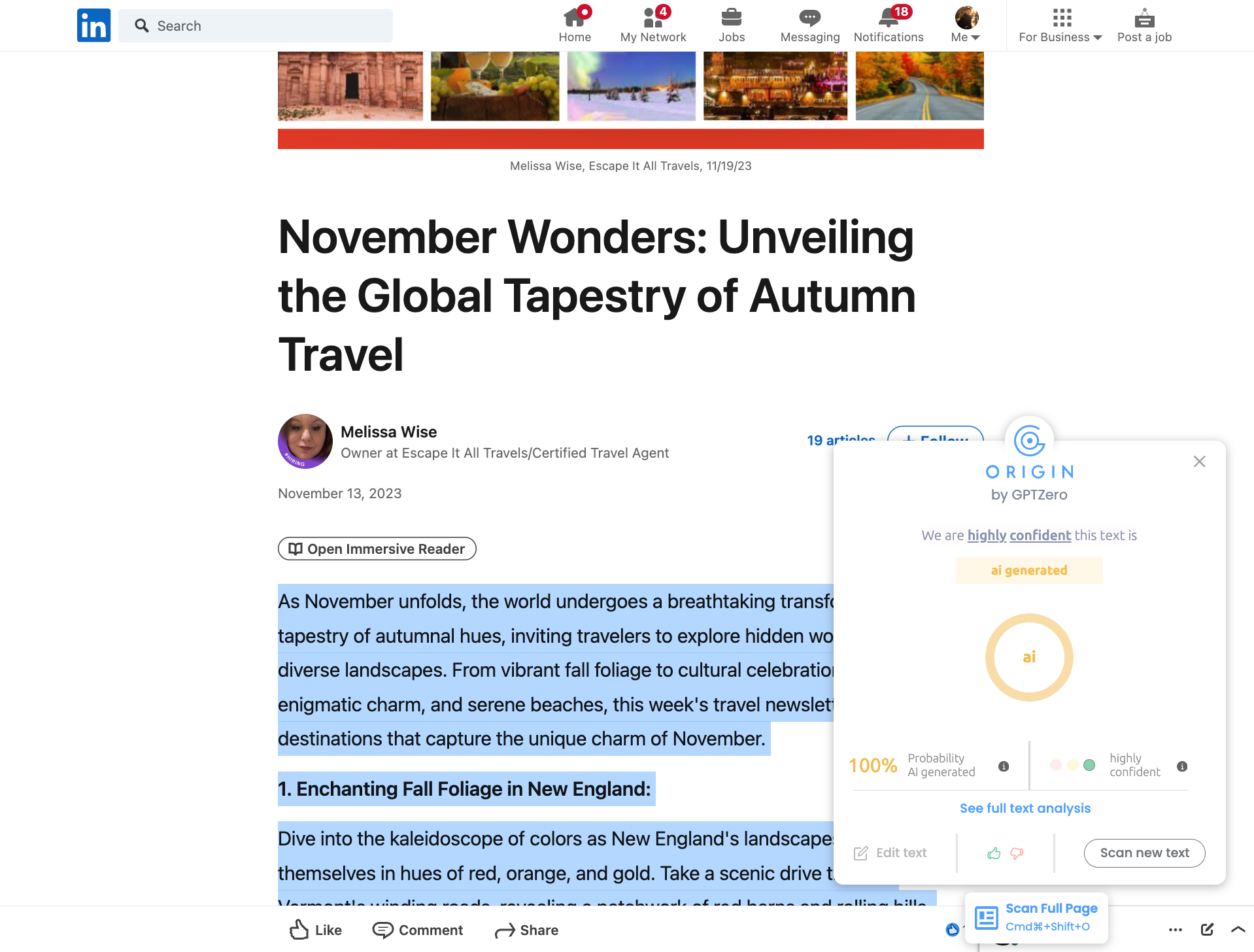
Here's an example of a travel-related search to Japan with the prompt 'Cultural festivals in Kyoto, Japan. ' The only source Perplexity used to generate its response was an entirely AI-generated LinkedIn article.

In another travel-related example, a search for Vietnam's famous floating markets on Perplexity returned a result featuring the Cai Be floating markets. Unfortunately, the Cai Be floating market has been permanently closed since the Covid-19 pandemic.

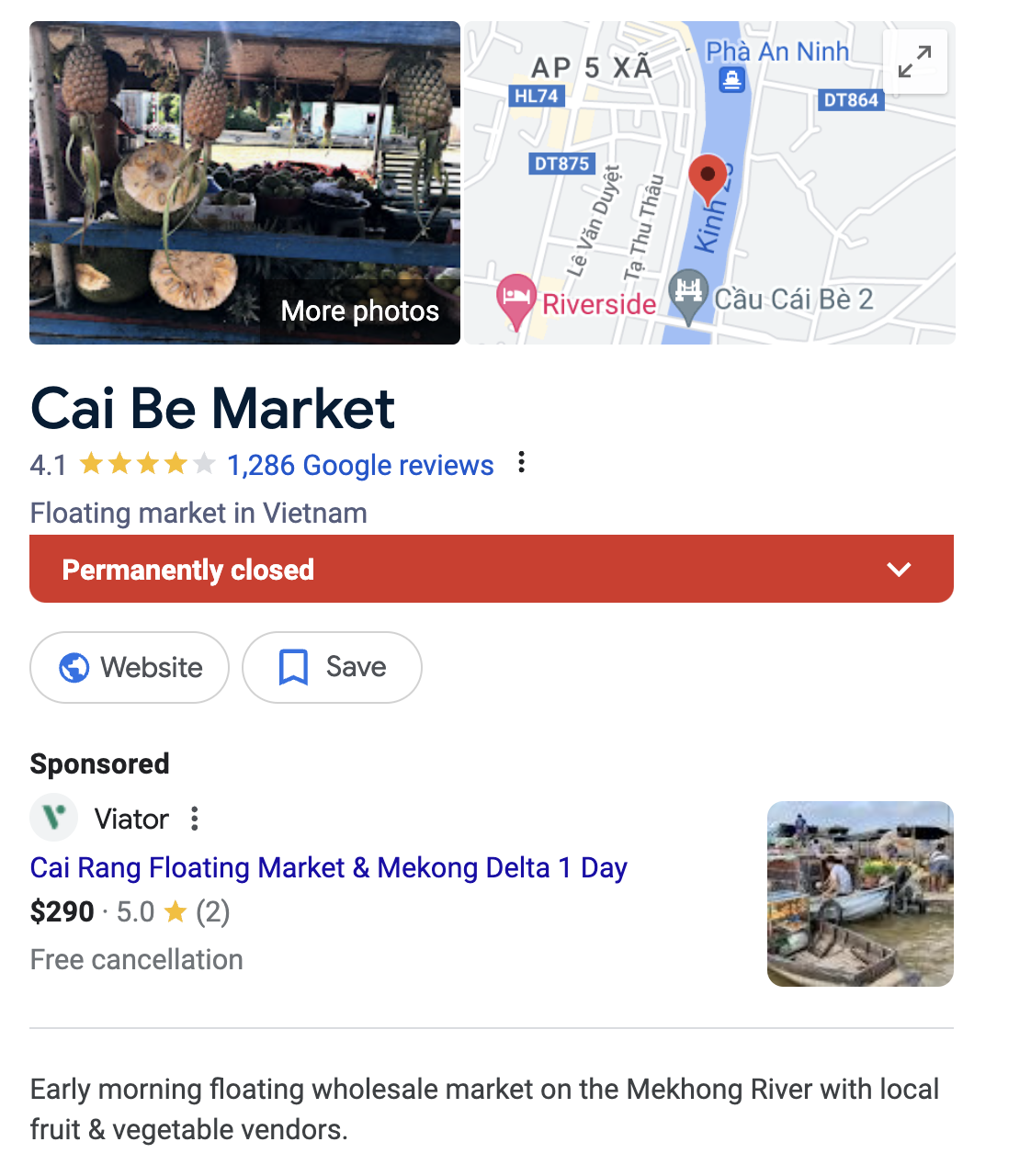
In this example, Perplexity generated an AI hallucination despite using retrieval augmented generation. This is because Perplexity's search is only as good as its sources.
In this case, the source was 100% AI-generated and contained an AI hallucination. The AI hallucination was ultimately passed down second-hand to Perplexity.

In another example, one of Perplexity's pre-recommended searches for 'Eric Schmidt's AI Drones' directly results in a source that is AI-generated.

Perplexity's tendency to surface AI-generated sources is not a coincidence and warrants a deeper investigation. As a result, the GPTZero team conducted a study on AI-generated sources from Perplexity, which demonstrated that the average user only needs three calls to Perplexity before encountering an AI-generated source. Certain topics required even fewer searches.
The average user only needs three calls to Perplexity today before encountering an AI-generated source.
Methodology
We divided our investigation of Perplexity's sources into three categories: travel-related searches, pre-recommended searches by Perplexity, and lastly, AI and tech-related searches. In each category, we inputted prompts into Perplexity and then continuously clicked on recommended searches by Perplexity in the "related" section until an AI-generated source appeared. AI-generated sources were determined by scanning sources with the GPTZero Origin Chrome Extension.
With each prompt, we recorded the number of searches related to the topic until we encountered an AI-generated link, and averaged the numbers.
Perplexity Recommended Searches
When new users log in, Perplexity initially appears with several pre-recommended searches. In this first section, we investigate Perplexity's pre-recommended searches on June 9th, 2024.
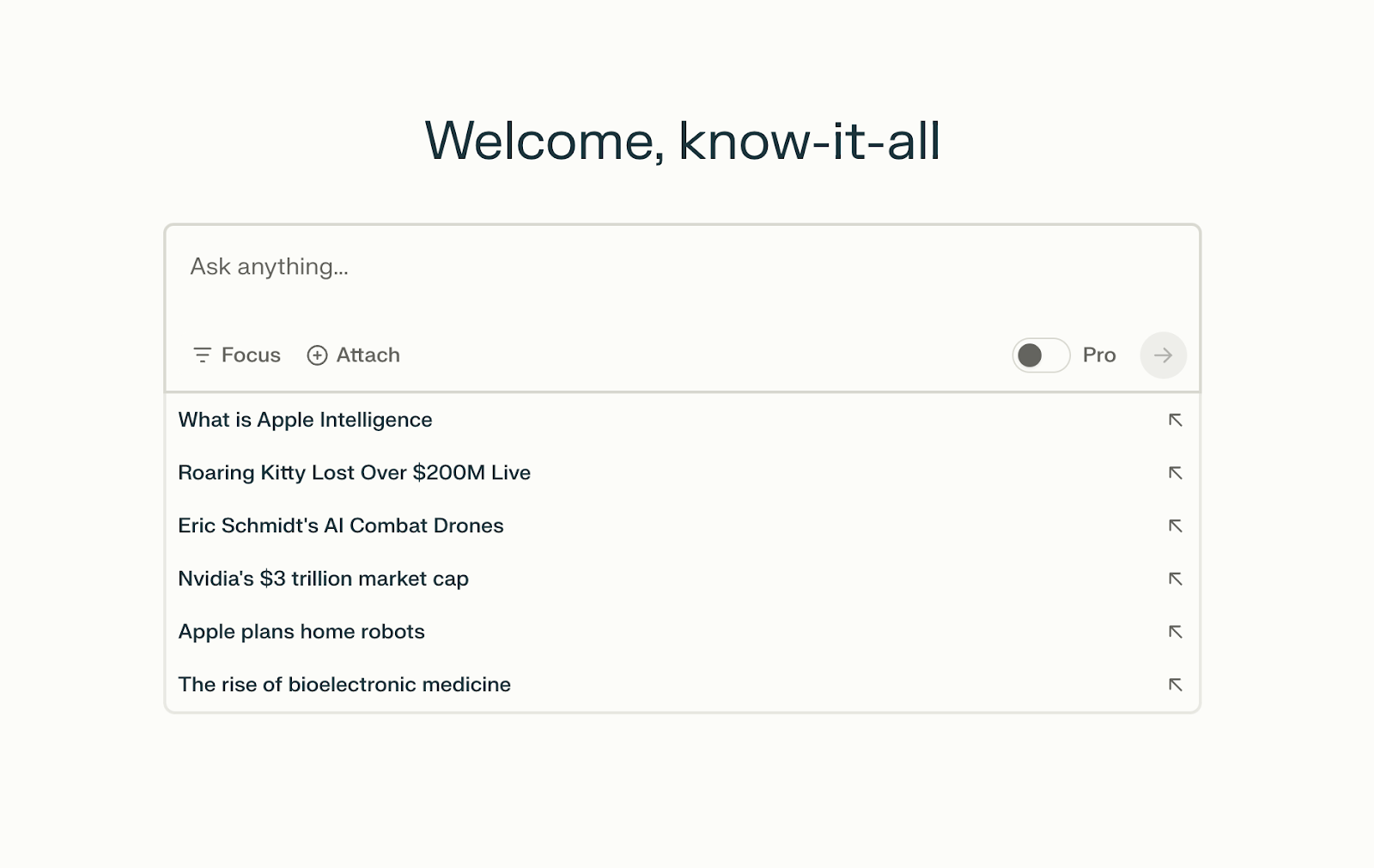
The majority of Perplexity pre-recommended searches take two more recommended result clicks after the initial prompt before encountering an AI-generated source. For example, we start with the first recommended prompt 'What is Apple Intelligence', then trace to two Perplexity recommended related searches, 'How will Apple Intelligence improve the user experience on iOS devices', then 'what are the main differences between on-device and cloud-based AI processing in Apple Intelligence'. This leads us to a blog post from MyScale on AI devices that is 100% AI-generated.

Below is the full table for the initial search prompts recommended by Perplexity and the number of calls to Perplexity until an AI-generated source is used. Most searches, whether on Nvidia or Apple, only required three runs of Perplexity before encountering an AI source.
Travel Related Searches
In the next section, we investigate travel-related searches.
Travel-related searches are one of the key opportunities for services like Perplexity to distinguish itself from regular AI models that are ripe with hallucinations. Recently, the New York Times reported that fake AI-generated travel guides have flooded the internet. However, if Perplexity's travel search results are also sourced from AI-hallucinated travel content, then the problem is not resolved.
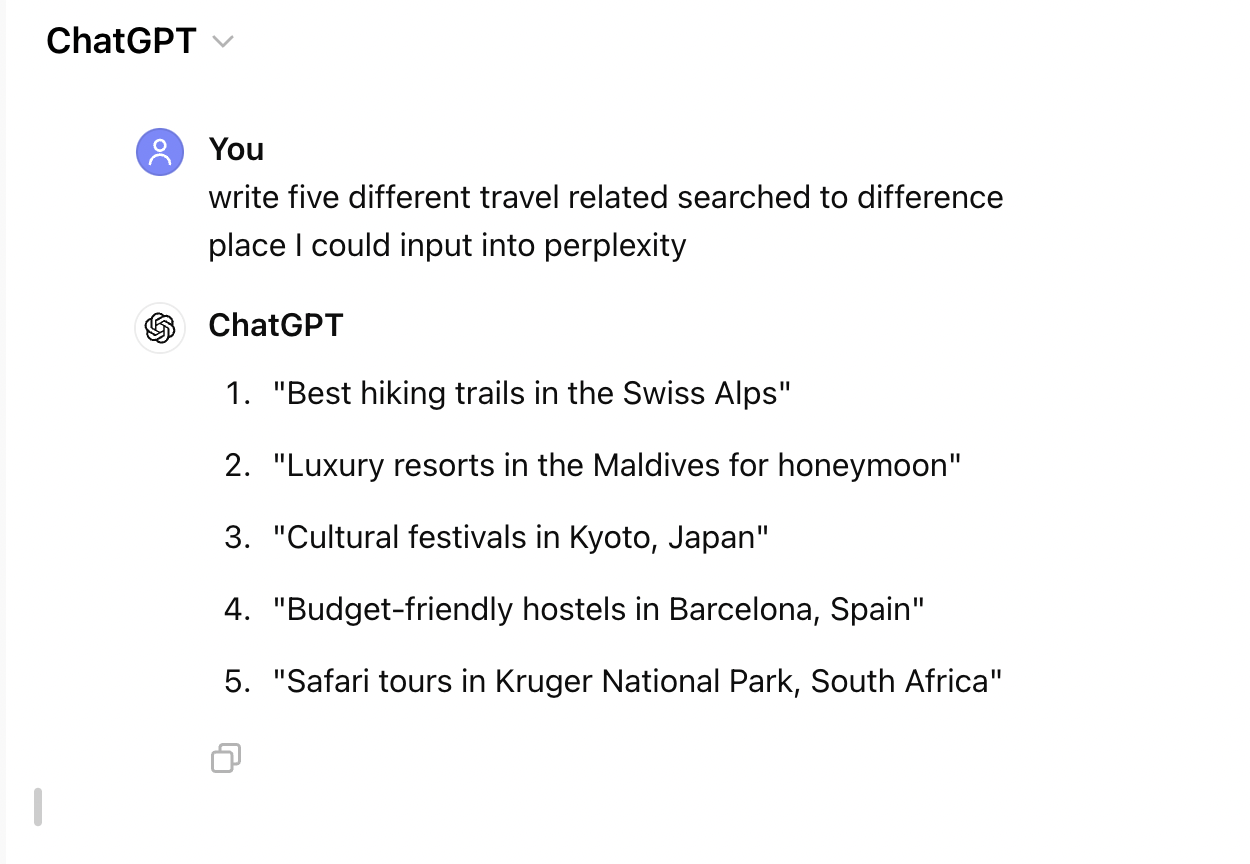
We asked ChatGPT to randomly generate five travel-related search prompts to input into Perplexity. In this section, Perplexity performs better than before with two searches related to hiking in the Alps and Safari tours in South Africa consistently citing the same selelct hiking and safari tour websites.
However, the results are still less than ideal, with two remaining searches surfacing AI-generated results in three or fewer calls to Perplexity.
AI and Tech Related Searches
Lastly, we asked ChatGPT to generate five AI-related search prompts to input into Perplexity providing prompts such as "Latest breakthroughs in natural language processing" and "Future prospects of autonomous vehicles"
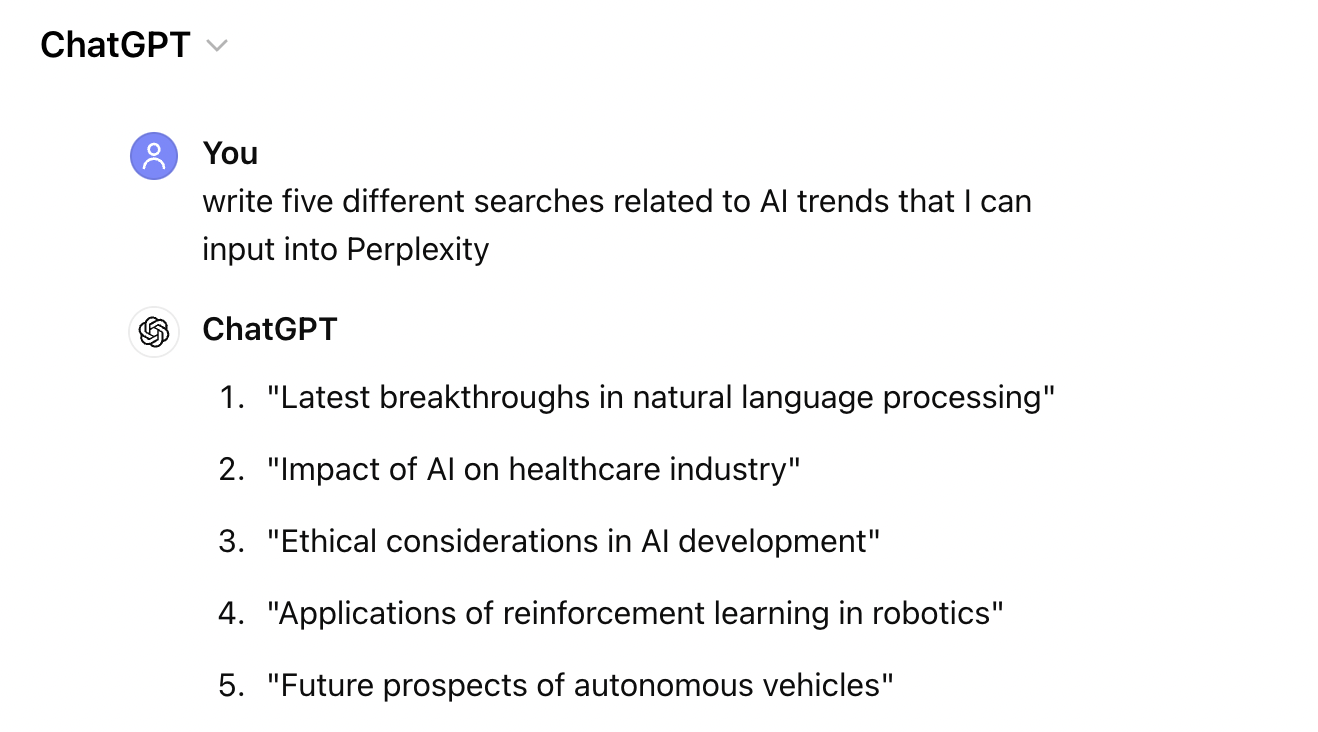
This final section had the most shocking results. Every single one of Perplexity's searches directly referenced a source that was AI-generated.
While this study reflects a shortcoming in Perplexity's ability to provide quality sources, it also reflects an internet that is increasingly polluted with AI content.