
Author
Alex Cui
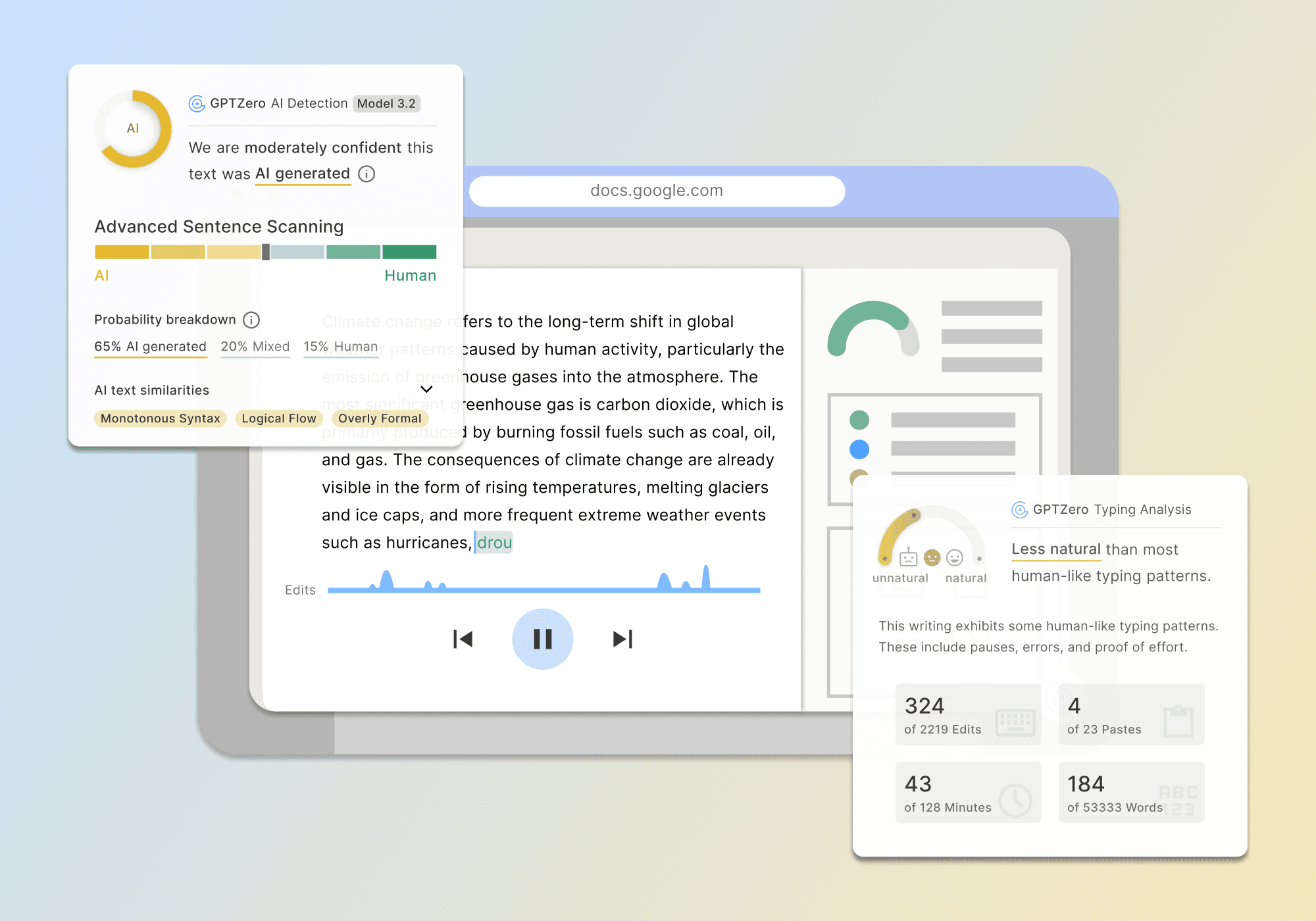
How to Understand Your AI Scan Results
You’ve scanned your first text using GPTZero’s AI detector. Here’s some quick background on how to evaluate the results.


Alex Cui, Adele Barlow
· 5 min read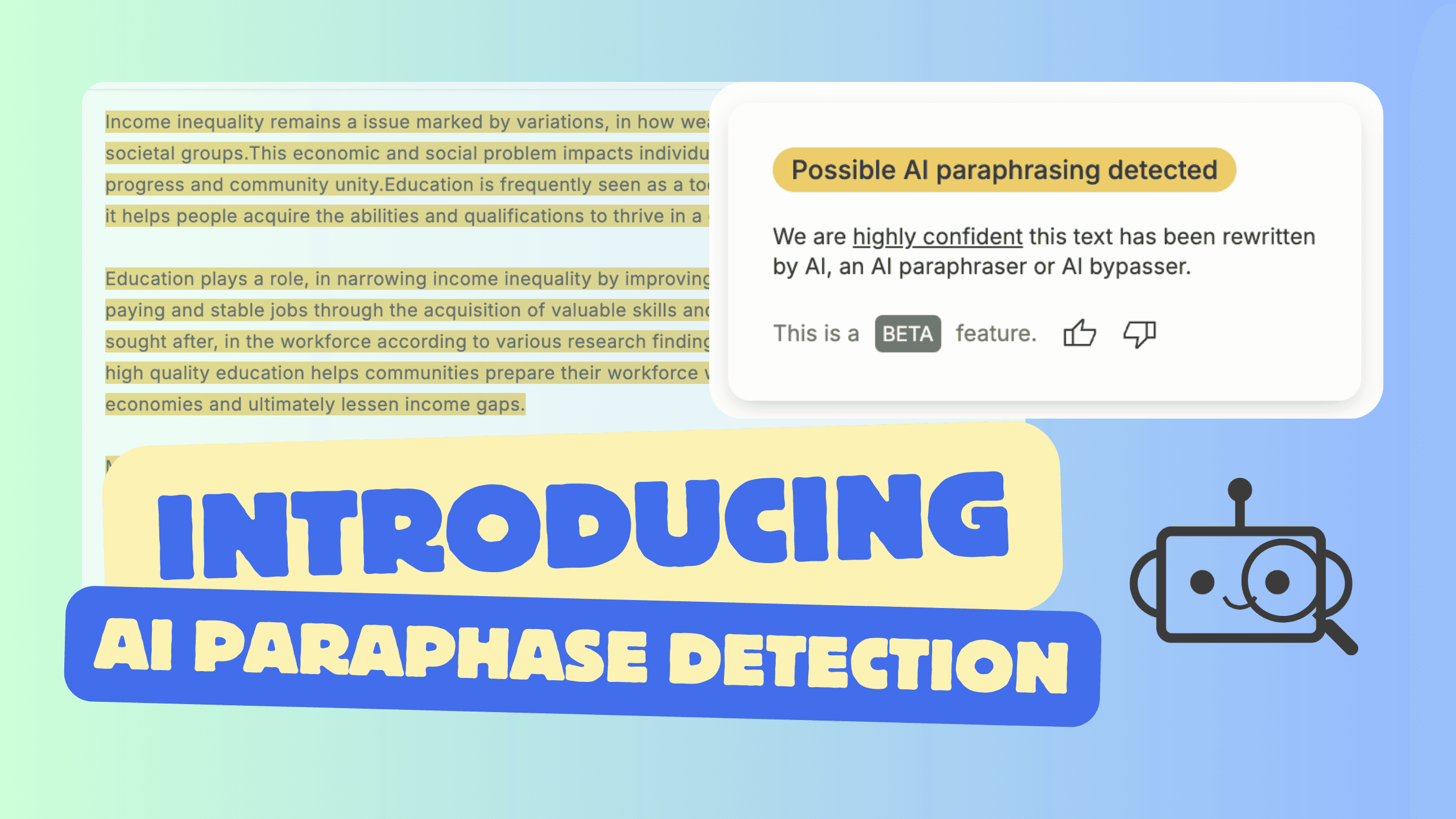
GPTZero Detects AI Paraphrasers
Learn more about GPTZero’s newest advancements in AI detection against AI bypassers, humanizers, and paraphrasers like Phrasly, Undetectable, and Quillbot


Edwin Thomas, Alex Adam, Alex Cui
· 4 min read
Google’s New AI Detection Watermarking – Will It Work?
GPTZero’s top AI detection team weighs in on Google’s SynthID watermarking announcement — what it is, what it's not, and its implications.

Edward Tian, Alex Cui, Alex Adam
· 2 min read
ESL Bias in AI Detection is an Outdated Narrative
Recently, we've seen the resurfacing of a previous narrative on (social) media that AI identification is biased against and failing ESL students. But this is an outmoded view from out-of-date research. In this article, we revisit the original study on ESL bias from Stanford University, and discuss the progress GPTZero has made in mitigating detection bias. Finally we replicate and re-run the original study with the same dataset and parameters outlined by Stanford researchers to demonstrate conc
Alex Adam, Alex Cui
· 4 min read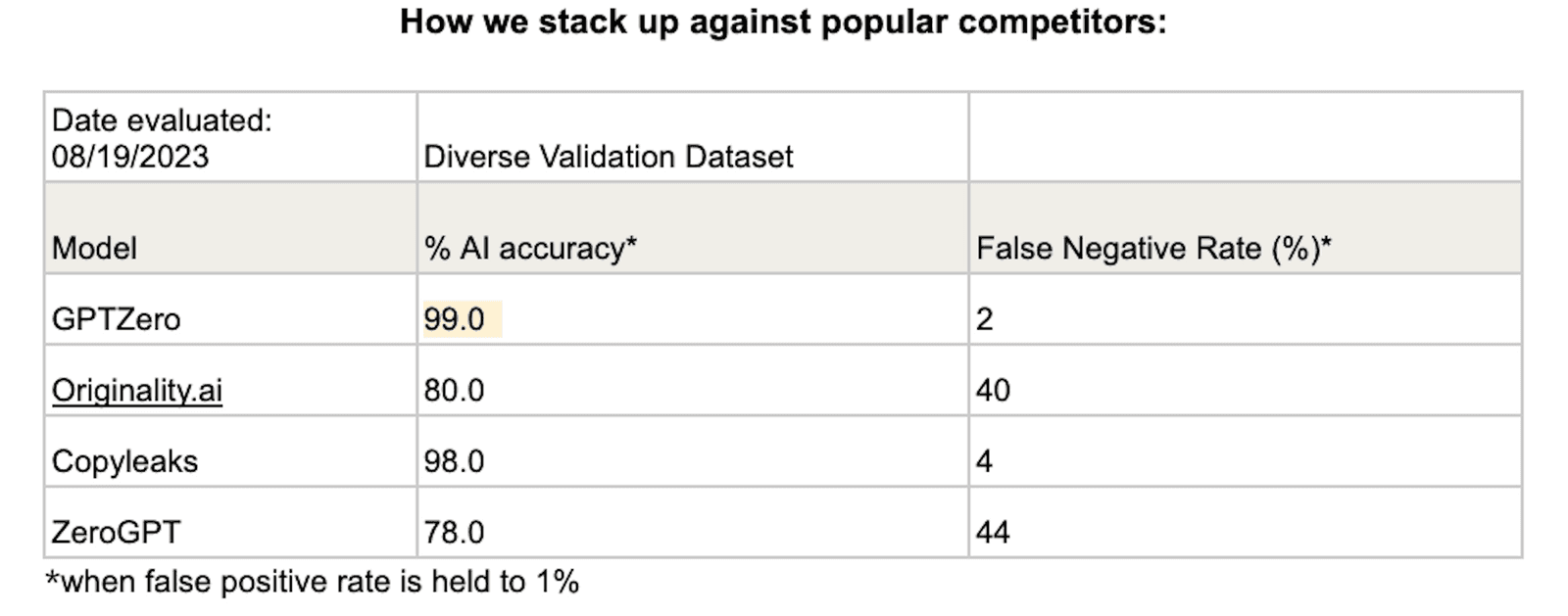
GPTZero Improves with Diverse Data, Surpasses Competitor AI Detectors
At GPTZero, our machine learning team has been working to improve our AI accuracy. We understand the importance of minimizing false positives in the classroom to make a comfortable learning environment for students. We have recently made a considerable leap in our progress. We’ve been able to decrease inaccuracies to provide the most seamless AI transparency between teachers and students. Our Improvements On August 22nd, we deployed a deep learning model resulting in improved benchmark result
Alex Cui
· 1 min read
Deep Learning Model Updates
ML Updates: In June, we developed a model that was spades better than any previously released models when evaluated on GPT4 and human data. The updated model combined our previous architecture and statistical discriminators approaches with a traditional deep learning approach that was critical in reducing false negatives for GPT4. After validating the performance of this model on challenging real-world examples, we deployed the model to production. The new model was evaluated both on general,
Alex Cui
· 2 min read