
How to Write a Strong Hypothesis
Learn how to write a strong hypothesis with six simple steps. Discover what makes a hypothesis testable, clear, and effective, plus examples, templates, a checklist, and FAQ.


“Why can’t anyone write a hypothesis?” wonders Kerry Evans, medical writer and editor. Even PhD students in medical science find it challenging to write hypotheses, so don’t be hard on yourself if you’re stuck on this step.
A hypothesis is a starting point. It’s really just an educated guess. A good hypothesis allows you to take the information you know and suggest a reasonable possible answer that you can test to see if it’s true. Students, researchers, and academic writers are trained to make these rational guesses and then test them through experiments, research, and analysis.
This guide will help you formulate a strong hypothesis statement by covering what a hypothesis is, outlining six simple steps to write a hypothesis, providing a checklist for traits of a strong hypothesis, and offering templates and examples.
What Is a Hypothesis?
The University of Melbourne defines a hypothesis as “a well-reasoned proposition in response to a research question that you will test to confirm or disprove in your research.” It’s an informed speculation that you’re going to test to see if it answers your research question.
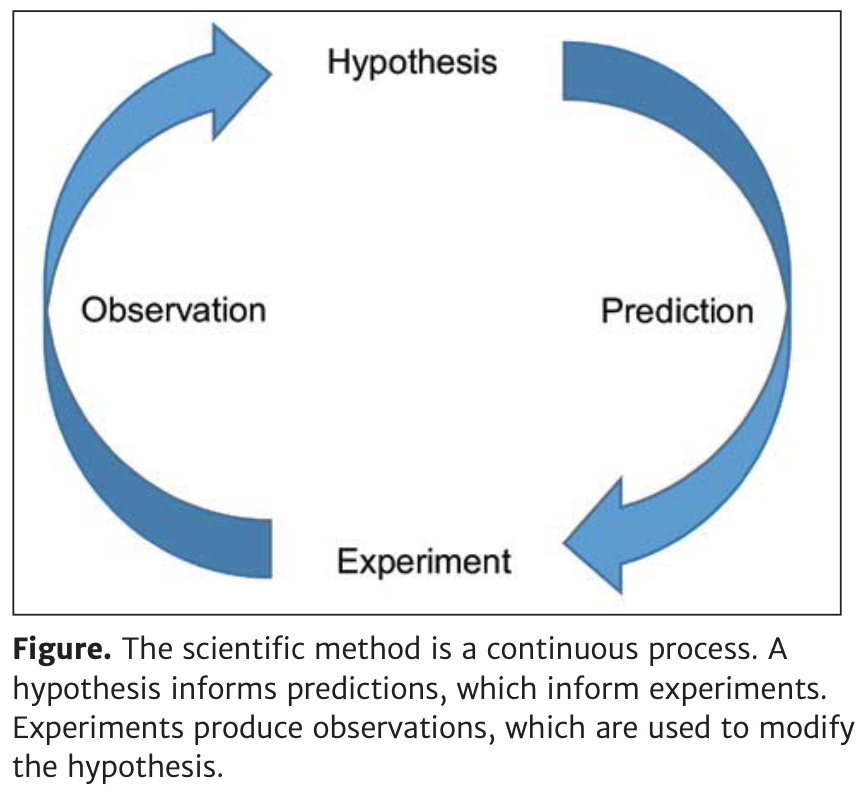
A hypothesis is used to “explain a phenomenon or predict a relationship.” It is a key part of the scientific method, which begins with observation that leads to a hypothesis, which yields a prediction that is tested through experiments and research, leading to either a conclusion or further observation and hypothesizing.
How to Write a Hypothesis in 6 Steps
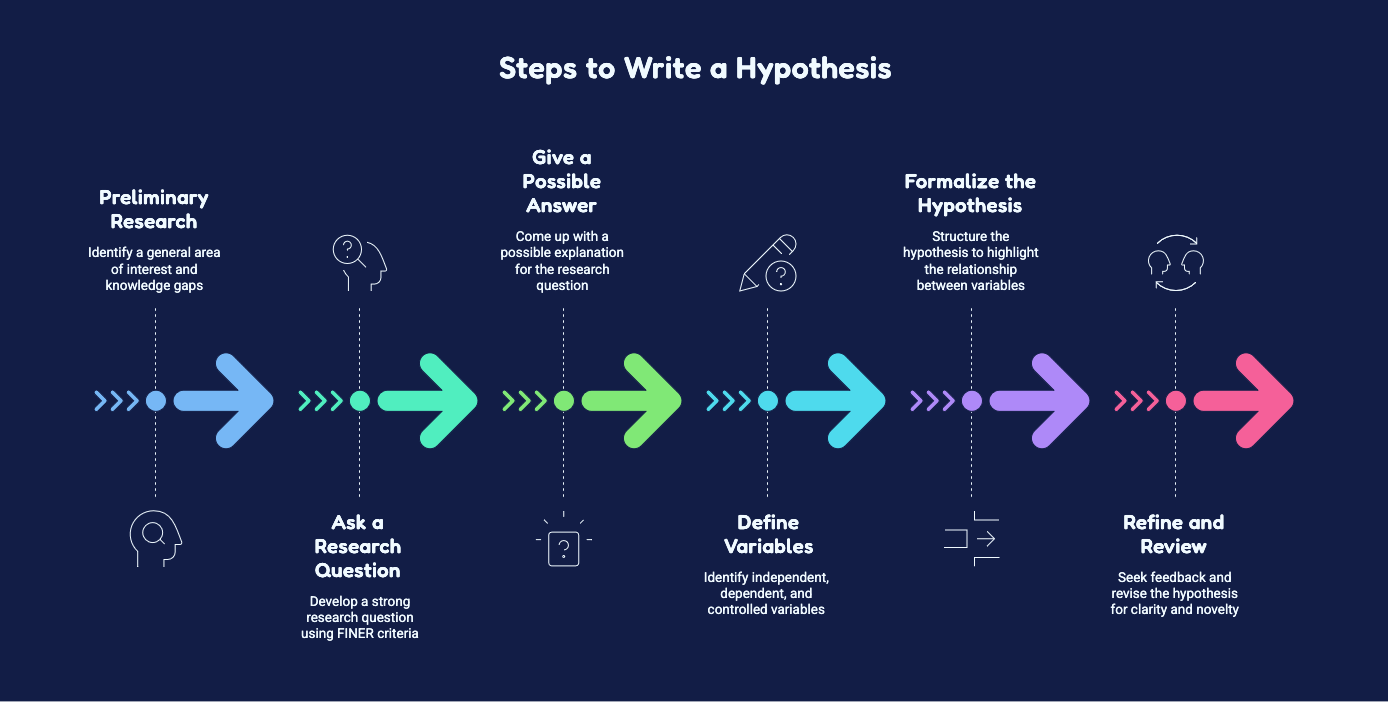
Preliminary research
First, you need to know something about the topic you want to formulate a hypothesis on. Identify a general area of interest and find out the knowledge gaps, emerging trends, and unresolved problems in that field. Understand enough to know what topics require further research.
Ask a research question
Hypotheses are always an answer to a research question. Developing a strong research question is crucial to establishing the purpose and components of a hypothesis. These questions tend to ask "what," "why," "how," or "in what way".
Apply the FINER criteria to test the strength of your research question:
- Feasible: Is the research possible given your time and resources?
- Interesting: Is the research compelling or intriguing?
- Novel: Is it original?
- Ethical: Are there possible negative impacts from the research?
- Relevant: Is the research meaningful to people in the field?
Give a possible answer
Come up with a possible answer or explanation for your research question. This will become your hypothesis. Remember that a hypothesis is a starting point for investigation; the goal is to propose an explanation that you can test.
Research question: Why do some plants grow larger than others of the same species?
Possible answer: Plants in the sun grow faster than plants in the shade.
Define variables
There are three variables to consider:
- Independent variables are manipulated in the study.
- Dependent variables respond to what happens to the independent variables.
- Controlled variables are intentionally held constant.
Example: If a plant is given more sunlight, it will grow faster.
Independent variable: amount of sunlight
Dependent variable: rate of growth
Controlled variables: species, water levels, soil composition, temperature, etc.
Hypotheses are typically looking to show a relationship between independent and dependent variables.
Formalize the hypothesis
To avoid accidentally formulating your hypothesis as a conclusion or a prediction, formalize your hypothesis to highlight its tentative relationship. This means both the independent and dependent variables should be present in the hypothesis.
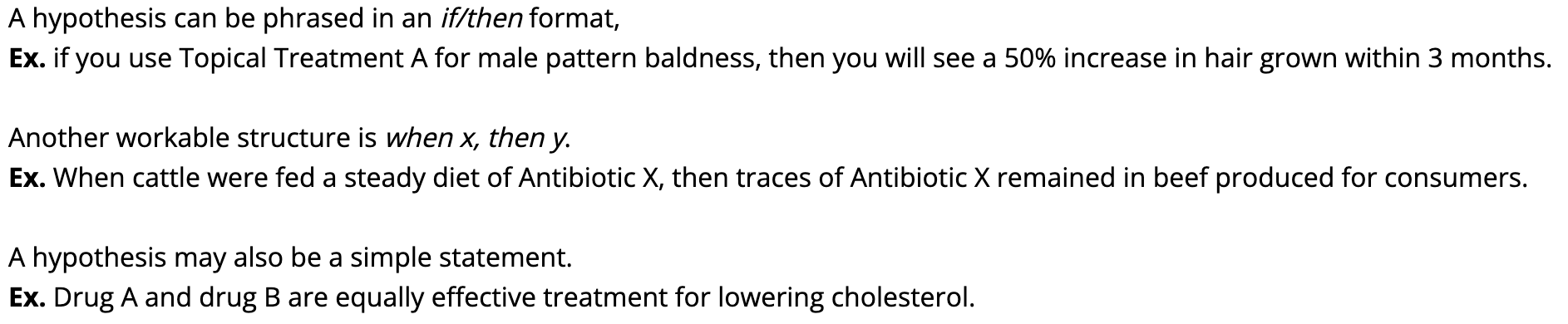
Some standard formats include “If/then,” “When/then”, and direct statements. Consider these examples from Texas A&M University:
Refine and review
Seek feedback on your hypothesis from mentors, colleagues, or experts in the field. As you dig into researching and experimenting to test your hypothesis, be prepared to revise and refine it so that it suits your emerging insights.
Edit for simplicity and clarity – this can be done efficiently with a grammar checker. Assess the novelty of your hypothesis with an online plagiarism detector.
What Makes a Strong Hypothesis?
The best hypotheses are written in a clear structure, contribute to existing research, and can be tested to see if they are supported by evidence or falsified by it. A strong hypothesis is:
- Testable because it allows you to work toward observable results.
- Falsifiable because it can be proven wrong through testing.
- Reflective of an expected relationship between independent and dependent variables.
- Simple and concise to avoid wordiness.
- Consistent with existing knowledge.
- Useful because the outcome gives valuable information.
Checklist for a strong hypothesis
- Useful
- Consistent
- Simple
- States a relationship
- Falsifiable
- Testable
Hypothesis Template and Examples
There is no single template for a hypothesis because they can take many different forms based on the relationship between the variables you’re observing. For two phenomena that are closely related in space and time, geophysicist Dr Kim Kastens offers these templates:
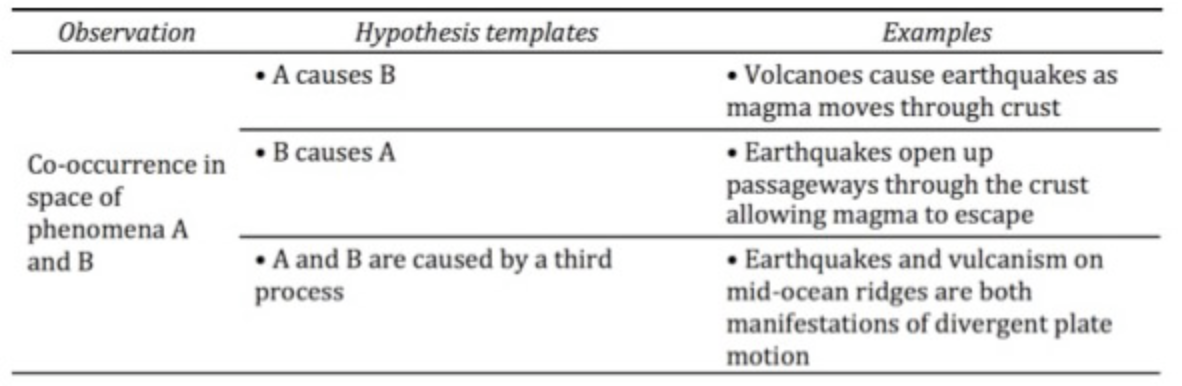
Get inspired by the work of others and see if these examples of valid hypotheses from the University of Toronto are useful in showing you a structure you can use.
Looking for more examples? Here are 50 hypotheses that have been grouped by discipline.
FAQ
What’s the difference between a hypothesis vs prediction?
A prediction can be part of a hypothesis, but is distinct. A prediction is “the outcome you would observe if your hypothesis were correct.” You can make a prediction without hypothesizing, eg “The Toronto Maple Leafs will win the Stanley Cup this year.” This is not a testable statement; it’s merely a guess about a future event.
What’s the difference between a hypothesis vs research question?
A hypothesis requires a research question, but a research question can be posed without offering a hypothesis. A research question is a central query that your research aims to answer, but it’s often open-ended, whereas a hypothesis must be a specific, testable statement about the relationship between two variables.
Are hypotheses only for scientific research?
Not at all! We formulate hypotheses and test them in our daily lives all the time. Imagine you come out to the kitchen to find a block of cheese missing from the counter. You may form this initial hypothesis: the cheese may have been put back in the fridge.
Under this hypothesis, you are predicting that the cheese will be in the fridge. You can then run a test to see if this prediction is accurate by opening the fridge door and looking. You may observe that there’s no cheese in the fridge, and you also happen to notice that your dog has her tail down and won’t meet your eyes.
Based on this new information, you will form a new hypothesis: if the dog ate the cheese, her breath will smell like cheddar. You can then run a new test to check for cheese breath and possibly reach a conclusion.