How to Write the Perfect Post-Interview Thank-You Email
A great interview is just the beginning. A well-crafted thank-you email can reinforce your first impression, highlight your qualifications, and keep you top of mind after an interview. Learn what to include, when to send it, and how to follow up by using practical templates and examples.


You’ve just walked out of a great interview. The interviewer seemed to like you, and you feel like you made a strong first impression. Now what?
One of the best ways to reinforce the positive outcomes of a good interview is by sending a follow-up email. A post-interview thank-you email helps recruiters remember you, and it’s a polite, professional expression of gratitude that potential employers notice and appreciate.
This article dives into what makes a great thank-you email after your interview. Learn what to write, when to send it, and why it’s an effective step in the job interview process. With helpful templates and examples, you’ll be able to craft and send a perfect post-interview thank-you email.
What is a Post-Interview Thank-You Email?
A thank-you email following an interview is one of several components of an interview process and should not be overlooked. It’s a common courtesy to send your interviewer a prompt and polite expression of gratitude for taking the time to talk to you. It’s also a well-established way to solidify the rapport you established in the interview, signal your interest in the position, and demonstrate your professionalism.
The thank-you letter should follow the conventions of writing a professional email and use formal language. It’s a chance to show that you’re aware of and able to perform conventions that are expected in professional communications.
Why and When Should You Send a Thank-You Email After an Interview?
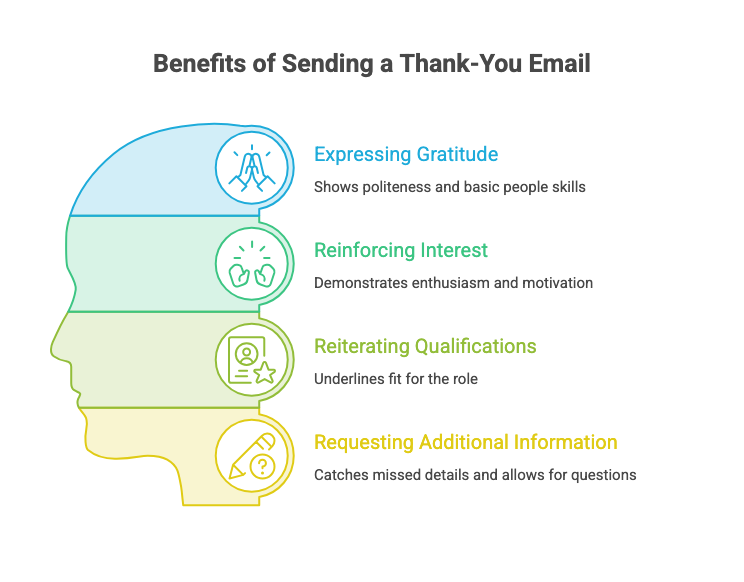
The main reasons to send an email after an interview thanking your interviewer include:
- Expressing gratitude – this is not only polite and professional, it shows that you have some basic people skills.
- Reinforcing your interest – demonstrate that you’re enthusiastic and motivated to join the company.
- Reiterating qualifications – take this final chance to underline your fit for the role.
- Requesting additional information – it’s a good idea to catch any details you might have missed in the interview and to offer the interviewer a chance to ask you any outstanding questions as well.
When to send a thank-you email after an interview
Timing your email just right can be a little bit tricky. Most career and job-seeking sites advise that within 24–48 hours is the generally accepted time limit for a follow-up after an interview. There is some leniency around a weekend; if your interview was on a Friday, sending the email on Monday is perfectly acceptable.
But how soon is too soon? Sending your post-interview email the second you leave the interview room can appear insincere if the timing suggests that the email was pre-written rather than a genuine expression of gratitude based on your reflections and feelings about the interview. Take time to tailor your email to reflect the interview you just had before hitting ‘send’.
What to do if you’ve left it a little late
If you’ve missed the ideal 24- to 48-hour window, don’t panic or give up on sending the email. “Late beats never.” Even if it’s been a few days, send the email. Don’t apologize, just give a confident expression of gratitude and add details or questions that add value to the email, signal your interest and compatibility, and keep the conversation going.
What Should You Include in a Post-Interview Thank-You Email?
“The key distinction between effective follow-ups and annoying ones comes down to value. Every follow-up should offer something new, whether that's fresh information, a different angle on your original message, or simply a more convenient way for the recipient to respond.”
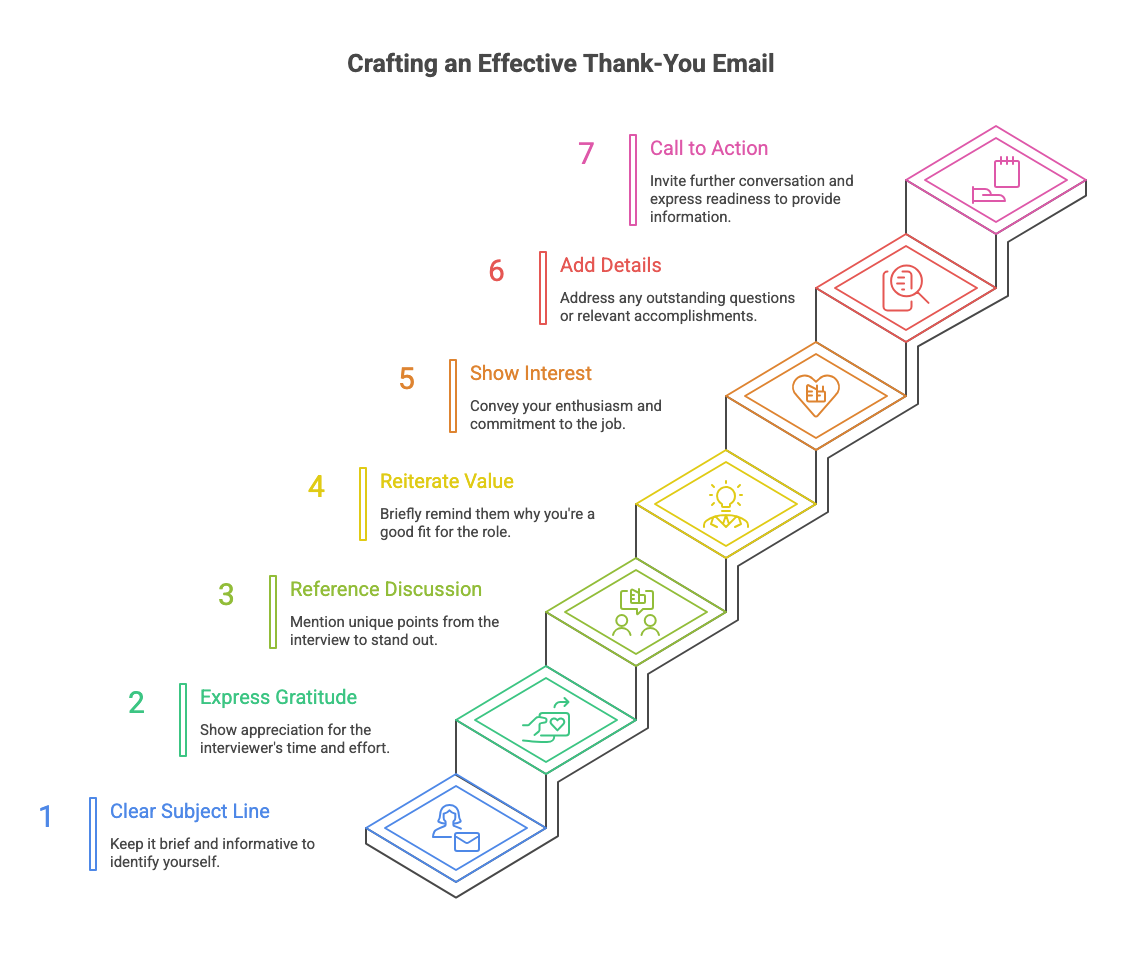
Add value to your communications by including the following elements in your email:
Clear subject line
Keep it brief, but give slightly more detail than a generic “Thank You” as the subject line. Include your name, the job title you interviewed for, or the date of the interview – some detail that helps identify who you are and why you’re thanking them. Eg. “Thank you – [Your Name]”
Gratitude
Be explicit about expressing gratitude, and attach it to concrete details you're thankful for. Recognize the time and effort the interviewer has invested in meeting with you. Indicate your awareness that they prioritized speaking with you over many other tasks they likely have waiting, and be appreciative of the preparatory work they conducted that made it possible for you to have the interview you just had.
What you discussed
Try to reference specific details from your conversation. Your interviewer may have seen several other individuals recently applying to the same job, so mention unique points from the interview to help them remember you specifically. The details you bring up may be work-centric, or they may touch upon topics that were brought up in small talk and which help personalize you to the interviewer.
Why they should hire you
A thank-you email after an interview should be short, so don’t treat this as a moment to fully pitch yourself to the company. That’s what the interview was for. Including one or two phrases that reiterate why the company should hire you, however, is a helpful reminder. Mention the skilled tasks you look forward to performing or the company goals you’re excited to work towards.
Your interest in the role
Again, keep this point brief, but take the chance to remind the interviewer of the energy and focus you could bring to the job. Eliminate any question of “Do they really want this job?” by straightforwardly and earnestly conveying your enthusiasm for the role. Don’t underestimate the importance of pitching yourself as a team player with a positive attitude.
Additional or clarifying details
The follow-up email is the perfect opportunity to address any outstanding questions or concerns that may have been left out of the interview. It’s also a chance to include details about yourself that you didn’t have a chance to raise in the interview, such as a previous work accomplishment that is highly relevant to the position you’re seeking.
Call to action
End with a call to action. No, not by calling on them to hire you, but by inviting them to continue the conversation. Let the interviewer know that if they need anything from you, you’re more than happy to provide it. Signal that you’re awaiting their direction for next steps and will be responsive if they reach out.
Post-Interview Thank-You Email Example & Template
A general follow-up
Vassar College offers this fairly generic thank-you letter as a basic template for your post-interview correspondence:
Dear Ms. Sullivan:
Thank you for an interesting and informative interview. Your information provided me with a solid foundation and an idea of where my qualifications would fit for the Legal Assistant position at XYZ Law Firm.
My combination of academic achievement and international law experience will be exceptionally suitable to XYZ’s dynamic plans for the future. Client contact and the ability to analyze are quintessential for this job and this industry, and my summer internships at the ABC City law office and PQR County family court have prepared me for this opportunity.
Again, thank you for interviewing me and giving me the chance to learn more about the work of XYZ Law Firm. If I can provide you with any additional information, please do not hesitate to respond to this email or call me at xxx-xxx-xxxx. I look forward to hearing from you.
Sincerely,
Your Name
After a group interview
Harvard University provides a template for a thank-you email following an interview in which you were interviewed by a panel of interviewers. You may choose to send each interviewer an individual thank-you, but you can also select this template for a single email to all interviewers. Remember to include all the names of your interviewers.
Dear Mr. Jones,
Thank you for taking the time to interview me yesterday. I enjoyed learning about the internship at the Housing Rights Center and appreciated the opportunity to meet with you and other members of the staff. Please thank Mr. Johnson, Ms. Jones, and Mr. Williams for speaking with me about their efforts to address predatory lending practices.
My experience working with recent immigrants at the Harvard Legal Aid Bureau has affirmed my commitment to working with those who encounter socioeconomic and linguistic barriers. I am very excited about the possibility of joining HRC next fall.
Please let me know if I can provide you with additional information. I look forward to hearing from you.
Sincerely,
Jessica Adams
Further examples and templates
This page by Medium not only provides useful templates to follow, it also shows and dissects the problems with weak examples of thank-you emails.
Indeed.com provides helpful email templates for scenarios in-person and not in-person, like phone interviews.
Check out Superhuman’s 15+ templates for follow-up emails, including a useful formula for following up if you’ve received no response from your first follow-up email.