Teaching With AI Around the World: A Q&A with Gavin Doyle in Ireland
From Dublin, Gavin Doyle shares how AI has the potential to give more students access to support they might not otherwise receive.


Title: Former Secondary School Maths and PE Teacher; Founder of Examinaite
School: Beneavin De La Salle College, Ireland
Subjects Taught: Maths and PE
Stance on AI: Optimistic, with concerns about over-reliance
At GPTZero, we are committed to helping educators foster originality, encourage critical thinking and prepare students for a future with AI. In our Teaching With AI Around the World series, we look at how different educators around the world are actually navigating AI in the classroom.
We spoke to Gavin Doyle, a former secondary school teacher in Ireland who has been in the classroom for nearly a decade, and is now the founder of Examinaite, an AI-powered exam preparation platform. Having taught in a broad range of schools, he sees AI’s potential to give more students access to support they might not otherwise receive.

As Ireland moves towards more continuous assessment, he is also thinking about what AI means for academic integrity and the future of assessment. He runs AI CPD sessions for Irish secondary schools on how teachers can use AI responsibly, and what it means for student work, assessment, and the Department's Digital Strategy for Schools to 2027.
This interview has been lightly edited for length and clarity.
How are you thinking about AI and education?
I am an AI optimist – in fact, I’m an optimist in every facet of life. So I see the potential of AI to be used for real and true good. I have a really varied teaching experience. I’ve taught in some extremely affluent schools and then I’ve taught in some really disadvantaged schools, and I’ve seen the range of students out there and the support that they need.
When I first started experimenting with AI back in 2023, my initial reaction was like, “Wow, this could be incredible for education.” It could be amazing to offer students support that a teacher just isn’t able to do in a classroom of 30 students with 30 different needs and abilities. It’s just an extra layer of support that we can offer students.
My goal is to use it to end, or close, the education inequality gap. Giving students who can’t, let’s say, afford extra support or extra tuition gives them an equal chance with the same quality.
My worry is mental offload and just handing everything over to AI. I use it every day in my everyday life, whether it’s in work or whether it’s in my personal life, and sometimes I can just feel my brain isn’t working because I’ve just handed so much over to AI. I’m not quite sure what that’s going to do to individuals or society.
But as I always say, I think learning’s very important. I think learning is a hard thing to do. Learning should feel tough.
I’m a PE teacher by trade and I played semi-pro basketball for a number of years, plus I did a master’s in strength and conditioning. The way I see it is, your brain’s like a muscle. After a good workout, your muscles should be sore and tired. After a good session of learning or a good class, your brain should be sore and it should be tired. So I think it’s really important that students hold onto that and get comfortable being uncomfortable.
How could AI help close that education inequality gap?
The platform that I’m building out, Examinaite, has a goal to offer personalised education to all students preparing for exams. We have partnered with a university and their access programme. One of the universities here in Dublin has an access programme where they partner with 25 local disadvantaged schools. They bring the students in, they give them extra support, extra tutoring, to give them an equal chance of getting to college.
When I was looking through the data, I saw that one of our top users is from one of the bottom three-performing schools in the country in terms of progressing students onto third-level education. I’ve met the student and I’ve had correspondence with him, but where he’s from and from his background, he would have never been able to access the support that someone from a more affluent area would have. We are offering that support and we’re there for him 24/7, able to answer his questions and help him with his studies.
How has AI changed the way you think about assessment and academic integrity?
It’s a funny one. In Ireland, the Leaving Certificate is the end-of-school exams that students get graded on, and then those grades get converted to points. Those points are used as a metric to see whether or not a student gets into college, or gets into a specific college course.
For the longest time, the majority of those subjects that students sit at Leaving Cert level were 100% exam, and that isn’t necessarily right. Not everyone can perform under exams. It then becomes a task or an exercise of who can rote learn the most.
The Department of Education here has pivoted towards including continuous assessment now. Unfortunately, they probably did it at the worst time, now that AI has become so widespread. Students aren’t supposed to use AI, or they’re supposed to use AI to a limiting degree. And if they do use it, they’re supposed to cite it in their work, where it was used. Thanks to GPTZero, there is a way to make sure that it’s being done fairly and ethically.
But then again, it’s like, who has more access to more resources? I’m kind of leaning towards going back to the 100% closed-book exam, whether that’s a Leaving Cert where it’s a 100% exam at the end of term, or maybe multiple exams broken up throughout the year. You do two exams a year, and each exam over two years is worth 25% of your grade or something like that. But it’s done in a supervised, closed-book setting. I think if you leave it open book, you’re kind of opening up a can of worms there.
Do teachers have enough guidance on how to handle AI in the classroom?
No, definitely not. I know here in Ireland there was a survey done, and 85% of teachers said that they would welcome formal guidance and training, as I know most of them feel they didn’t have enough training or guidance in how to use artificial intelligence ethically or responsibly in the classroom.
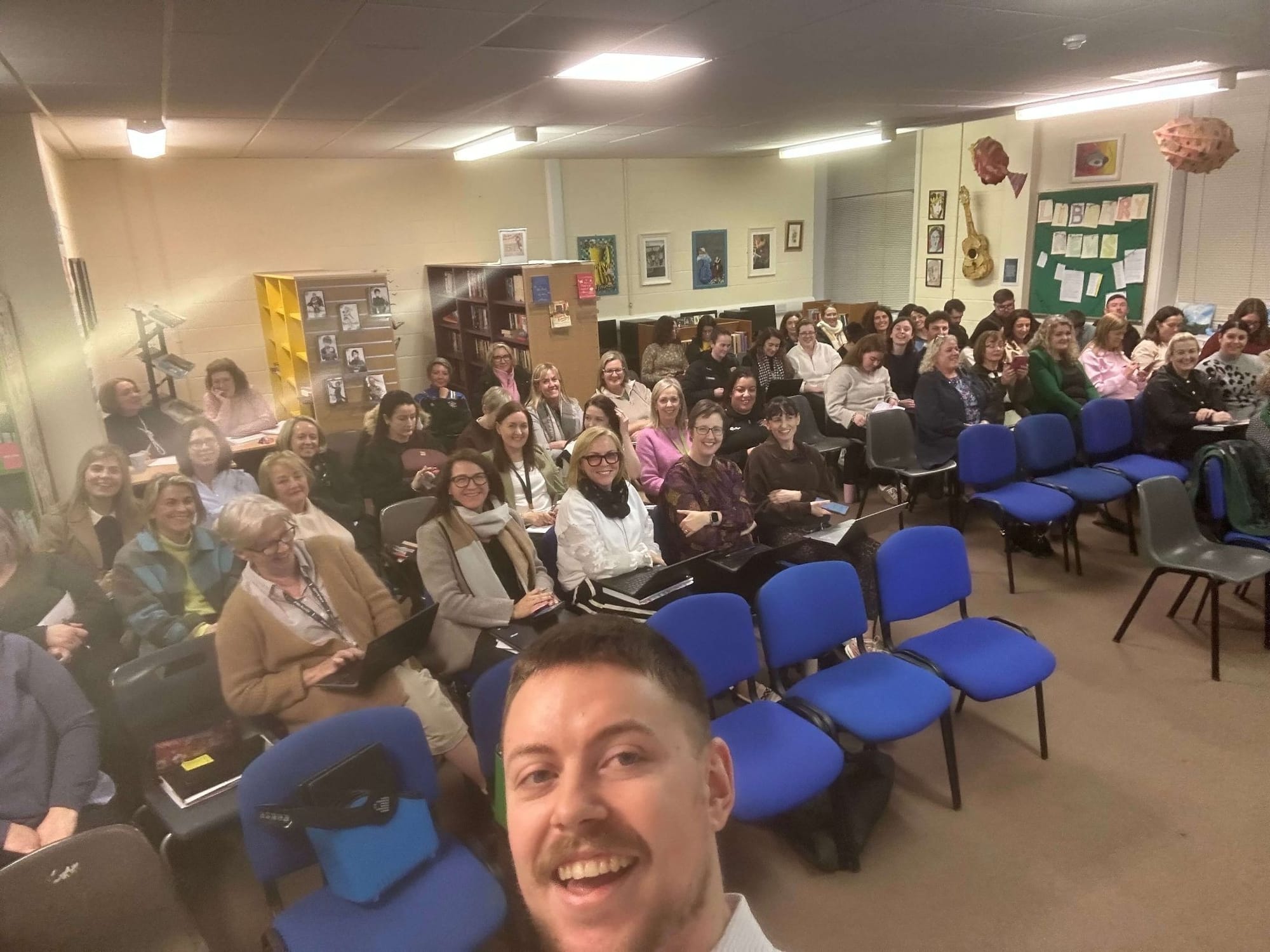
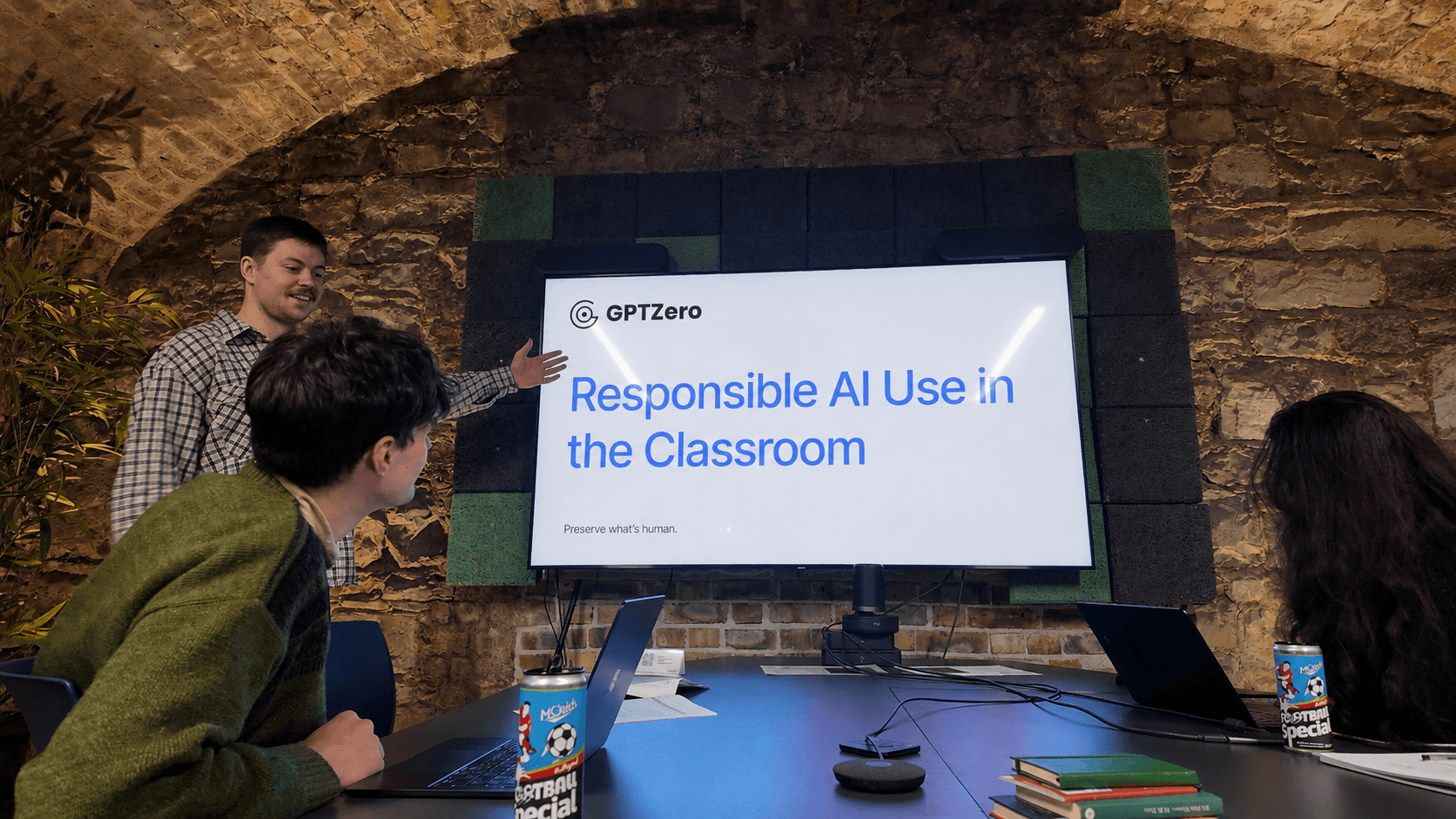
Thankfully, through myself and through the GPTZero Teacher Ambassador Program, I’ve been able to deliver workshops to secondary school teachers and to staff to give them guidance and a bit of clarity. We expose them to the tools out there, like GPTZero, where they can flag or just make sure that the schoolwork is being done fairly, correctly and ethically.
What made you start using GPTZero?
When I went back to teaching, it was incredible for when students were submitting classwork. I could check: did they do it, or did AI help them a lot in this assessment?
I’ve used GPTZero so much that I can almost eyeball myself when something is written by AI or not at this stage.
I love the Chrome extension for GPTZero, it makes GPTZero so seamless and easy to use. To be honest, I didn't even know there were other AI detectors other than GPTZero - for myself and everyone I know it's the go-to household name for AI detection!
What would make the transition easier for teachers and students?
I think it’s a combination of policy and AI literacy. I think training and hands-on experience is the best approach. That’s what I’ve been doing with my workshops: making them extremely hands-on, where every teacher has a laptop in front of them.
They’re using the tools that we’re exposing them to, whether it’s how to use Gemini correctly to build resources, how to use GPTZero to check assessments, or how to use Examinate to help take off the workload for teachers. I think it’s really important that both the staff and the students just get their hands dirty and get using it and learn by doing.
How would you describe your teaching background?
I’ve been in the classroom as a teacher for nearly a decade now and I’ve taught in a wide variety of schools: very affluent schools, very high-achieving academically, and then very disadvantaged schools where the kids were crazy but so much fun. I’m very, very blessed to have such a wide variety of teaching experience.
And I love it. I really do love teaching. I love the community that a school has. I love other teachers, they’re always great people. I love the students. The word that we use in Ireland is “the craic”, which means fun. So, I love the fun, I love the buzz, and I love helping students reach their full potential. I love when a student’s struggling with something, I’m able to help them, and then that leads to their success in whatever way that they define success for them.