
How to Write an Apology Letter That Actually Sounds Sincere
A sincere apology means taking responsibility, acknowledging the harm you caused, and expressing genuine remorse. Learn the essential elements of an effective apology letter - and what to avoid.



We all screw up sometimes. To err is human, after all. But how do we address those mistakes afterwards? Usually, the best response to a blunder is to own up and apologize.
“Apologies are an expression of remorse and the willingness to take responsibility for your actions.” An apology letter is a deliberate and sincere way to say you’re sorry. If you’ve seriously hurt or negatively affected someone, consider sending one. They can help rebuild trust, show that you want to work together moving forward, and prove that you are willing to reflect on your actions and conduct yourself responsibly.
There are a range of situations that may call for an apology letter, but common ones include: needing to apologize to a superior at work; being involved in a misconduct process; apologizing on behalf of someone else; or wanting to mend a relationship with a person or group.
This guide will walk you through the features and format of an apology letter, flag common errors and slip-ups to avoid, and highlight the qualities of an apology that make it meaningful and sincere.
What Makes an Apology Letter Work
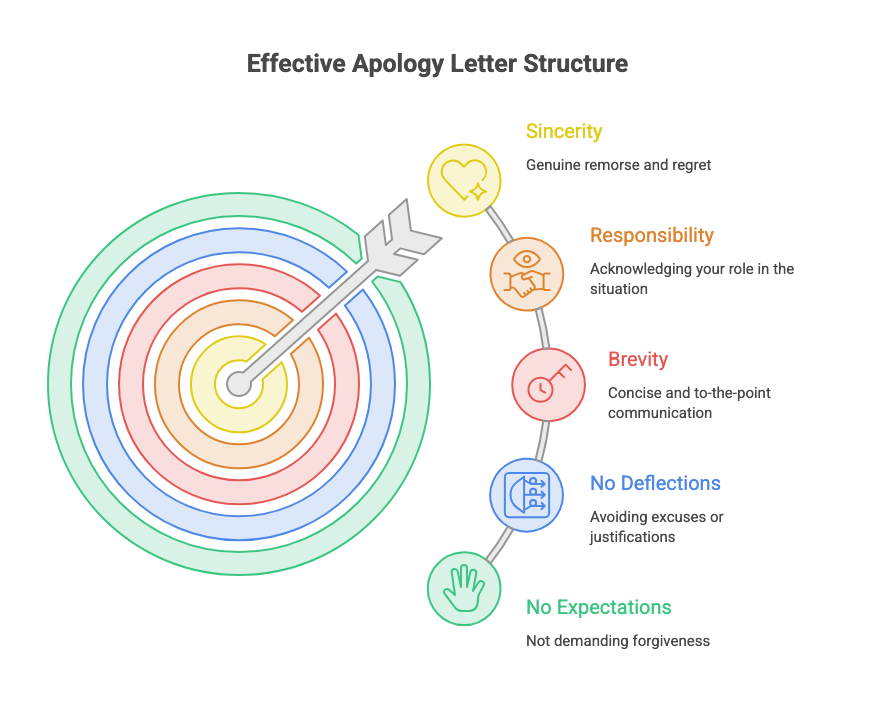
To write an effective apology letter, the University of Alberta recommends “be sincere, admit responsibility where applicable, avoid deflections or excuses, be brief, and to not expect acceptance or forgiveness from the other party in return.” Apologies are not bargaining chips for forgiveness, and they’re not an opportunity to justify or deny your actions. Keep only one goal in mind: saying you’re sorry.
Sincerity
Express regret and apologize earnestly for your part in the problem. Do not be shallow or careless with your apology, and do not go overboard with frantic or dramatic statements. Write from a genuine place of remorse and show that you understand your part in the problem.
Simplicity
Keep it plain and to the point. Be brief and only address the particular situation or problem. There may be a lot you want to say or explain, but consider putting that into a journal and processing it on your own instead of overloading your apology letter with unnecessary details. Remember that an apology letter is not for you; it’s for the recipient.
Timing
“Write as soon as possible after the incident.” Take time to reflect on what happened and how best to apologize for it, but do not wait for too long. Lateness can diminish an apology’s sincerity and relevance. Send your apology soon after the incident so that the person you’re apologizing to doesn’t receive the mistaken impression that you’ve forgotten or don’t care.
Proofreading
You don’t want your apology to appear hasty or insincere because of poor grammar or word choice. Take the time to refine the final version of your letter. Try using a free grammar checker to catch mistakes you missed. Consider using formal language to sound more serious and solemn.
6 Essential Elements and Letter Format for an Apology Letter
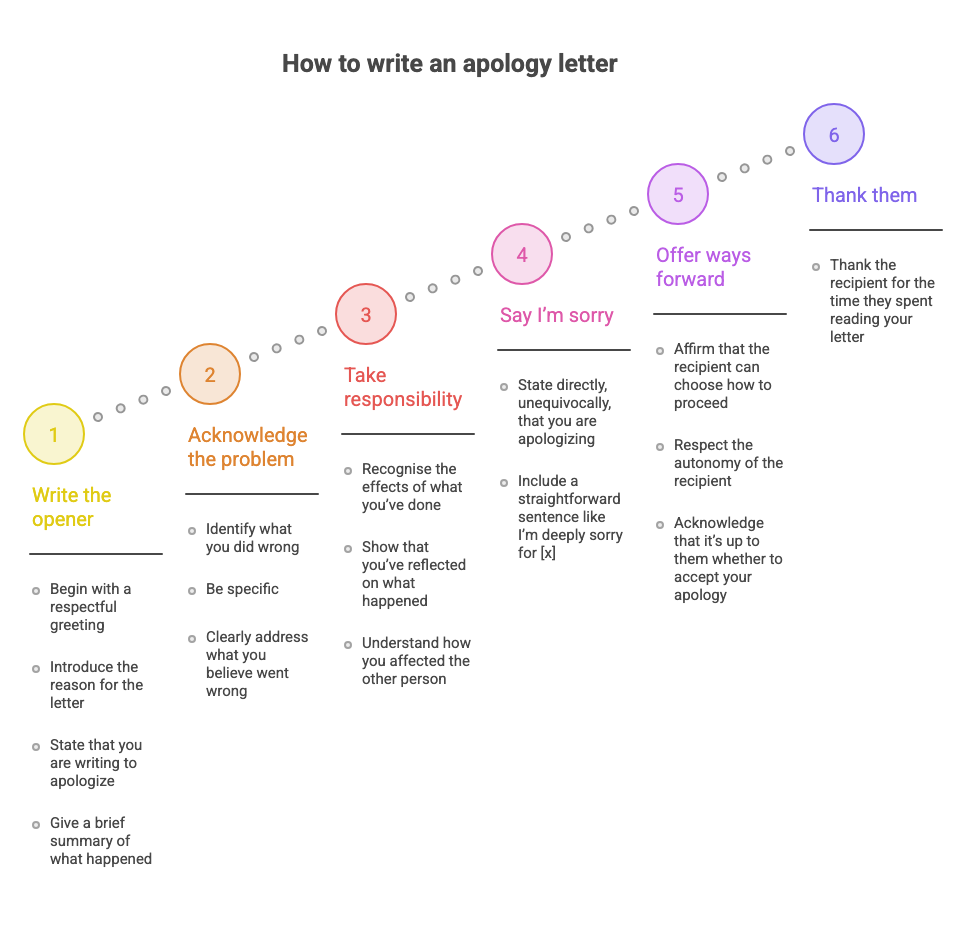
As author and editor Dr. Hanne Boyd explains, “A well-written apology letter has six elements that should come in this order: introduction, identification of wrongdoing, recognition of effects, the apology itself, affirming the recipient’s autonomy, and thanks.” An apology letter must acknowledge and accept the problem, apologize for it, and respectfully suggest ways of solving the problem or moving forward together.
The opener
Begin with a respectful greeting and introduce the reason for the letter. State that you are writing to apologize and indicate what you are apologizing for.
Acknowledge the problem
Identify what you did wrong. Be specific. You don’t need to summarize everything that happened (or didn’t happen), but you do need to clearly address what you believe you did wrong and why you’re apologizing.
Take responsibility
Recognise the effects of what you’ve done. Although the situation may have been complex, this is not the place to try to justify your actions or get self-defensive. Show that you’ve reflected on what happened and that you’re able to understand how you affected the other person. You don’t need to be effusive in expressing remorse, but empathy is key to bolstering the sincerity of your apology.
Say “I’m sorry”
Don’t forget to actually state directly, unequivocally, that you are apologizing. Include a straightforward sentence that uses words like, “I’m deeply sorry for [x]” or “I apologize for [x].” Don’t leave the recipient wondering if you’ve actually apologized or not.
Offer ways forward
Affirm that the recipient can choose how to proceed. They may choose to forgive you or they may not. They may be receptive to solutions you propose, or they may reject them. You must respect the autonomy of the recipient and acknowledge that it’s up to them how to receive your apology.
Thank them
Thank the recipient for the time they spent reading your letter. Sign off with a brief, respectful ending.
Basic Format
- Respectful greeting
- Acknowledgement of the mistake/problem
- Acceptance of responsibility for the mistake/problem
- A clear apology
- Proposal of a way forward
- Closing gratitude and sign-off
What to Avoid (and What to Say Instead)
Conditional apologies
It’s unwise to include the words “if” or “but” in your apology because they indicate that the apology is conditional, and these words are readily perceived as red flags of an insincere apology.
If you phrase your apology like this: “I’m sorry if I hurt you”, then it’s a conditional apology. It suggests that maybe you weren’t hurt (but the fact that you’re writing an apology letter indicates you know you’ve negatively affected the recipient), and it therefore also indicates that maybe I’m not sorry.
Blaming others
Never try to shift the blame. An apology letter is sincere because it owns up to what’s happened. This is especially important in formal misconduct proceedings because attempting to blame others can be perceived as an attempt to “deny or minimize your responsibility for the harm caused.” Focus on your own actions, your own remorse, and your own steps to do better in the future.
Focusing on your own feelings
It’s important to convey remorse and regret for negatively affecting someone else; however, your emotions are not the central focus of an apology. Do not make the recipient read on and on about your emotional state, and certainly do not make the recipient feel like they have to comfort you for hurting them. Be emotionally sincere, but be brief.
Apology Letter Examples for Every Situation
Template.net’s collection of apology letter templates has 29+ situations ranging from apologizing for missing an interview to apologizing to a teacher for cheating.
SampleTemplates.com has over a dozen apology letter templates for business-related communications that can help you apologize for a delayed order or a defective product.
If you’re still looking for the perfect template, apologyletters.net has 500+ examples for you to draw on whether you’re apologizing for overbooking your hotel or for throwing a noisy party.
Find a template that matches your circumstances, and be sure to tailor it to exactly your situation. Be specific about the event you are apologizing for and take responsibility for your actions with respect and sincerity.