How to Deal With Academic Pressure: Practical Strategies for Students
If you’ve been struggling with academic pressure, you’re not alone. Here are some things that can help.


Nearly one in three college students reported moderate to severe anxiety in the 2024-25 Healthy Minds Study. If you are trying to understand how to deal with academic pressure, this guide offers practical ways to manage deadlines, study more effectively, and protect your wellbeing.
What we see at GPTZero is that many of the students using the tool are under serious academic pressure, and are often anxious, panicked about deadlines, and stressed about whether or not their writing is going to get flagged, with a major pain point being around false-positive fear ("I wrote this myself, so why does it say AI did?”).
You might be holding everything together on the surface but feel like you’re crumbling underneath, and this doesn’t mean you’re lazy or “bad” at school. By the end of this guide, you’ll know how to deal with academic pressure, build a realistic study plan, reduce last-minute stress, and recognize when you may need additional support.
Key Takeaways
Academic pressure can come from an overwhelming flurry of deadlines, competition, family expectations, and anxiety about the future. The signs of an unhealthy level of stress can include poor sleep, exhaustion, and finding it hard to concentrate. A number of study techniques can make the workload feel more manageable, as well as AI tools that can support planning and feedback (not do the work for you).
What Is Academic Pressure?
Academic pressure has become a recognized global mental health crisis, with one report by WHO/Europe outlining worrying trends in adolescent well-being across 44 countries. Essentially, academic pressure is the stress that students experience when they believe they have to meet increasingly demanding expectations. As one student in the GPTZero community revealed of the daily struggle managing different priorities inside tight time constraints:
“The most difficult part of being a student is managing a lot of different classes and work life and at the same time... it's just time, like not having enough time sometimes."
Academic pressure can look different for each person: for some, it can be a panic attack around examination season, for others, it can be getting too little sleep as they stay up too late every night to finish schoolwork. While this pressure can affect students at any level, it typically peaks around exam season and application deadlines.
What Are the Signs of Academic Pressure?
There are various ways to tell if the pressure is becoming too much, and you might experience one of the following, or several all at once. Each sign is worth taking seriously, as emotional health challenges, according to the JED foundation, can be “the biggest stumbling blocks to academic success”.
Academic pressure can make you feel like you’re on edge, or perpetually worried about your results or deadlines. You might feel guilty if you take time off from studying, or are simply unable to take pleasure in activities that used to bring you joy. You might also find yourself caught in a comparison trap with your peers or people online, and feel constantly behind.
Stress can affect your body too, and often looks like sleep troubles, feeling tired even after you’ve taken a rest, or headaches and stomachaches. You might also notice a shift in your appetite, or generally feeling more tense, or getting sick much more frequently than you usually do.
The pressure can also change the way you work, causing you to procrastinate more, even with tasks you care about, or forget assignments entirely. You might spend hours and hours reading notes without actually keeping much of the information in, and find it hard to get going on your work, or freeze with indecision around which work to start with first.
What Causes Academic Pressure?
The pressure of overwhelming academic workloads and high expectations is a frequent theme among the students we spoke to, and it rarely came down to one single cause – instead, it was more often a range of causes coming together.
Heavy workloads
These days, a full load can mean different classes, all the homework that comes with each of those, as well as group projects and tests, all happening all around the same time. When each thing feels important and urgent, it can create paralysis, and this is hard when students are also holding down paid work, caring responsibilities, extracurriculars, applications, or family pressure.
As one undergraduate in the GPTZero community told us of the intense study environment he found in the United States: "Sometimes they just keep asking more and more of you. But not only academics. Even socially, extracurriculars... There's so much emphasis to be a genius in all the areas. To do super well in everything."
One explains that she uses AI as a coping mechanism for this stress, noting that "AI is like that thing that can help workload feel easier... It really saves you a lot of time."
Exams and high-stakes grades
High-stakes assignments can also cause heightened anxiety. One coordinator shared that major milestones such as internal assessments are "high points of stress for students... if they're not good at time management, they'll rely on AI." She adds that other independently researched projects "can be moments of high stress for students, like when things have to be submitted."
It can be especially stressful when certain deadlines feel like a decider of your future, particularly when they have the power to influence college admissions, scholarships, or career plans. However, it’s also worth remembering that an exam is simply a measure of performance on a single day, in a particular format, as opposed to being a definitive measure of your intelligence or long-term potential.
Perfectionism
Perfectionism can make work feel especially impossible if you become obsessed with making each and every sentence flawless or believe that anything less than perfect means failure. In fact, one instructor views AI as a beneficial way to bypass stylistic anxieties, explaining: "What it's doing, I think, is it's taking this pressure, this like artificial pressure of being judged based on the grammar or word choices that we all have and knowing that there's a tool available so that they can concentrate on their own observations."
Then again, avoiding false AI accusations under rigid school rules introduces a different kind of mental strain. One Master's student describes the high stakes of her university's strict limit, where "if our assignment was over 15% AI, it's an automatic red flag." She explains the constant paranoia of "being flagged for AI even though you've done your work and having to write this way because this way is AI, but if you use this word, it's not AI, but if you use that word, it is AI… just maneuvering that."
How to Deal With Academic Pressure
1. Identify the real source of stress
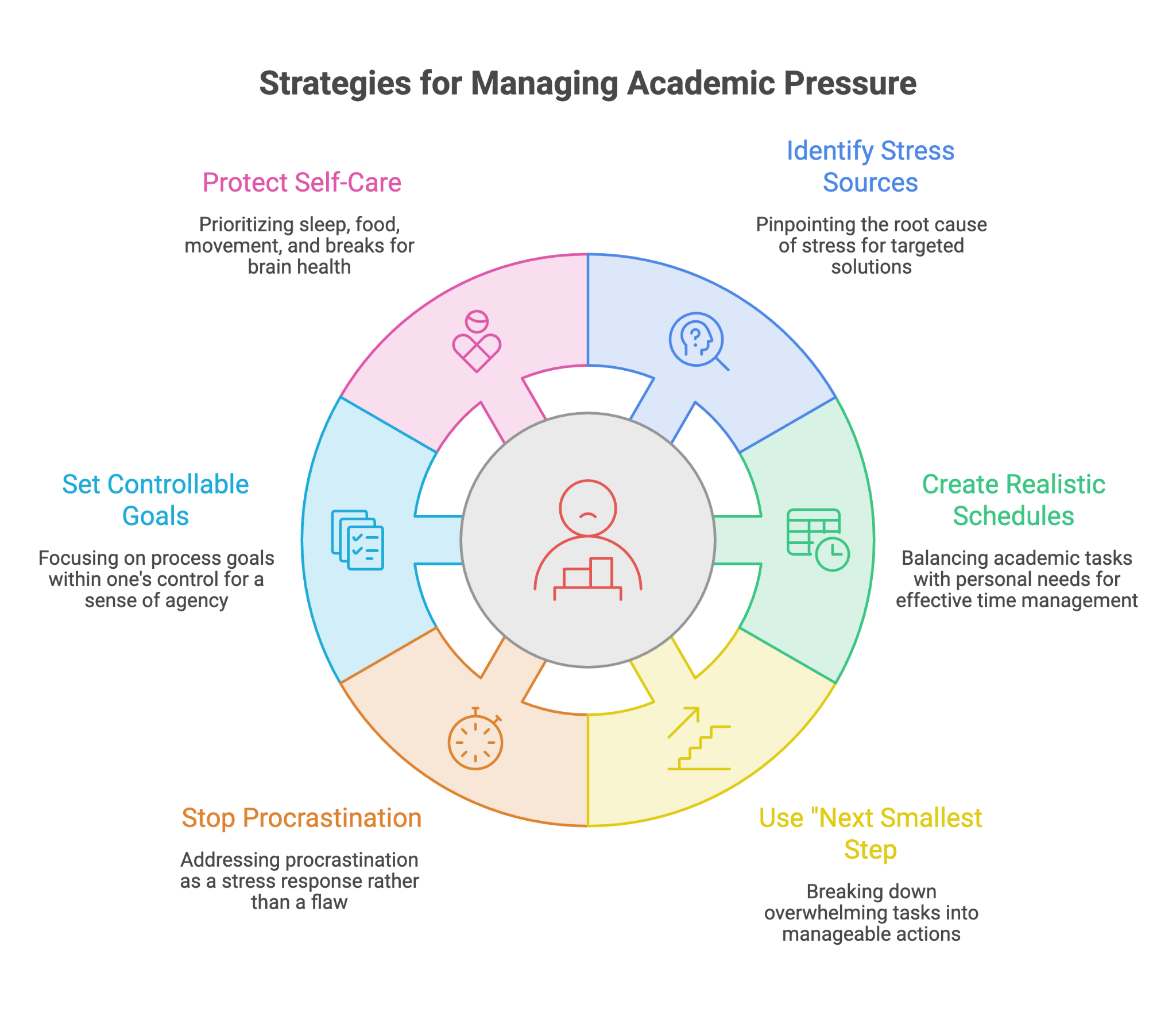
It’s hard to improve your situation when you’re not sure exactly what the real problem is. Take time to get specific and ask yourself: does the stress come from too much work, or not knowing where to start? Is one class taking a disproportionate amount of time compared to others? Am I avoiding work because I’m tired, or scared of doing it badly?
This can lead you to being able to help yourself in a healthier way. For example, “I am stressed about school” is more vague than: “I’m stressed because I have a history essay due Friday and do not understand the question.” The latter helps you with the next step: ask for clarification, break down the assignment, and make a plan.
2. Create a realistic study schedule
A good study schedule shouldn’t feel impossible, and you only have so many hours in a day. List out each and every upcoming assignment, exam, reading, and deadline, along with a rough estimate of how much time each will take, then turn the bigger tasks into smaller ones.
For example, instead of writing “study English,” make a commitment to reviewing a specific chapter, making flashcards, or answering five practice questions. Once you’ve calendarised this, make sure you also leave room for meals, sleep, and the unexpected things that could crop up. Ideally, try using a weekly planning session every Sunday or Monday where you look ahead, identify your busiest days, and choose your priority tasks for the week.
3. Use the “next smallest step” rule
When a task feels overwhelming, it’s tempting to ask, “How will I finish this entire project?” And that can leave you feeling overwhelmed and powerless. Instead, ask, “What is the smallest useful thing I can do in the next ten minutes?” This could be as small as opening the assignment instructions, finding one source, or sending your teacher one question.
But still, it’s a start, and those small steps can snowball into a much more powerful sequence of action. Starting imperfectly is much more effective than waiting to feel totally motivated and getting nothing done.
4. Don’t label procrastination as a character flaw
Procrastination doesn’t make you weak, and it’s often a stress response. Instead of beating yourself up, one of the best methods to deal with procrastination is using the Pomodoro technique: set a timer for 25 minutes, remove distractions, and work on one specific task.
When the timer goes off, take a five-minute break before deciding whether to continue. You can make this easier on yourself by putting your phone in another room, opening the right tabs before you start, and only having what you need for the task in front of you.
5. Set goals you can control
While you don’t have the final say over your final grade or the difficulty of an exam, what you can change is how often you go to class, when you start assignments, and whether or not you do practice questions. These are process goals instead of only outcome goals. The difference is that process goals are within your control and also give you a direction for right here, right now.
6. Protect sleep, food, movement, and breaks
When deadlines pile up, self-care can feel like a luxury, but it’s essential because your brain needs rest to learn. It doesn’t have to be crazy, fancy or elaborate: start with eating something nutritious before a long study session, drink water, take short breaks and move your body, even with a brief walk and stretch.
Study Techniques That Reduce Academic Stress
How AI Tools Can Reduce Academic Pressure Responsibly
There are certain AI tools that can help to lessen the load of academic pressure, as long as they are used as support tools and not shortcuts. It’s important to save your drafts and notes, or use a tool like GPTZero’s Writing Replay, to be able to prove your authorship if questioned.
Use grammar tools to improve your own writing
A free grammar checker can review your words to improve sentence structure and enhance your overall writing quality. While it can’t replace learning how to communicate, it can be useful when you’re trying to catch errors.
Double-check sources and citations
Citations can be stressful, especially if you have lots of different research sources. This citation checker can help you quickly find sources from text, essays, or research papers.
It’s also worth watching out for AI hallucination and running your work through a hallucination detector. GPTZero's Hallucination Detector automatically detects hallucinated sources and poorly supported claims in essays.
Check originality before you submit
An online plagiarism checker helps you spot any accidental overlap with existing sources before you submit your work.
An AI detector can give you peace of mind pre-submission as to whether or not any portions of your work sound AI-generated.
When to Seek Additional Help
There’s a noticeable difference between manageable academic pressure that you can cope with through the techniques above and the level of stress that interferes with daily life and feels too overwhelming to cope with on your own. Generally, that level of stress usually affects your sleep, relationships, and capacity to complete ordinary tasks.
It’s worth speaking to a professional if you feel overwhelmed or irritable on most days, or regularly cannot eat, sleep or concentrate. Perhaps you’re withdrawing from loved ones or activities you typically enjoy, or have frequent panic attacks or other stress-related symptoms.
If you’re relying on alcohol or drugs to cope, or academic stress is making you feel hopeless, you don’t need to wait until the situation balloons into a crisis. Instead, speak to a school counselor, therapist, teacher or academic advisor to learn about your options, which could include deadline extensions, study-skills guidance, counselling, or adjustments to your workload.
If you feel that you may hurt yourself or someone else, or you are in immediate danger, contact your local emergency service or an urgent mental health service immediately: do not try to manage an emergency alone.
Conclusion
Academic pressure, when it gets too much, can feel unbearable, but it will not last forever. As we’ve demonstrated above, there are small steps you can take that will add up to a big difference over time. Learning effectively without sacrificing your wellbeing is completely possible, even if it isn’t an overnight process.
FAQs
How can academic pressure affect mental health?
Academic pressure can be a huge part of the reason behind anxiety, low mood, poor sleep, irritability, and burnout. When stress becomes too much, it can make concentration and academic performance feel impossible.
What are the best ways to manage academic pressure?
We recommend not beating yourself up for procrastination and for struggling – and instead, focus on breaking bigger tasks down into smaller tasks; as well as setting goals that are based on the process (which you can influence) as opposed to the result (which you have less control over).
Is it normal to feel overwhelmed by academic pressure?
The truth is that many students feel overwhelmed at some point, especially around exams. In fact, academic pressure has become a recognized mental health crisis. But you don’t have to deal with this alone, and if it’s all feeling like it’s getting too much, make sure you reach out to a parent, teacher, counsellor or mental health professional for support.