Teaching With AI Around the World: A Q&A with James Abela in Malaysia
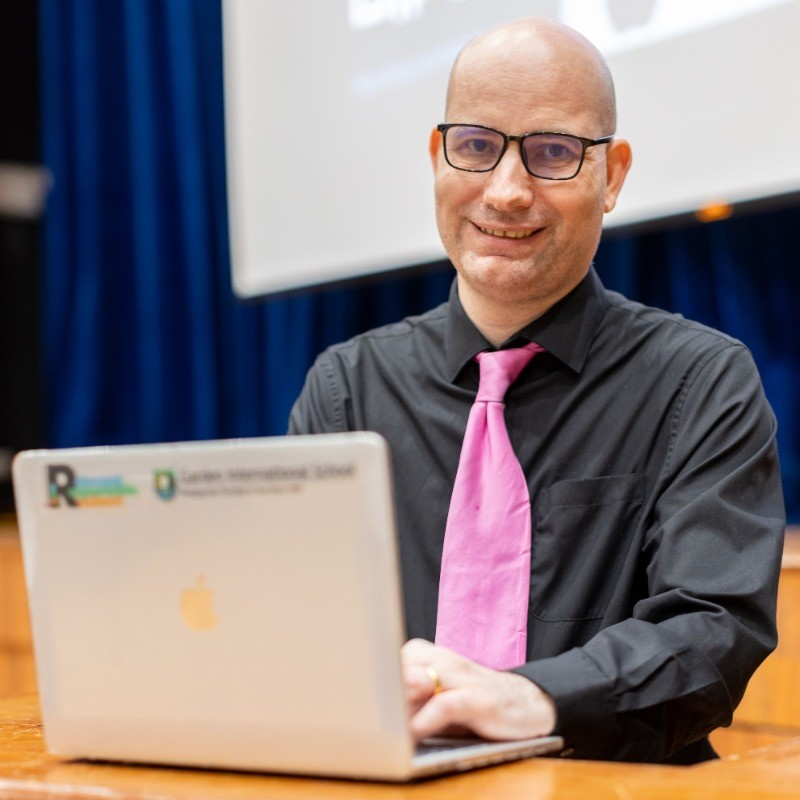
From Kuala Lumpur, James Abela shares how one Malaysian international school is dealing with AI changes in the classroom.


Title: Director of Digital Learning and Entrepreneurship
School: Garden International School in Kuala Lumpur, Malaysia
Stance on AI: Cautious/Optimistic
We’ve always been committed to helping educators foster originality, encourage critical thinking and prepare your students for the future with AI. In our new ‘Teaching With AI Around the World’ series, we look at how different schools around the world are actually navigating AI in their classrooms.
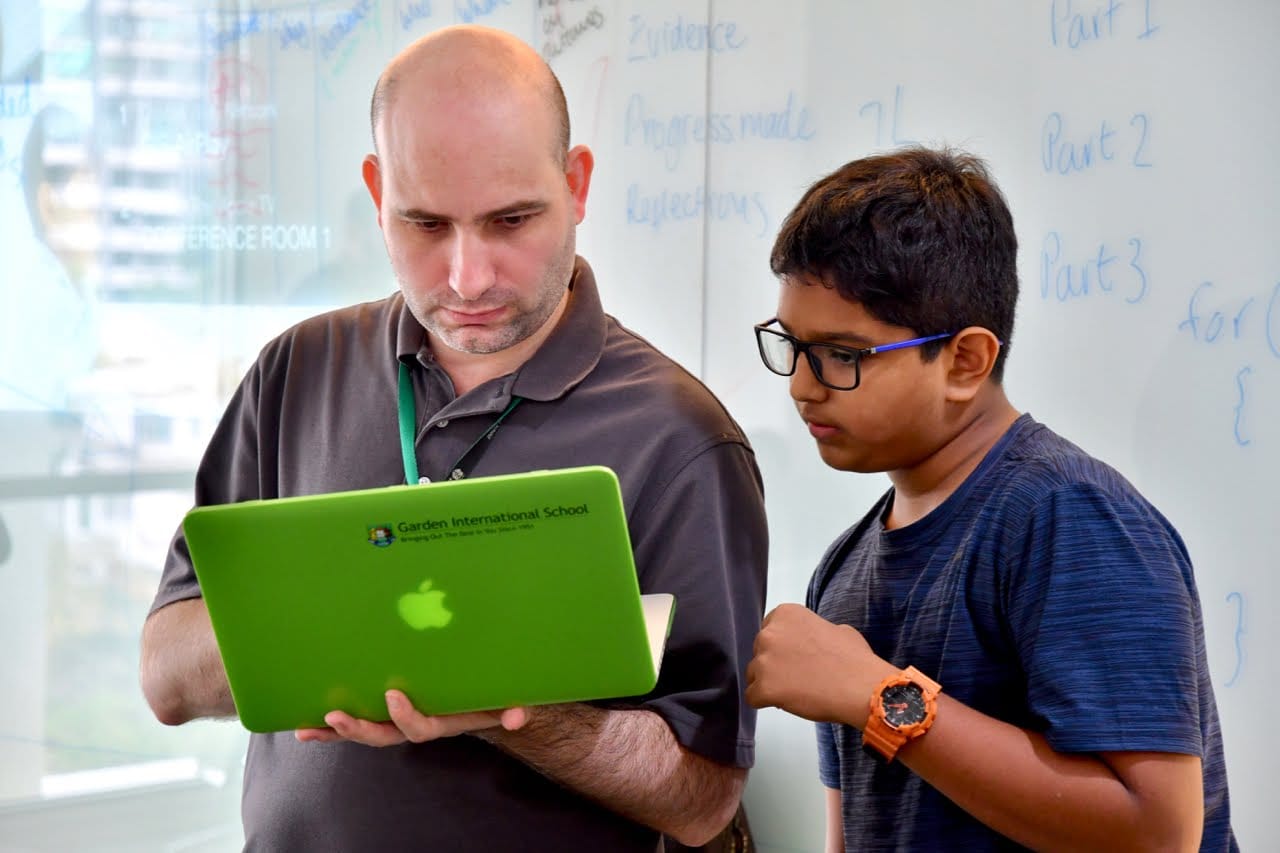
We spoke to James Abela, Director of Digital Learning and Entrepreneurship at Garden International School in Kuala Lumpur, Malaysia, who has been thinking about AI in education for years. He shares how AI is ‘a bit like the calculator’, where he sees opportunity, and how if students use it to avoid thinking, that’s where it becomes a problem.
This interview has been lightly edited for length and clarity.
How are you currently thinking about AI and education?
I think it’s a classic case of AI is here to stay, and we’re going to have to deal with it.
My worries are that it’s going to take a lot of white-collar jobs, and we’re starting to see that happen. Not as much as people expect, but it tends to be in terms of replacing jobs. I worry that a lot of jobs, those entry-level jobs, are being gobbled and it will take a while for employers to realize that without the entry levels, you’re not going to have the senior engineers, you’re not going to have the more senior people without spending the time training them. And I think this is the worry: the jobs get taken, that kids stop using their brain so they’re even less employable.
But the other thing is a bit like the calculator – it means that kids can do more. Kids can start off as managers. They can start by managing AI. You can actually get management experience from the get-go.
I also think it’s a great opportunity to stretch yourself to go further, to try and find holes. What can’t AI do? What can make me extendable? How am I able to vibe code? Am I able to push that? Am I able to go further? Those kids who take full advantage of it, they’re going to be employable. They’re the ones the universities are going to enjoy.
How would you describe Malaysia’s approach to AI in education?
Malaysia is the land of the free when it comes to AI. We can use the Chinese GPTs. We can use the American GPTs. We can use the European GPTs. We have access to it all because it is completely unlimited in Malaysia.
The Malaysian government has been very happy to have international education. They actually have very few limits. They do have some guidance, but basically, it’s over 13 for most things. We don’t allow Gemini below 13, but that’s a decision we made. Google say that with adult supervision, you can use it below that. And we feel adult supervision means the students shouldn’t be typing in the prompts.
Actually, the ones who are most tightly regulated is the US. I think the UK is reasonably free, but in the UK state sector, there’s very little access to computers and to devices except for phones. So I think the UK is somewhat behind compared to an international school, but obviously that’s not comparing like with like. The trouble is that most of AI and computing is getting used at home, where it’s largely unregulated.
What worries you most about AI’s impact on students?
The worry is that kids stop using their brain so they’re even less employable. That’s the risk. If the jobs get taken and students also over-rely on AI, then you have a real problem. But I also think it depends on how they use it. If they use it to push themselves further, that’s different. If they use it to avoid thinking, that’s where it becomes a problem.
How has AI changed the way you think about assessment and academic integrity?
For teachers, it’s challenging because we’ve got to get to a point where we're assessing process, not just the end results.
We are very lucky that we are at a Cambridge International school, so most of our subjects are exam-only. So that means they’re basically cheating themselves if they use AI because they’re hurting their own revision. We are using things like NotebookLM to create revision materials and make resources more interactive. We’re using Gemini as well.
History has been challenging. For that one, we’ve insisted that GPTZero is engaged right from the beginning of the process, which means that GPTZero will be checking you as you type, to check that you are really typing, not copying and pasting. We give you one template, and we tell you you’re not allowed to copy and paste. We want to see natural patterns of typing, and it will assess you as you go along.
We’ve also reminded the students that it is not about us believing you didn’t use AI. It is about us being absolutely sure you wrote this yourself. And if we are unsure, we have asked for things like vivas or to write a part of it by hand so that we can be fully confident that you definitely wrote it.
What does a viva look like in practice?
(A viva is a spoken discussion, usually with an instructor, where a student is asked to explain their work out loud.)
Asking questions about what they wrote, seeing if they know it. Vivas are in person, because we are not an online school. It’s really about being able to interrogate the work and say, even if you can pass it, how can we be absolutely sure? We’ve done everything we can to discourage copy and paste, but also to build an evidence portfolio that you didn’t just paste things in.
What made you start using GPTZero?
Basically, it was those coursework subjects, mostly history. For most subjects, we were able to say, you’re not allowed to do summative assessment that’s not handwritten basically, or not under supervision, because we’re an in-person school. But for anything with coursework, that isn’t a complete option.
We have a lot of EAL (English as an Additional Language) kids, so we would hate to falsely accuse them. But if they’ve got GPTZero running, they can already see the things that make it look suspicious. If they’ve happened to hand type, at least they’re able to say it. They’re able to say, “Well, I did type it.” They’re able to go back quickly and say, “Look, my thing spiked at this particular point.” Then the teacher can say, “Oh yeah, that looks like something a GPT might write,” but at least we can have those discussions, and we can make it very formative.
What does responsible AI use look like for teachers and students?
I think, from the teacher's point of view, to be honest, it's where you’ve used GPT and how much you’ve used it. So if you say, “It was created by GPT, but I edited it, I checked it,” I think most students are okay with that. If you say that, “I’m doing an initial mark with GPT just to check, please come back and check in with me,” really, we want the GPTs to be very honestly used.
From the student's point of view, because we’re mostly exam-based, we do talk about not spoiling your learning. At the end of the day, you’re going to have to do a handwritten exam. So don’t spoil your learning, because if you do well in every different piece of homework and then you do badly at the main exam, well, you’ve then got to explain the difference in the quality of writing because, ultimately, that exam is summative.
Those are the things that are formative to help your learning. We can have those kinds of conversations rather than, “You’re an outright cheat.” We can say, “Well, what did you do that maybe spoiled your learning? How did you use things?”
What questions or concerns come up most often in your workshops?
A lot of it is about students cheating. We do say, “Look, we have to be honest, you do need to reformat the way you do your assessment. You do need to do a summative assessment. It doesn’t absolutely have to be handwritten, but it’s generally easier if it’s handwritten because you are absolutely sure, with a piece of paper and a pen, there’s no chance. But also start to look at the process more, rather than the end results, when you’ve got portfolios and things like that.”
Also, yes, GPTs can be used to help revise and make that revision less tedious, and have those discussions. It does vary very widely between subjects as to what GPTs are effective at or not.
In computer science, I’ve found it very, very effective. It’s very good at it because that’s where the money is. It’s a bunch of computer software engineers checking computer software to see if it can write computer software. In computer science, it’s often better than the textbooks.
When you look at other things like politics and the horrific dregs, false news, and the highly unbalanced pieces, of course, the GPT goes down with the poor quality of data that went in. It’s surprisingly good at English literature because, rightly or wrongly, it seems to be fed with an awful lot of books directly.
The other thing is that it’s a moving paradigm. It moves, and it keeps on going. These GPTs are the worst they’re going to be, and they keep on getting better.

What does your school’s AI policy look like right now?
Still evolving – we’ve had a policy for about two years. The main one is over 13. The main one is that important summative assessments are done in person.
It was initiated about two years ago, and it was a collaboration between six schools. We recognized very early on that this was a massive change, and we needed to moderate both teachers and students in these things. I’ve been teaching AI since 2015, but it was only in 2022 when everybody cared about it. So we started that process very quickly because we understood how this would affect things like coursework.
Where do you think schools still have the biggest challenge ahead?
If you look at it compared to IB, for instance, as soon as you’ve got coursework, those challenges increase hugely.
If you ask a kid to revise for their exam and you allow them to talk to a bot, those kids who do that, at least they’re doing some revision, perhaps more than they might otherwise have done, but then the result is going to be in the summer. Cambridge has pretty much gone back to old school, and it is the old school and the very new school that work together.
Next year, we are going to be teaching in year 12 how to vibe code, but it won’t be an exam assessment. It will be to give those kids those important skills so they know what’s going on.
When you assess anything that’s AI, like vibe coding, we have to assess the process and the prompts and what the student did and how they went through it. Education isn’t always about memorisation. It’s about giving students sometimes a sandbox to play with. Just like when maths got calculators, the assessment will move on when the GPTs standardise and get to a point that they’re known, but they’re moving so quickly now, education is always incredibly slow to keep up. But if you can start to assess process, that’s the key thing.