
Quetext Plagiarism Checker Review: Is It Accurate?
Is Quetext's plagiarism checker accurate? I tested its accuracy against news articles, academic papers, video transcripts, and blog posts from three eras.


The Higher Education Policy Institute (HEPI), in its Student Generative AI Survey 2025, reported that 88% of UK undergraduates had used generative AI for assessments, up from 53% in 2024.
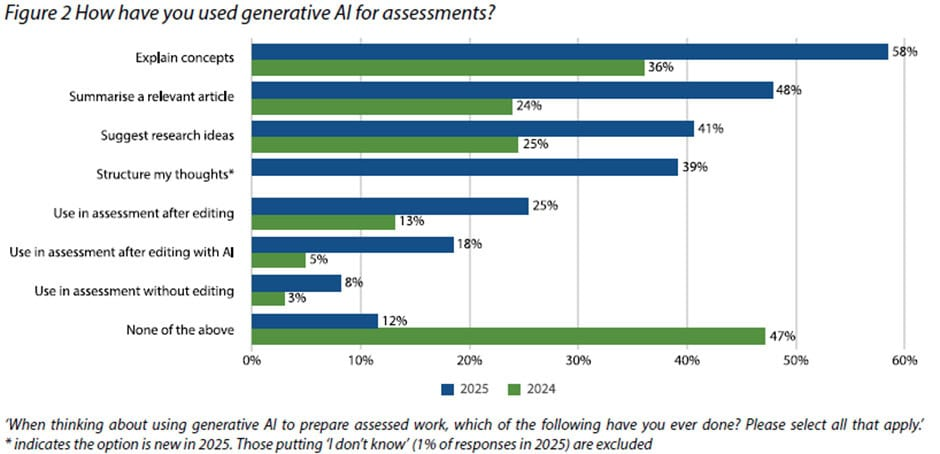
The 2026 edition of this survey reports that this number is now 95%. The same survey also reports that 94% use AI even on assessed work.
This trend has made it necessary for all institutions to address the challenge with tools like AI detectors and plagiarism checkers.
Plagiarism checkers are needed because the use of AI brings a high chance of plagiarism with it too.
Quetext is one of the more well-known plagiarism checkers. But does its performance live up to the hype?
I ran Quetext's plagiarism checker against content published everywhere from the early web to July 2026 to see how accurate it actually is.
Read on to find out how it performed.
TL;DR
Here are all the samples I tested, along with their published year and Quetext’s plagiarism score percentage:
What is Quetext Plagiarism Checker?
The Quetext plagiarism checker verifies the originality of written content using a proprietary detection engine that it has named DeepSearch.
The platform offers a very limited free scan that allows you to scan 1,000 words only before you have to buy a plan.
I tried to find the number of words you can scan for plagiarism at a time, but that is not mentioned anywhere on the website. The textbox seemingly allows you to paste an unlimited number of words. So I think the only limit is the number of words remaining in your plan.
Quetext offers an AI detector as well. Like GPTZero, Quetext allows you to run a plagiarism check and AI detection scan on a text at the same time.
One unique thing about Quetext is that it offers two paid plans that cover the entire platform, but it also offers plagiarism checker-only and AI detector-only plans.
Quetext’s plagiarism checker is highly regarded for its accuracy in other online reviews.
I wanted to test it firsthand before forming an opinion, and that’s what I did.
The testing methodology I used, and how Quetext performed, is detailed below.
You can see all the scans and plagiarism scores the Quetext plagiarism detector gave to the samples used in this article in this PDF document.
Testing Quetext Plagiarism Checker
If you have read my review of PapersOwl plagiarism checker, you already know how I test plagiarism checkers.
The methodology involves testing a plagiarism checker against three sets of text samples published at various times in the past. I started from the time when websites were a new thing and only a few news outlets had an online presence. I call this pre-2000 content. Then I also picked text samples from content published after 2000 (post-2000 era), along with recently published content in July, 2026.
Here’s some more detail about the three sets:
- Pre-2000 content: This set includes three text samples taken from content published in 1996 and 1998. Two of these samples are news articles, and one is a text excerpt from a religious movement website.
- Post-2000 content: These are four text samples, two of which are from 2006 and the other two are from 2018 and 2024. Two of these are video transcripts, and the other two are academic papers.
- Very recent content: This set also contains four samples, all from content published in July 2026. Two of these are news articles and two others are blog posts.
In short, I made sure to cover the entire timeline (samples spanning the early web through mid-2026) since the start of the World Wide Web (WWW) and also various content formats such as news articles, video transcripts, academic papers, and blog posts.
I pasted 150-300-word text excerpts from these sources into Quetext and analyzed the results.
1. Quetext vs Pre-2000 Published Online Content
Quetext performed perfectly on the two news articles. One was a BBC news article, and the other was from The Economist.
Quetext's plagiarism checker flagged them both as 100% plagiarized and also provided the online sources where the entire text was present.
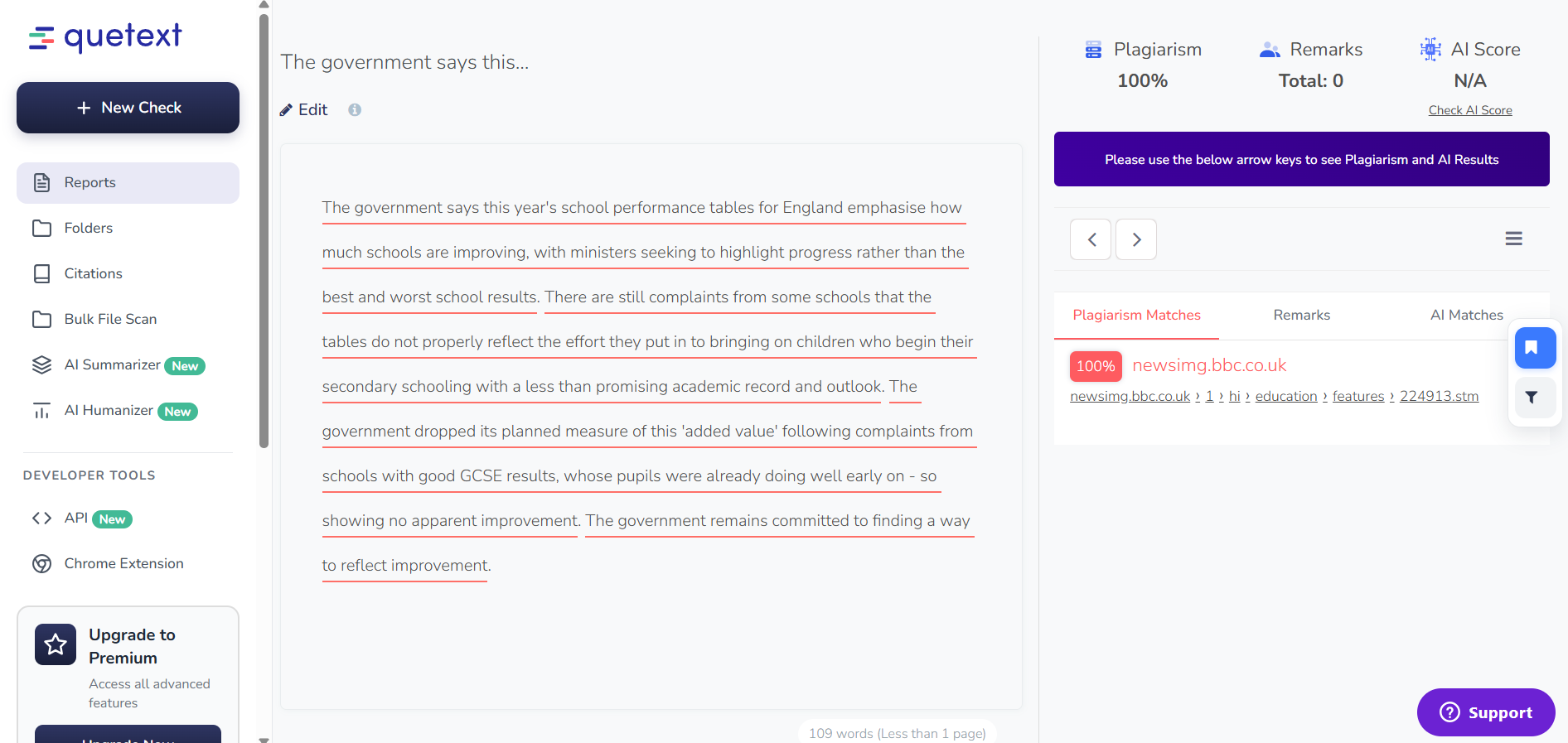
The third sample was a text excerpt from the Heaven’s Gate website published in 1996. Quetext could only find 22% plagiarism. Even the lines highlighted for plagiarism weren’t a 100% match with the text on the detected webpage.
So, it’s safe to say that Quetext failed on this sample.
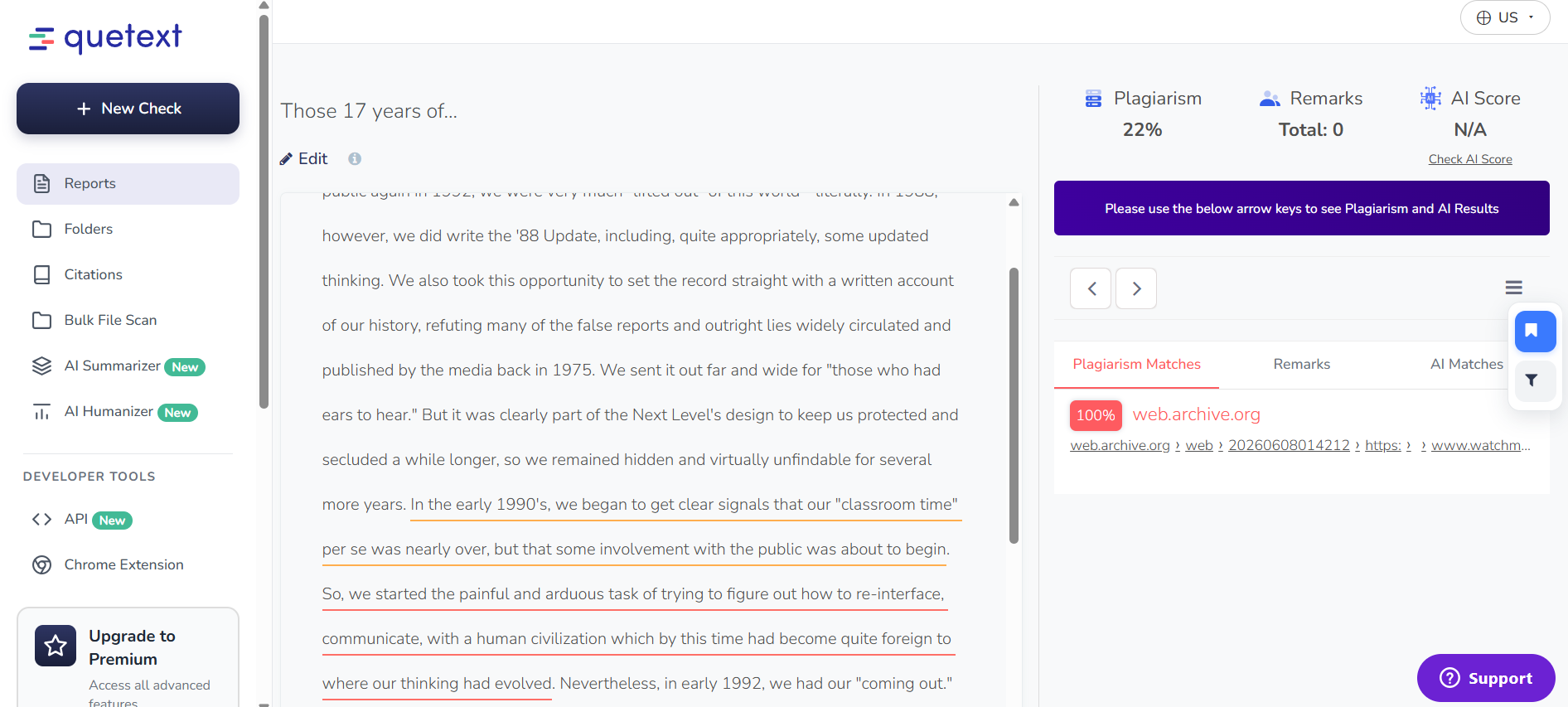
For comparison, I also scanned the same Heaven’s Gate sample with GPTZero’s plagiarism checker, and it correctly identified that the content is 100% plagiarized and provided the sources.
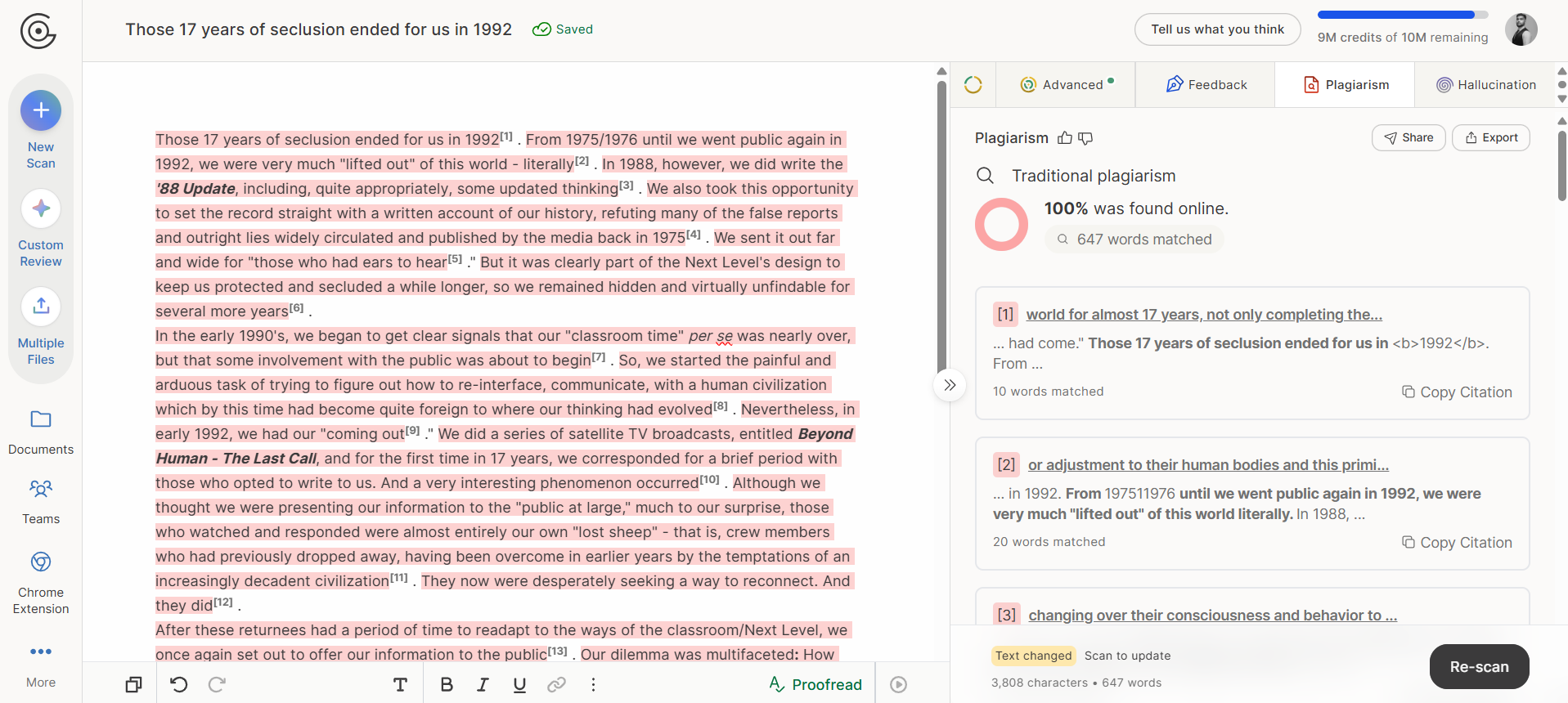
Here’s how Quetext performed on three pre-2000 samples:
Verdict: Quetext has a good success rate on content published before 2000, given the content comes from well-known sources. It could only detect 22% plagiarism on the Heaven’s Gate sample.
2. Quetext vs Post-2000 Published Content
Quetext also had a high success rate on content published between 2000 and 2024.
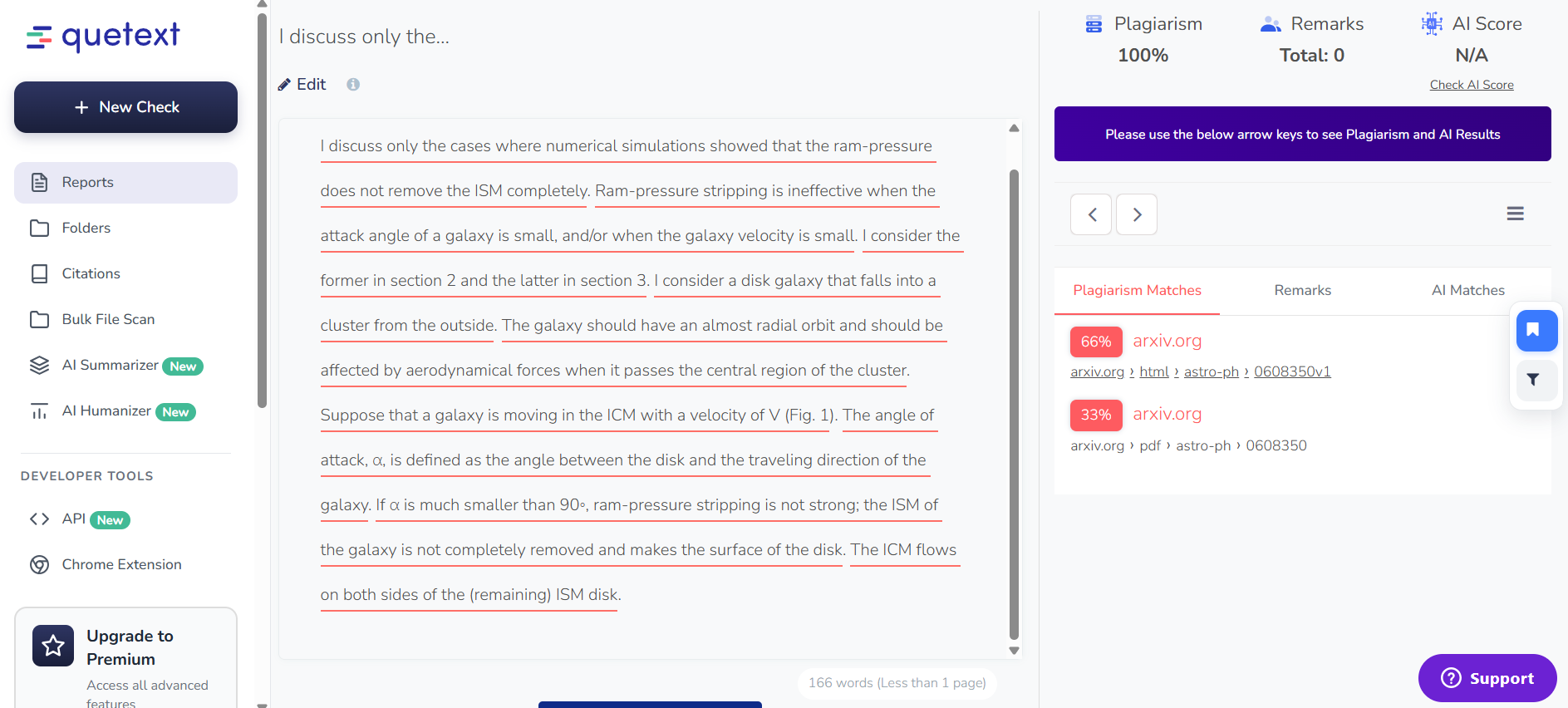
The scan results that surprised me the most were for the academic paper from 2006. This academic paper exists as a PDF as well as a webpage. Quetext was able to pull both sources and give the sample a 100% plagiarism score.
This is impressive because only a few plagiarism checkers, like GPTZero, could catch plagiarism in this sample in my testing.
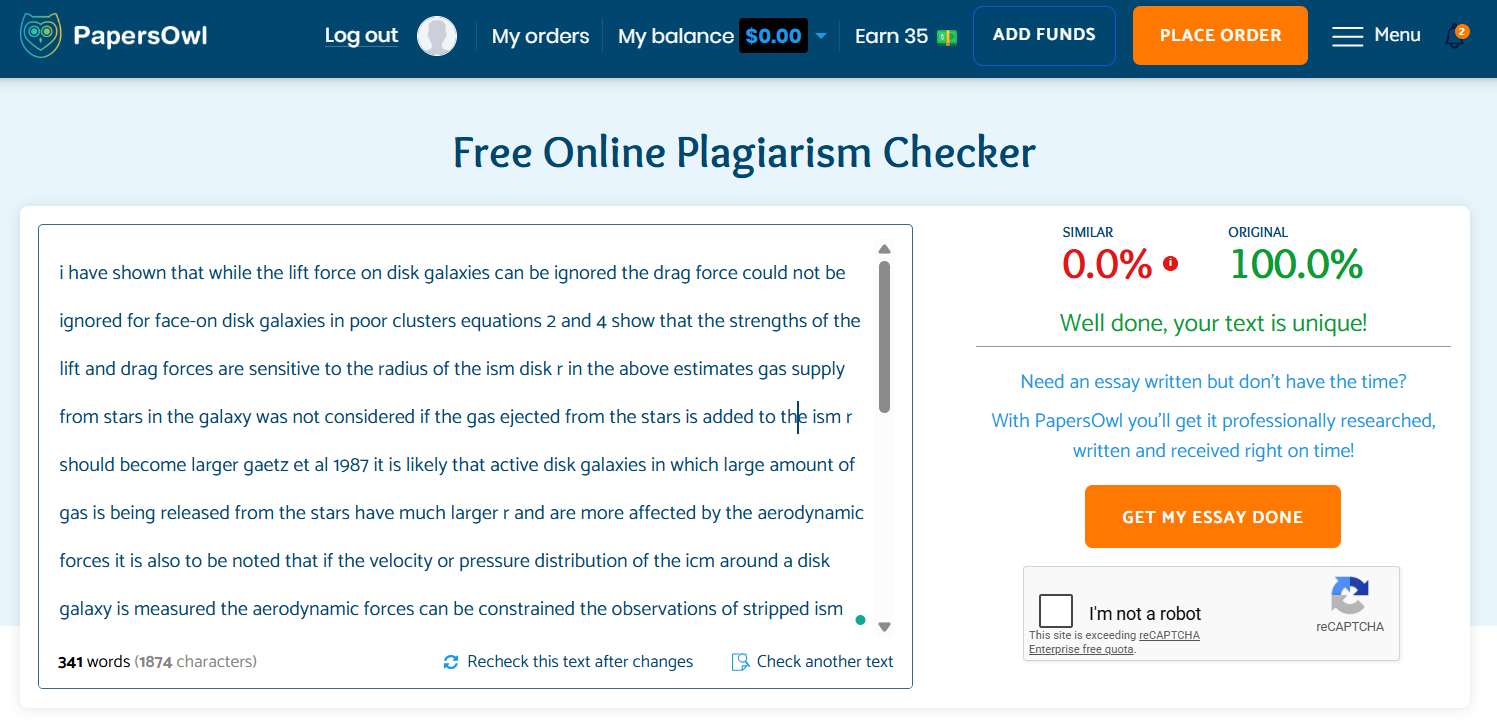
For instance, I had included this same sample in the review of the PapersOwl plagiarism checker, where it had received a 0% plagiarism score.
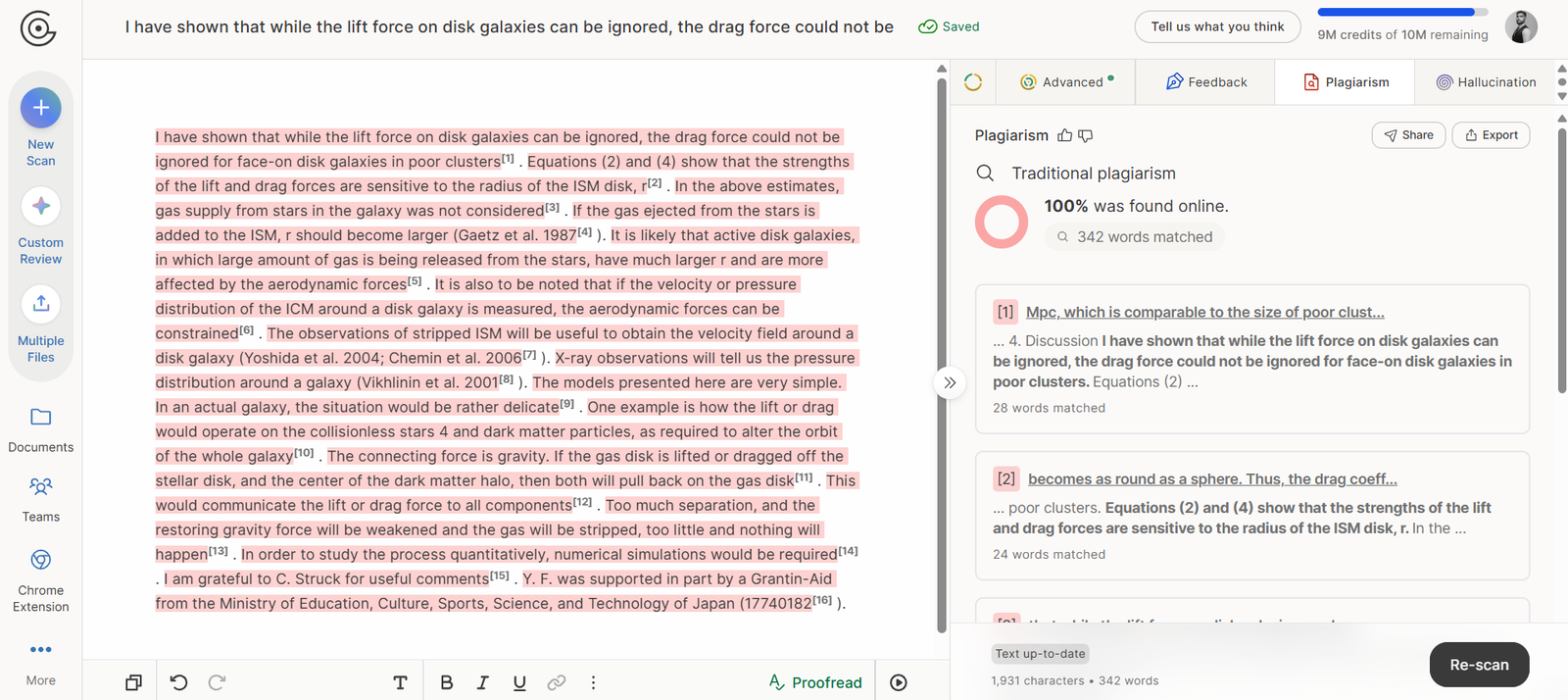
However, as mentioned before, the GPTZero plagiarism detector detected this sample correctly as well:
The only sample in the post-2000 set that Quetext failed on was the transcript of a NatGeo documentary from 2018. Quetext flagged the content as 65% plagiarized and listed multiple sources for the few matching sentences.
Despite that, this was a failed attempt because most of the highlighted text didn’t exist verbatim in the matched sources. And the correct source wasn’t identified either.
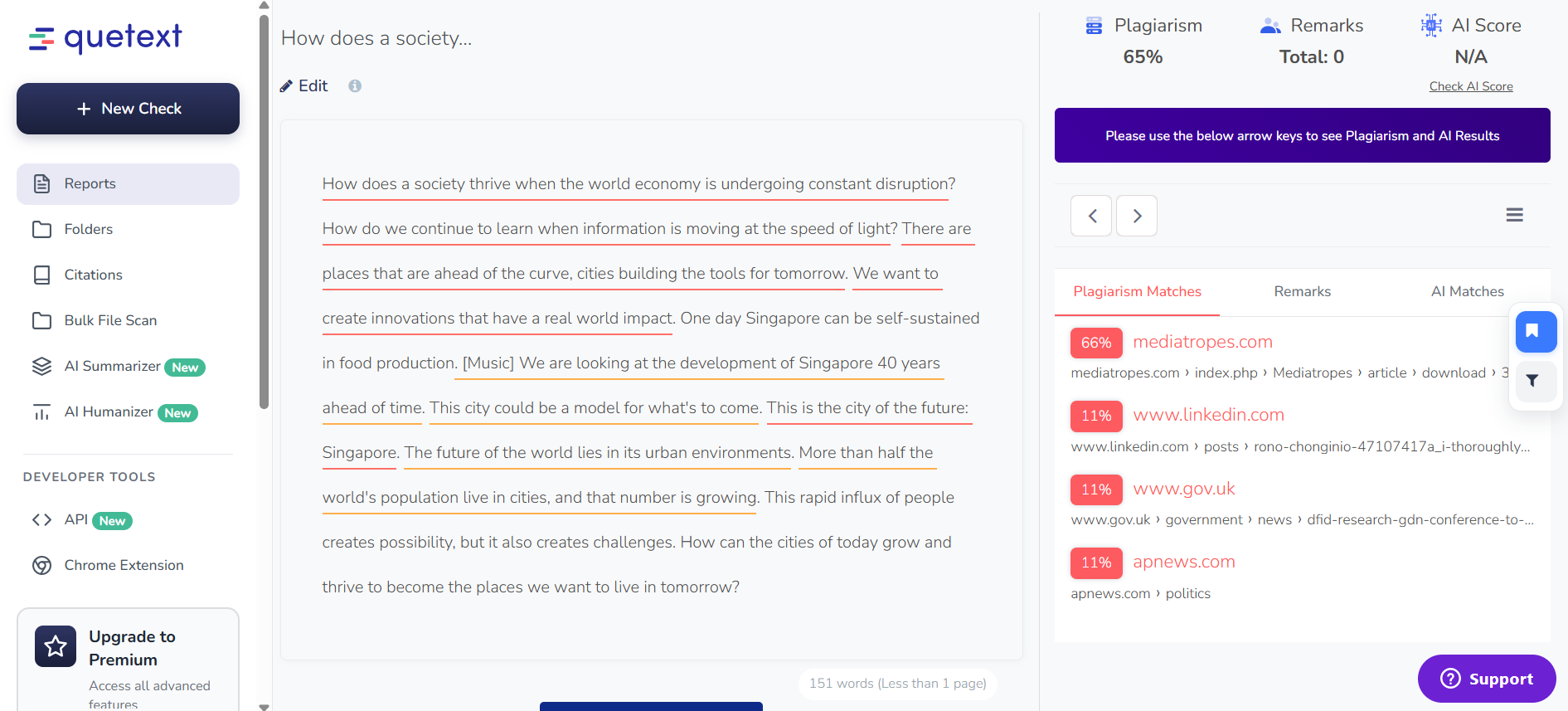
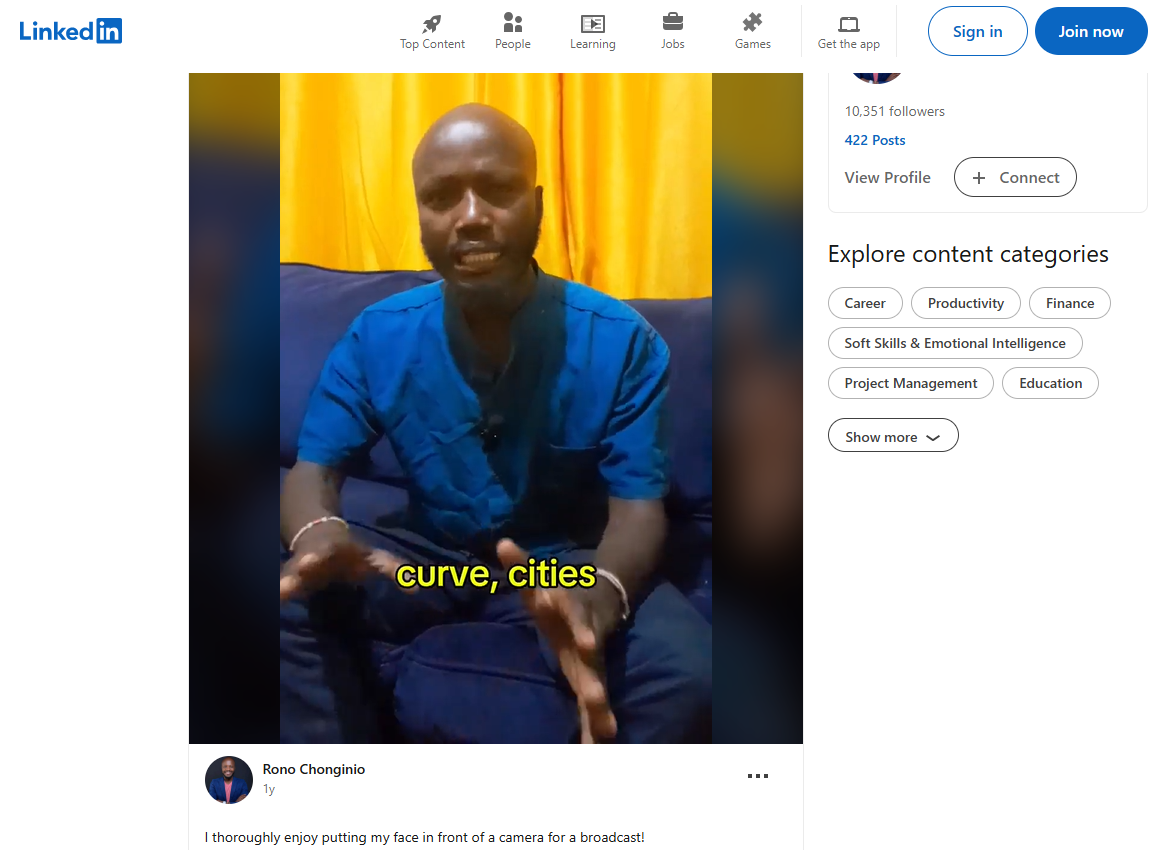
Only the sentence “There are places that are ahead of the curve…” fully matched the transcript of a LinkedIn video. But this LinkedIn video was posted a year ago, and the YouTube video was posted in 2018, so that’s not the correct plagiarized source.
But I’d like to give Quetext credit here for digging out a single sentence from the transcript of a short LinkedIn clip uploaded by a small account.
Here’s how Quetext performed on a post-2000 sample set:
Verdict: Quetext has a good success rate against content published between 2000 and 2024. But it may still fumble at times.
3. Quetext vs Very Recent Content Published in July, 2026
Like the previous sets, this set also had just one sample that Quetext failed against.
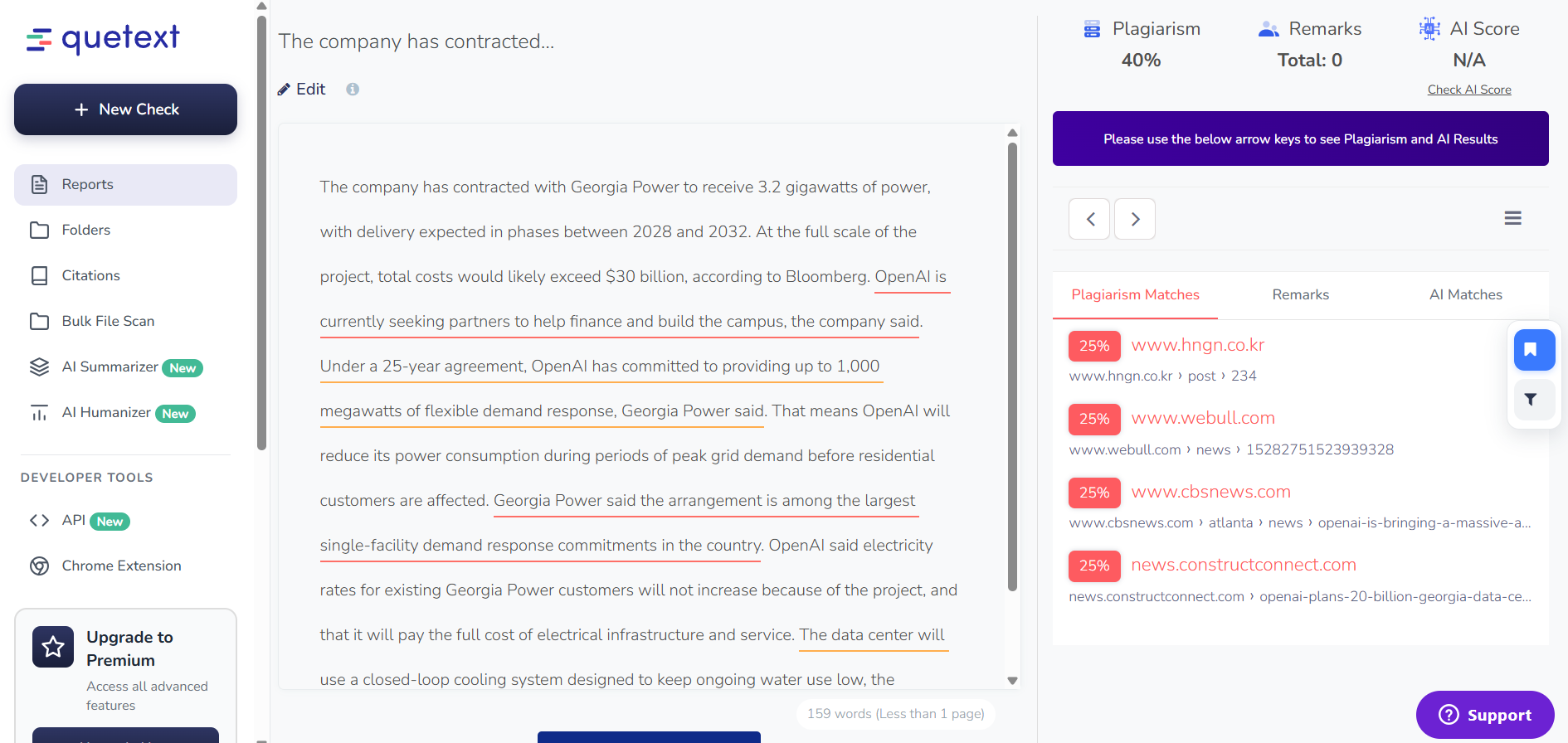
The Yahoo news article received a 40% plagiarism score, and all the matched sources were also news articles about the exact same event.
So Quetext was at least looking for the right thing. It just couldn’t pull the exact source the text was copied from verbatim.
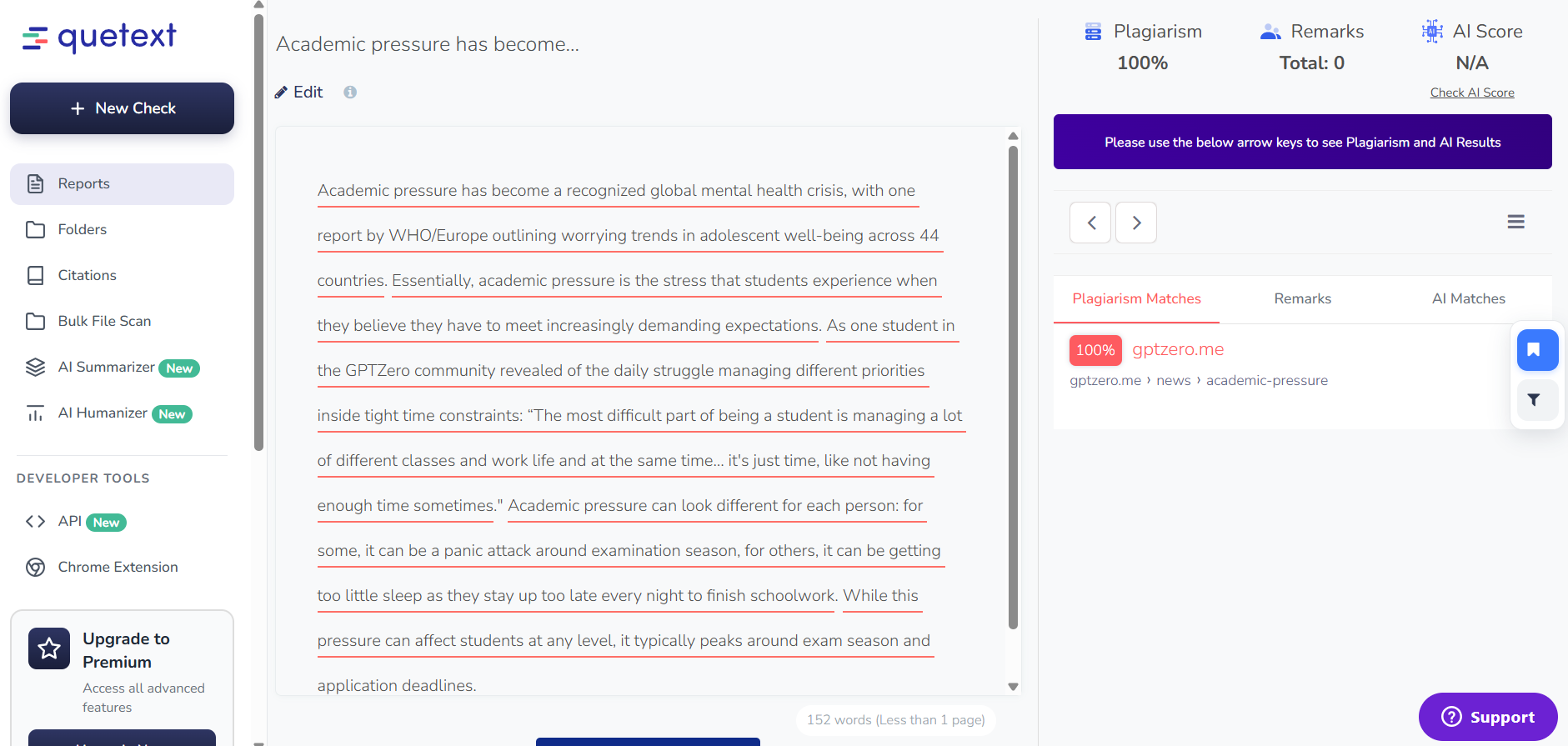
The rest of the three samples were flagged as 100% plagiarized. Here are the results for the GPTZero article that I scanned with Quetext:
See the table below for all the latest samples published in 2026 that I tested against Quetext.
Verdict: Quetext has a high accuracy on recently published content.
How Much Does Quetext Cost?
Quetext allows every new user to scan 1000 words for free.
It’s up to you whether you scan those 1000 words at once or consume the limit in multiple scans.
Once you have scanned 1000 words, it’s time to pay for further plagiarism checking.
Quetext offers two types of paid plans.
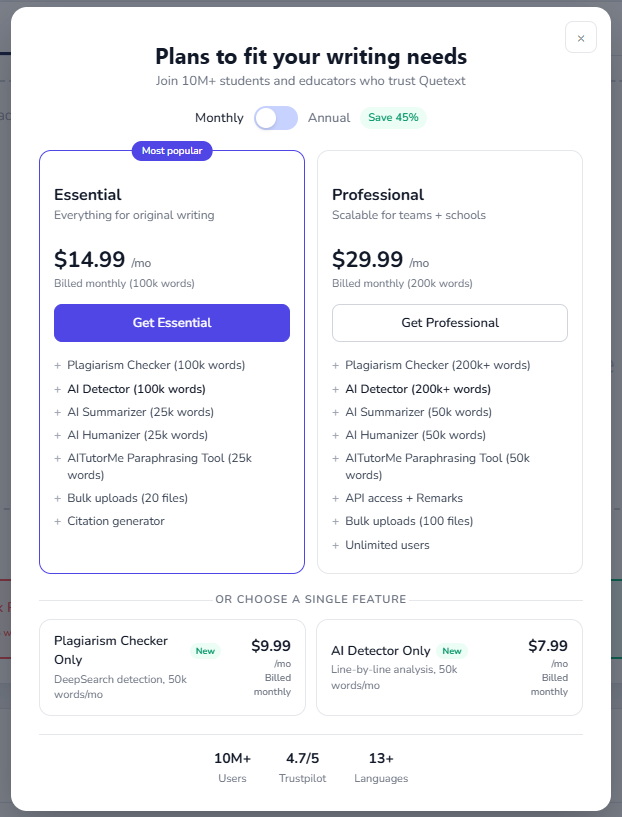
Some paid plans unlock the entire platform with all its features, like the Essential and Professional plans, which cost $14.99 and $29.99 when billed monthly, respectively.
Then there are separate plans that unlock the plagiarism checker or the AI detector only, costing $9.99 and $7.99 a month, respectively.
All these plans are available for both monthly and yearly payments. The pricing is 45% off if you choose to pay yearly.
Try GPTZero for More Accurate Plagiarism Detection
Quetext performed roughly as its reputation suggested
Most of the samples were flagged correctly and matched to the right sources, except for a few slip-ups.
So it’s not a bad tool at all. You can use it for your day-to-day plagiarism needs.
But if the content you’re scanning for plagiarism is of the nature where the room for error is very little, you should always pick GPTZero’s accurate plagiarism checker.
Apart from accuracy, GPTZero’s plagiarism checker also generates citations of matched sentences so you can cite them in your content ethically instead of plagiarizing them.
Try GPTZero’s plagiarism checker for yourself and see its accuracy.