PapersOwl Plagiarism Checker Review: Is It Accurate?
PapersOwl offers academic writing services along with a free plagiarism checker. This article will review PapersOwl’s plagiarism checker to see how accurate it is.


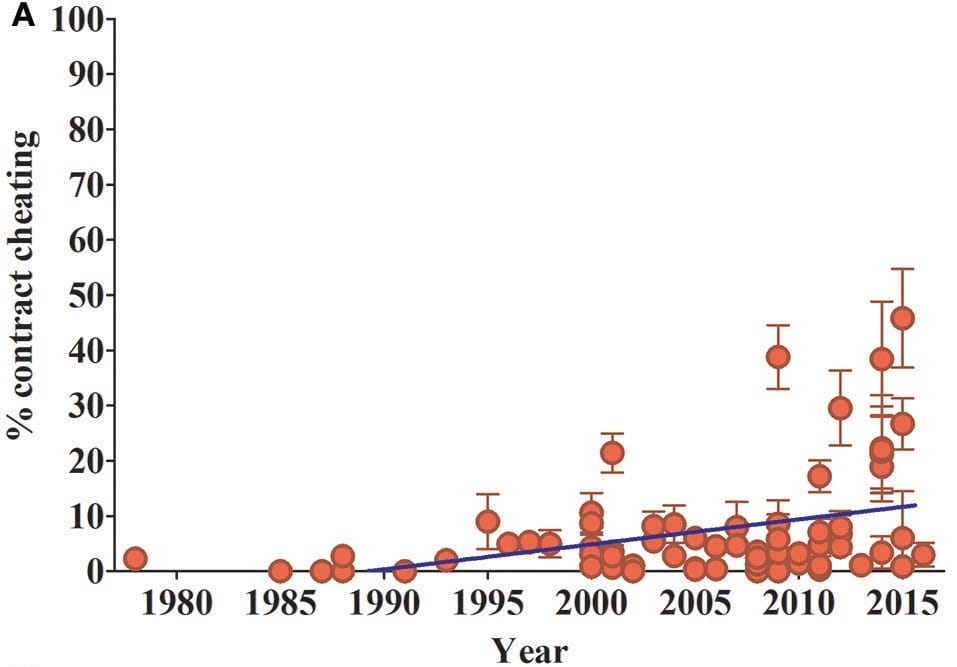
A 2018 review of 65 studies on academic misconduct found that 15.7% of students admitted to paying someone else to complete their coursework since 2014. Researchers extrapolated this figure to roughly 31 million students worldwide.
PapersOwl is one of the companies that offers to write students' essays and papers for a fee. This is the same practice researchers are describing above. But somewhat ironically, PapersOwl also offers a plagiarism checker for free.
In this review, I’m going to put PapersOwl’s plagiarism checker through an extensive test. You’ll learn whether it's actually any good at catching plagiarism and what the catch is behind it being free.
Let's find out.
What is PapersOwl Plagiarism Checker?
The Papers Owl platform offers paid academic writing services and some free tools to assist with writing. The plagiarism checker is one of those free tools.
It is a free, forever tool. You can use it whenever needed, and there seems to be no word-per-scan limit or daily scan limit either, unlike many plagiarism checkers available online.
PapersOwl plagiarism checker is simple to use. You can paste your text or import it from Google Drive or Dropbox. There’s also the option to import files from your system’s local storage.
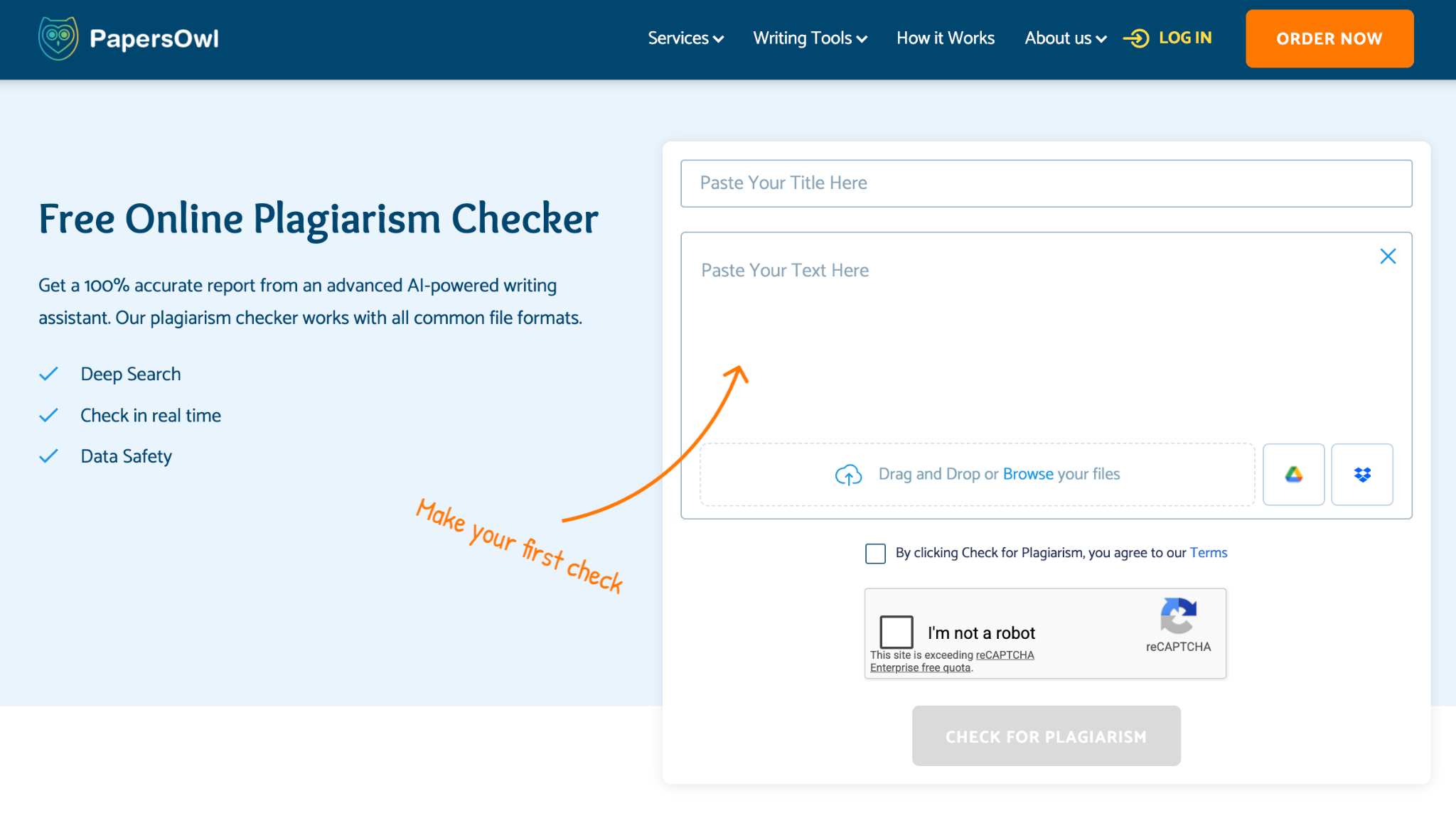
Once you have pasted the text, you confirm that you agree to PapersOwl's terms (if you’re a first-timer) and that you aren’t a robot. Then you proceed to hit the Check for Plagiarism button, and a few seconds later the plagiarism report is displayed to you.
The report shows what percent of your text is plagiarized and what percent is original, in the eyes of PapersOwl, of course. The report also lists the supposed sources the flagged text was copied from, along with the percentage of text taken from these sources.
Also keep in mind that PapersOwl doesn’t retain the original formatting of your text. The moment you paste your text, all formatting is lost. It even removes colons, periods, capitalization, and URL dots and slashes from the text.
Another thing to keep in mind is that after two plagiarism scans, PapersOwl will ask you to sign up. Once you’re signed in, PapersOwl will try to make you place an order for any of their writing services. Ignore the instructions on the screen and simply press the PapersOwl name in the header of the webpage, and you’ll be directed to the website’s homepage.
With that out of the way, let’s get to the point of this article. No matter what a tool looks and feels like, if it performs its intended function, it is deemed to be a useful tool. So is PapersOwl plagiarism checker accurate? Let’s use it and find out.
Testing PapersOwl Plagiarism Checker
To learn about the strengths and weaknesses of PapersOwl plagiarism checker, I designed a detailed test.
I gathered content from around the internet and divided it into three sets:
- Content that was published online before 2000. Websites began surfacing on the internet in 1991. But many of them have long since discontinued. But I could find published content from the BBC, The Economist, and the Heaven's Gate website. All of them joined the internet after 1995.
- Content that was published online after 2000. This set included news articles, video transcripts, and academic papers from 2006 all the way through 2025.
- Very recent content from the past month or so was published by news and company websites.
Spoiler alert: PapersOwl might look like a cheap and low-effort tool for plagiarism checking, but it performed fairly well in the testing.
Read further and learn how accurately PapersOwl performed on each of these samples.
PapersOwl vs Pre 2000 Published Online Content
The pre 2000 set of content included 3 samples.
The BBC News and The Economist articles were published in 1998. The Heaven's Gate webpage was from 1996.
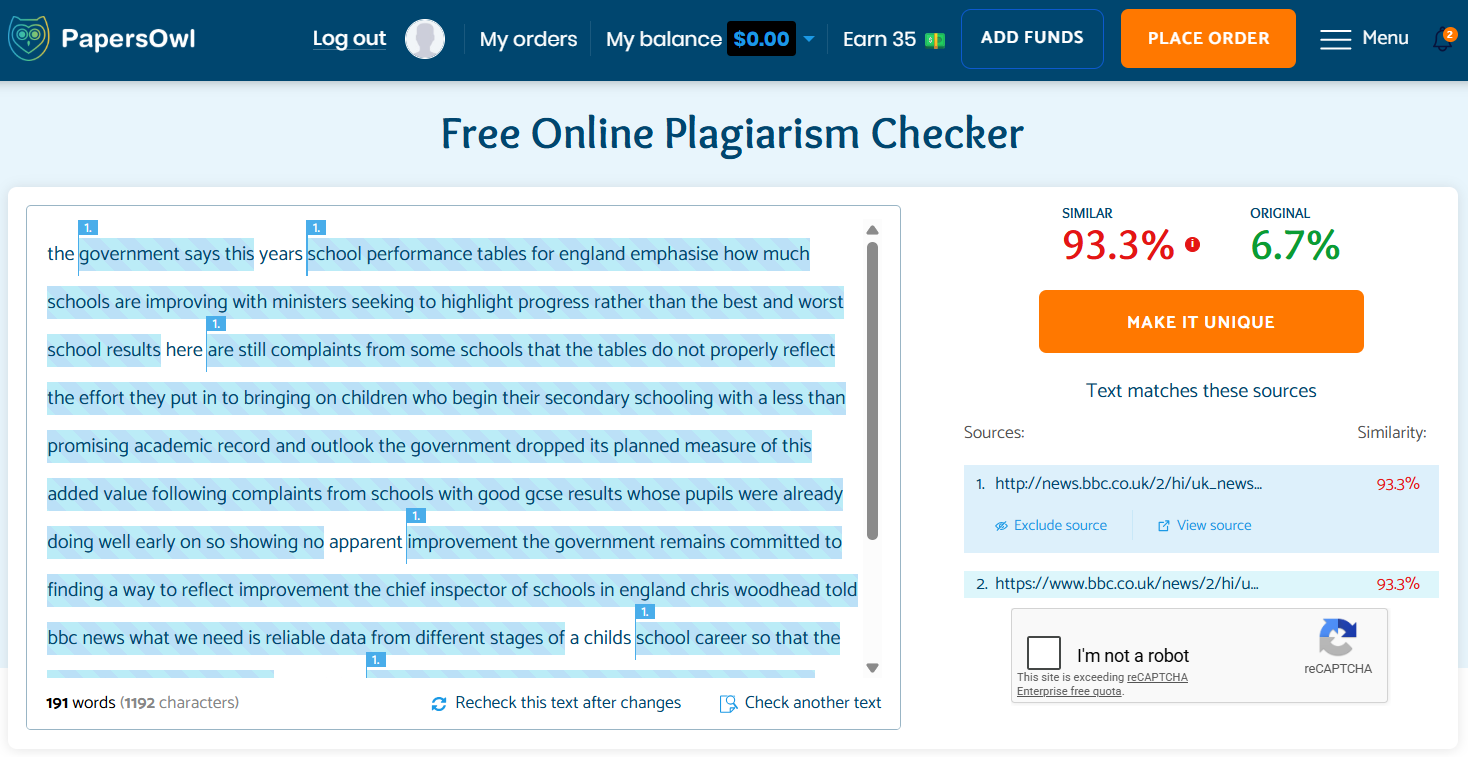
I picked excerpts from these pages for the scan, and the PapersOwl plagiarism checker detected high levels of plagiarism from all three sources. The tool couldn’t detect 100% plagiarism in any of them, but the result was still satisfactory, and the content was being traced back to the right sources.
The following screenshot shows the plagiarism report of the BBC article:
PapersOwl vs Post 2000 Published Content
Next in line was the biggest set of samples.
This set included diverse content types from 7 samples.
PapersOwl could detect high levels of plagiarism in 4 out of 7 samples. It performed poorly on the rest of the samples.
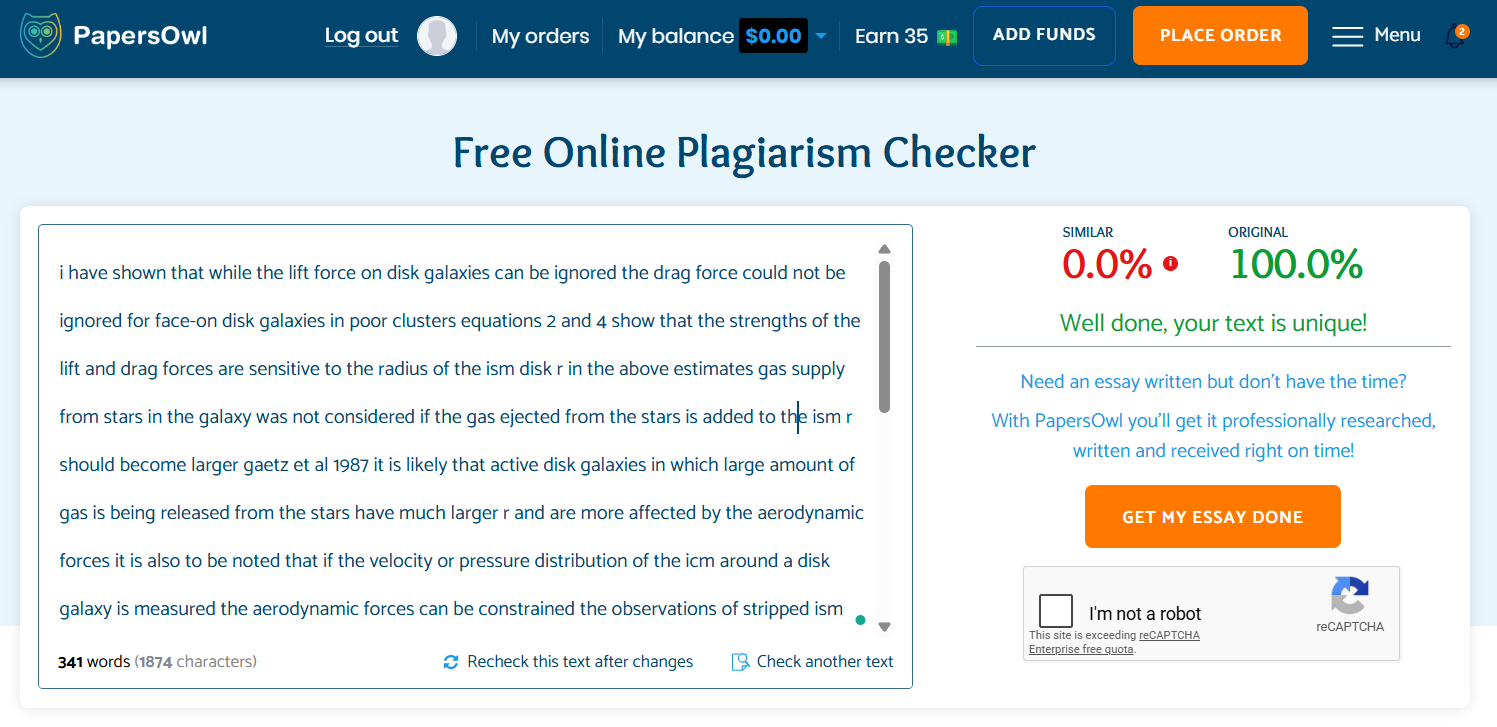
It couldn’t detect any plagiarism in one of the samples at all. That was an excerpt from an academic article published in 2006 in Japan. But PapersOwl labeled it as 100% original (i.e., 0% plagiarism).
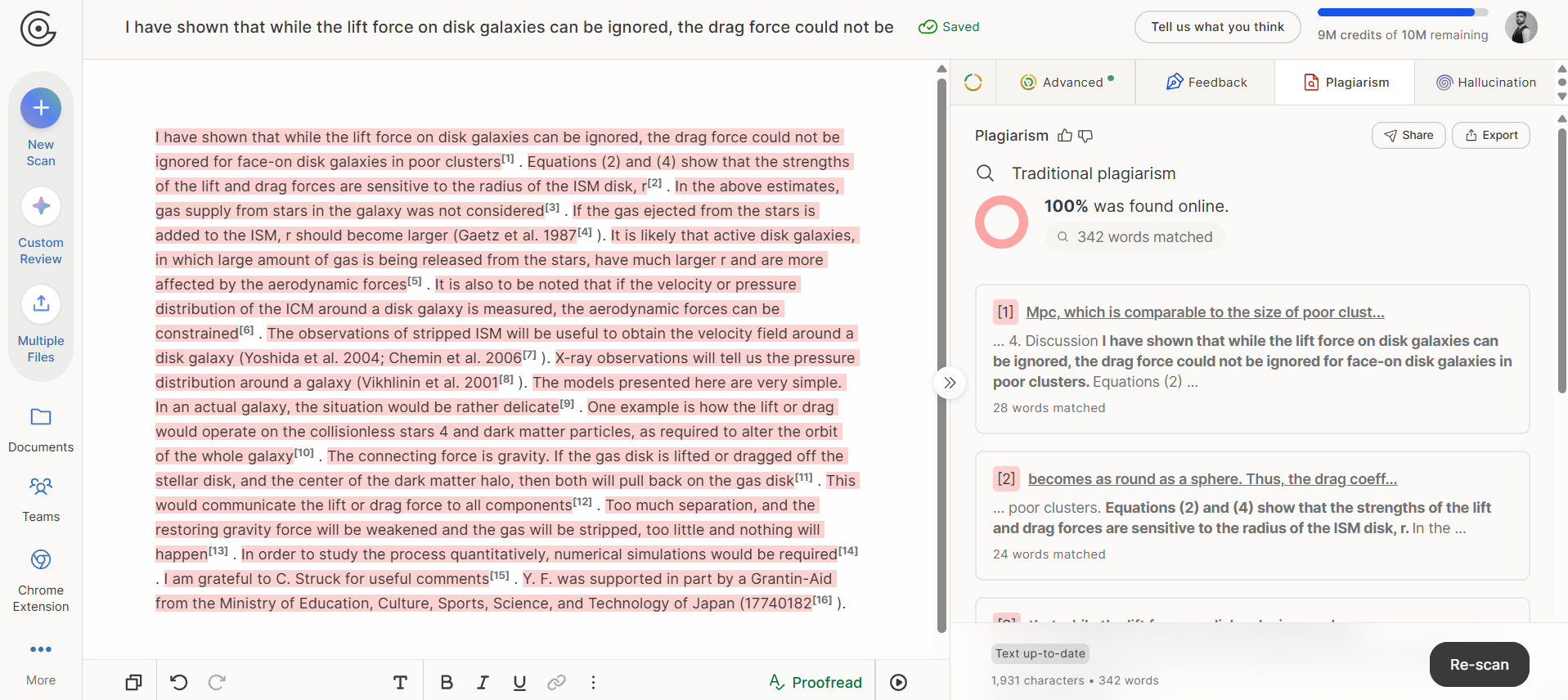
I scanned the same sample with GPTZero’s plagiarism checker, and it gave a 100% plagiarism verdict.
The other two samples that PapersOwl gave inaccurate plagiarism scores for had some interesting things to note about.
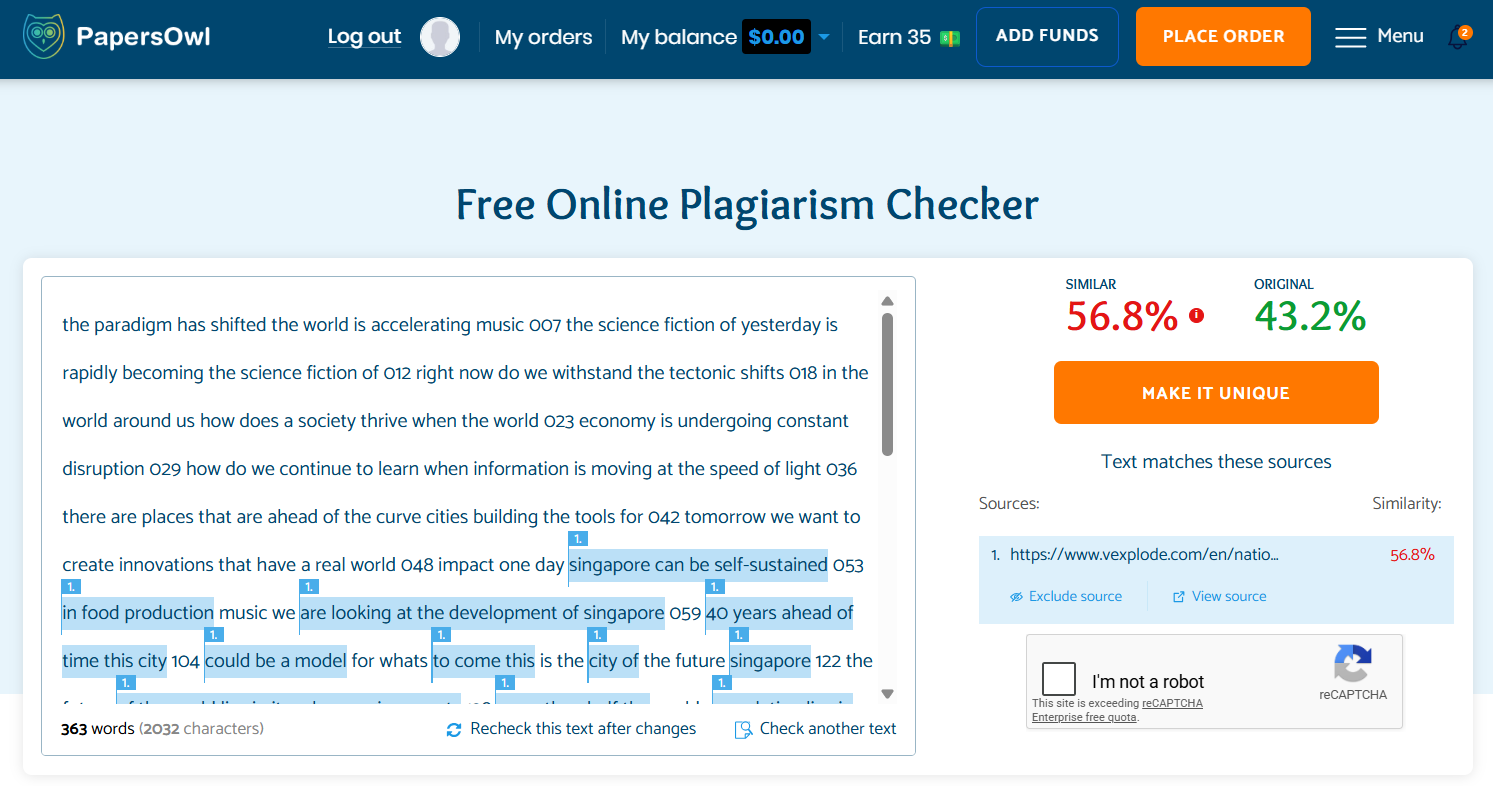
PapersOwl gave them low plagiarism scores, detecting chunks of the text from some sources. But the interesting thing is that our entire samples were present in those sources, so it’s not clear why PapersOwl couldn’t detect a high level of plagiarism.
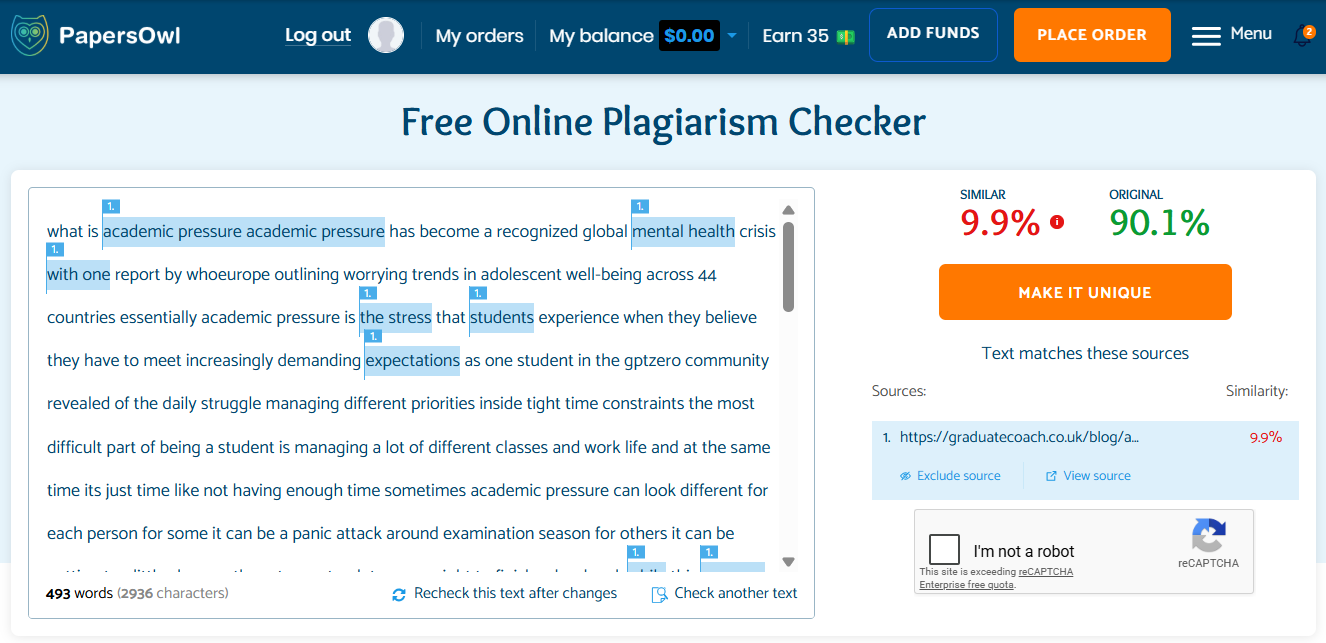
Take a look at the plagiarism report of the two samples below.
This one was a transcript of a documentary by National Geographic published in 2018:
And this one was an academic paper from 2023:
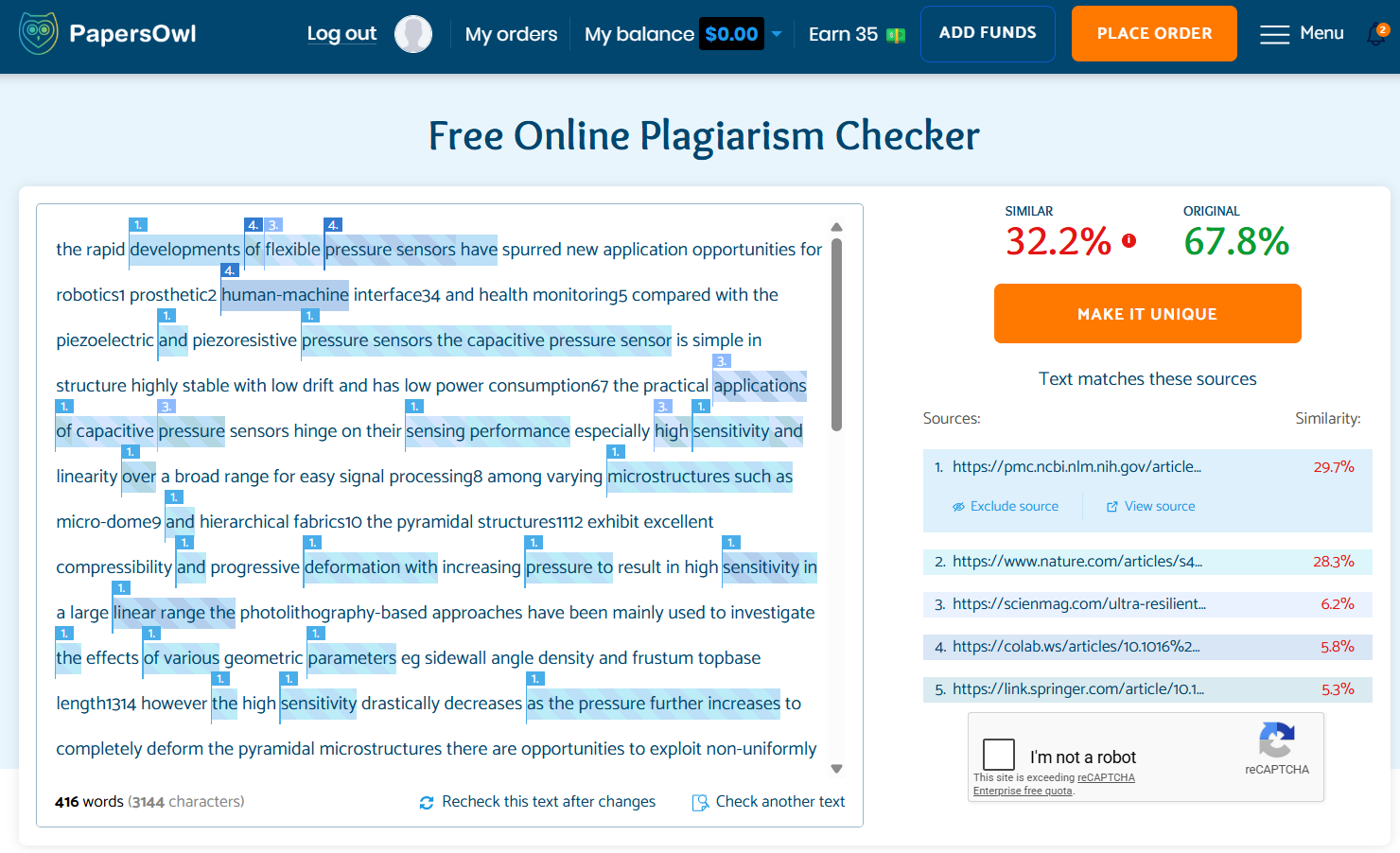
A possible takeaway from this set can be that PapersOwl might not be a reliable plagiarism scanner for academic papers.
PapersOwl vs Very Recent Content
This set had mixed results. All content was published during the month of July 2026.
PapersOwl was able to detect over 98% plagiarism in news articles from popular agencies like BBC and Yahoo Finance published one or two days ago.
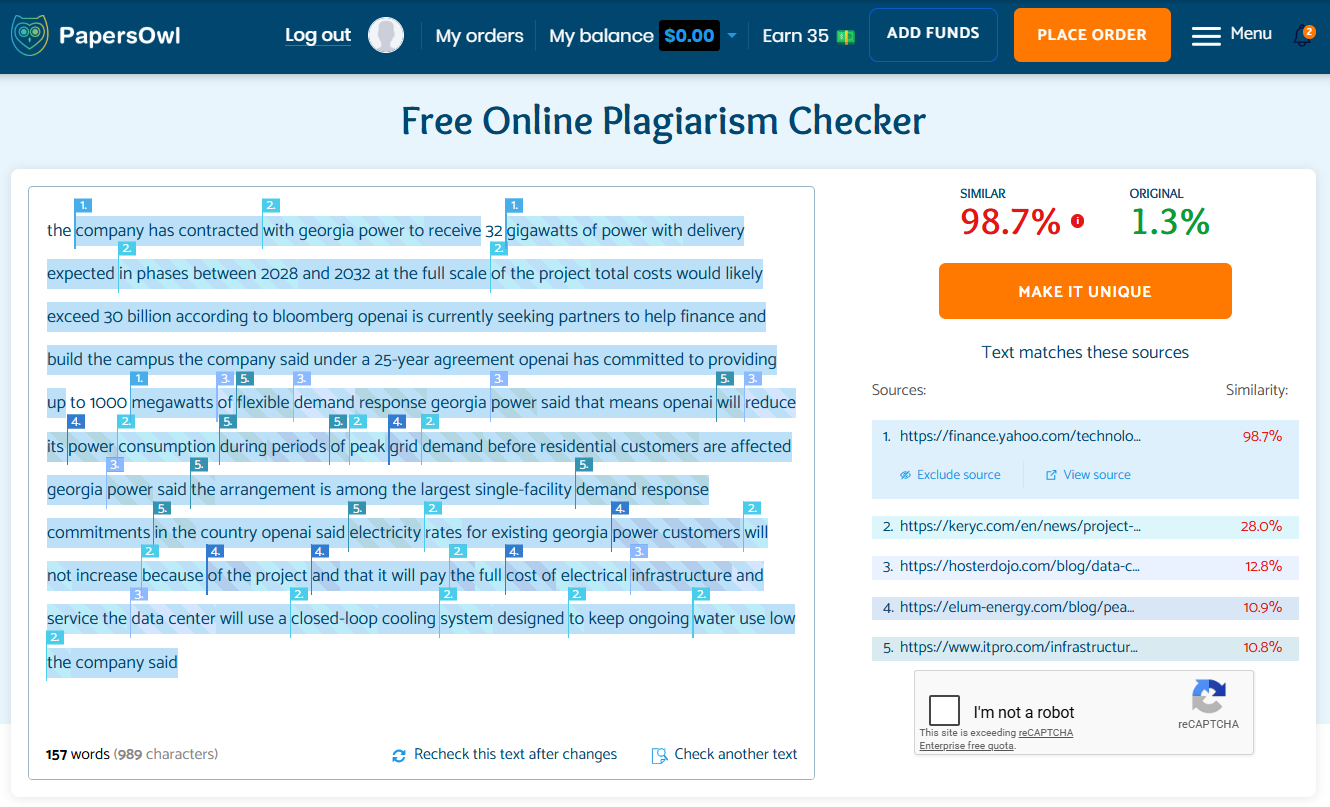
But at the same time, a Washington Post article was given a low plagiarism score of just 50.1%.
Then I scanned text from company websites. One article was posted by GPTZero, and another was posted by an enterprise accounting software called Sage.
PapersOwl gave both of them very low plagiarism scores, and the sources it surfaced were also unrelated to the scanned text.
The conclusion from testing of this set can be that PapersOwl might not be a reliable plagiarism checker if text has been copied from niche or company websites.
Why is PapersOwl Plagiarism Checker Free to Use?
As I have mentioned earlier, PapersOwl’s plagiarism checker is fully free. It won’t ask you to pay after a few scans. You’ll only be asked to sign in after two scans, after which you can continue using the tool for free.
Also, be ready to face CAPTCHAs if you have to perform several scans in a short time.
Now, let’s address the question. Why does PapersOwl offer its plagiarism checker for free, given it has a fairly decent accuracy rate?
This could be because their real income stream is their academic writing services. They use their plagiarism scan results to nudge students into purchasing their writing services in order to remove plagiarism from their content.
Who Should Use Papers Owl Plagiarism Detector?
Based on what I saw during my PapersOwl plagiarism detector testing, I think it’s a pretty decent tool for checking plagiarism fast.
PapersOwl's plagiarism checker is a decent option if you need a free tool with no word limits and no daily scan caps. It works well if you're checking content against popular news sites or older published webpages. In those cases, it caught plagiarism reliably and traced the text back to the correct sources.
But if you're a student or a researcher checking academic papers, I'd be a little careful and take its score with a grain of salt. PapersOwl couldn’t detect plagiarism in several academic samples during my test, including one it labeled 100% original when the entire excerpt was copied from a published source. It also struggled with content from niche or company websites.
So my advice would be to use it for quick and casual checks on general web content. Don't rely on it alone when the stakes are high, like submitting a paper for a grade. Instead, you can use GPTZero’s free plagiarism checker, which is built exactly for your academic needs, no matter if you’re a student, educator, researcher, or an author.
GPTZero’s Plagiarism Checker is Far More Advanced
PapersOwl’s plagiarism checker has a high accuracy rate, but if you paid attention, it didn’t call out 100% plagiarism even once despite identifying the sources correctly.
But GPTZero’s plagiarism scanner was able to not only find the correct sources but also give a 100% plagiarism score where applicable.
GPTZero’s plagiarism checker also cites the source for each plagiarized sentence separately. If you want to use a sentence in your content from a source, you can copy its citation from within GPTZero’s plagiarism report.
Have content to scan for plagiarism? Try GPTZero’s plagiarism checker for free now.
FAQs
Is PapersOwl plagiarism checker legit?
Yes, PapersOwl is indeed a legit plagiarism detection tool. In my testing, it detected high levels of plagiarism from news articles and older web pages, and it also identified the correct sources where the text was copied from. It's fully free with no word limits. But you need to keep in mind that it isn't perfect, especially with academic papers and niche websites, where it struggles to accurately detect plagiarism.
Which is the most trusted plagiarism checker?
Turnitin is by far the most trusted name in academic settings, since schools and universities rely on it. But it isn't available to individual users. If you want a free tool with high accuracy that anyone can access, you can use the GPTZero plagiarism checker. It detected 100% plagiarism where applicable in my tests and cited each plagiarized sentence separately.
Is PapersOwl similar to Turnitin?
PapersOwl is not at all similar to Turnitin. Turnitin is a paid, institution-level tool that schools use to check student submissions against a massive private database. On the other hand, PapersOwl is a free public tool with no such backing. While PapersOwl performed decently in my tests, it doesn't come close to the depth or reliability that Turnitin offers educators.
Is the GPTZero plagiarism checker more accurate than PapersOwl?
Yes, based on my testing. GPTZero found the correct sources and gave a 100% plagiarism score where it applied, while PapersOwl never hit 100% even once. GPTZero also cites the source for each plagiarized sentence, so you can grab a citation directly from the report. PapersOwl doesn't offer that level of detail and struggles to detect academic sources correctly.