
WriteHuman AI Review: Can it Bypass 4 Major AI Detectors?
WriteHuman.ai is an AI humanizer that claims to beat major AI detectors, particularly GPTZero. Does it really? Find out in this hands-on WriteHuman.ai review.


In the initial days of the AI boom, students would generate text with AI and submit the raw text.
Then came AI detectors, and students could no longer submit raw AI-generated assignments. According to a 2024 survey conducted by the Center for Democracy & Technology (CDT), 76% of Licensed special education teachers say that “they are more likely to use an AI content detection tool regularly.”
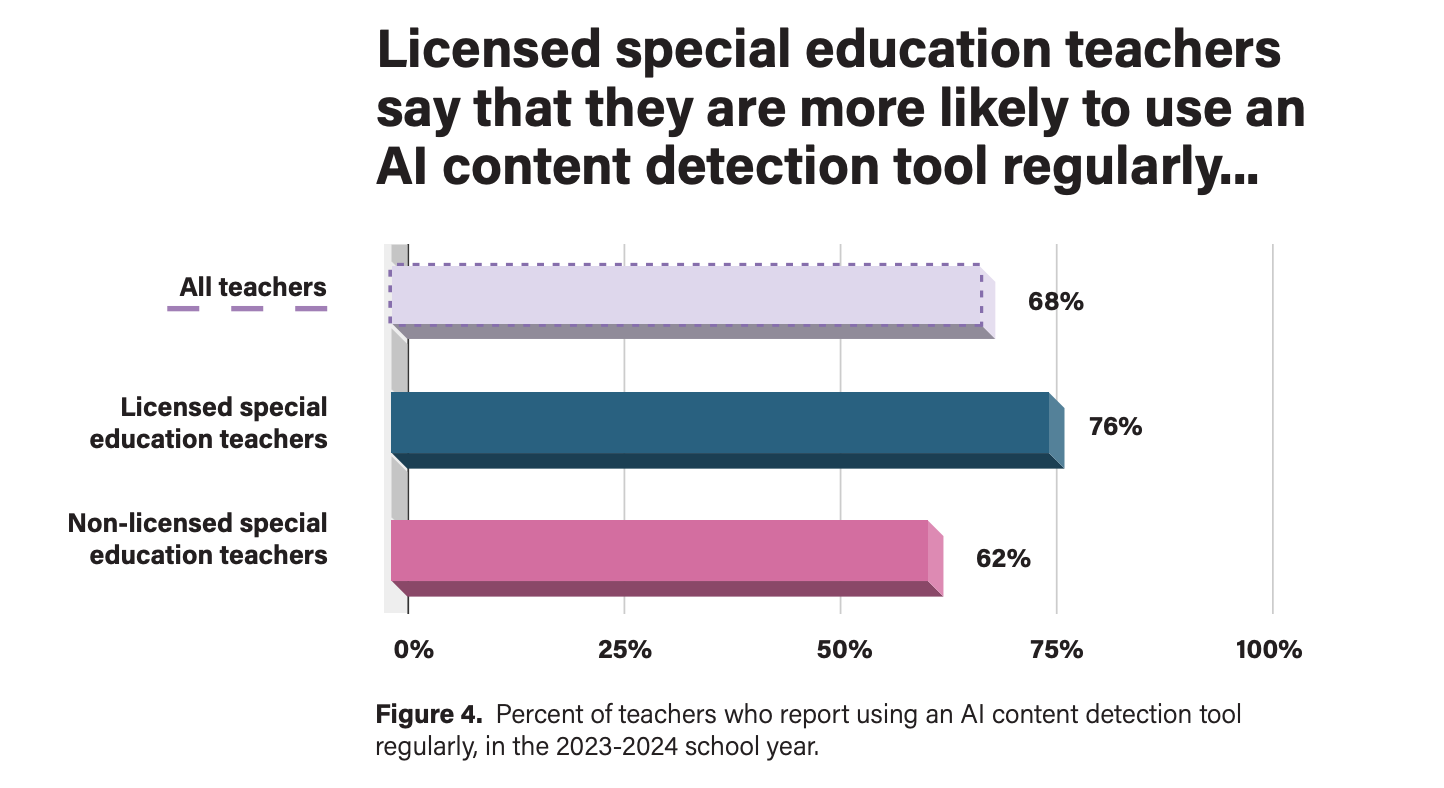
By now you can tell that this number increased.
But did students stop using generative AI for their homework? No, because then AI humanizing tools arrived, which promised users that they could bypass AI detectors with ease.
Are these AI humanizers effective at what they claim? We should only speak about and review one AI humanizer at a time instead of making sweeping statements.
And that’s what I have been doing. I have published reviews of several AI humanizers in the past.
Today, I’ll be reviewing another AI humanizer called WriteHuman.ai that has been gaining popularity. The tool makes bold claims about beating major AI detectors, so I have tested it against the same AI detectors to test its claims.
Before starting the WriteHuman AI review, here’s a brief overview of the platform.
What is WriteHuman.ai
WriteHuman.ai is primarily an AI humanizer, but it also offers three other tools, namely an AI detector, an AI image detector, and a word counter.
So the platform offers four tools in total. But WriteHuman.ai’s main product is still its AI humanizer. The name of the platform suggests the same, and the homepage of the website also talks about the AI humanizer mainly.
Due to this, the discussion in this article will revolve around the AI humanizer.
WriteHuman.ai claims that its humanized text can achieve high human scores on leading AI detectors.
To back their claim, it also lists the names of the AI detectors and an example of human scores its humanized text can achieve on these platforms.
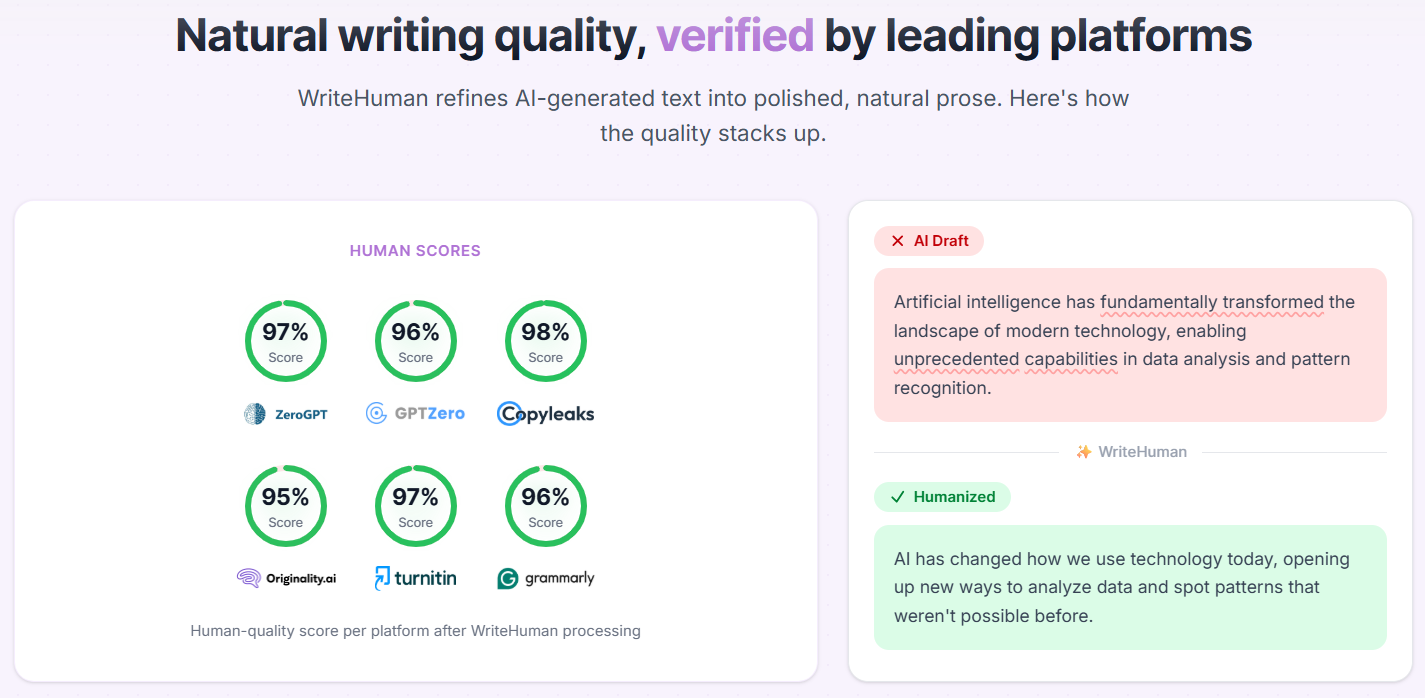
The AI detectors WriteHuman.ai lists are as follows:
- ZeroGPT
- GPTZero
- Copyleaks
- Originality.ai
- Turnitin
- Grammarly
According to the platform, the techniques it uses to remove AI patterns from text include the following:
- Replacing filler words and sentences (e.g., in today’s fast-paced world, it is important to note)
- Breaking the formulaic rhythm of AI-written paragraphs
- Randomizing sentence lengths like humans do
- Removes or replaces overused transitional words/phrases with more human options
WriteHuman.ai’s AI detector scans the following signals in text to determine its verdict and the scores:
- Perplexity: Perplexity is measured based on how predictable or unpredictable the writing is. High predictability means low perplexity, which is an AI-writing trait.
- Burstiness: Calculated based on the rhythm of sentences. Predictable or repetitive rhythm gets low burstiness, which is a sign of AI-writing.
- Stylometric fingerprints: Unique patterns left by different AI writing models.
- Watermarks & training echoes: Some AI writing models slightly favor a secret subset of words to make their text appear human. AI writing models also reproduce certain words, phrases, constructions, or clichés at higher rates than a typical human writer would because their training data contained a high-frequency of these. WriteHuman’s AI detector claims to catch these.
Testing Results At a Glance
Can WriteHuman.ai Bypass Popular AI Detectors?
You read what WriteHuman claims about its effectiveness against major AI detectors.
The platform seems to have a particular emphasis on GPTZero compared to other AI detectors it names. A recent blog published by the platform reports that WriteHuman humanized 400 AI-generated text samples, and they managed to bring down GPTZero’s AI score from 73.7% to 4.0%.
Here’s how WriteHuman says it built that test sample:
“We took 400 real AI-generated inputs from our platform (English, 100–300 words, last 30 days), ran each through our humanizer to generate 3 variations per input, then scored every version (input + all three variations) with GPTZero. For each input, we took the best of three (the lowest AI-probability variation, as our Pro and Ultra plans allow for), because that's what the product surfaces to users.”
The study also mentions that 70.8% of the AI-generated samples that were flagged as "more likely AI than human" by GPTZero for having ≥50% AI probability were scoring below 50% AI after WriteHuman humanized them.
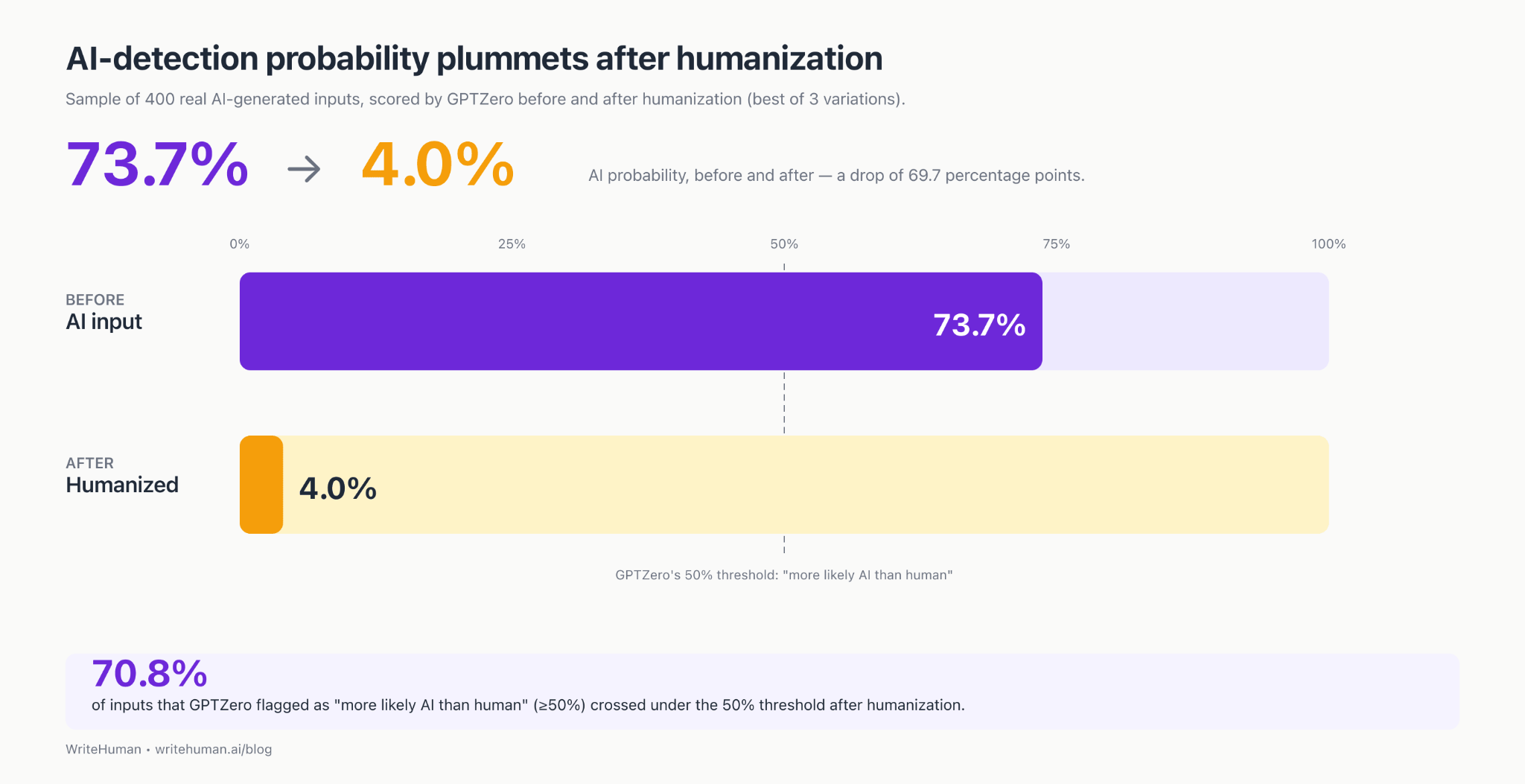
A 69.7 percentage point drop in AI score is a bold claim to make for WriteHuman.
We can’t tell if this testing actually happened. But if we assume it to be true, it can be explained why those text samples bypassed GPTZero. You can see that WriteHuman mentions their text samples were all 100-300 words. And after humanization, the text usually gets even shorter.
All AI detectors perform well on long-form text. Their accuracy drops on short content, especially when there are less than 300 words. WriteHuman might have exploited this technology limitation in its favor, knowingly or unknowingly.
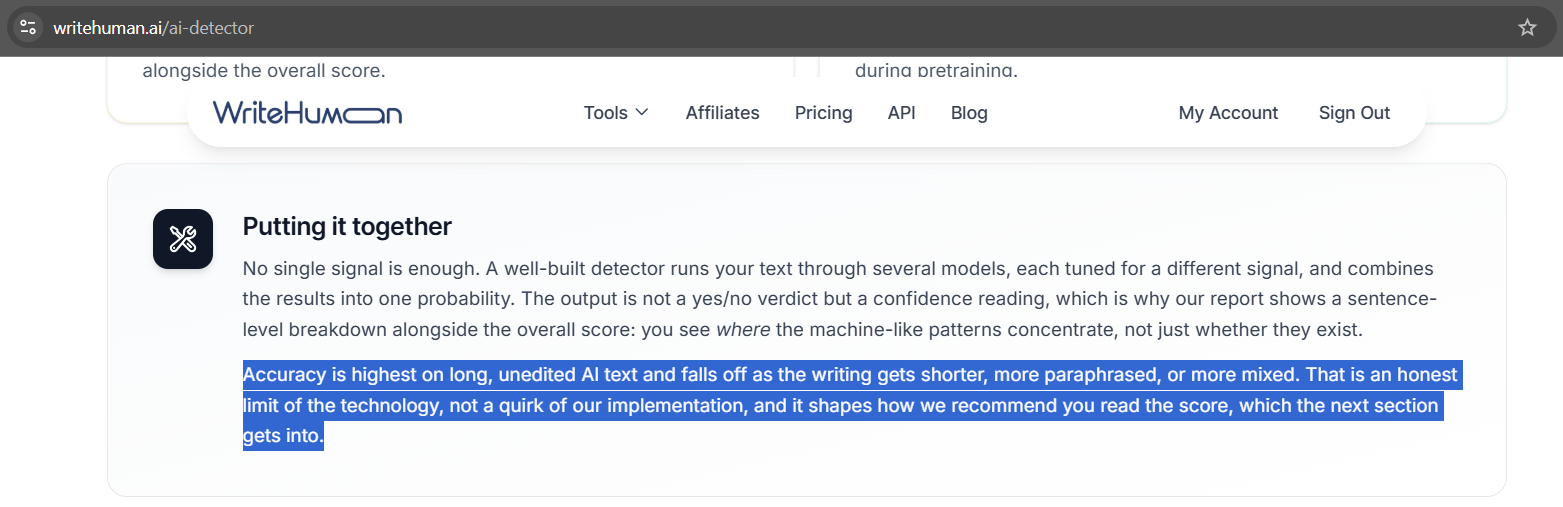
But I am certain that WriteHuman knows about this limitation of AI detectors. The platform acknowledges this fact on its AI detector page in these words:
“Accuracy is highest on long, unedited AI text and falls off as the writing gets shorter, more paraphrased, or more mixed. That is an honest limit of the technology, not a quirk of our implementation, and it shapes how we recommend you read the score, which the next section gets into.”
It’s established that you should only use long-form content if you’re testing the effectiveness of an AI humanizer against AI detectors.
That’s what I did. Let me show you how WriteHuman performed against the AI detectors in question.
WriteHuman.ai Hands-on Testing
The good thing about AI detectors that WriteHuman claims to bypass is that they are free to use. So you can test this claim by yourself. Simply humanize text through WriteHuman and paste it into those AI detectors and see whether it manages to get a high human score.
That’s what I did. I asked ChatGPT to generate 800 words on a topic, then I humanized it all using WriteHuman’s humanizer and ran the humanized sample through all the AI detectors that the platform claims to beat (except Turnitin because that’s only for organizations).
Please see this screenshot of the AI-generated sample.

Please see the screenshot pasted below to see the text, humanized by WriteHuman.ai.


Here’s the complete humanized text that WriteHuman AI generated that you can also use for testing.
Let’s now see how the AI detectors scored against this WriteHuman AI humanized text.
1. GPTZero
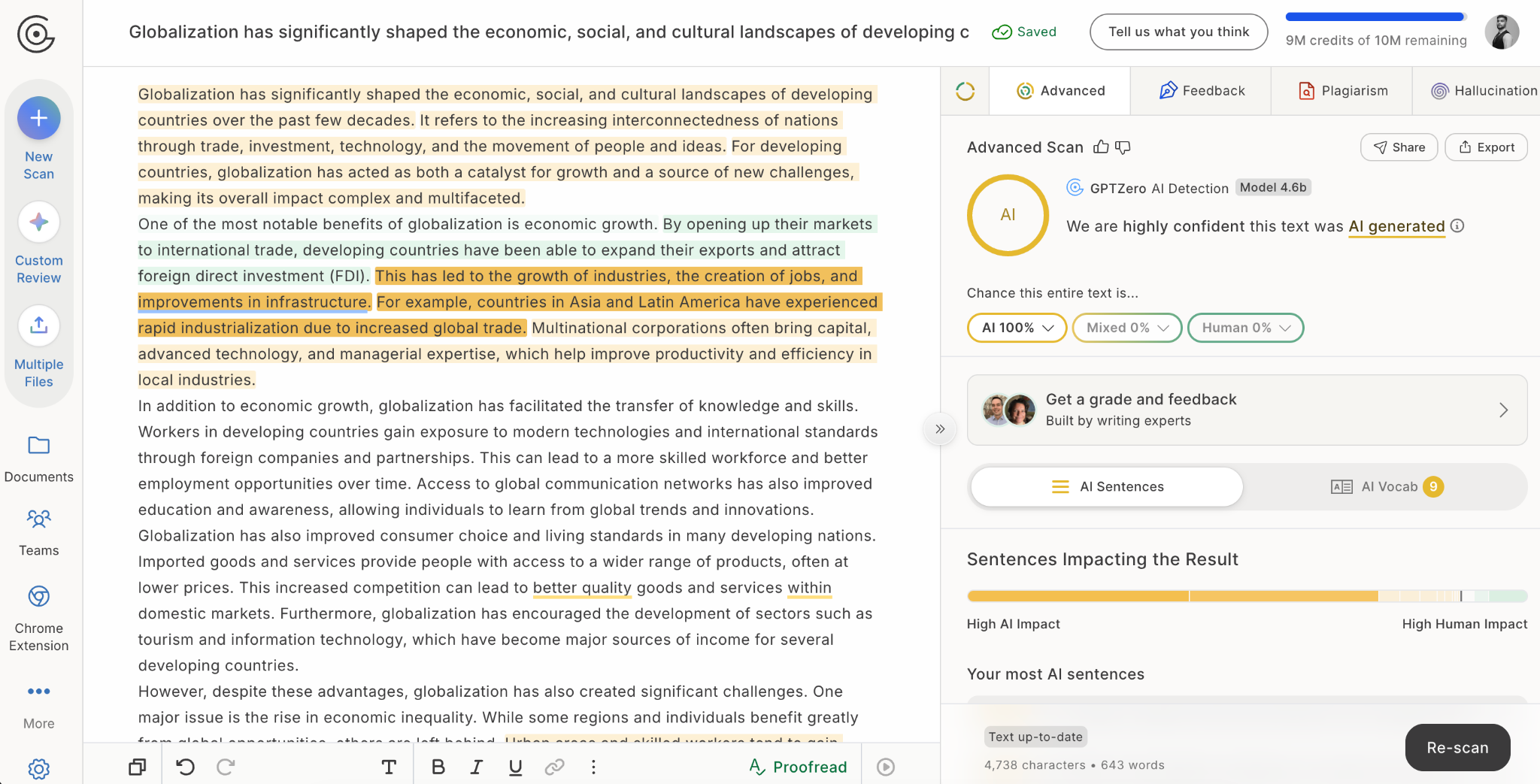
First of all, I pasted the text I generated using ChatGPT into GPTZero, and it correctly flagged the whole content as 100% AI-generated.
Now, it was time to paste the humanized text that WriteHuman AI gave into GPTZero. Out of all the AI detectors, only GPTZero accurately labeled the text as what it was: AI paraphrasing.
When a piece of text is directly coming from an AI text generator, GPTZero labels it as AI, as you can see in the above screenshot. But since the text was coming from an AI humanizer (which falls under the AI paraphraser category), GPTZero labeled it accordingly.
GPTZero flagged the whole content as 84% AI paraphrasing and said that “We are highly confident this text was originally AI, but rewritten by AI or human”
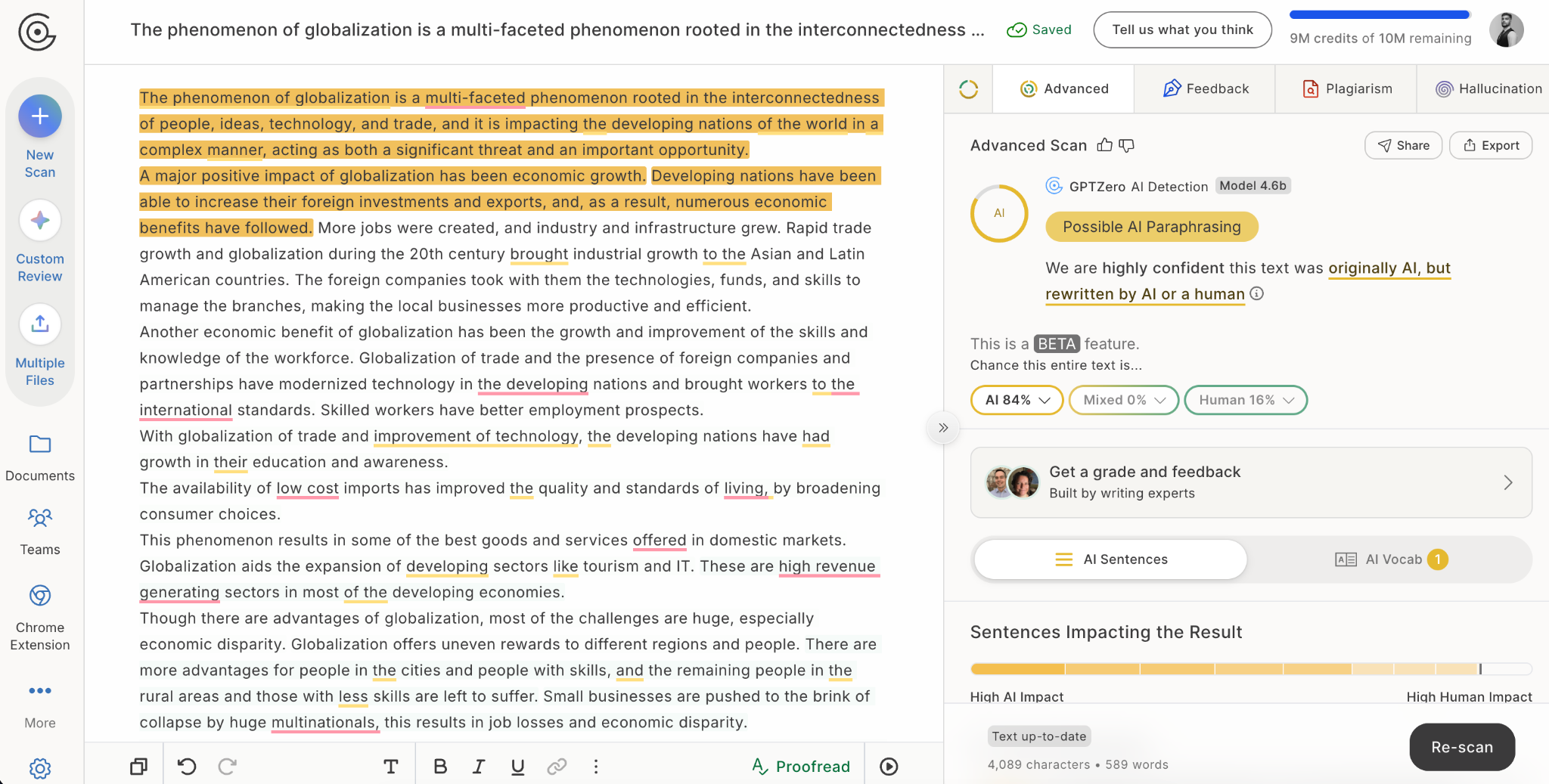
GPTZero could even tell that the text was originally AI but was rewritten by an AI humanizer. That’s the level of accuracy that you should expect from an AI detector.
You can also try GPTZero for free on your samples and see its accuracy yourself.
Verdict: WriteHuman AI humanizer couldn’t bypass GPTZero as it claims.
2. ZeroGPT
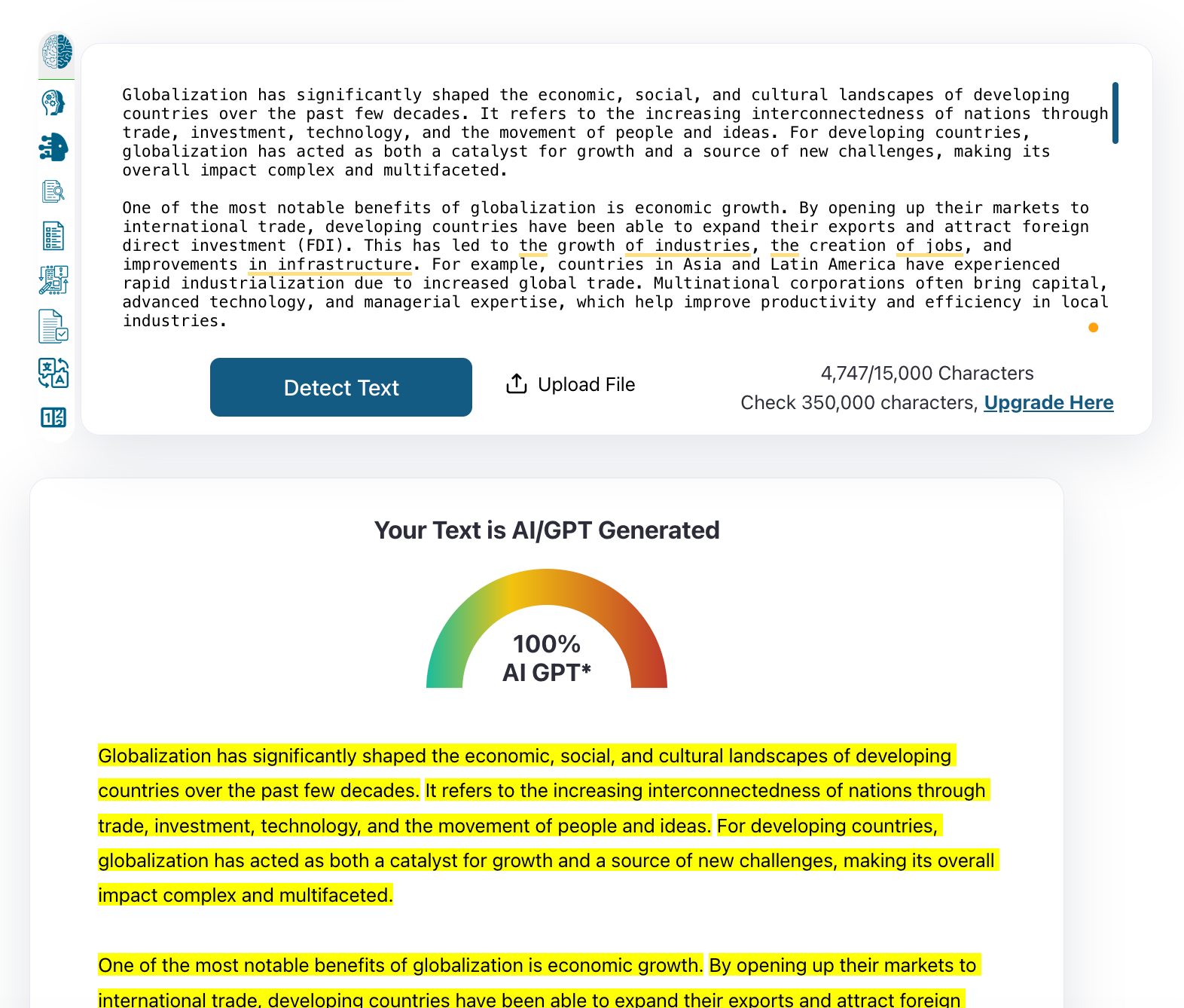
ZeroGPT, which is a copycat of GPTZero, gave the original AI text (generated using ChatGPT) a 100% AI score, which is correct.
But ZeroGPT fully fell for the humanized text.
WriteHuman’s text was able to fully bypass ZeroGPT.
The AI detector’s verdict was “Your text is human-written” with 0% AI score (i.e., 100% human).
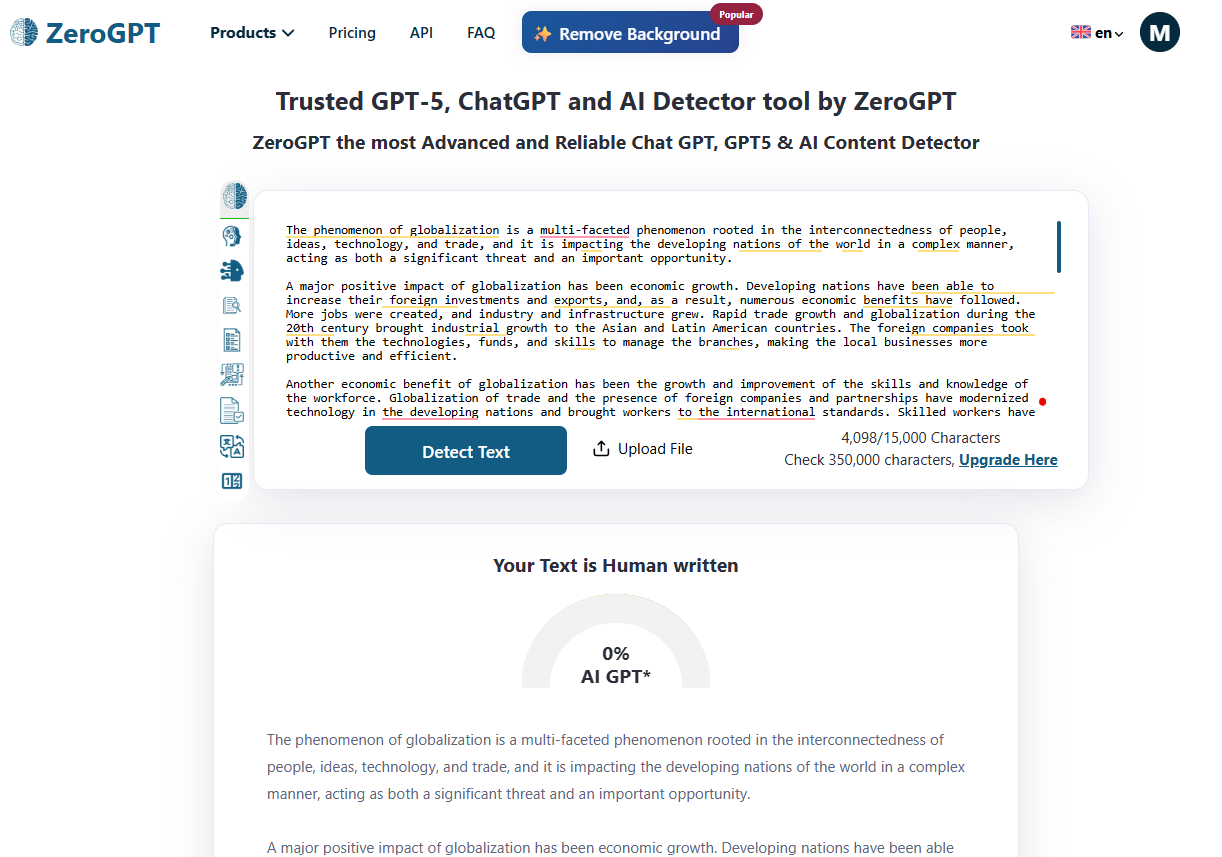
Verdict: WriteHuman AI humanizer managed to bypass ZeroGPT with ease.
3. Copyleaks
Copyleaks also correctly flagged the original ChatGPT-generated text as 100% AI, although the interface took ages to load.
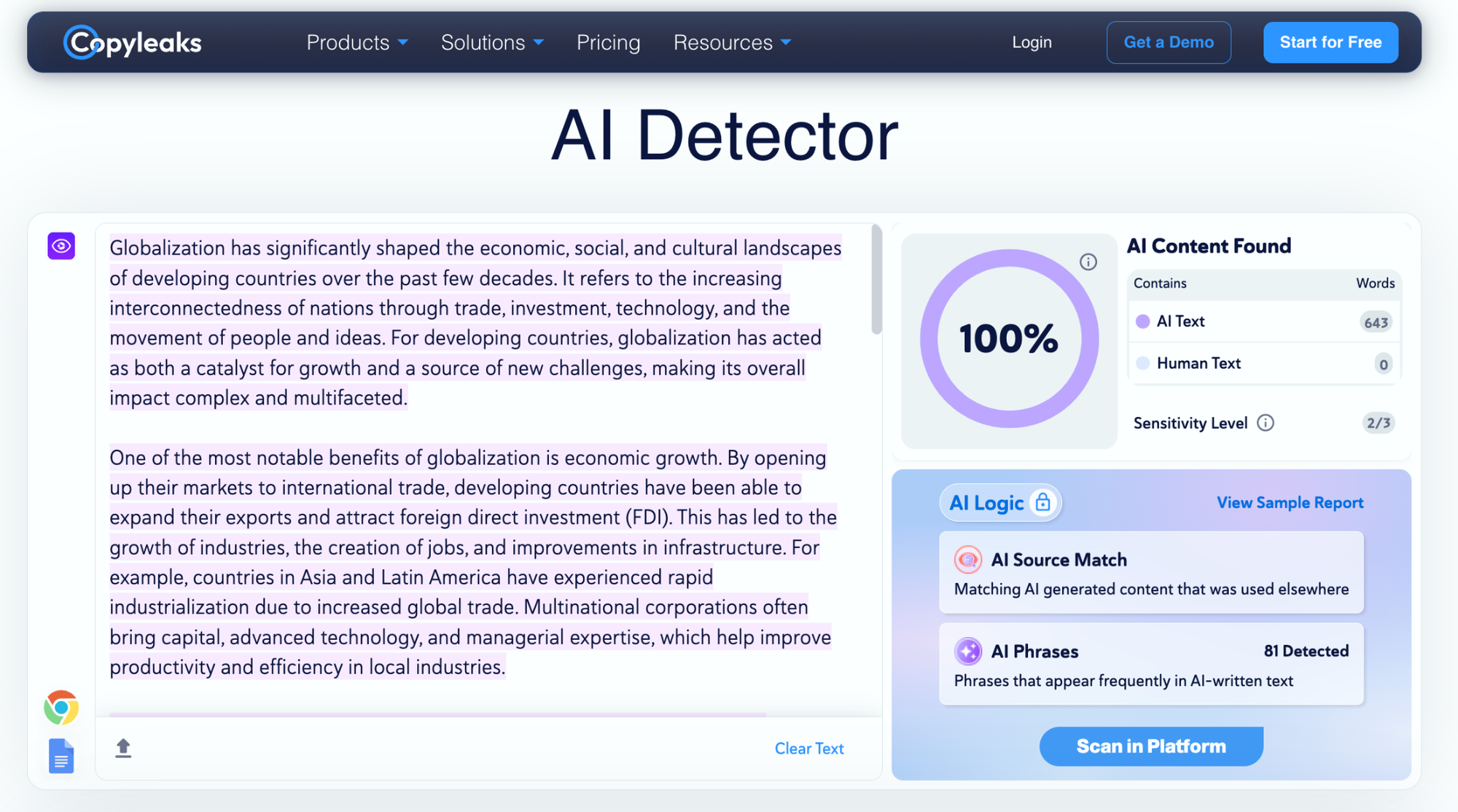
But Copyleaks performed the same as ZeroGPT when it comes to the humanized text. It failed to find AI in the humanized text of WriteHuman.
The entirety of the text was labeled as human, and it flagged 0% of the content as AI.
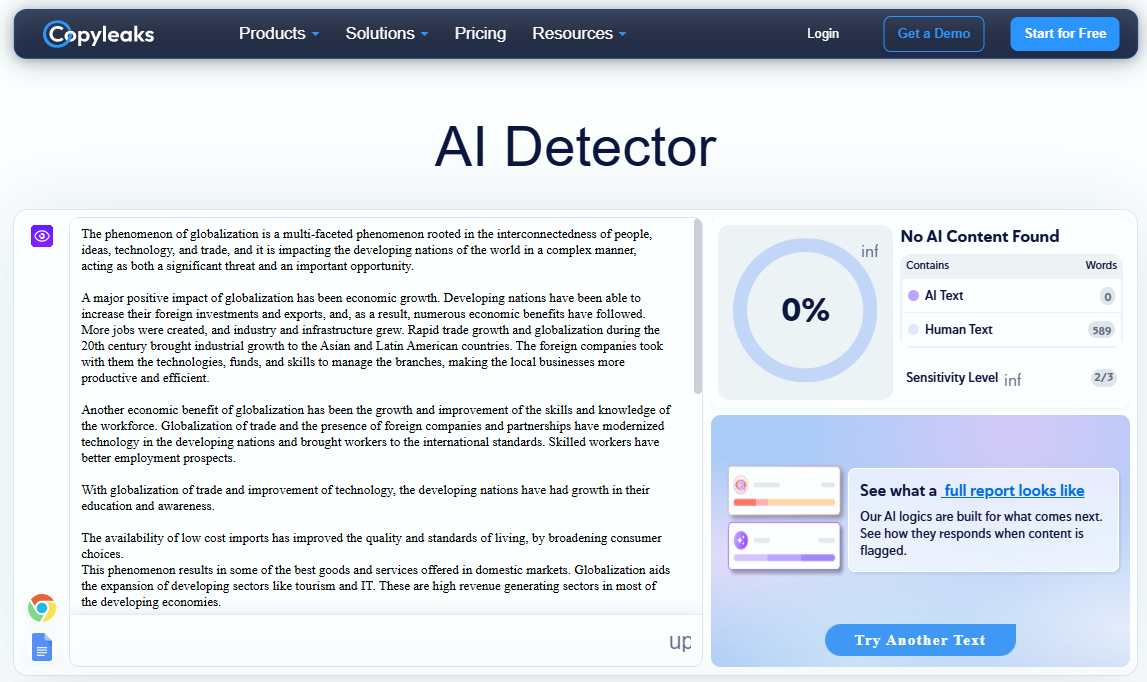
Verdict: WriteHuman AI humanizer bypassed Copyleaks with ease.
4. Originality.ai
Like all other AI detectors on this list, Originality AI also correctly flagged the original ChatGPT-generated text as 100% AI.
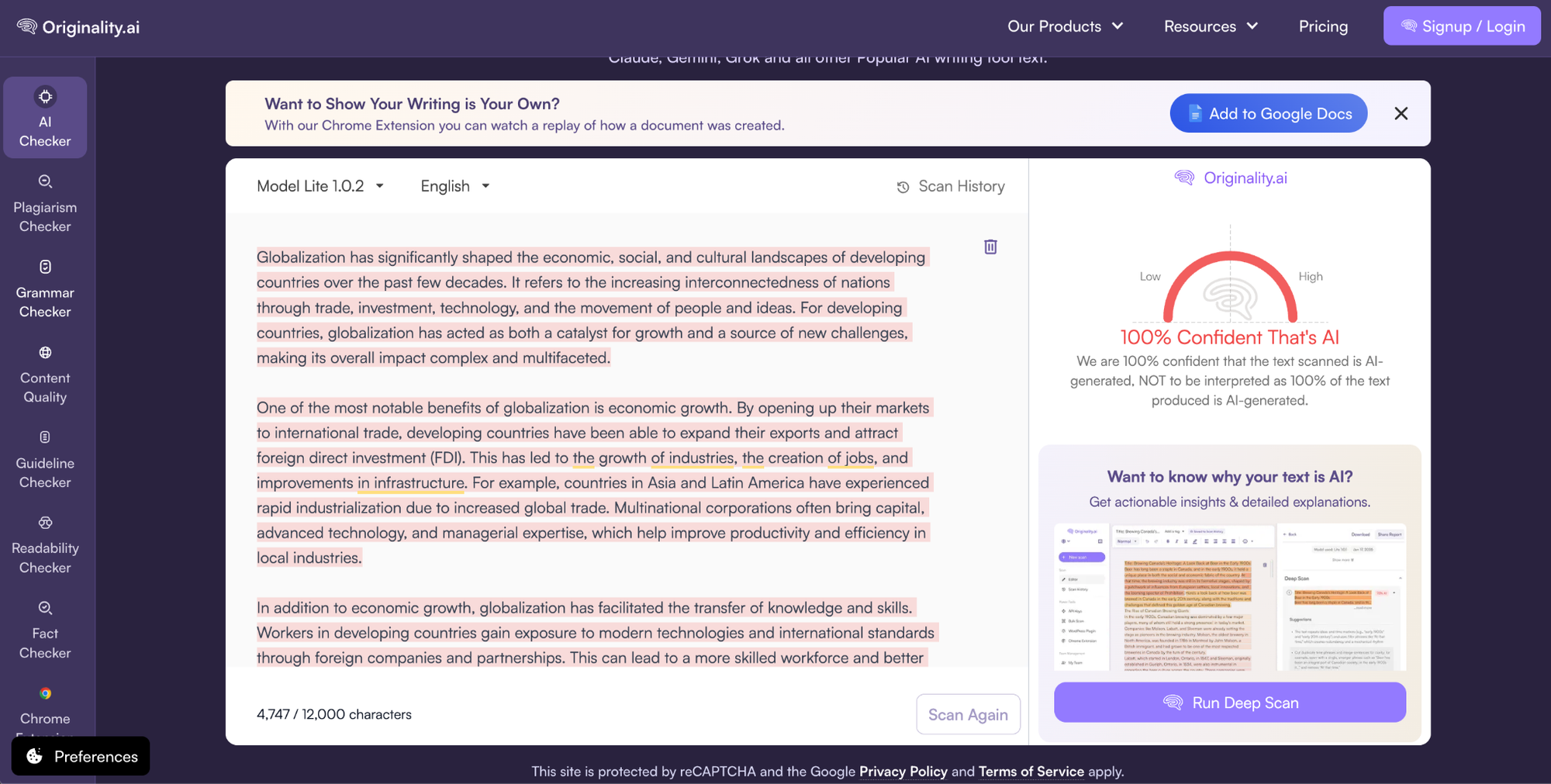
When it comes to WriteHuman’s humanized text, Originality.ai showed a little resistance against it but still reached the wrong conclusion.
Originality AI was 63% confident that the humanized text was original, i.e., human-written. That should be taken as its verdict.
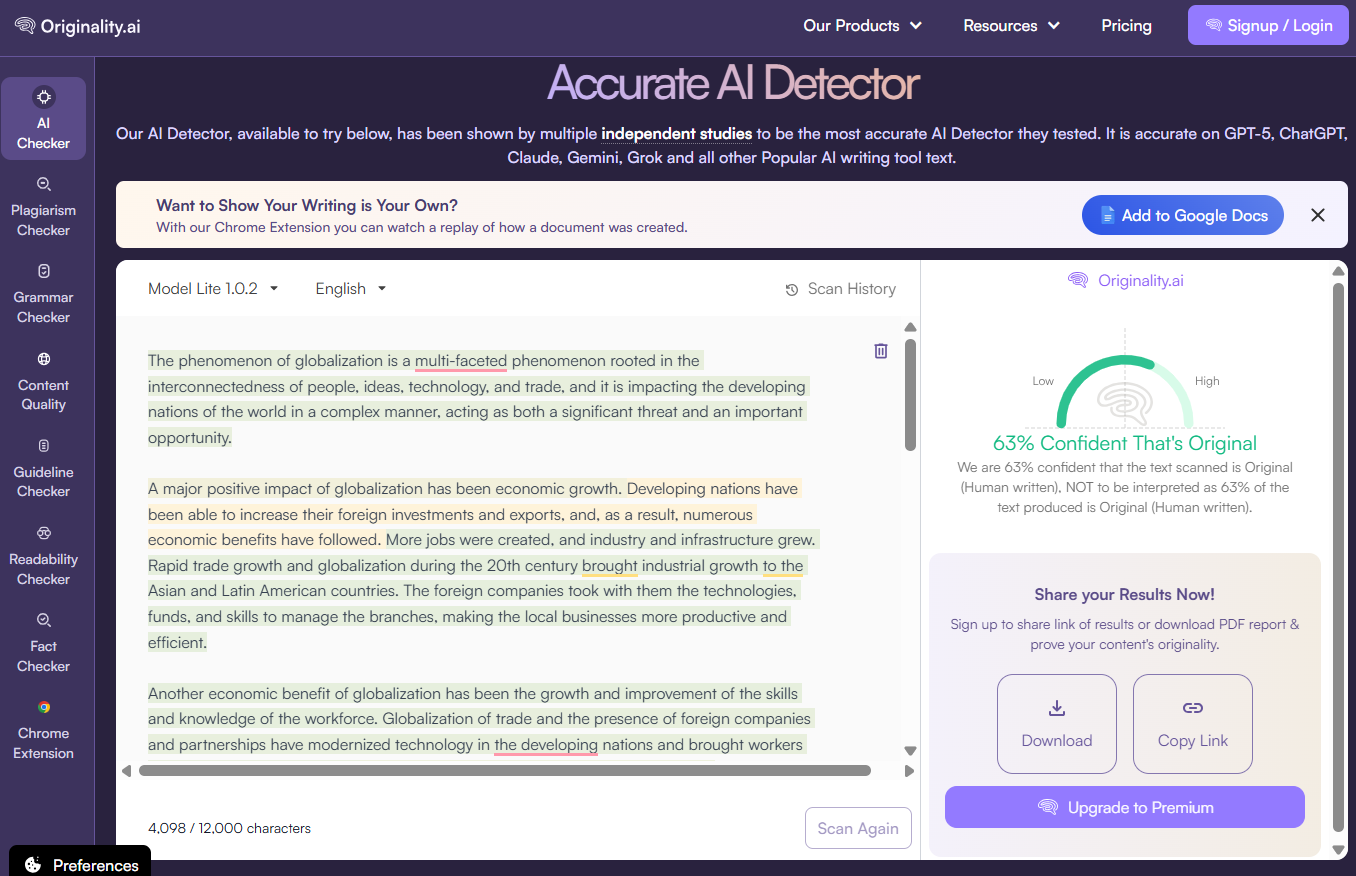
Verdict: Since Originality AI couldn’t label the humanized text as AI, it’s safe to say that WriteHuman was able to bypass Originality.ai.
WriteHuman.ai Pricing
WriteHuman AI offers a free plan which allows a few humanizing requests per day. Once you have consumed your daily limit, you have to wait until the next day to use the tool again.
And the free plan allows you to humanize only 250 words per request. That’s barely enough for serious work.
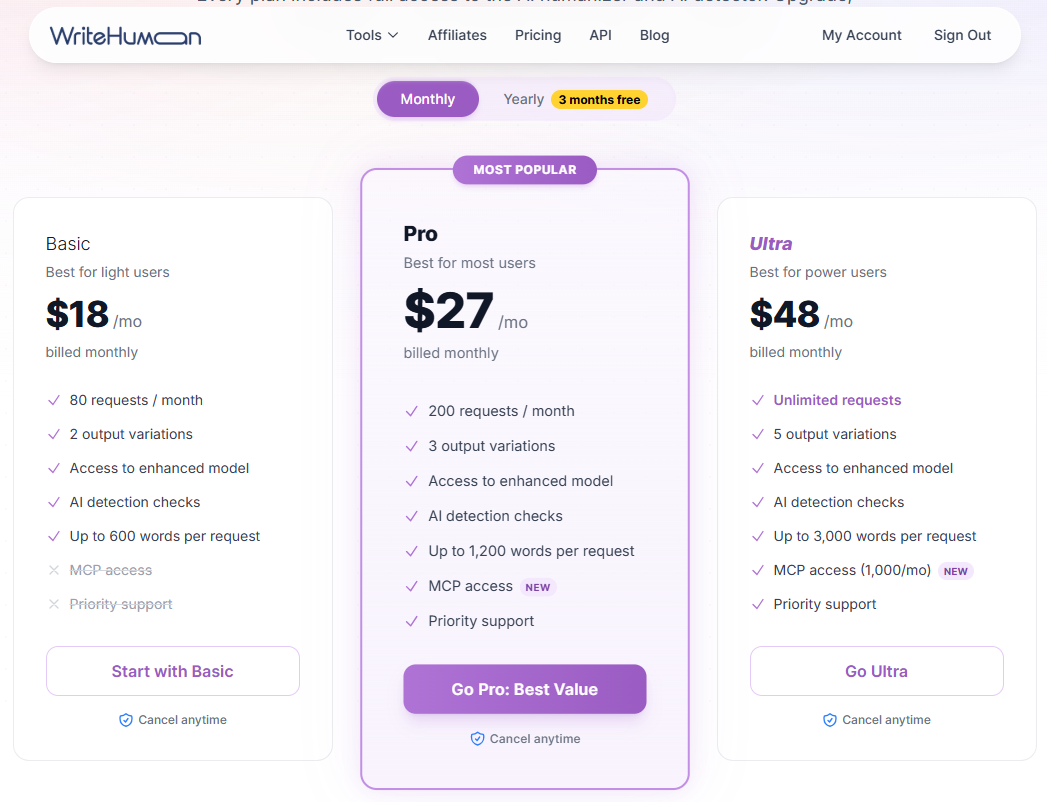
The three paid plans unlock higher daily limits and words/requests. You also get to humanize text using WriteHuman’s enhanced model.
The screenshot below shows the three plans with their per-month pricing and other details.
Use GPTZero to Identify Poor AI Humanizers
You might look at the results of this WriteHuman AI review and conclude that WriteHuman.ai is good for humanizing text because it managed to bypass 3 major AI detectors. But that would be a wrong takeaway.
Only poor AI detectors fall for AI humanizers. This has been observed time and again in reviews of other popular AI humanizers published by GPTZero, including HyperWriteAI, Uncheck AI, StealthWriter AI, and more on the way.
In all these tests, only one AI detector remains unbeaten, and that is GPTZero.
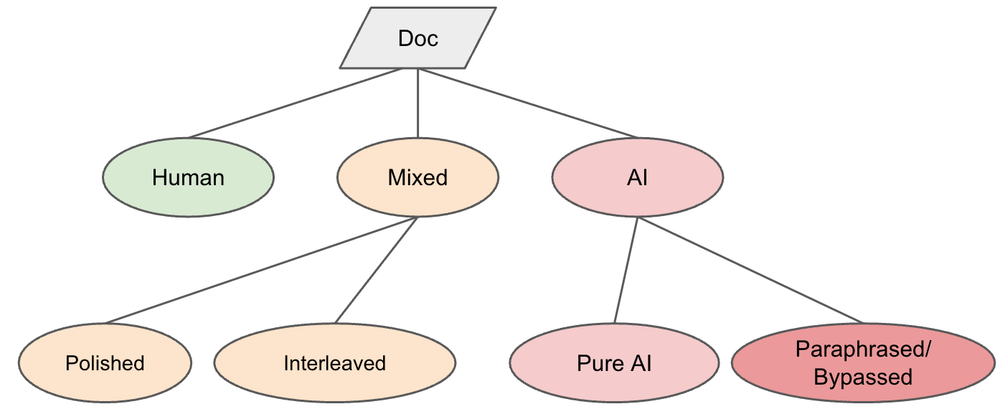
The reason is simple. GPTZero has been trained on AI humanized benchmarking data from 12+ open-source and closed-source paraphrasing tools. This helps it distinguish between and separately label raw AI-generated text and text that was paraphrased by AI.
Try GPTZero for free on your samples and witness the accuracy for yourself.
FAQs
What is WriteHuman AI?
WriteHuman AI is primarily an AI humanizer tool that claims to bypass leading AI detectors like GPTZero, Originality AI, Turnitin, Copyleaks, etc. It also offers three other tools, such as an AI detector of its own, an AI image detector, and a word counter. But its core product and the reason for its popularity is its AI humanizer tool.
Is WriteHuman AI humanizer detectable?
The content that WriteHuman’s AI humanizer generates is detectable, especially if you detect the content using a leading AI detector like GPTZero. In my testing, WriteHuman AI managed to bypass Originality AI, Copyleaks, and ZeroGPT successfully. But it couldn’t bypass GPTZero, as GPTZero correctly identified its content as “AI paraphrased” text.