New York Times Investigates Fake AI Biographies on Amazon with GPTZero

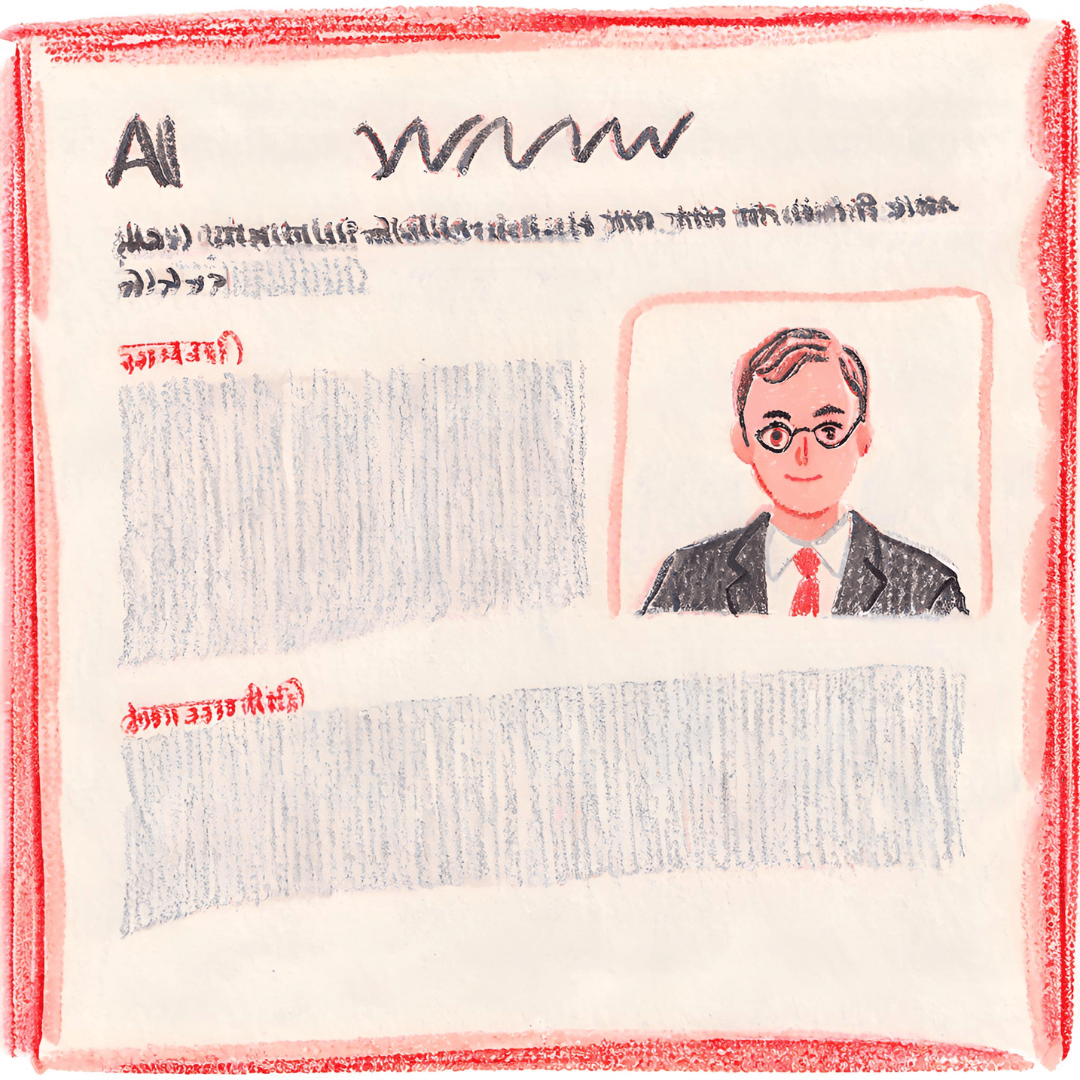
“[There’s a] new publishing subgenre: hasty, shoddy, A.I.-generated biographies of people who have just died,” Elizabeth A. Harris, New York Times Journalist said.
Upon the death of Joseph Lelyveld this year, former executive editor of the New York Times, his brother was shocked to find, “at least half a dozen biographies were published on Amazon in the days immediately following Lelyveld’s death. Several of them were available for purchase on the same day he died.” The twist - they falsely described Lelyveld as a chain smoker, one title being, “Beyond the Byline: Unraveling the Heart of Joseph Lelyveld: The Man Who Smoked His Way Through History.”
Harris was investigating a trail of A.I. generated books on Amazon and reached out to GPTZero to support her investigation. In this article, Harris talks about how she used GPTZero to find out that there is a 97% chance the book was written by AI. The 3% - slightly human sections at the end of the book. In a conversation with Edward Tian, CEO of GPTZero, Harris learned about A.I. interpretability. GPTZero’s model uses a combination of statistical properties such as text ‘burstiness’ with a deep learning model that uses AI trained to identify AI writing. In addition, GPTZero provides assessments of content that is a mix or balanced amount of human and AI writing, or entirely AI jargon.
“They want to make a buck on your grief,” said Michael Lelyveld. And many others have fallen victim.
On the same day Tom Smothers died, a book with an ungrammatical title, “Tom Smothers: Revealing 4 Untold Truth About Half of Smothers Brother” surfaced.
Toby Keith’s biography came with a warning, “the author and publisher make no warranties about the accuracy or completeness of the content,” it said. “Resemblance to real persons is coincidental.”

Source: New York Times
A.I. generated pieces have come under fire in other industries too. “Shoddy guidebooks that appear to be compiled with the help of generative artificial intelligence, self-published and bolstered by sham reviews, that have proliferated in recent months on Amazon,” said New York Times Journalists Seth Kugel and Stephen Hiltner. Not only is the text written by A.I., but the authors may be A.I. generated too. The Times investigated one author, and were unable to find any previously published work, records of his home or family and his headshot shows consistencies with being generated by A.I.
Sports Illustrated also allegedly published articles with fake A.I.-generated authors, according to Futurism, that found the journalists headshots for sale on an A.I.-generated image website.
Newsguard also deployed GPTZero on an investigation to uncover the truth behind AI-driven content farms. Their initial findings unveiled 49 websites across seven languages suspected of being predominantly or entirely generated by AI language models.
In a world filled with fake A.I. news, humans deserve the truth. GPTZero is committed to supporting journalists in their work towards bringing transparency in an A.I. world.
GPTZero is more than an A.I. detector. We preserve what's human. GPTZero brings transparency to humans navigating a world filled with A.I. content.