
How to Write a Resignation Letter: Tips & Templates
Ready to leave your job on good terms? Learn how to write a professional resignation letter to protect your reputation, preserve valuable relationships, and help you move on with confidence. Explore practical tips and templates for your situation.


It may be unpleasant in the moment, but quitting a job is often the right move. You may have found a new opportunity, or you may just need to step back from a workplace that doesn’t suit you. Whatever your situation, there are well-established protocols for leaving a job, and sending a resignation letter is a key part of the process.
A resignation letter officially informs your employer of your intention to leave your job, and it’s usually given with advance notice so your workplace can plan and adjust for your impending absence. As a perfunctory piece of communication, they’re not hard or time-consuming to write; they just require the right parts to be put in place.
This guide will explain the purpose of a resignation letter, identify necessary elements to include, and show you a variety of templates and formats to suit your situation. Pick up tips and best practices for crafting a clear and decisive resignation letter, and make the process efficient so that you can quickly move on to better, brighter opportunities.
What is a Resignation Letter?
“A resignation letter is a formal notice that you are leaving your job. It is usually shared with your manager and human resources team after you decide to resign.” Even if you’ve had an informal discussion with your employer about leaving, it’s still important to submit an official letter of resignation so that the process is properly documented and you leave with a strong final impression.
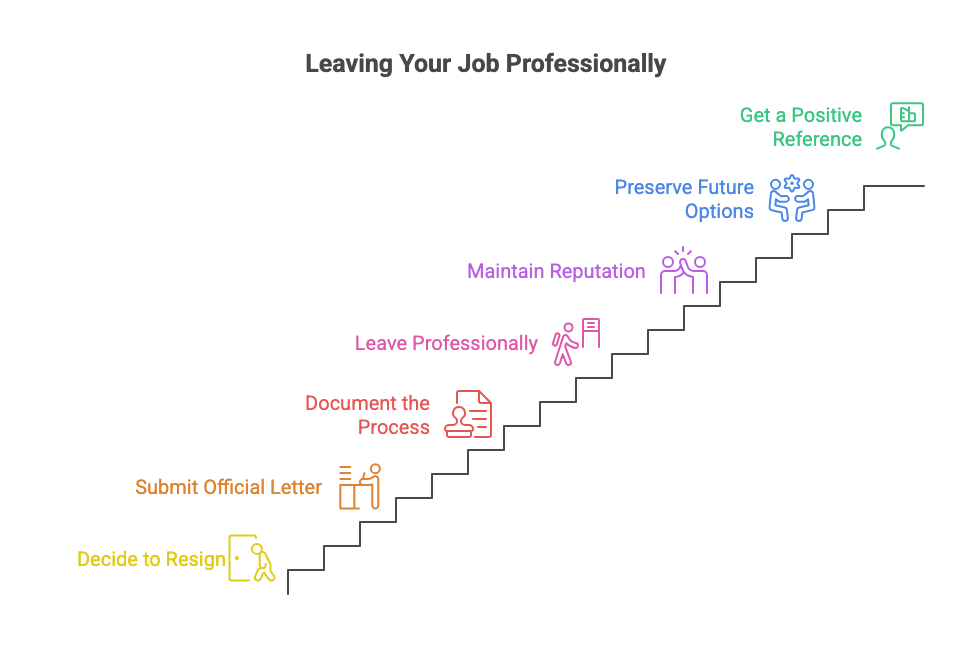
A well-written resignation letter is a key part of leaving your job without burning bridges. Besides courtesy and protocol, it’s smart to leave your job in a professional manner because:
- People change jobs all the time. In the future, you may end up once again working with someone at the organization you’re leaving.
- You may need a positive job reference from your (soon-to-be former) employer.
- People talk. Take simple steps to maintain a positive reputation.
What to Include in a Resignation Letter
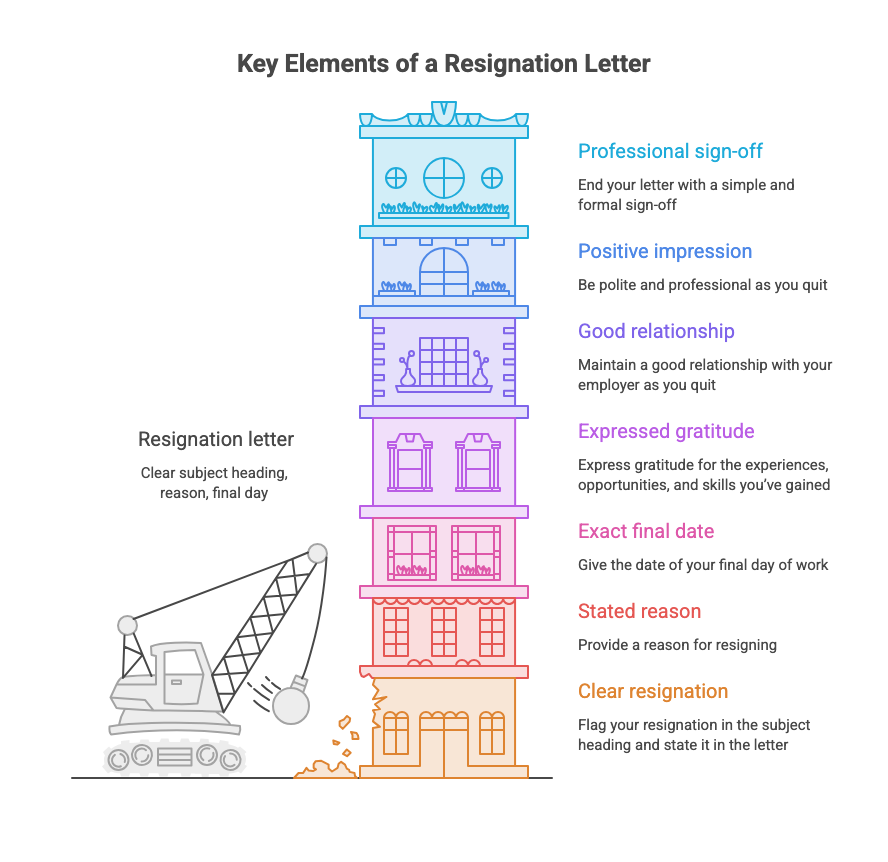
Clear subject heading
Don’t beat around the bush. If you’re sending your letter by email, flag your resignation in the subject heading. If you’re writing or printing out a letter, the first line of your opening paragraph should state your resignation.
Reason for resignation
Possible reasons for resigning include:
- Leaving a part-time job for an internship opportunity
- Changing career paths
- Pursuing an opportunity with higher pay
- Desiring a better work environment
- Relocating to a different city
- Accommodating a family/life change
Final day of work
Give the date of your final day of work. Usually, you will have given your employer 2 weeks of notice, but this will vary based on company policy, your role, and your specific agreement with your employer. Provide the exact date rather than a time period like, “Two weeks from today.”
A thank-you
This can be an easy and uncomplicated section to write if you’ve genuinely enjoyed most of your time at the position you’re leaving. Express gratitude for the experiences, opportunities, and skills you’ve gained.
On the other hand, if your employment was unpleasant, thanking your employer for a miserable time sounds like torture. But don’t skip this step or lie about it, because obvious insincerity will undermine the positive impression you want to leave as you quit. Try one of these carefully worded phrases:
Thank you for sharing your high standards with me. You’ve taught me new ways to value my contributions.
I am grateful for the opportunities to practice resilience in a fast-paced environment.
Thank you for trusting me with your ever-evolving schedule. I’ll take with me lessons in organization and prioritization.
Offer to help transition
Identify next steps you will take so that you can transition seamlessly out of your role. These are the most concrete steps you can take to maintain a good relationship with your employer as you quit. By tying up loose ends, you'll show goodwill not only to your employer, but also to colleagues who won’t be left scrambling to cover your sudden absence.
Your final steps at your job can include:
- Finishing projects or leaving clear instructions to help someone else take over the project
- Helping to train your replacement, if appropriate
- Cleaning out and tidying your workspace, both physical (like desks and paperwork) and electronic (like files and email inboxes)
- Removing personal items and returning company property
Professional closing
End your letter with a simple and professional sign-off. The most basic, time-honoured closings are suitable in this context. Consider:
- “Sincerely,”
- “Best regards,”
- Or “Thank you,”
Tip: For help drafting your letter of resignation, check out Grammarly’s custom AI writing tools. Just plug in a few details about your situation, and the resignation letter generator will go to work.
Examples and Templates for Different Scenarios
The full formal
The University of Phoenix fully outlines a detailed template for a resignation letter in 10 parts:
The boomerang
These examples of resignation letters from the University of Alberta include a template for a “boomerang resignation” where you intend to leave your job temporarily for a short-term placement elsewhere (but, like a boomerang, you plan to return).
Effective immediately
Sometimes it’s not possible to give two days’ notice, let alone two weeks’ notice. If you need to leave your job effective immediately, here is a sample letter for resigning effective tomorrow.
New job
The University of Wyoming provides 10 templates for different scenarios, including “#2: Resignation email for a new job opportunity.”
If you’re leaving your job to return to school or university, see also “#10: Resignation email for further studies.”
Best Practices
Observe company policies
Be sure to review your company’s resignation procedures. Your employer may have certain requirements for your exit strategy, like an advanced notice period, formal letter, or form submission. Don’t make failing to observe policy your final move.
Avoid venting or oversharing
Keep the topic and tone professional. A resignation letter should be written in formal language and it shouldn’t be overly emotional or personal. Even if you’re leaving because things went badly, keep a neutral tone and focus on moving forward. If you’re angry about not being able to vent your frustration, take comfort in the fact that you are already giving the strongest possible sign of discontent: quitting.
Proofread
If the point of a resignation letter is to maintain a good relationship and reputation as you leave, don’t let sloppiness undermine your good intentions. Give your letter the attention it deserves as a professional piece of correspondence, and be sure to edit. For quick and comprehensive feedback, use an AI grammar checker and review its suggestions before hitting send.