Grammarly AI Review: How Accurate Is Grammarly’s AI Detector?
We take a look at Grammarly's AI detector and paraphrasing tools to review how AI detectors such as GPTZero handle its AI-powered writing tools.


Grammarly first became popular as a grammar-checking tool, with a freemium plugin helping users to refine their grammar and word voice. Overall, it can be a very useful tool for writers to strengthen the clarity of their content and help it land with their intended audience.
In August 2024, Grammarly announced the addition of an AI content detector to its offerings, entering a space already occupied by tools designed specifically for AI detection, such as GPTZero. But how reliable is Grammarly’s AI detection accuracy in practice?
In this review, we’ve included our own tests and pulled in some of the most widely cited reviews from around the web to take a closer look at how often Grammarly correctly identifies AI-generated writing, how frequently it produces false positives, and how it performs on mixed human and AI content. We also compare its results with those from GPTZero to better understand where Grammarly’s detector holds up, and where it falls short.
What Is Grammarly’s AI Detector And How Does It Work?
The Grammarly Detector is designed to determine whether a work is likely to have been generated by AI, and can be used in their tools in Microsoft Word, Google Docs, and the Grammarly Editor. Using a machine-learning model “trained on hundreds of thousands of human and AI-generated texts”, the detector checks “each section against the model for language patterns typically indicative of AI text.”
Then, it shows a percentage score for how much of the text might be AI-generated, and, in Grammarly’s own words: “Although it doesn't explain why the text may be flagged, it helps users gauge, before submission, the likelihood of their text being flagged. The percentage result should not be used as an objective source of truth, as AI detection of any kind can be prone to errors.”
The detection model works by looking at patterns such as syntax and language structure and comparing the text to a larger dataset of both human and AI writing. While the tool is geared towards minimizing false positives, it states that it “cannot provide a definitive conclusion” and that its “AI detection score is an averaged estimate of the amount of AI-generated text that is likely contained in a given document or piece of writing.”
Key Features of Grammarly’s AI Detector
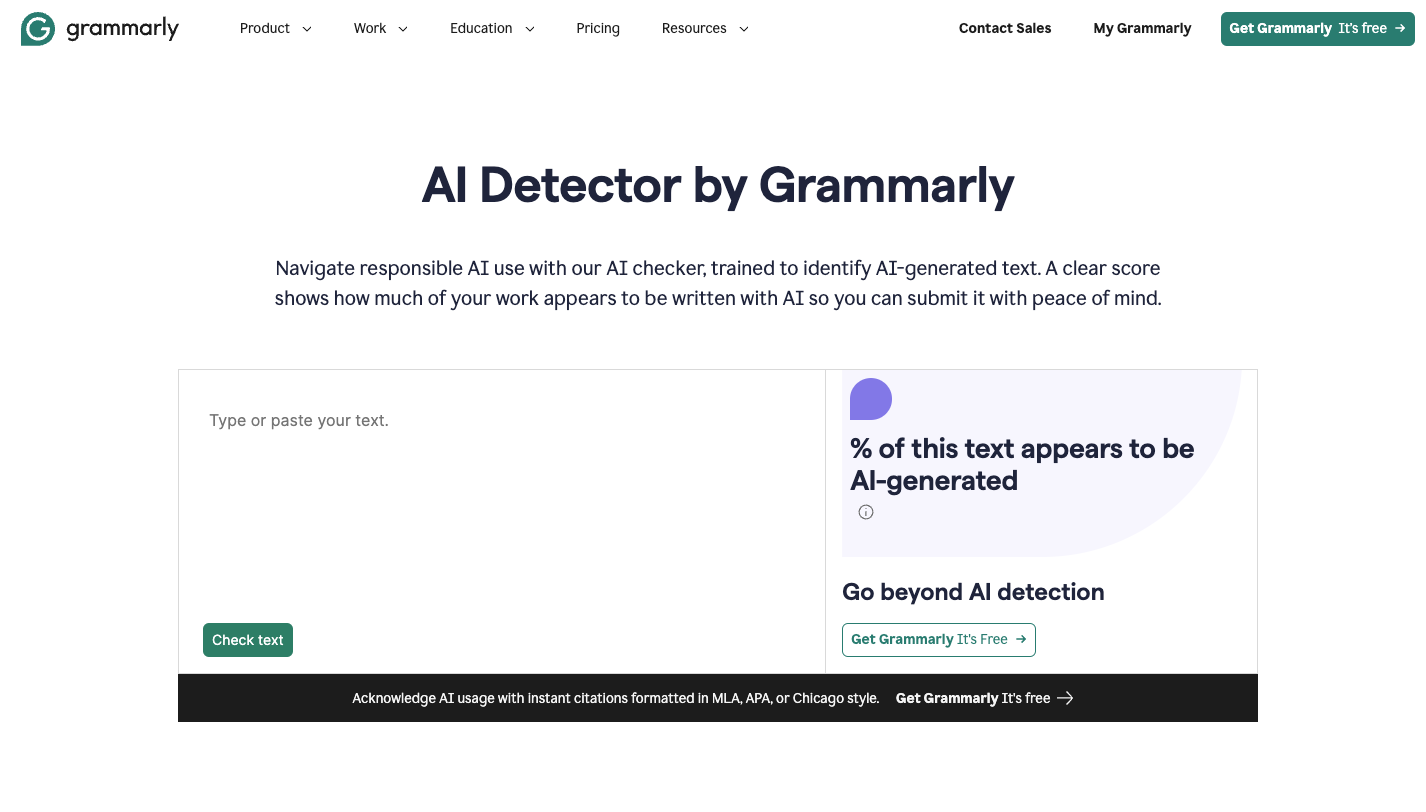
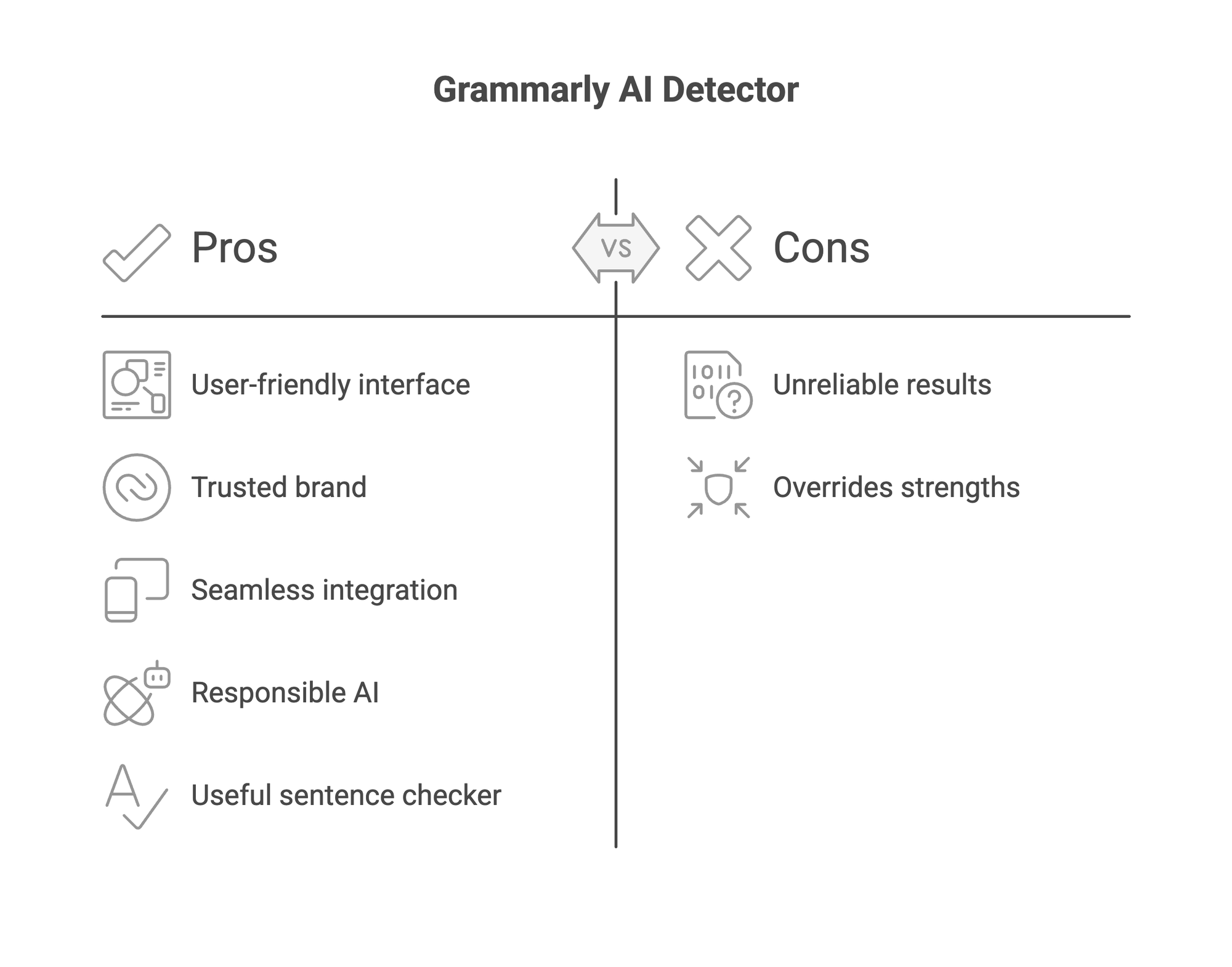
Like many other AI detection tools, Grammarly’s AI Detector homepage has a very user-friendly interface that makes it hard not to immediately understand the next steps. The simplicity makes it easy for anyone to get started straight away.
Grammarly also has the following strengths:
- It bills itself as “An AI Checker From a Brand You Already Trust”Unlike other AI detection tools, Grammarly is starting from a place of being widely known as a go-to writing assistant. This familiarity can make it an obvious choice for some users who are already familiar with the platform.
- It is the only AI writing partner that seamlessly integrates with 500,000+ apps and sites.This makes it easy to get real-time, strategic feedback, no matter which platform you’re writing on, whether it’s an email or a Google Document. This can be hugely valuable for students and professionals who are short on time.
- It promotes a Responsible AI ethos. They operate under “the belief that AI innovations should enhance people’s skills while respecting personal autonomy and amplifying the intelligence, strengths, and impact of every user”. This positions them as a company prioritizing ethical AI use.
However, as we will explore, the main weakness it has, which overrides any of its strengths, is its consistently unreliable results when it comes to detecting what has been written by an AI tool, and what has been written by a human.
This being said, Grammarly as a sentence-checker can be a useful tool when it comes to gathering AI-powered feedback on your writing. It gives suggestions for improving grammar and style, which makes it valuable for all kinds of writing, from writing an academic report to a professional email.
It can be especially useful for non-native English speakers who struggle with nuances of language. Grammarly flags obvious errors and also gives suggestions about improving overall readability, which can boost confidence and English skills.
Is Grammarly’s AI Detector Reliable?
Grammarly has a solid reputation as a writing assistant, which would make it fair to expect the same level of confidence from its AI detection feature. But when you look beyond the product messaging and into long-term user experiences, a more mixed picture starts to emerge.
Eram Shaikh, who writes for DemandSage, shares that she’s been a Grammarly user for many years, from her university days to her career, and that the tool has helped her enhance her writing. Yet when it comes to their AI detector, she says bluntly: “Grammarly’s AI and plagiarism checker is not accurate.”
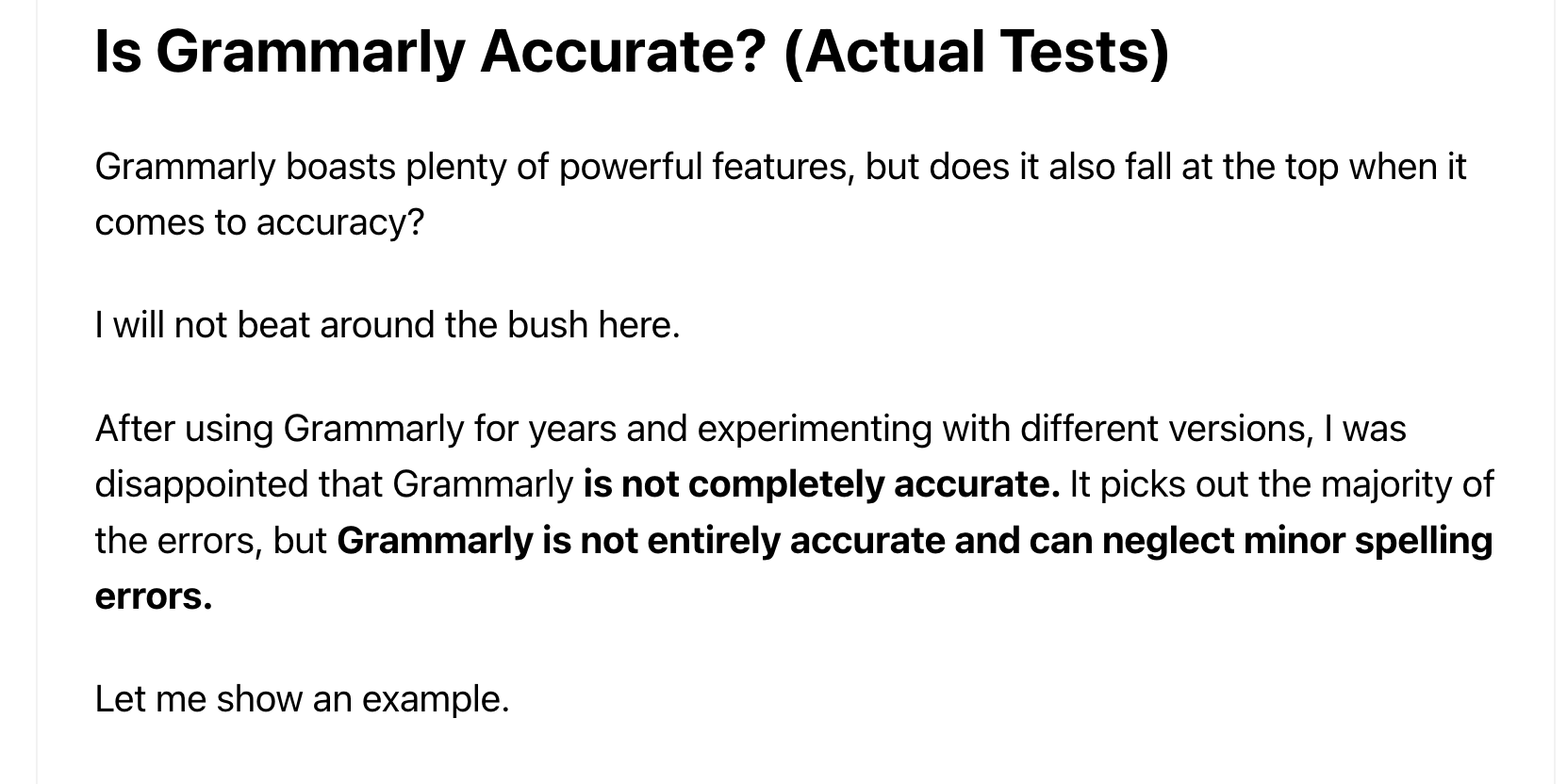
She goes on to say: “I will not beat around the bush here. After using Grammarly for years and experimenting with different versions, I was disappointed that Grammarly is not completely accurate. It picks out the majority of the errors, but Grammarly is not entirely accurate and can neglect minor spelling errors.”
This was reflected on another review site, where Raj Patel’s review looked at feedback from writers on Reddit, one of which talked about testing the same 2,300 word story into Grammarly two separate times, two days apart.
While Grammarly marked it as 0% AI the first time; the next time (two days later), the exact same text appeared as 35% AI. After months went by, the same story then got flagged as 90% AI. Patel observes: “This shows that Grammarly’s detection results can shift drastically as their model updates, even when the text hasn’t changed.”
He also talked about how another user deemed Grammarly’s AI detector “the worst so far”, with that user talking about how there was no obvious signal to exactly which part of their text set off the AI detection.
Why This Matters for Students and Educators
Being in the dark about precisely which parts of the text set off AI detection can be especially tricky for students, who are then left knowing that their text is being flagged as AI but aren’t told much context as to how they can adjust their work.
The same lack of precision creates problems for educators. Teachers are often forced into a binary choice: accept the AI score without the evidence needed to properly investigate it, or dismiss the score entirely while still harboring doubts about the originality of the work. Frankly, neither option supports fair and constructive academic conversations.
This is why precision and transparency matter in AI detection, and why tools that surface where and how AI signals appear in a text are becoming more and more popular. As Patel ultimately concludes: “If you need something stricter or more detailed, GPTZero gives insights into AI vocabulary and writing style. Great for spotting subtler AI patterns.”
Testing Grammarly AI Detector vs GPTZero
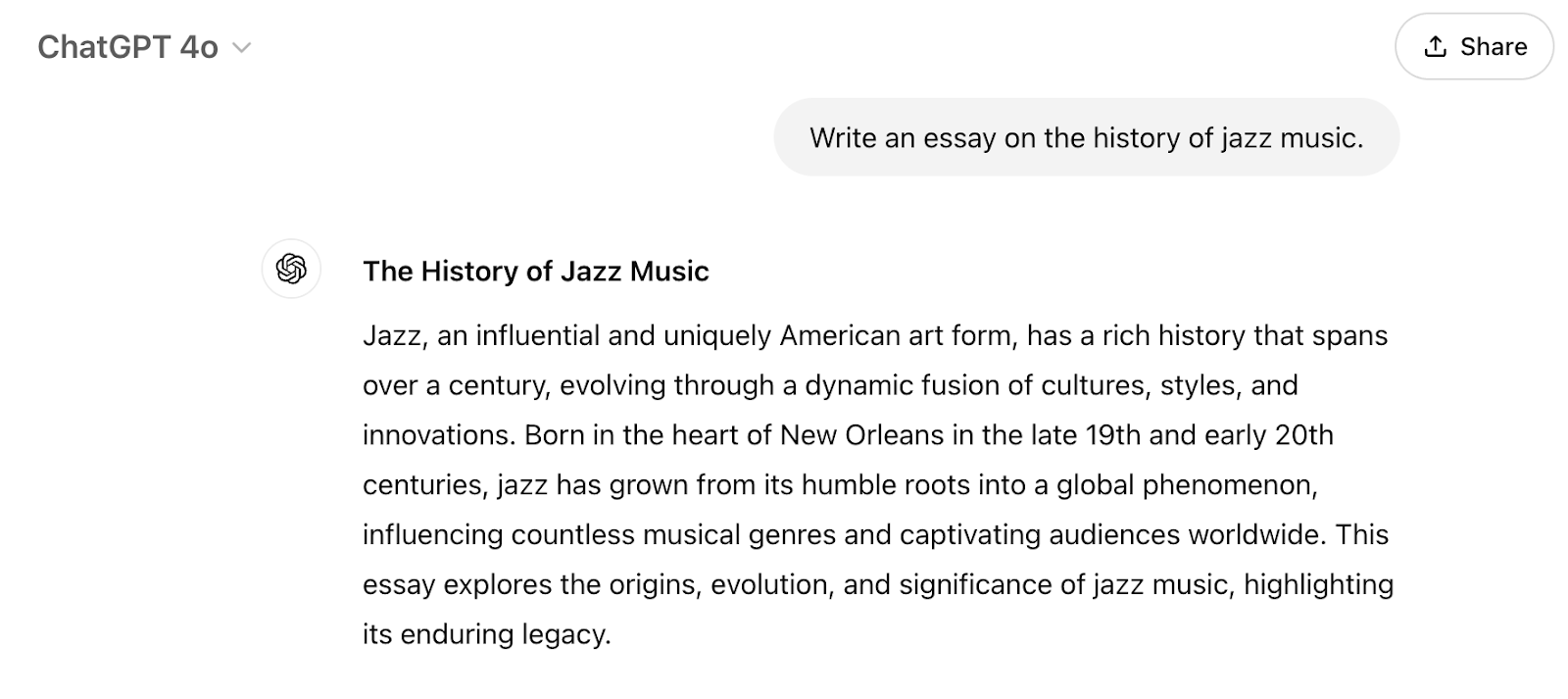
We also ran our own test, and asked ChatGPT to write an essay on the history of jazz music so we could use the opening paragraph. This is what it came up with:
Jazz, an influential and uniquely American art form, has a rich history that spans over a century, evolving through a dynamic fusion of cultures, styles, and innovations. Born in the heart of New Orleans in the late 19th and early 20th centuries, jazz has grown from its humble roots into a global phenomenon, influencing countless musical genres and captivating audiences worldwide. This essay explores the origins, evolution, and significance of jazz music, highlighting its enduring legacy.
We ran it through GPTZero’s advanced scan, which detects AI with 99%+ accuracy. Our result correctly labeled this as AI-generated.
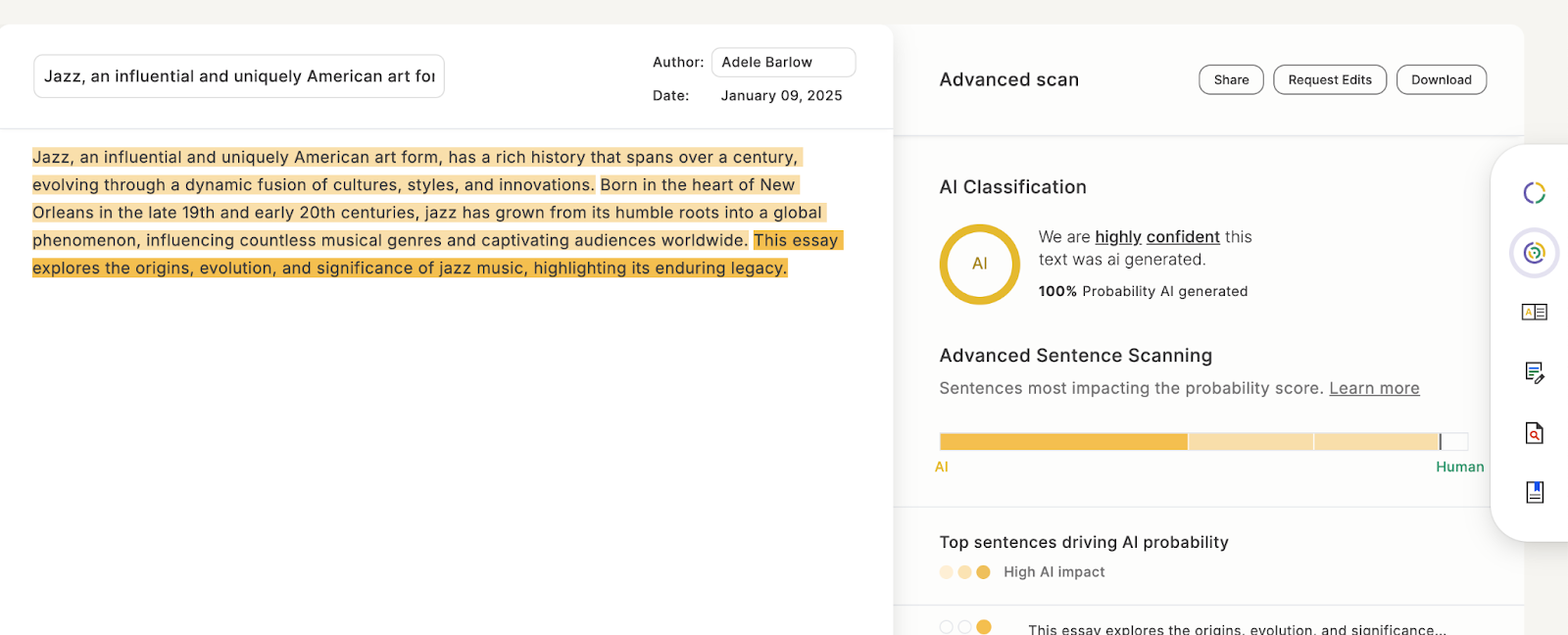
This is what you would reasonably expect from a tool with this function, which gives you fairly solid confidence in its results.
We then put the paragraph through Grammarly’s AI detector, and the major difference was impossible to ignore: it said that only 50% of this text appears to be AI-generated.
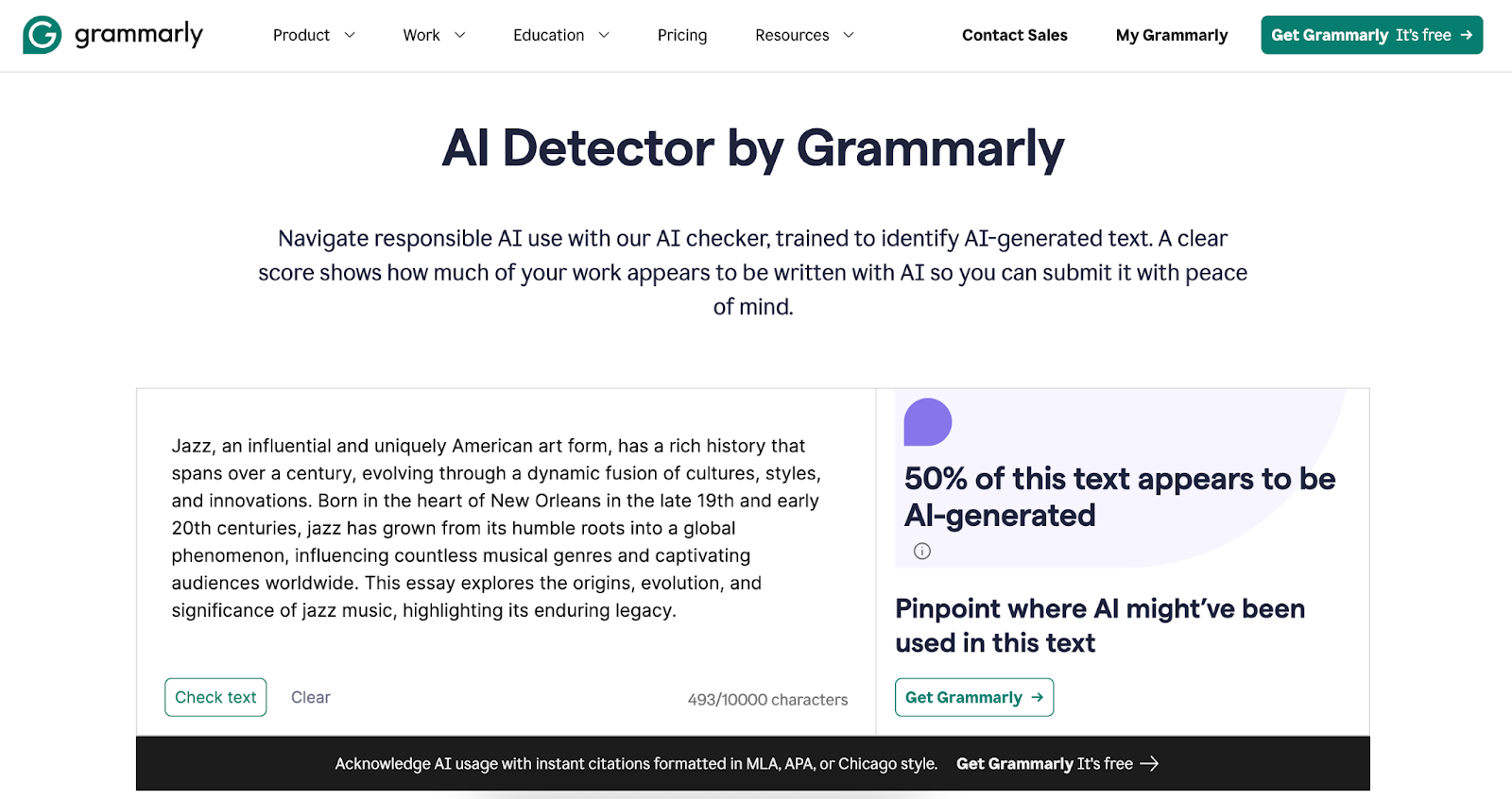
This makes it difficult to want to use the tool, particularly if you’re a teacher or editor checking the originality of a student’s essay or a journalist’s submission. False results like this can have far-reaching consequences, like unfair punishment for students, or undermining trust in professional reputations.
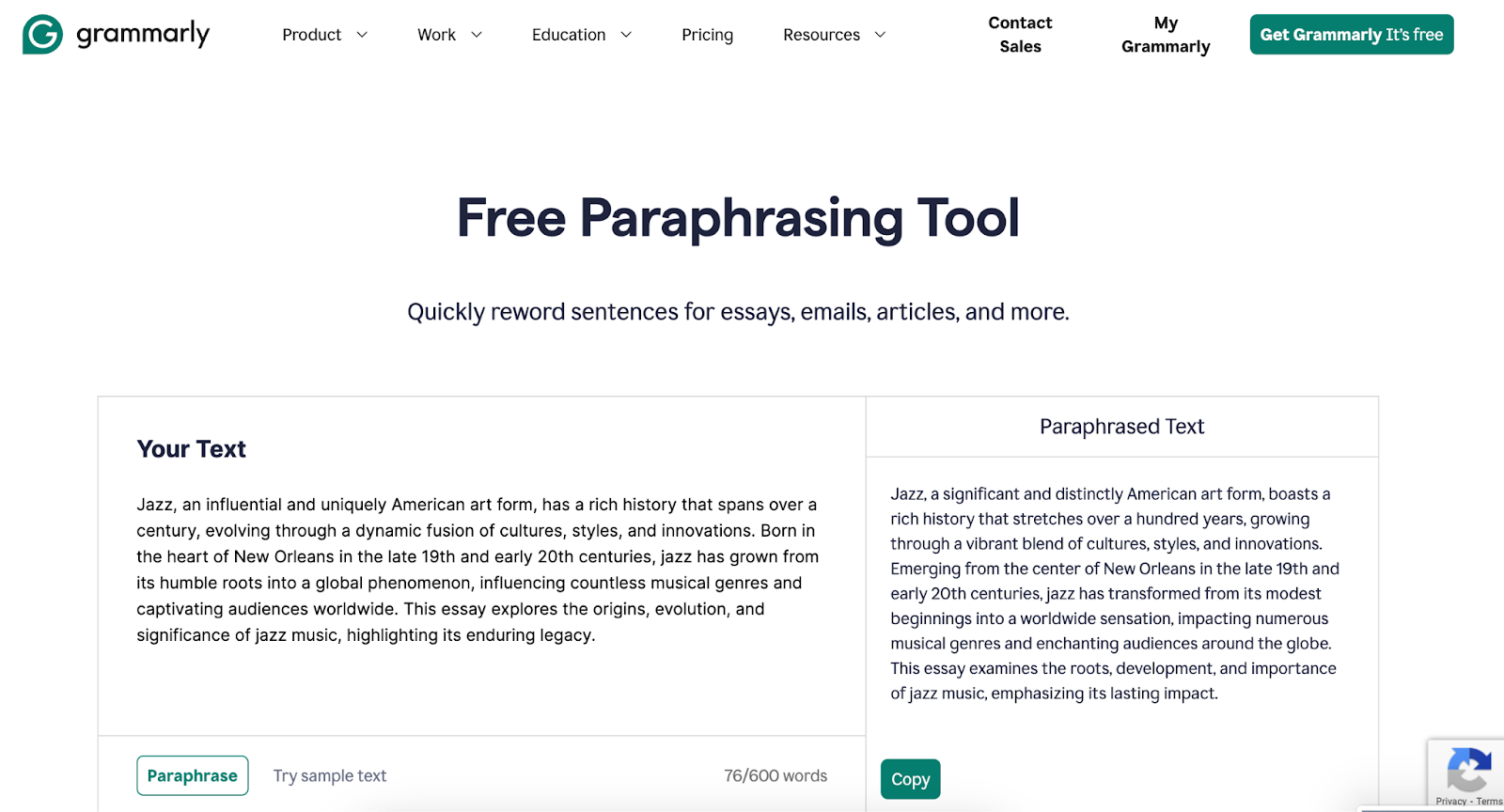
We also put the same paragraph through Grammarly’s paraphrasing tool, which converted the original paragraph to this:
Jazz, a significant and distinctly American art form, boasts a rich history that stretches over a hundred years, growing through a vibrant blend of cultures, styles, and innovations. Emerging from the center of New Orleans in the late 19th and early 20th centuries, jazz has transformed from its modest beginnings into a worldwide sensation, impacting numerous musical genres and enchanting audiences around the globe. This essay examines the roots, development, and importance of jazz music, emphasizing its lasting impact.
We put this through GPTZero’s advanced scan, which again correctly flagged it with 100% probability of being AI-generated.
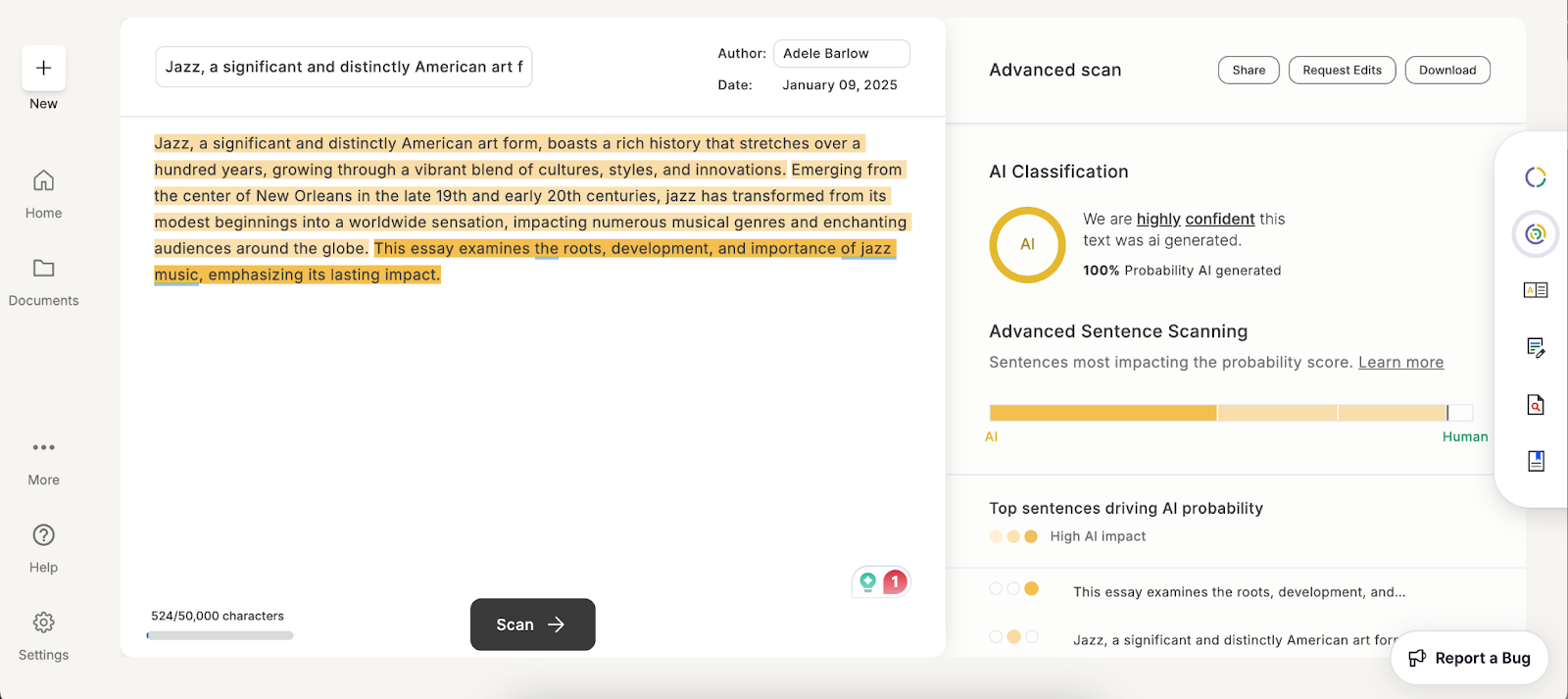
This shows that no matter how useful tools like Grammarly’s Paraphrasing tool claim to be, they are increasingly identifiable by advanced detectors, particularly at the document level. AI-generated content is AI-generated content, and no matter how many times it has been paraphrased, it will still be caught through sophisticated AI detectors.
Sign up for GPTZero and test out our AI detector yourself for free.
Is Grammarly AI Good for Detecting Student Writing?
Grammarly’s approach to AI helps explain why it could struggle with student writing. Student work is often mixed writing (drafts blending original ideas with light AI assistance), and mixed writing can be a gray area for Grammarly. The Hastewire team explains that the tool “primarily focuses on enhancing human writing rather than outright blocking AI assistance.” In other words, AI is deeply built into the Grammarly product itself, with AI being used to suggest edits, adjust tone, draft short sections of text when needed, and so on.
Basically, Grammarly actively helps people write, and as a result, many documents edited in Grammarly already carry AI-influenced patterns, even when the underlying ideas and structure are human.
With this in mind, Grammarly draws a distinction between using AI as a writing assistant and submitting fully AI-generated content. Its detector looks for broad signals like repetitive phrasing or unnatural sentence structures, but it’s just not designed to aggressively police AI use or clearly separate human-written text from AI-assisted revisions.
In mixed-writing scenarios, this creates a practical limitation: a piece of writing may be largely human-authored, lightly edited with Grammarly’s own AI tools, and still trigger AI signals. Or the opposite may happen, where heavily paraphrased AI content appears more “human” than it actually is. Since Grammarly presents only a single percentage score without showing which sentences were flagged, users are left guessing what the result actually reflects.
This is intentional to some extent, as Grammarly’s main goal is improving writing. Yet it also means that its detector isn’t especially well-suited for evaluating nuanced, mixed-authorship documents where transparency and explanation really matter.
Pricing: How Much Does Grammarly’s AI Detector Cost?
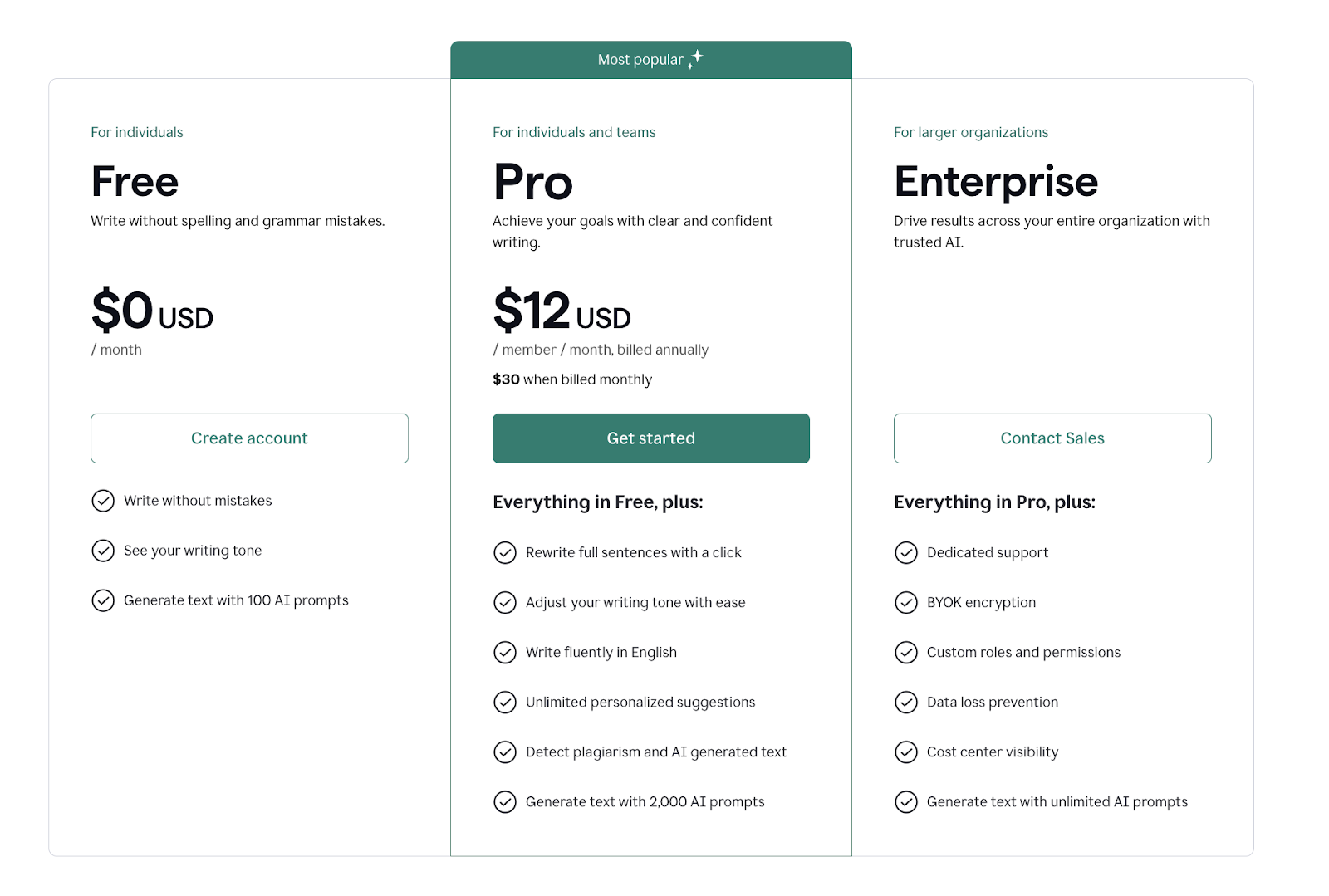
Unlike many other AI detectors, Grammarly’s AI detection feature isn’t universally available across every plan and surface, which is where knowing exactly how much it costs doesn’t have a straightforward answer. However, Grammarly Pro plans start at $12/month, with Enterprise pricing beginning at $45 per month for a team of three.
As Will Ramon, Author at AI Detector On, notes in his own Grammarly AI Detector review: “To utilise Grammarly’s AI detection feature, users need to have a subscription to Grammarly Premium, Business, or Education.” If you’re not on one of those tiers, when trying to use the AI detector, you get this message:
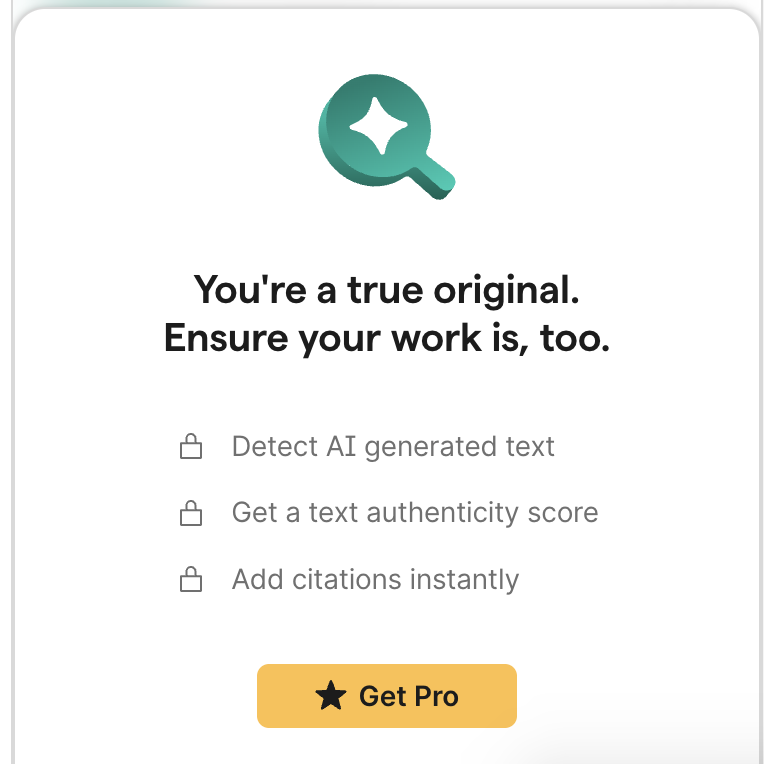
Since Grammarly’s AI detection feature sits behind paid plans, many users don’t see how the detector behaves until after they’ve subscribed, and for a tool that produces non-definitive results, that lack of upfront transparency can be frustrating.
In contrast, AI detectors designed specifically for authorship analysis often prioritize accessible testing and explainability, recognizing that trust in the result matters just as much as the score itself.
Final Verdict: Is Grammarly’s AI Detector worth it?
Despite its strengths, when it comes to detecting AI-generated content, it’s just not that reliable. It often wrongly classifies human-written work as AI-generated. This can be insulting to any writer, but it can also result in potentially damaging and unfair outcomes for students when educators use it for originality checks. In comparison to tools specifically designed for AI detection, Grammarly’s AI detection tool feels like an afterthought.
We recommend using Grammarly as a tool to improve your writing, but we don’t recommend using it as a way to detect whether or not a piece has been written by AI. We also don’t recommend using its paraphrasing tool, which we believe weakens writing generally.
Better tools exist and specialize in AI detection and writing feedback. Platforms like GPTZero provide more advanced detection features which in turn deliver way more consistently accurate results, and writing feedback aimed at teaching you how to improve your writing.
FAQ
- How accurate is Grammarly’s AI content detector? Grammarly is pretty upfront that its AI detector offers an estimate, as opposed to being a definitive answer, which means that independent tests and user reviews show that results can vary quite a bit. Accuracy also tends to drop with mixed AI-and-human writing, which is increasingly the norm. Essentially this means that Grammarly can be a useful signal, but not necessarily something you’d want to rely on for high-stakes decisions.
- Can Grammarly’s AI detector produce false positives? Yes, which is one of the most common criticisms. Human-written text can be flagged as AI, especially if it’s polished or uses familiar academic language, and this isn’t unique to Grammarly; false positives are a broader challenge across AI detection tools. But in classrooms, those false flags can have real consequences.
- Does Grammarly explain which parts of the text were flagged as AI? Not really. Grammarly gives you a percentage score, but it doesn’t clearly show which sentences or sections pushed the score up. Without that context, it’s hard to understand why something was flagged or what to do next, and for educators, that missing transparency can limit how helpful the result actually is in practice.
- Should AI detection results be used as proof of cheating? No. Even Grammarly avoids framing its results as a final verdict and implies that AI detectors are best used as starting points. Most experts agree that human judgment still needs to be part of the loop, especially when the stakes are high.