GPTZero vs QuillBot vs Grammarly: Which AI Detector Is Most Accurate?
Many writing platforms now include AI detection, but our benchmark results show that not all detectors are built for the same level of accuracy.


As AI tools become more prevalent, so does the need to detect AI-written text. Platforms such as Grammarly and Quilbot now offer light-weight and general-purpose AI detection features alongside their core products. However, there has been limited rigorous evaluation of how well these tools perform in practice. Users often report inconsistent results across platforms – for instance text that is labelled as human-written by Grammarly and Quilbot is often flagged as AI written by GPTZero.
GPTZero is among the first to conduct a systematic evaluation of these general purpose detectors. Our investigation reveals that these detectors are not sensitive enough, have much lower accuracy and even a higher false positive rate.
While detecting surface-level AI features may seem like a straightforward task, achieving state-of-the-art performance on real-world data requires addressing a range of challenges including correctly identifying traces of AI in a continuously evolving LLM landscape, identifying diverse human writing styles and measuring extent of mixed Human-AI writing and paraphrasing.
GPTZero's monthly model updates ensure that we have high accuracy despite a fast-evolving LLM landscape. Additionally, we strive to be the most transparent and interpretable AI detection platform, explaining to users which text features caused a given prediction.
TL;DR
For reliable AI detection, GPTZero is the strongest choice based on the benchmark data. Across multiple domains, there is higher accuracy, lower false positive rates, and much stronger performance on difficult categories like paraphrased AI text, mixed human-AI writing, and multilingual content.
QuillBot and Grammarly are useful writing tools, but AI detection is not their main job. QuillBot is focused on paraphrasing and rewriting, and Grammarly is built around grammar, clarity, tone, and productivity features – and while both include AI detection, these general-purpose detectors are far less dependable when the text becomes more adversarial or more nuanced.
Our testing methodology and benchmark results
How we tested these tools
We evaluated GPTZero, QuillBot, and Grammarly across a range of benchmark domains designed to reflect how AI detection works in the real world. These included:
- AI-generated content across multiple domains
- Human-written content across diverse styles
- Mixed or AI-assisted writing
- Adversarial or “humanised” AI text
- Multilingual content
We then compared performance using three key metrics: accuracy, false positive rate, and detection reliability across harder categories, such as paraphrased AI and multilingual samples.
Benchmark results
We evaluated our detector alongside tools such as Grammarly and Quilbot on a range of domains and frontier LLM families such as GPT-5, Gemini 3, Claude Sonnet 4.5, and Grok 4). The results show that we consistently achieve:
- Much higher accuracy across domains and languages (both english and non-english texts)
- Much more robust in detecting human-AI blended texts (mixed and AI-assisted/polished) and adversarial attacks.
- Lower FPRs on Human written content, being robust to a diverse set of writing styles.
Table 1: General Purpose AI detectors compared with GPTZero on diverse domains. GPTZero ranks number one across domains in terms of overall FPR and AI detection accuracy.
All of these results are being tracked in our live benchmark page which we consistently update as new models and tools are released, so that it serves as a single reliable source of truth for AI detection. We refer readers to this page for more details on how these benchmarks are prepared.
The most obvious pattern in the data is how GPTZero performs strongly across every category, while QuillBot and Grammarly are much less consistent. That gap becomes especially visible in creative writing, bypassers, and multilingual data, which are the types of categories that can show the limitations of more general-purpose detectors.
The benchmark also demonstrates that GPTZero is materially better at identifying human-AI blended writing and AI-paraphrased text, which is increasingly important now that many users no longer submit 100% AI-generated drafts, but edited, polished, or humanised versions instead.
What the benchmark shows: At a Glance
1. Paper reviews and abstracts
GPTZero leads on both recall and accuracy in this category, with a much lower false positive rate than QuillBot and slightly stronger performance than Grammarly.
2. Creative writing
This is one of the most dramatic gaps in the table: QuillBot and Grammarly struggle far more here, while GPTZero remains near-perfect. Creative writing often departs from formulaic structures, making it a useful stress test for detector strength.
3. Essays
All three tools improve here, but GPTZero still leads; a useful category because essays are one of the most common real-world use cases for AI detection in education.
4. Product reviews
GPTZero again separates itself, especially on accuracy and recall, suggesting it handles consumer-style and commercially shaped writing better than the general-purpose tools.
5. Bypassers
This is one of the most important categories: QuillBot and Grammarly both perform poorly on adversarially modified text, while GPTZero remains much stronger.
6. Multilingual performance
GPTZero substantially outperforms both tools here, especially significant because multilingual detection is often where lighter detectors break down.
In the following section we demonstrate examples of documents from our benchmark domains that GPTZero correctly flags, but which Quilbot and Grammarly misclassify with relatively high confidence.
What the benchmark shows: Case studies
Benchmark 1: Paper Reviews and abstracts
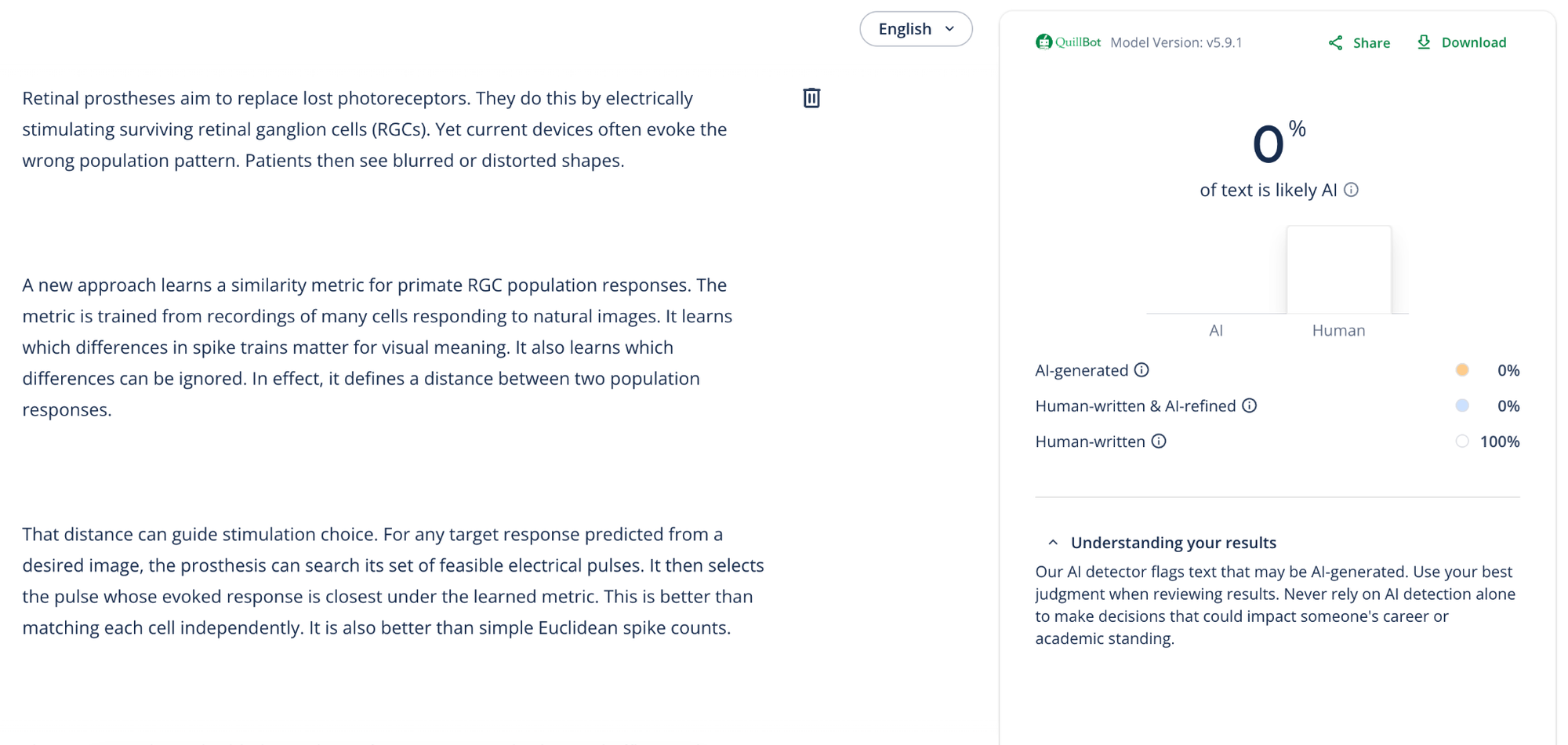
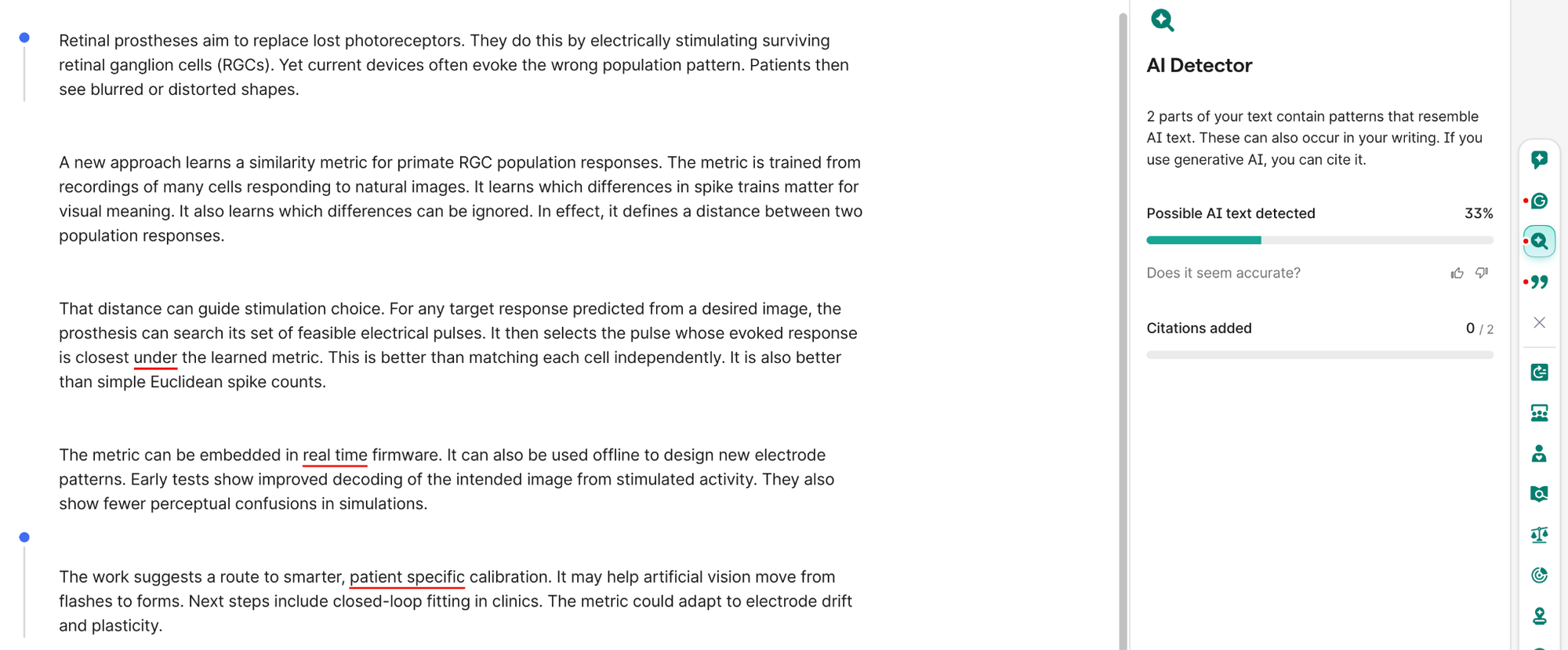
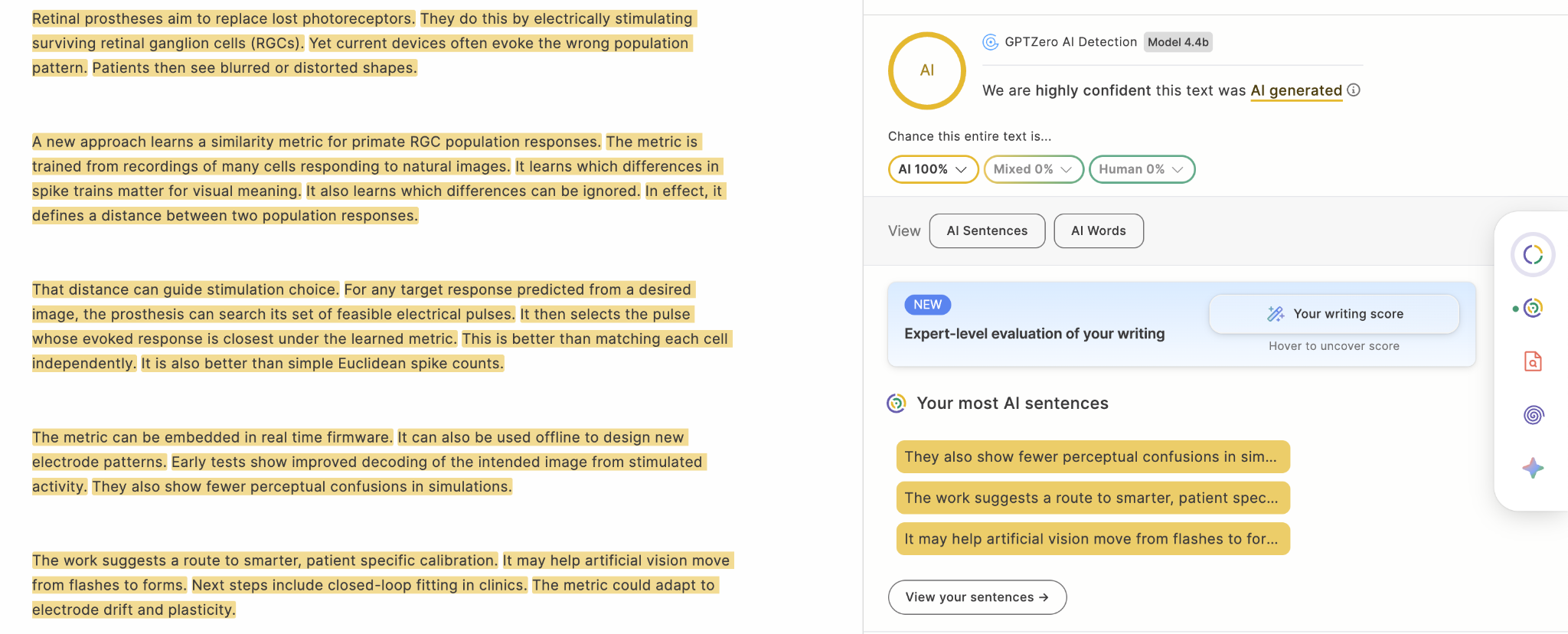
Fig 1: AI generated text using gpt 5 misclassified by Quilbot and Grammarly (a,b), GPTZero identifies it correctly (c).
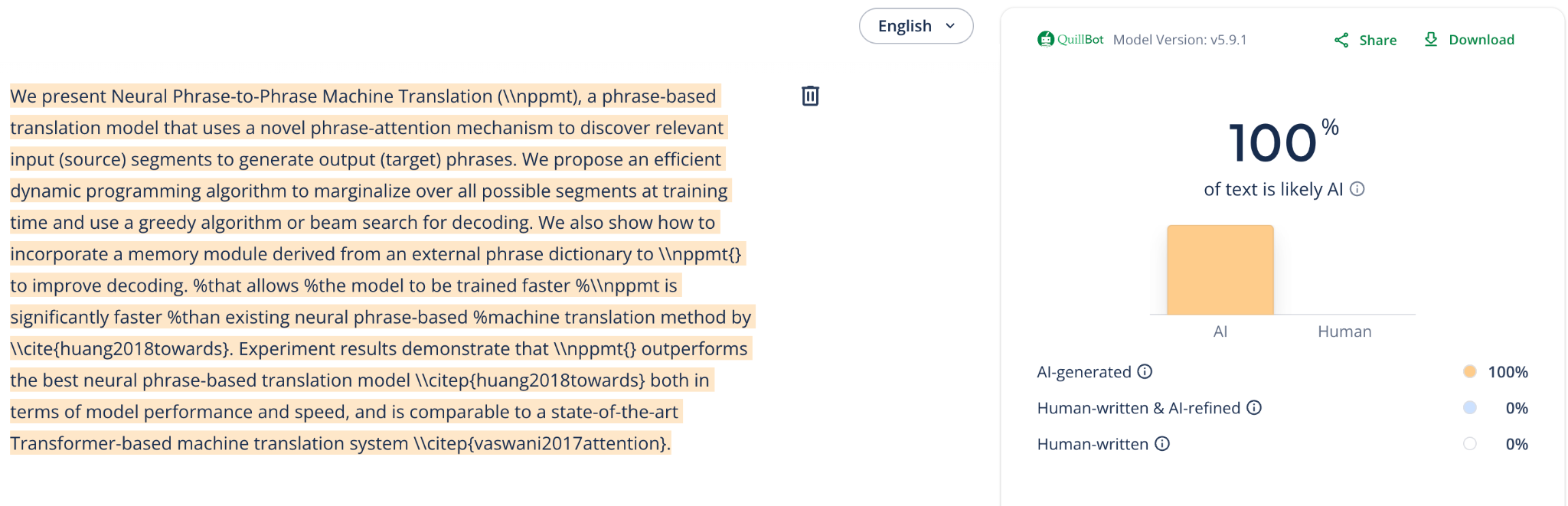
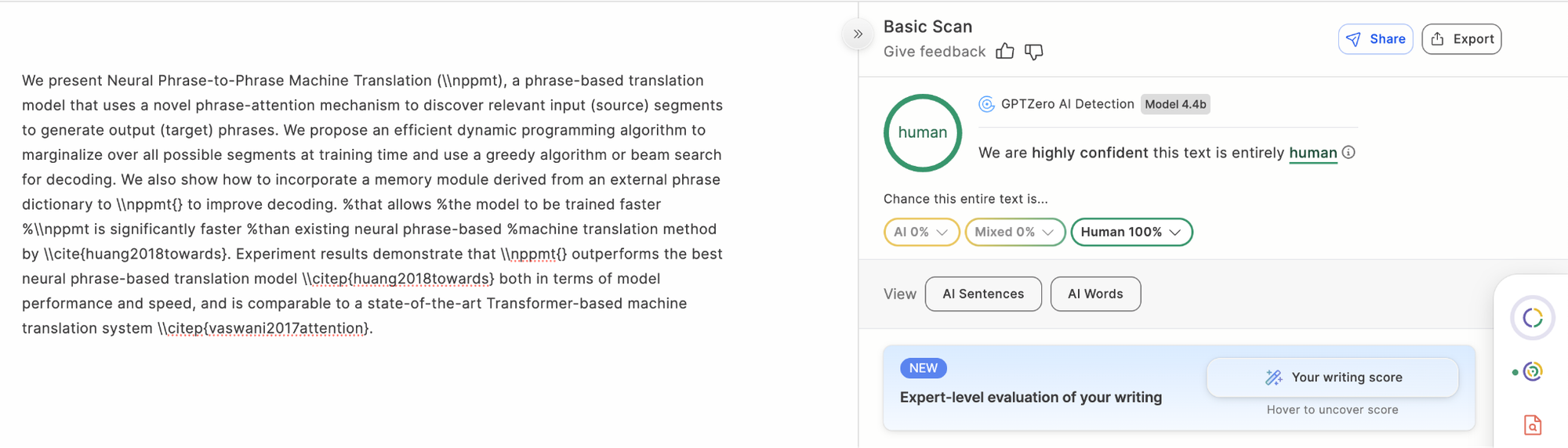
Fig 2: Human written text incorrectly flagged as AI (high confidence) by Quilbot AI detector (a) while GPTZero correctly detects it as Human-written (b).
Benchmark 2: Creative Writing
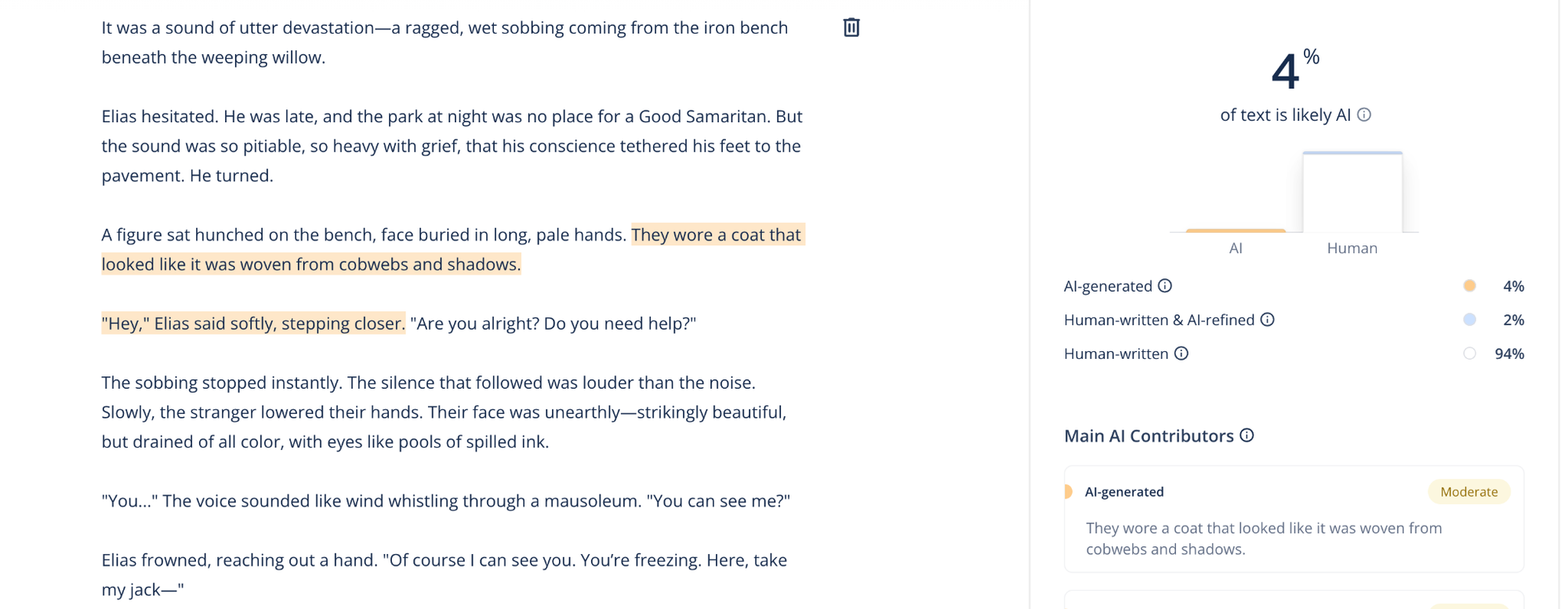
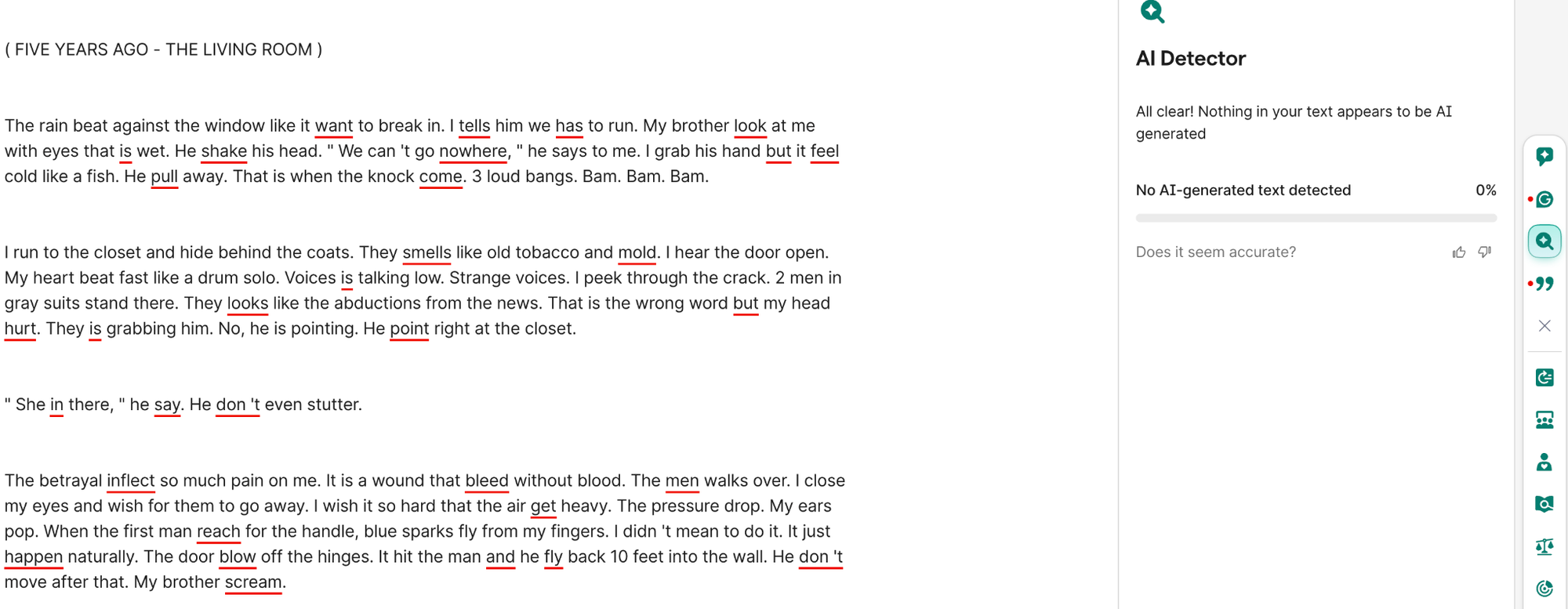
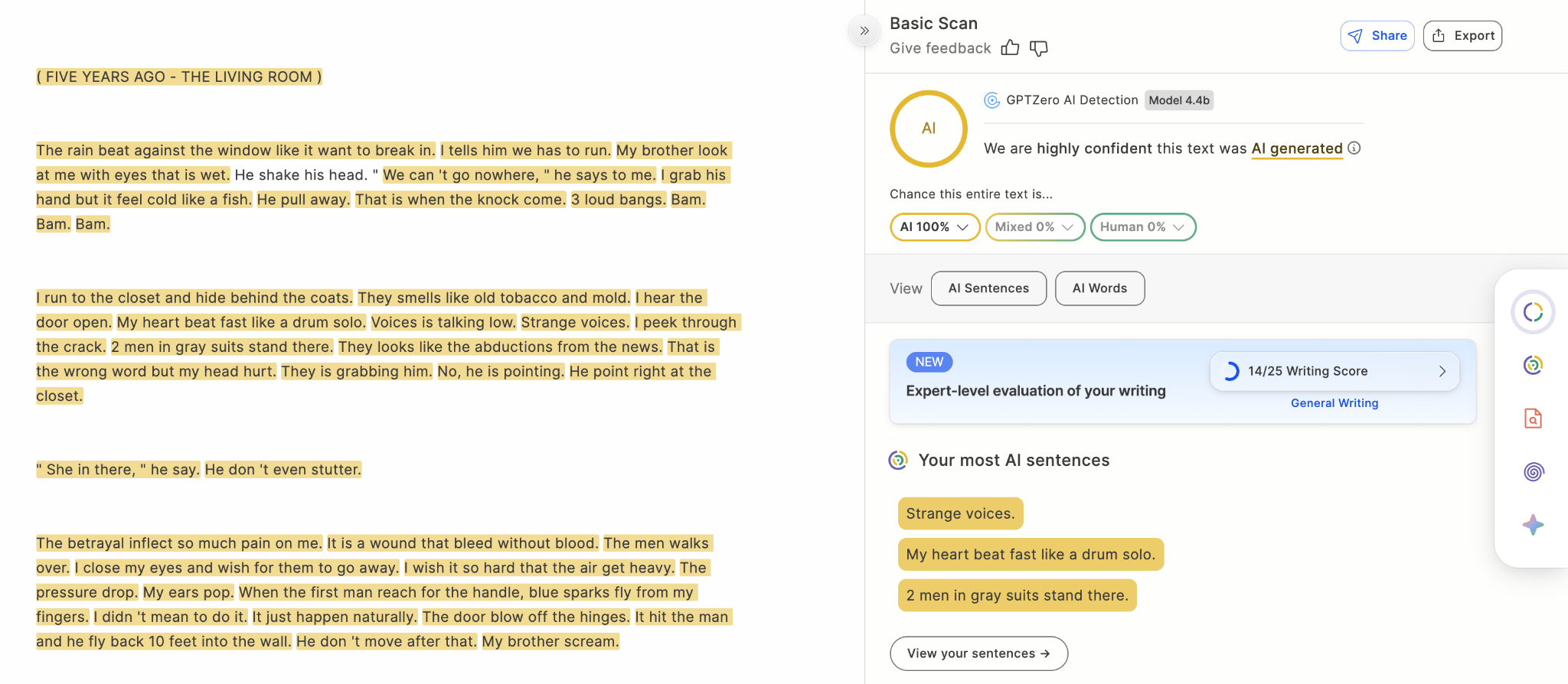
Fig 3: AI generated creative writing excerpt (using gpt 5) with some grammatical inaccuracies misclassified by Quilbot and Grammarly (a,b) as Human while GPTZero flags it correctly as 100% AI generated (c).
Benchmark 3: Essays
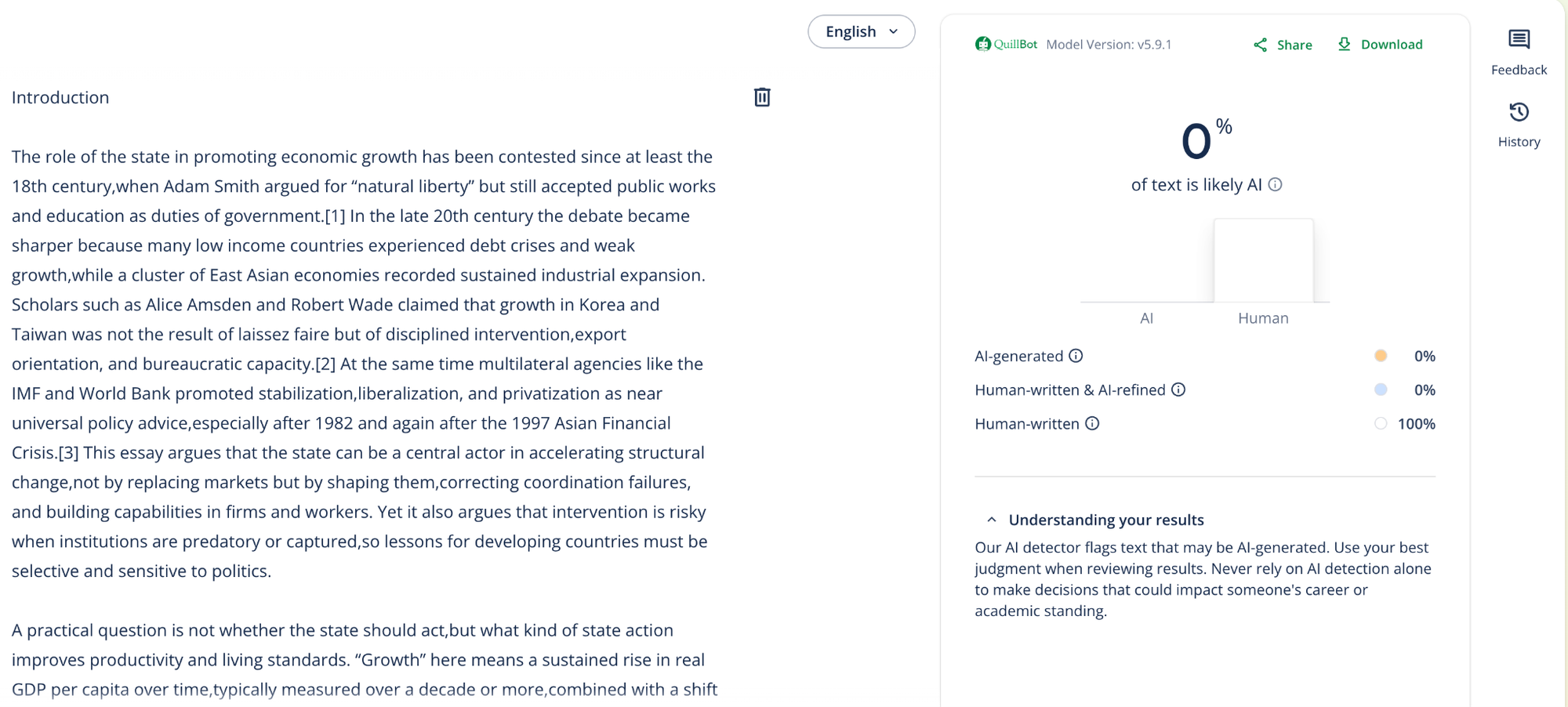
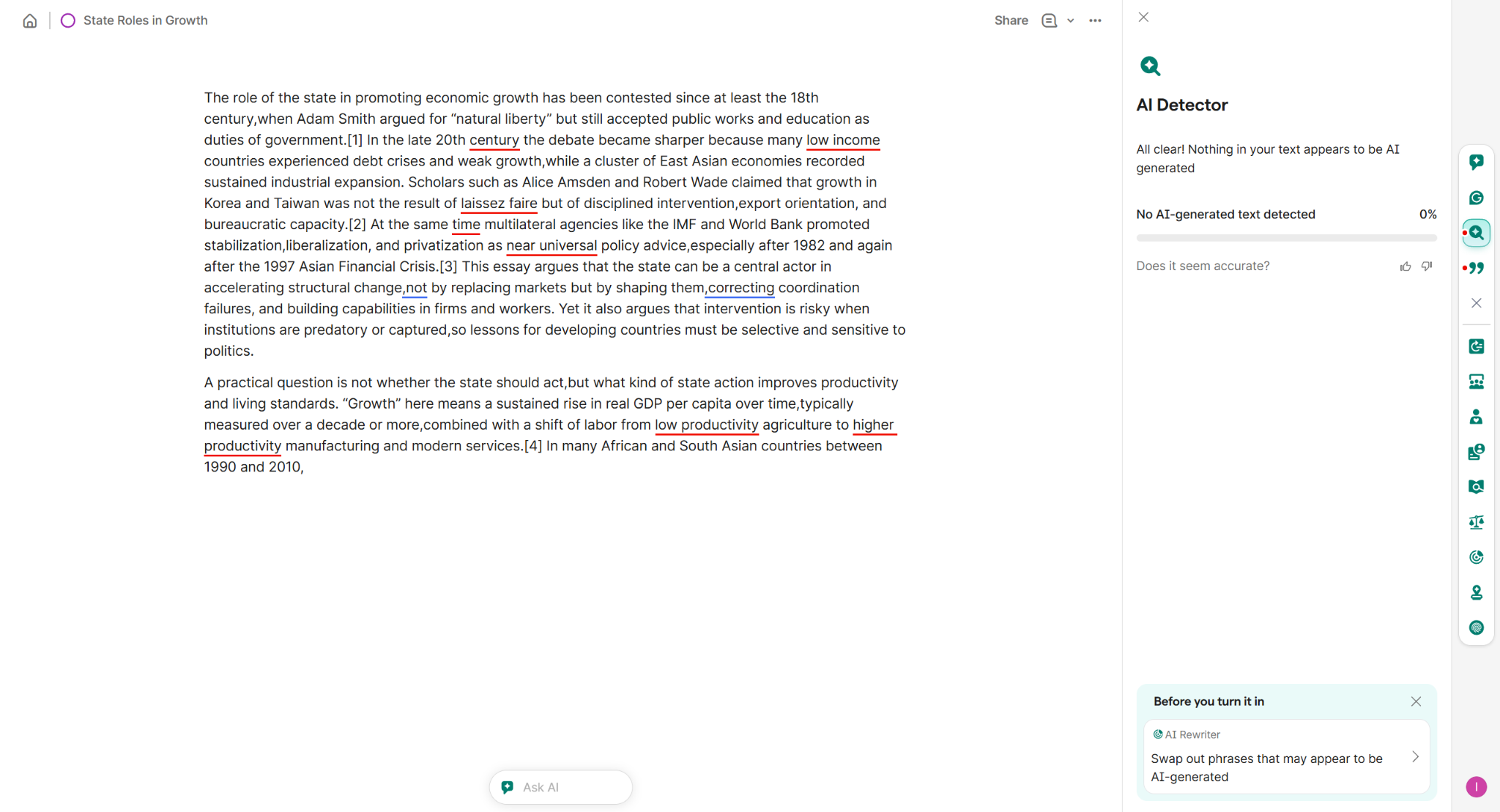
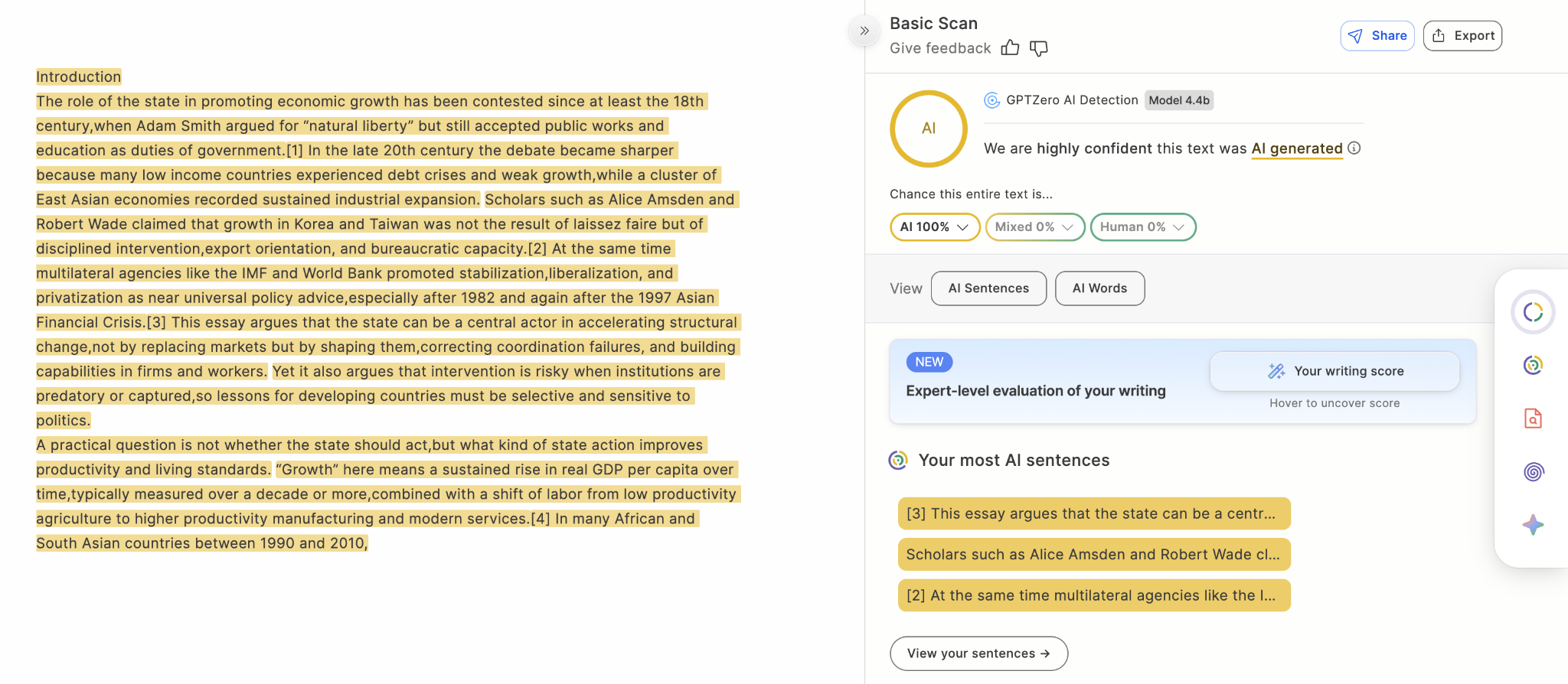
Fig 4: AI generated essays misclassified by Quilbot and Grammarly (a,b) as Human while GPTZero flags it correctly as 100% AI generated (c).
Benchmark 4: Product Reviews
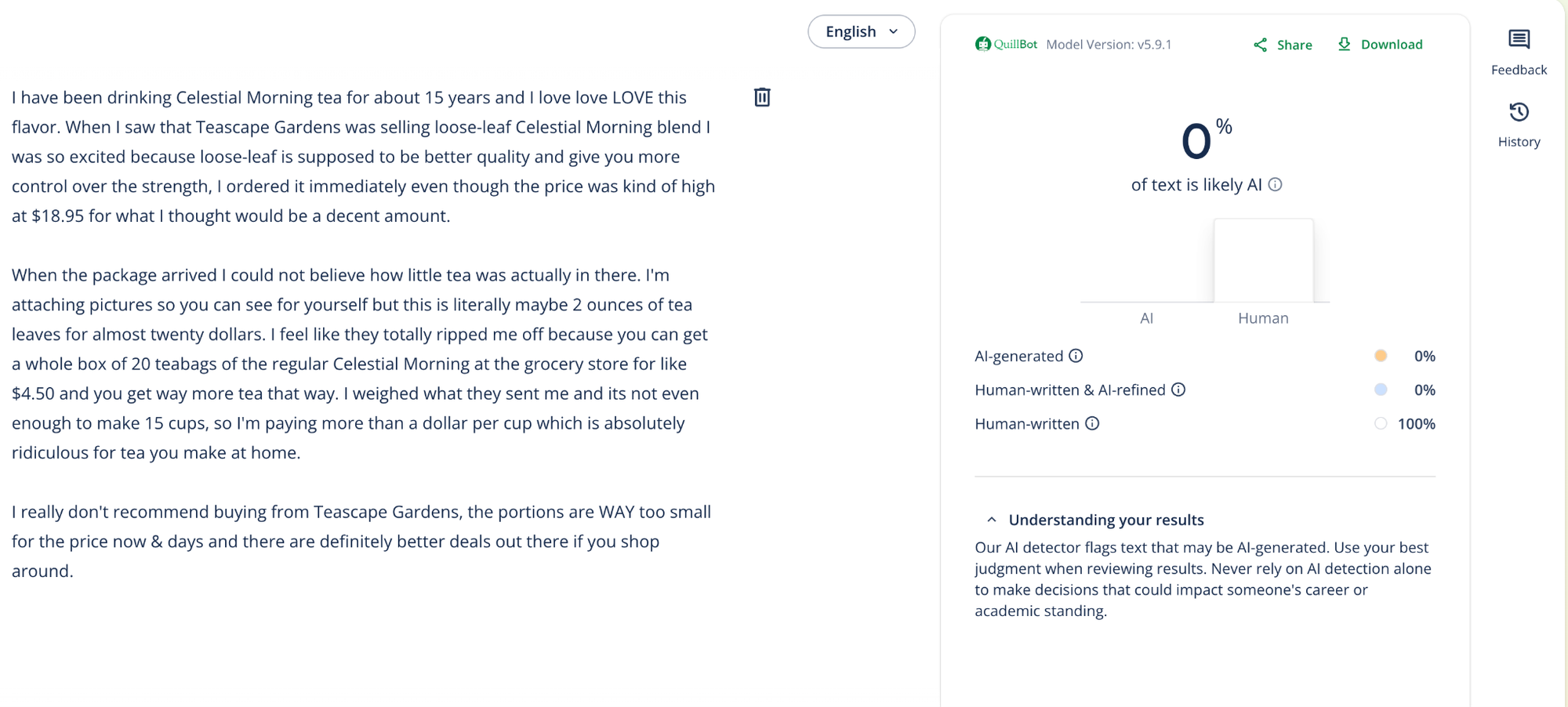
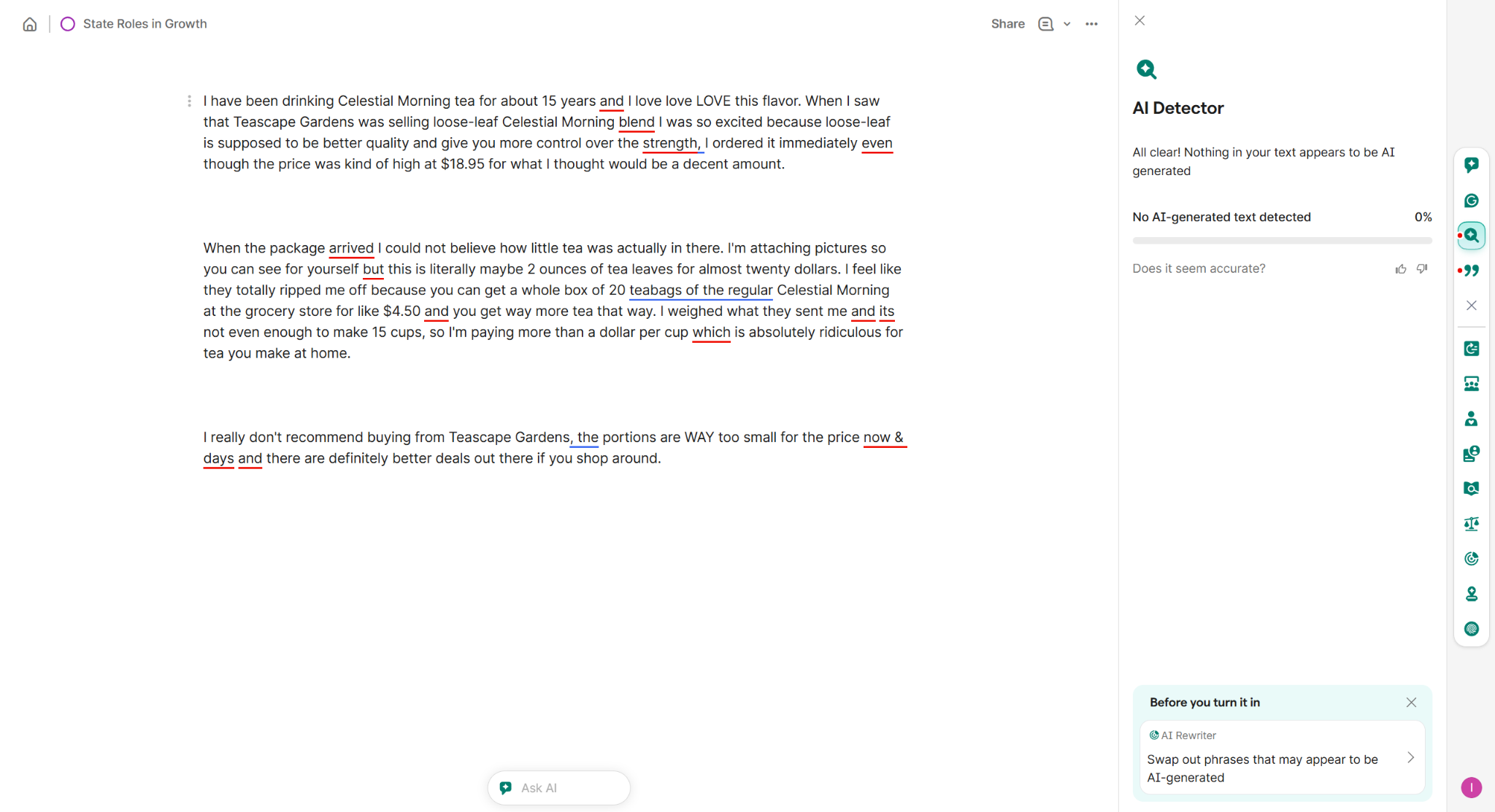
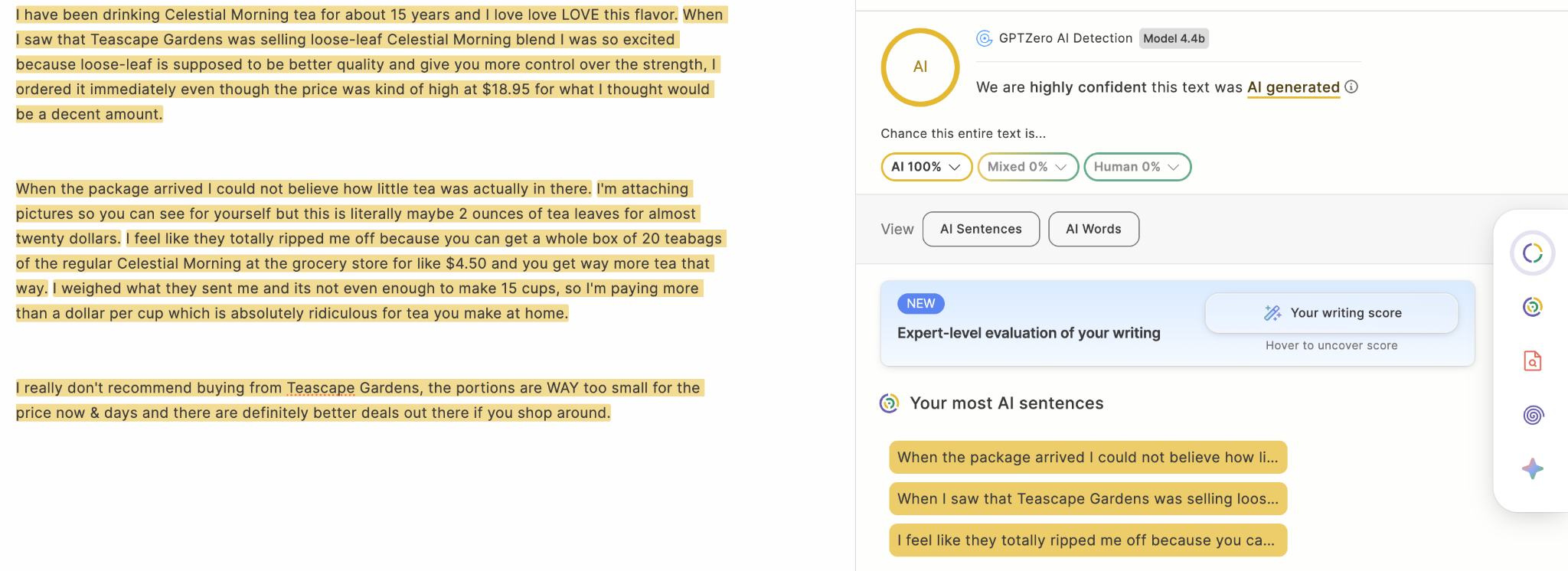
Fig 5: AI generated product review (using claude sonnet) misclassified by Quilbot and Grammarly (a,b) as Human while GPTZero flags it correctly as 100% AI generated (c)
Benchmark 5: AI Paraphrased texts
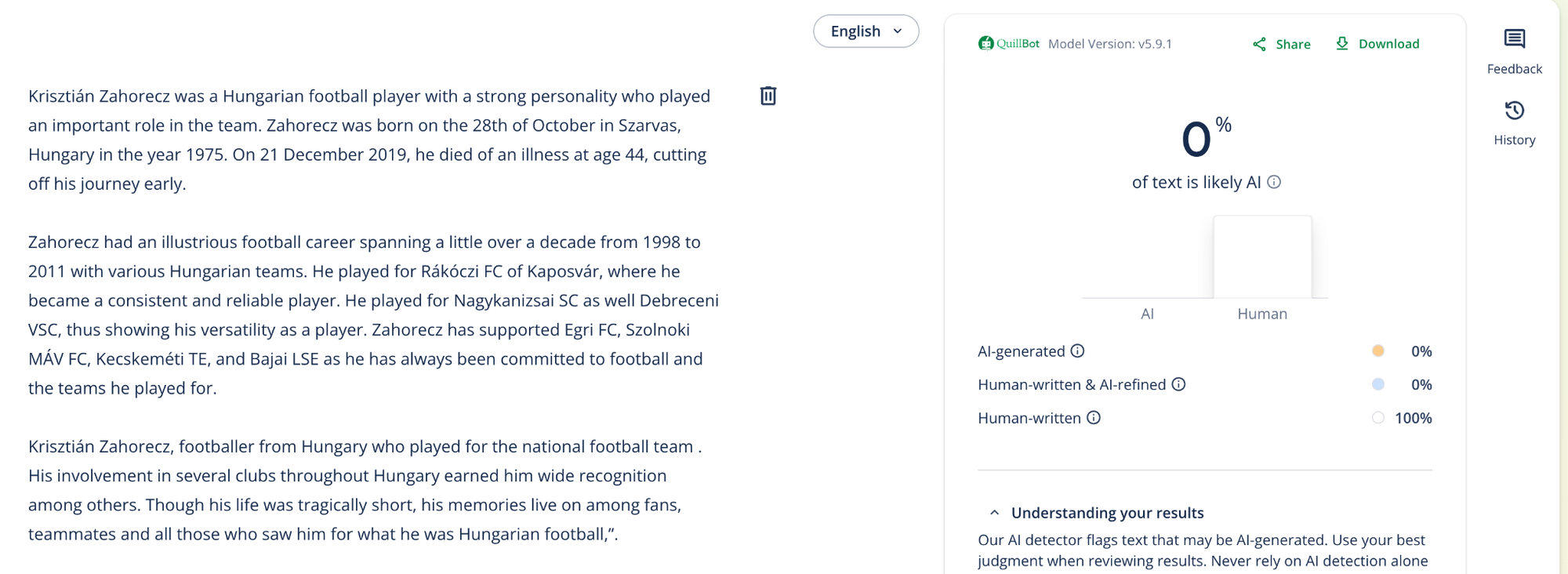
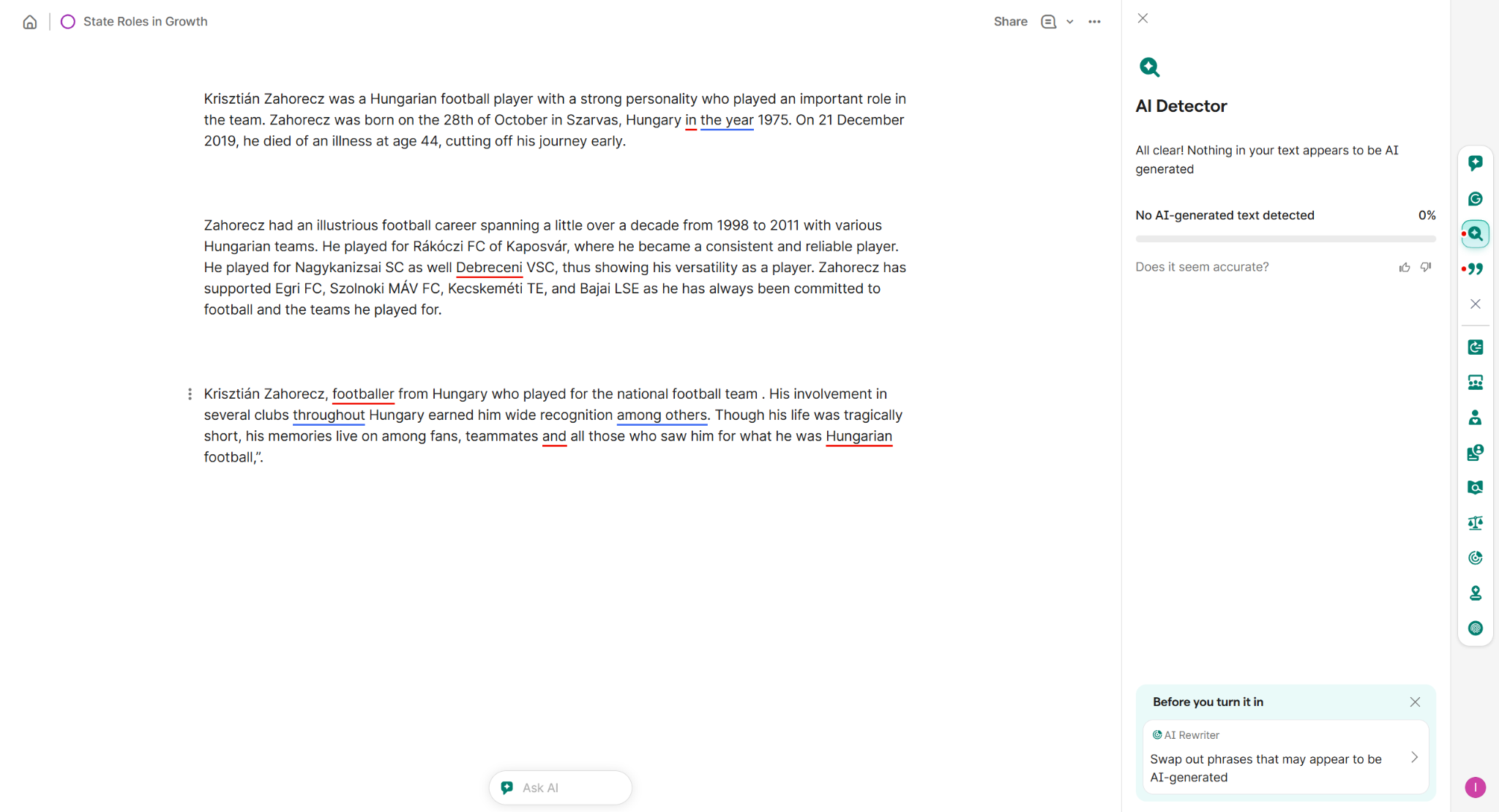
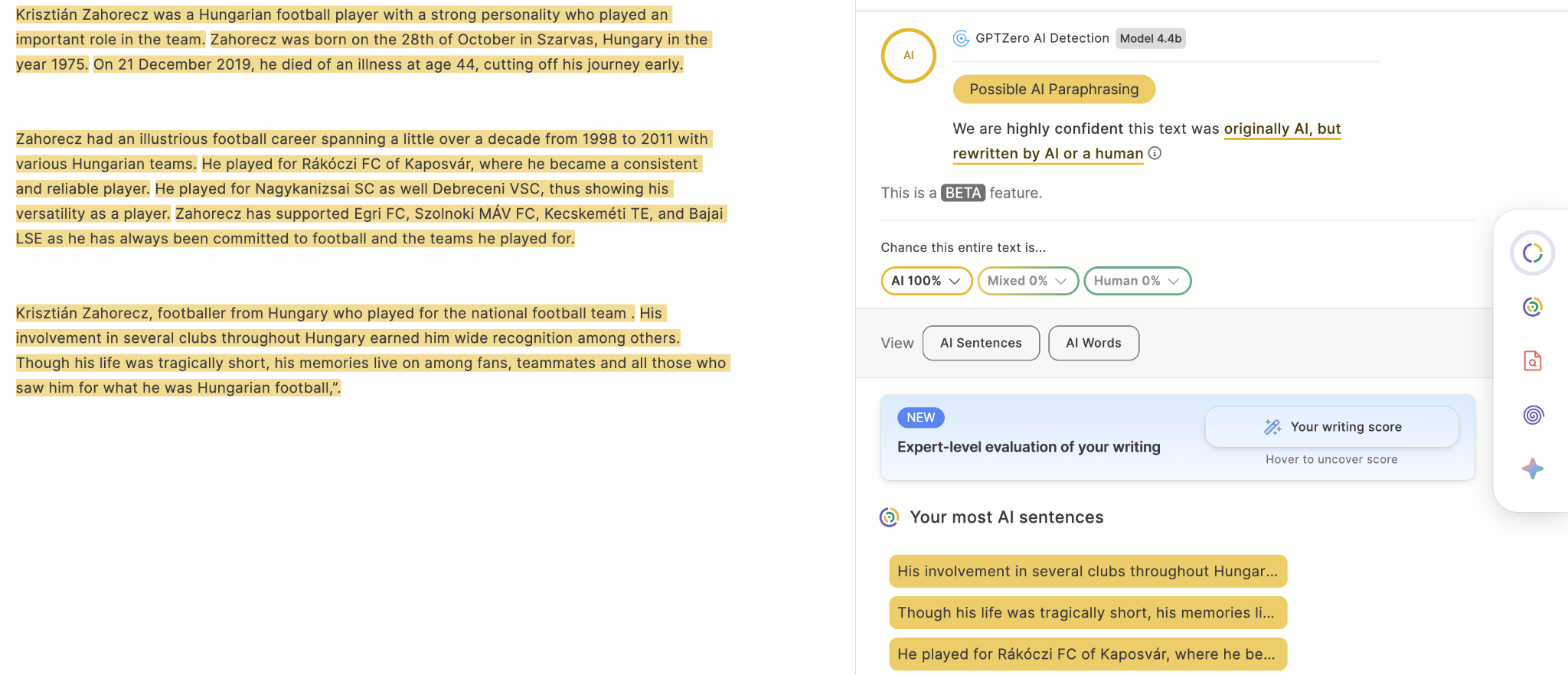
Fig 6: AI generated and then humanized text misclassified by Quilbot and Grammarly (a,b) as Human written while GPTZero flags it correctly as 100% AI generated and flags it as AI Paraphrased text (c).
Benchmark 6: Multilingual data
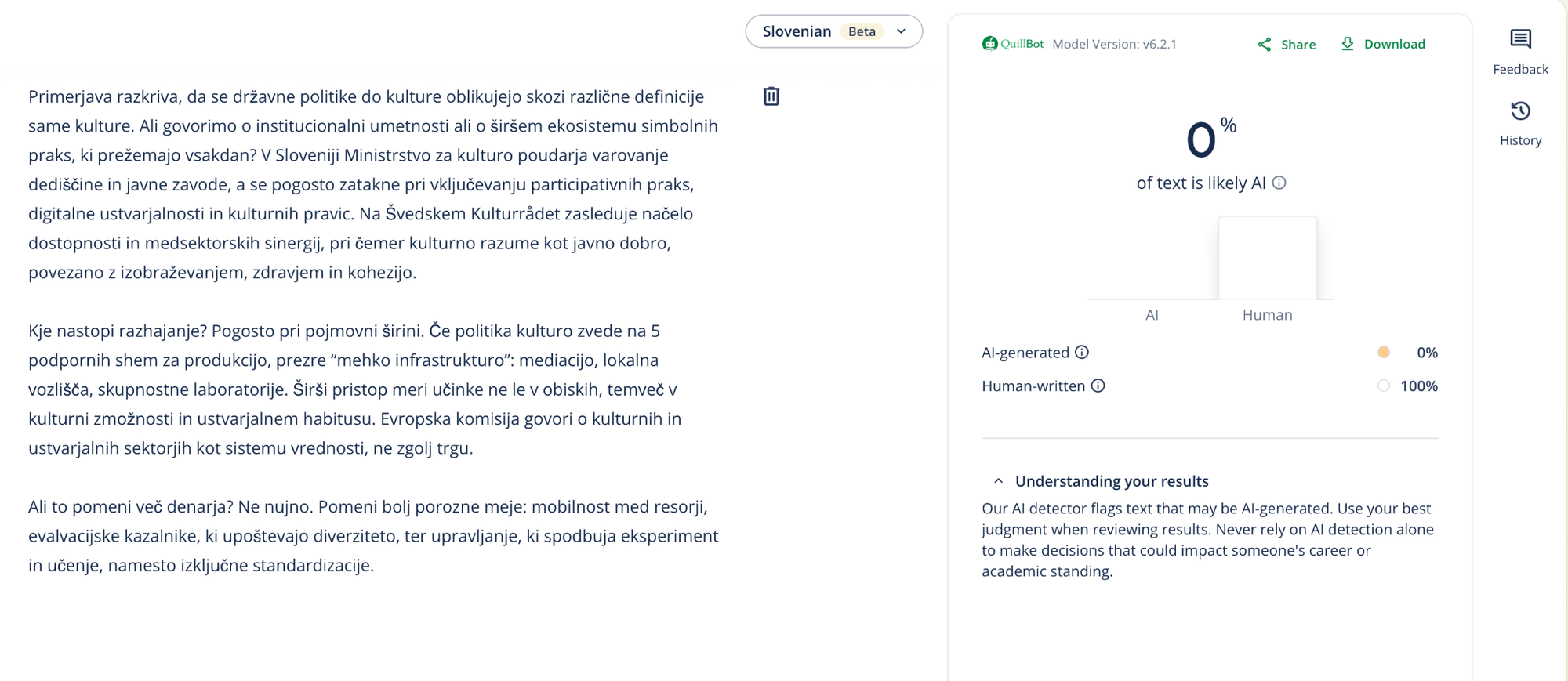
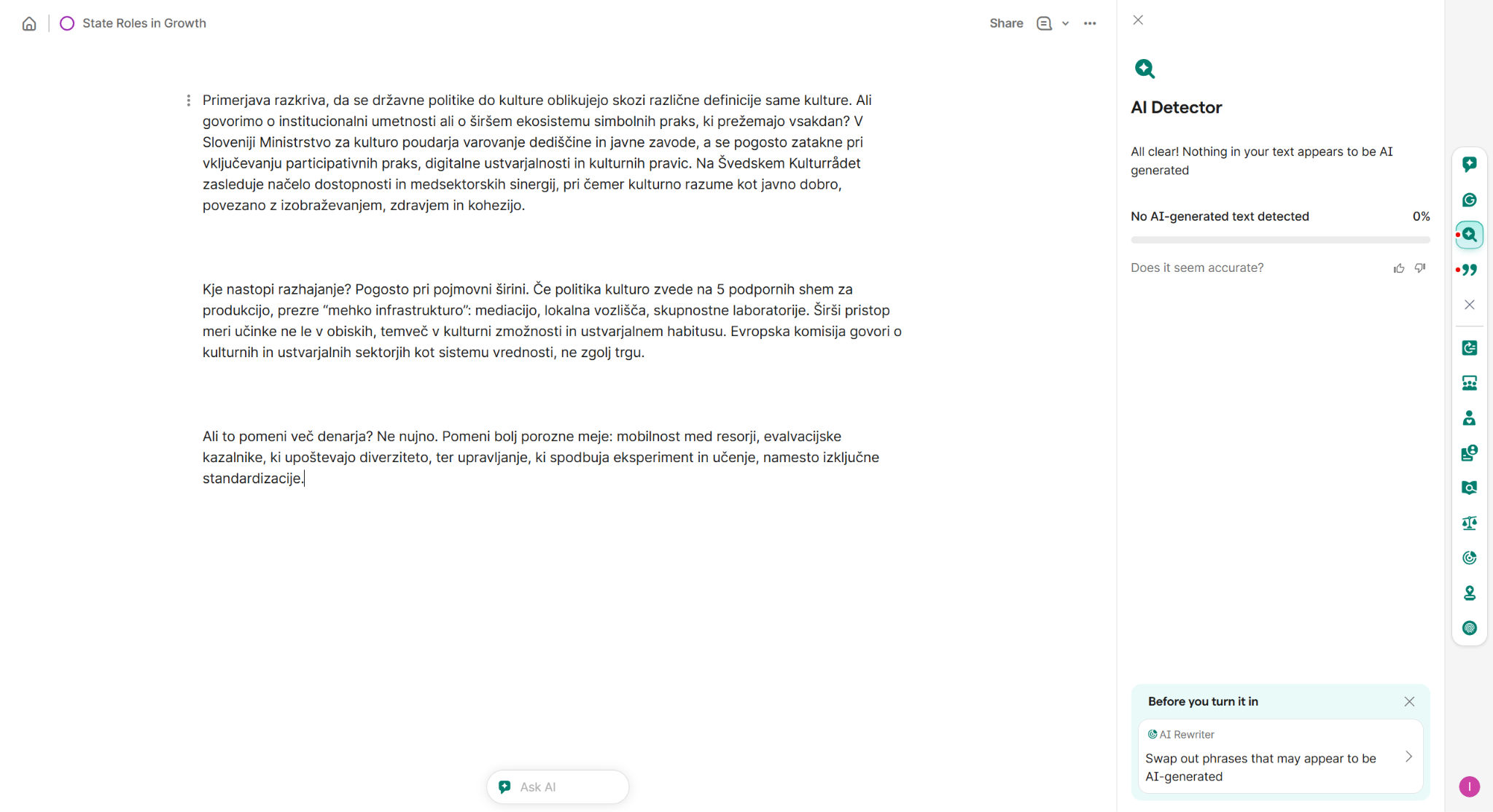
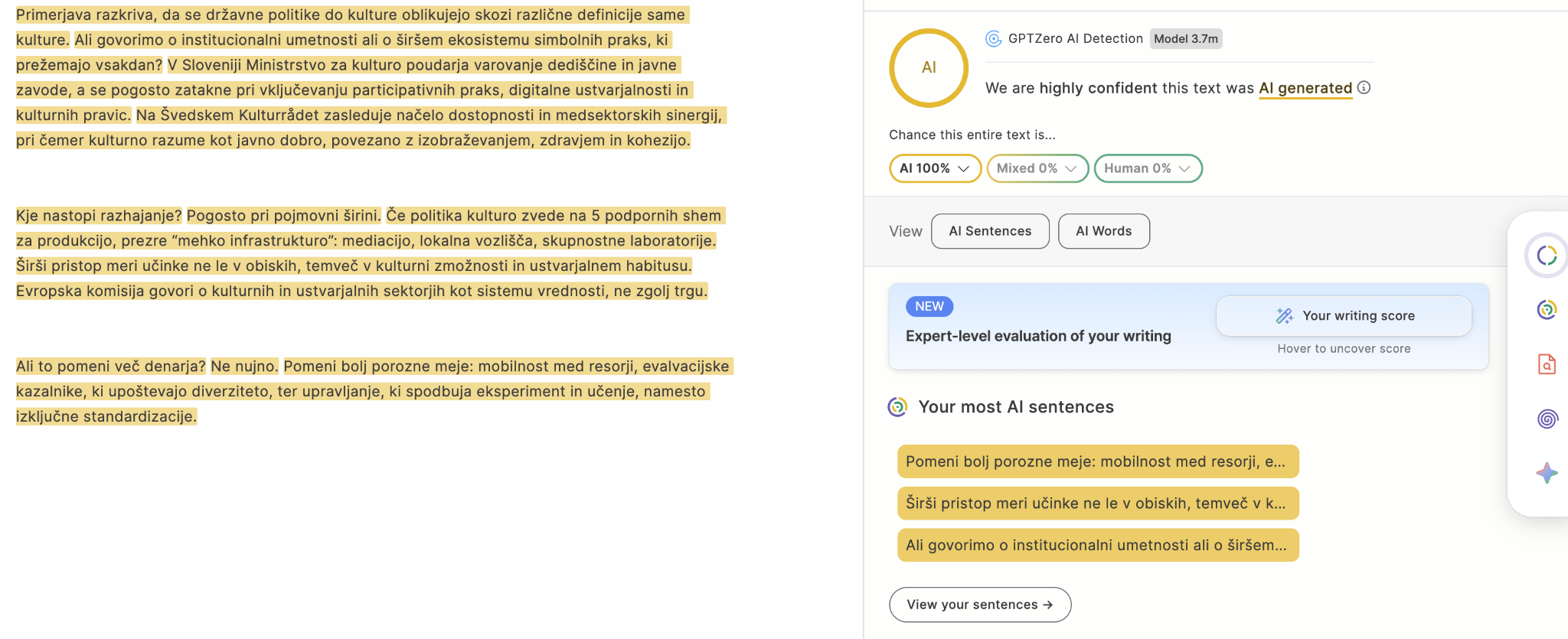
Fig 7: AI generated Slovenian text (using GPT-5) misclassified by Quilbot and Grammarly (a,b) as Human written while GPTZero flags it correctly as 100% AI generated (c).
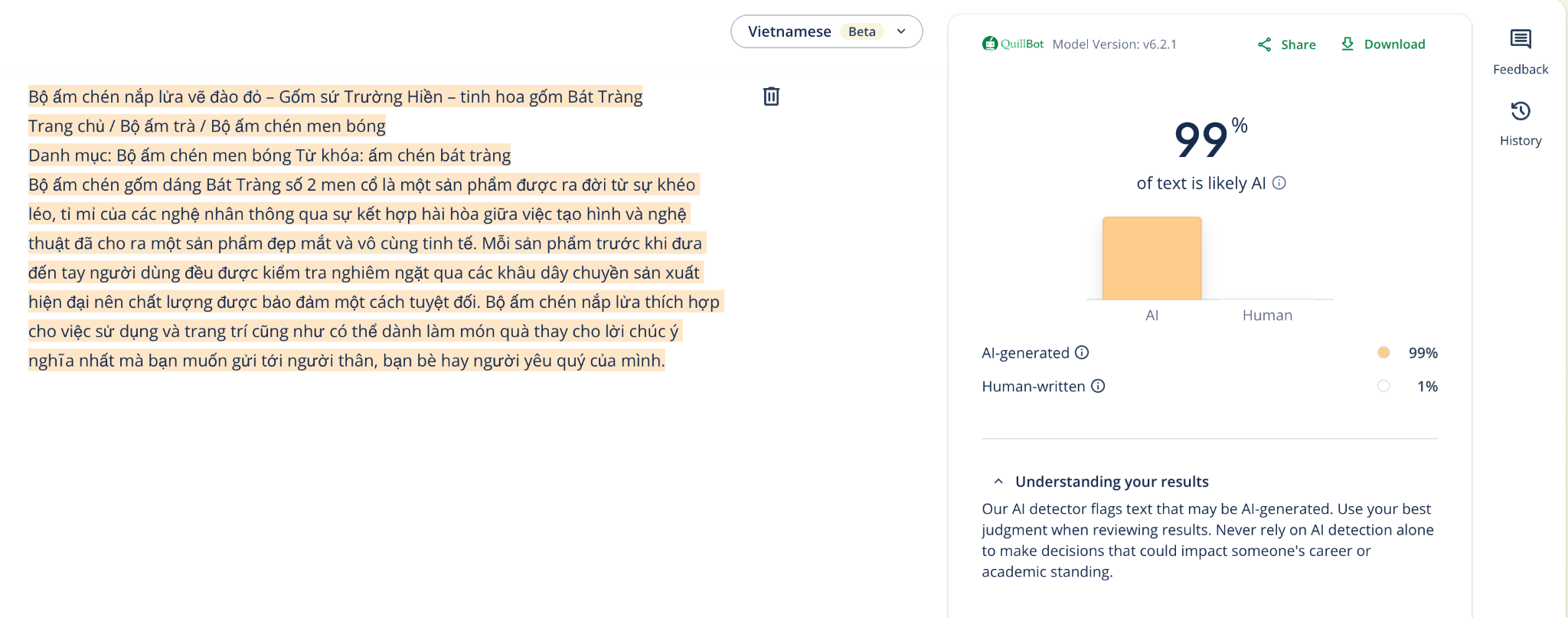
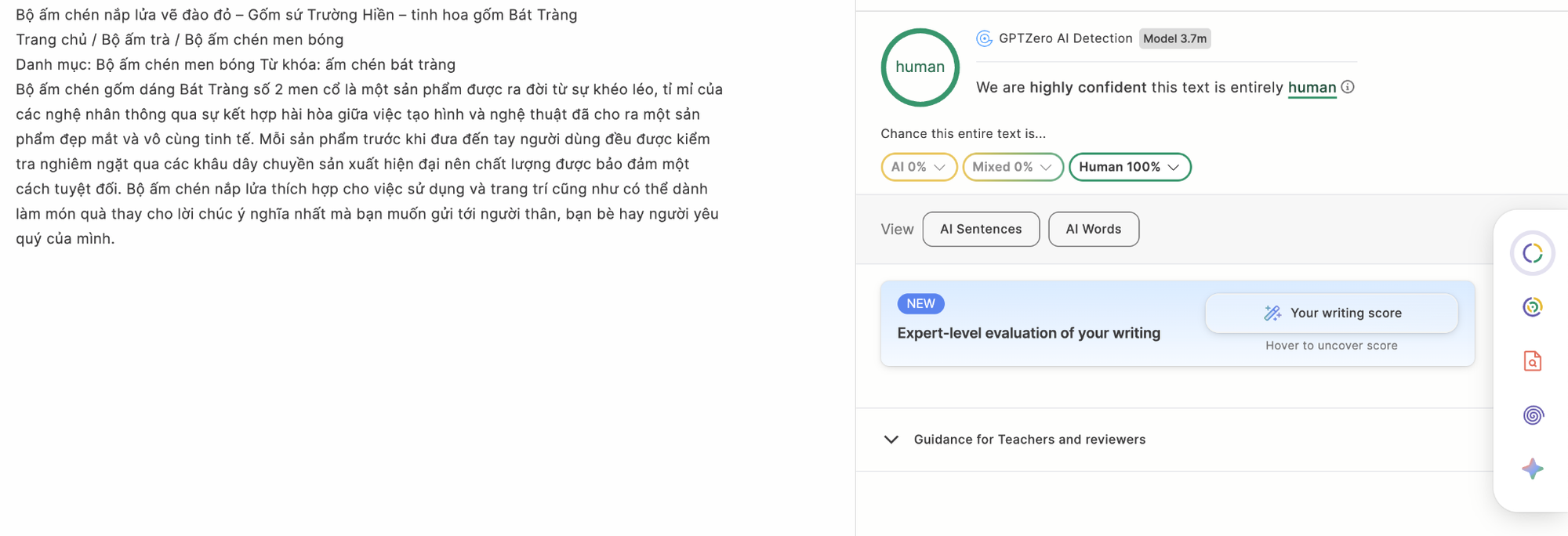
Fig 8: Human written text Vietnamese text misclassified by Quilbot (a) as AI written while GPTZero classifies it correctly as 100% Human written (b).
GPTZero vs QuillBot
While AI detection is now part of their offering, QuillBot is primarily known as a paraphrasing and rewriting tool, which helps users reword sentences, summarise content, and make writing sound smoother or more polished. Basically, AI detection isn’t necessarily QuillBot’s defining strength.
This shows in our benchmark results, as across every category tested, GPTZero outperformed QuillBot on AI detection accuracy. The gap was especially wide in harder categories such as creative writing, product reviews, bypassed text, and multilingual samples. QuillBot can be useful for rewriting text, but it was much less reliable at identifying whether that text was AI-generated in the first place.
AI Detection Accuracy
Our benchmark results show GPTZero consistently outperforms QuillBot on AI detection accuracy across domains. While QuillBot performed reasonably in some straightforward categories, its results dropped sharply on more difficult benchmarks, including creative writing, adversarially modified text, and multilingual content.
This matters because modern AI detection needs to handle mixed documents, edited outputs, and a much wider range of styles and languages, which is where GPTZero has a definite advantage.
False Positives and Reliability
Accuracy alone is a huge part of the equation, but also, a useful detector needs to avoid falsely flagging human writing as AI-generated.
In our benchmark, GPTZero maintained a lower false positive rate overall while still achieving much stronger recall. This matters as detectors missing large amounts of AI text may look conservative, but in practice are less reliable. GPTZero is designed to perform well on both sides of the problem: detecting AI-generated content accurately while staying strong on genuinely human writing.
Use Cases
QuillBot is best suited for users who want help rewriting, paraphrasing, or summarising text. It is primarily a writing assistance tool.
GPTZero is designed for AI detection, authorship analysis, and identifying mixed or AI-assisted writing across real-world contexts. For educators, publishers, platforms, and teams that need reliable AI detection rather than general writing support, GPTZero is the stronger fit.
Paraphrasing Capabilities
This is the category where QuillBot has the most major advantage: paraphrasing is its signature feature, and it is built to help users quickly rewrite or rephrase text in different styles.
But that strength also highlights an important limitation in this comparison. A tool can be good at rewriting AI-generated text without being especially good at detecting it. Our benchmark suggests that while QuillBot is useful for transformation, it is far less dependable as an AI detector.
Grammar and Writing Assistance
QuillBot offers grammar and writing improvement features as part of its broader writing workflow. For users who want a lightweight all-in-one writing assistant, that may be appealing.
GPTZero, by contrast, is not trying to be a general writing assistant first. Its focus is on giving users a more accurate, transparent view of whether and how AI was used in a document.
Plagiarism Detection
Both tools offer plagiarism-related features, but they serve different priorities. QuillBot includes plagiarism checking as part of a broader productivity suite. GPTZero includes plagiarism checking within a platform built around verification and trust. The more important issue is whether a tool can accurately distinguish between human, AI, and mixed writing, which is where GPTZero leads.
Integrations and Extensions
QuillBot is designed to fit naturally into everyday writing workflows, especially for users who want browser-based rewriting and drafting support.
GPTZero’s integrations are more detection-focused. Features such as browser-based scanning and document-level analysis are designed to help users verify content, review authorship signals, and make more informed decisions about AI-generated writing.
Pricing and Plans
If the main goal is reliable AI detection, benchmark performance matters more than a lower starting price. Our results suggest that QuillBot’s lower-cost, broader writing suite comes with major trade-offs in detection accuracy and robustness.
Pros and Cons: GPTZero
Pros
- Higher AI detection accuracy across every benchmark category
- Stronger performance on mixed, paraphrased, and adversarial text
- Lower false positive rates on human-written content
- Built specifically for AI detection and authorship analysis
Cons
- Less focused on paraphrasing and general rewriting workflows
- Not positioned as an all-purpose writing assistant
Pros and Cons: QuillBot
Pros
- Strong paraphrasing and rewriting features
- Useful grammar and writing support tools
- Lower starting price for users focused on writing assistance
Cons
- Significantly weaker AI detection performance in our benchmark
- Less reliable on harder categories such as bypassers and multilingual text
- AI detection is a secondary feature, not the product’s main focus
GPTZero vs Grammarly
Grammarly is one of the most widely used writing assistants and can help users improve grammar, spelling, clarity, tone, and overall writing quality across emails, essays, documents, and workplace communication. In recent years, it has also added AI features, including AI detection.
Like with QuillBot, there is a difference between offering AI detection and excelling at it. Our benchmark results show that Grammarly performs better than QuillBot in several categories, but still falls well short of GPTZero overall. This is especially obvious in more difficult detection scenarios, including creative writing, bypassed text, and multilingual content.
AI Detection Accuracy
In our benchmark, GPTZero consistently outperformed Grammarly on AI detection accuracy across domains. Grammarly showed relatively strong results in some more conventional categories, such as essays and paper reviews, but its performance dropped much more sharply on harder benchmarks.
However, real-world AI detection does not happen in clean, predictable conditions. Users increasingly submit text that has been edited, humanised, paraphrased, or blended with human writing. A detector that performs well only on straightforward samples is not enough and GPTZero is designed to handle this more complex reality, which is why it performs more strongly across the full benchmark.
False Positives and Reliability
One of the biggest risks in AI detection is getting the human side of the equation wrong. A false positive can have massive and long-reaching consequences, especially in education, publishing, or professional review workflows.
In our benchmark, Grammarly maintained a low false positive rate in several categories, but reliability is also about catching AI-generated text when it is actually present. GPTZero achieves a stronger balance here, blending low false positive rates with much higher recall, making it more reliable across both human-written and AI-generated text.
Paraphrasing Capabilities
Unlike QuillBot, Grammarly is not primarily positioned as a paraphrasing tool, and the rewriting features are more closely tied to tone improvement than sentence-level paraphrasing for its own sake.
This means Grammarly is useful for users who want to polish their writing, but also the more relevant distinction is that Grammarly is designed to improve writing, while GPTZero is designed to analyse authorship and detect AI use.
Grammar and Writing Assistance
This is Grammarly’s strongest category and it has built its international reputation on helping users write more confidently, and it remains more comprehensive than GPTZero as a general writing assistant.
For users who want support with grammar, sentence fluency, tone, and everyday communication, Grammarly has an advantage. But that does not change the benchmark results: strong grammar support and strong AI detection are not the same thing, and our testing shows that GPTZero wins when the task is identifying AI-generated content accurately.
Plagiarism Detection
Both GPTZero and Grammarly offer plagiarism-related features, but they are built around different priorities. For Grammarly, plagiarism detection sits within a much broader writing and editing ecosystem, while for GPTZero, it sits alongside AI detection and authorship analysis as part of a verification-focused platform.
Integrations and Extensions
Grammarly is deeply integrated into everyday writing workflows. It works across browsers, documents, email, and workplace tools, making it a natural choice for users who want always-on writing support.
GPTZero’s integrations are narrower, but more specialised. Rather than focusing on writing assistance across every workflow, GPTZero focuses on scanning, verification, and authorship analysis, making it a better fit for users who need detection-focused tooling.
Pricing and Plans
For users looking for an all-purpose writing assistant, Grammarly’s pricing may feel justified by the breadth of features it offers. But if the main question is which tool is better at AI detection, our benchmark results suggest that Grammarly’s wider writing suite does not translate into top-tier detector performance.
Pros and Cons: GPTZero
Pros
- Higher AI detection accuracy across benchmark categories
- Stronger performance on adversarial, mixed, and multilingual text
- Better balance between low false positives and high recall
- Built specifically for AI detection and authorship analysis
Cons
- Not as broad a writing assistant as Grammarly
- Less focused on everyday editing, clarity, and tone improvement
Pros and Cons: Grammarly
Pros
- Excellent grammar, spelling, clarity, and tone support
- Broad integrations across writing workflows
- Strong choice for users who want general writing assistance
Cons
- Weaker AI detection performance than GPTZero in our benchmark
- Less robust on harder categories such as bypassed and multilingual text
- AI detection is one feature within a broader product, rather than the product’s main focus
Looking ahead
As machine-generated content continues to grow, AI detection will remain a moving target. By focusing on accuracy, fairness, and robustness, we aim to provide reliable detection results, and we invite readers to check our live benchmark to stay up to date as models and tools evolve.
FAQs
Can QuillBot bypass GPTZero? GPTZero correctly flags 97.6% of QuillBot-humanized AI text as AI-generated on our live benchmark. GPTZero is much stronger in detecting human-AI blended texts, AI-paraphrased text, and adversarially modified text, while QuillBot is less reliable at identifying whether that text was AI-generated in the first place.
Which detector is better for academic settings? GPTZero is the better choice for academic settings because it achieves higher accuracy across categories, lower false positive rates on human-written text, and much stronger performance on mixed writing, paraphrased AI text, and multilingual samples.
Which tool is more secure? When choosing a writing tool, users should consider other factors such as API integration, features, support, and security alongside benchmark performance.
What to look for when choosing a writing tool? The right choice depends on what you actually need: if the main goal is reliable AI detection, GPTZero is the strongest choice, while QuillBot and Grammarly are useful writing tools but AI detection is not their main job.