GPTZero versus ZeroGPT: What's the difference?
What's the difference between AI detection tools named GPTZero and ZeroGPT? Here’s what you should know about each to make an informed decision.


Let’s face it: it’s getting harder and harder to tell what’s been written by humans, and what’s been created by AI. This is where tools like ZeroGPT and GPTZero come in – but which is better for what you need?
While they might have similar names, which can be confusing, there’s an important distinction between the origins of each tool, plus a practical distinction: GPTZero is built to support higher-stakes workflows (education, publishing, journalism, enterprise), while ZeroGPT other is mainly aimed at fast, surface-level checks.
Overview of GPTZero
GPTZero was the original AI detection tool, developed by a team with deep AI expertise and launched on January 1st, 2023. Started by 24-year-old Edward Tian and 26-year-old Alex Cui, who met at high school, GPTZero’s detection tool that helps identify whether a piece of content was AI-generated. Techcrunch declared it one of the fast-growing consumer apps of the year.

From the very beginning, GPTZero has been a leading offering widely used by institutions and content creators. GPTZero’s algorithms are always being updated to detect the latest AI-generated patterns and keep up with ever-evolving generative AI technologies.
Strengths of GPTZero
- Advanced detection algorithms: GPTZero’s algorithms are designed to catch even the most subtle of AI-generated text, making it preferable for those seeking a high accuracy level. Our detector was benchmarked on RAID (a comprehensive, independent, 3rd party dataset), and was shown to be the most accurate AI detector in North America. Our AI checker is able to detect 95.7% of AI texts while only incorrectly predicting 1% of human texts as AI, an accuracy that jumps to over 99% when filtering out discontinued LLMs like GPT3.5.
- Detailed reports: GPTZero offers users more detailed analysis and breaks down sections of text to make it extremely clear where there is AI-like phrasing or structure. This matters because it means that instead of a single percentage, you get details that you can audit and discuss.
- Broader use cases: It is popular in academic circles but is also widely used in professional environments, namely auditing corporate or published content – for example, we are one of the third-party providers for the Associated Press tool AP Verify to help verify content.
- Frequently updated: GPTZero is the most regularly updated AI detector available, as shown by the 15 different model releases in 2025. This is so that it can expand to new types of writing, stay reliable against new humanization techniques, and add features like distinguishing between fully LLM generated text and human text that was polished by an LLM.
- Built for responsible education workflows: In higher-stakes settings (like grading), the best tools help you slow down and apply repeatable standards, and GPTZero’s toolkit is designed to support documentation, consistency, and fair follow-up.
- Security + compliance posture: GPTZero is SOC 2 certified for enterprise usage and FERPA-compliant for student data safety, which is a practical requirement if handling student work or internal documents.
- Enterprise options: Beyond the web app, GPTZero offers API access and more scalable workflows for teams that need repeatability, logs, and integration with existing review processes.
Limitations of GPTZero
- Complexity: If you only need a quick and simple answer, GPTZero’s detailed reports and options can be overwhelming.
- Higher costs: The advanced detection features come with higher price tags for premium users, which could be limiting for some.
- Response times for longer documents: As its analysis has more depth, GPTZero’s processing time can be slightly slower, especially with extensive documents.
Overview of ZeroGPT
ZeroGPT is a copycat of GPTZero that launched after the popularity of GPTZero. It has an ad-support model, and prioritizes a quicker, basic approach to whether or not a text may have been AI-generated. It’s positioned more as a lightweight checker than a tool built for accountable, high-stakes decision-making.
Strengths of ZeroGPT
- User-Friendly interface: ZeroGPT is simple to use. You just paste your text and then it’ll give you a percentage showing how likely it is to be AI-generated.
- Great for quick checks: Particularly helpful if you’re looking for a fast answer without extra details.
- Affordable options: It has a free version, although you need a paid plan for more in-depth results.
Limitations of ZeroGPT
- Limited features: ZeroGPT lacks advanced features like detailed breakdowns of flagged text sections.
- Accuracy on longer texts: The accuracy of ZeroGPT can decrease with longer text inputs, which may be an issue for analyzing long documents like research papers.
- Credibility issues: After GPTZero’s launch, ZeroGPT quickly followed with a suspiciously similar name and a misleading tagline.
- Unverifiable AI detection accuracies: GPTZero accuracies are benchmarked independently with university labs at Penn State as well as comprehensive benchmarks such as RAID, and consistently tested across tests the results of the product across different writing types and languages. ZeroGPT conducts no academic benchmarking, and offers no independent validation.
- Unaccountable customer support and team: Short of the fact that the business was registered in Lebanon, there is no accountability behind product, payment, and customer support failings for their users. In contrast, GPTZero was ranked as G2’s #1 AI software in 2025 based on customer satisfaction and ratings.
- Opaque data storage and privacy practices: GPTZero is SOC 2 certified for enterprise usage and FERPA-compliant for student data safety. ZeroGPT offers no transparency into their data storage or privacy and makes it unsafe to store academic or personal information.
What’s the difference between GPTZero and ZeroGPT?
Here are some factors to consider when making the decision between ZeroGPT and GPTZero.
1. Accuracy
Accuracy is obviously the most critical factor for any AI detection tool, which becomes more difficult as AI-generated content becomes more sophisticated. GPTZero leads in accuracy with its advanced algorithms and detailed reporting, making it the better choice if you need precise results.
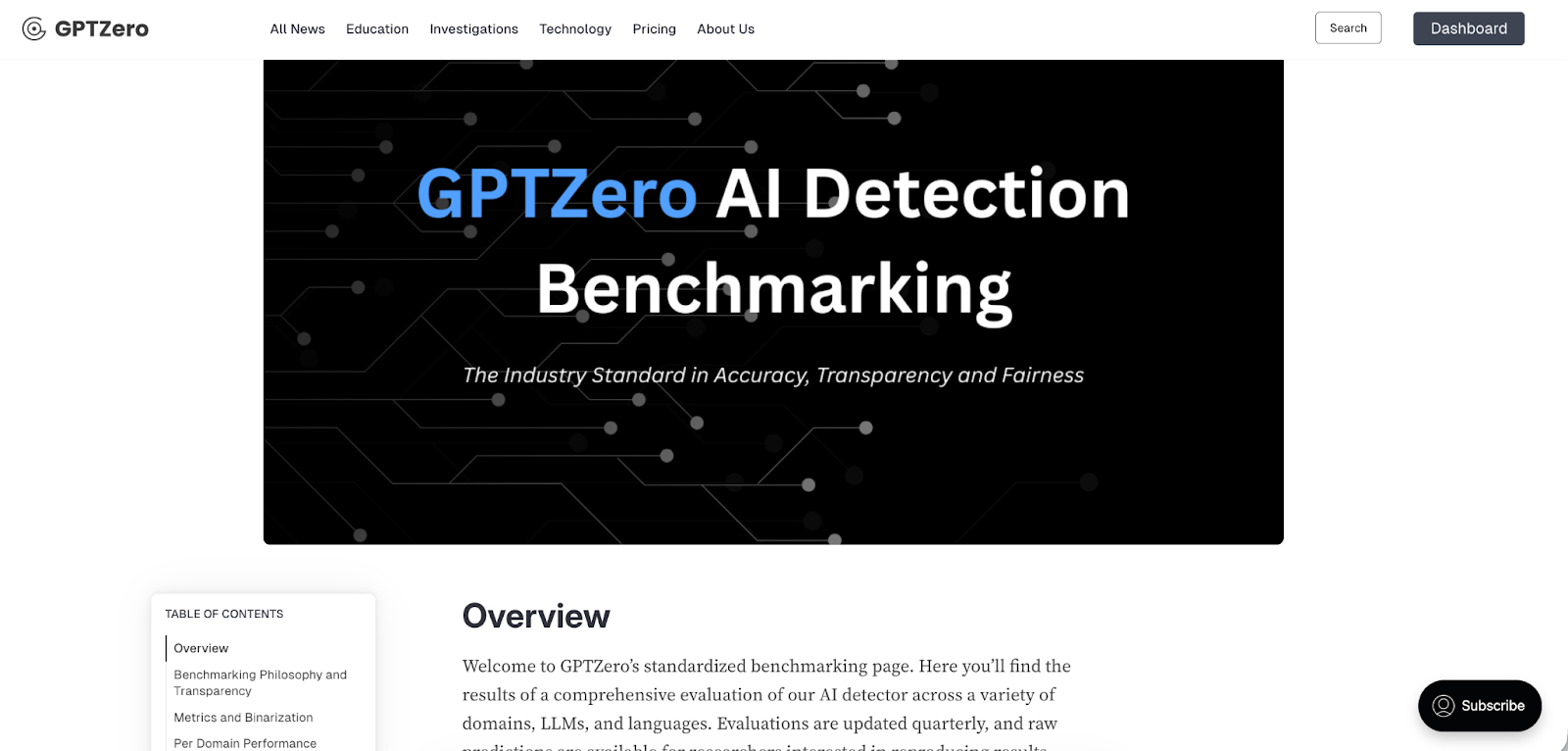
Based on this investigation (as well as other independent tests), ZeroGPT’s accuracy results are much worse.
“ZeroGPT is a copy of GPTZero which is less effective, especially when it comes to differentiating between AI and human text,” says George Argyros, a contributor to Twixify. “GPTZero clearly outperforms ZeroGPT in distinguishing between AI-generated and human-written text. It's not just about the numbers; it's about how these tools impact my daily tasks. GPTZero tends to give me a lot of confidence that I'm getting accurate readings, which is crucial when I need to ensure the content's authenticity quickly and efficiently.”
2. User experience
ZeroGPT is all about simplicity: you paste your text and get a score, and there are no extra clicks required. GPTZero offers more depth, which may be less user-friendly for those looking for a quick fix – but ultimately provides a more thorough analysis. However, if you’re making an important decision that affects someone else – whether they’re a student, a writer or a job applicant – then “more thorough” is usually the right trade.
3. Reporting depth
If you need detailed breakdowns, GPTZero is the winner as it gives in-depth reports and specific flagging of text sections that seem to be AI-generated. ZeroGPT focuses on keeping things surface-level – giving a clear overall probability but not as much when it comes to section-specific details.
4. Cost and accessibility
Both tools offer free access and their paid plans differ in price and scope. GPTZero’s premium plans come at a higher price but with a large variety of features, like customized reports and bulk content analysis. ZeroGPT’s paid options are more affordable but come with fewer functions, and can be confusing to figure out.
5. Business model
ZeroGPT’s business model relies on ads so that you can access the tool for free, although the ads can be distracting. GPTZero offers a cleaner user experience with free as well as subscription options (the paid version comes with advanced features).
6. Community
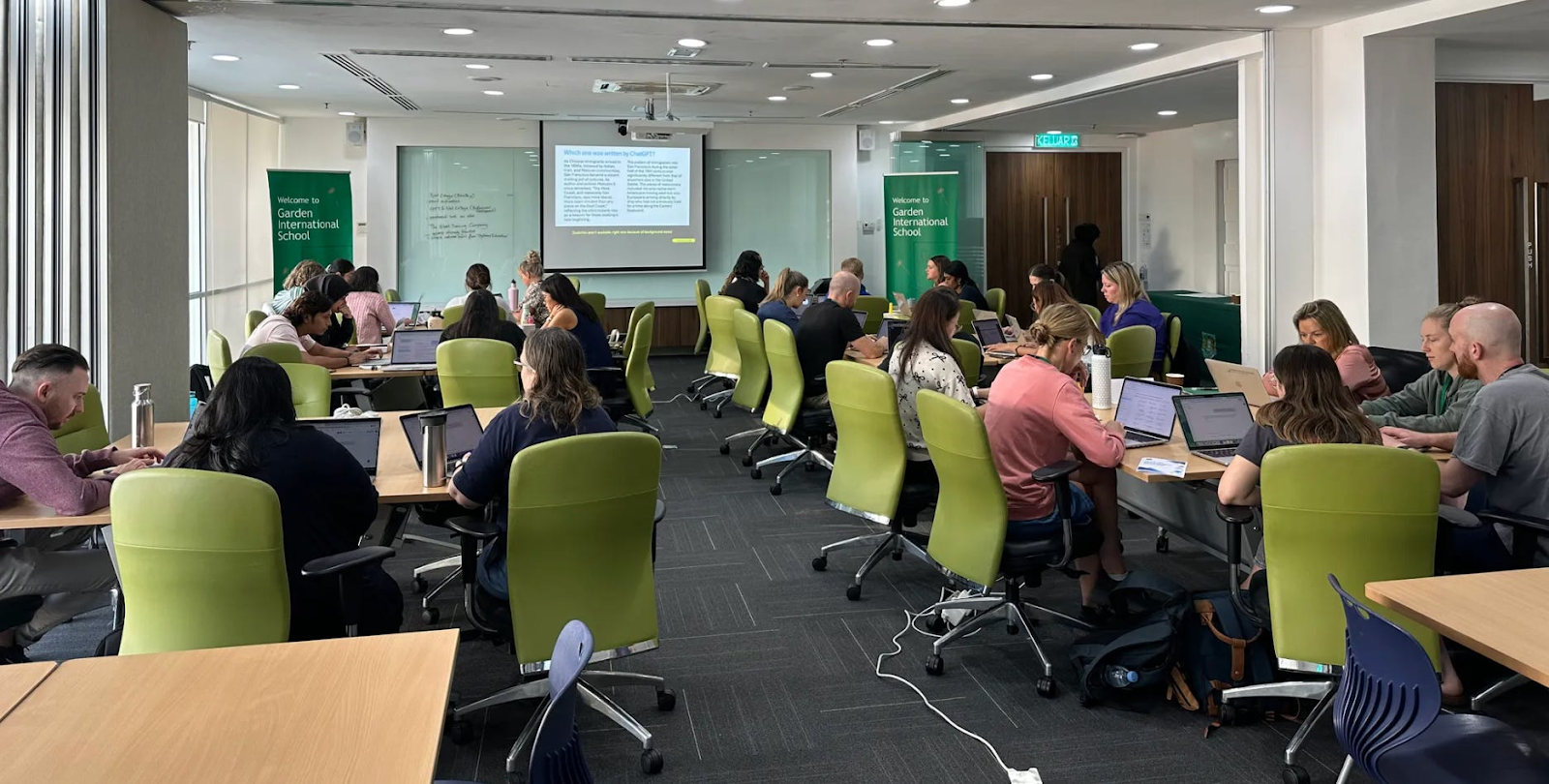
The GPTZero Teacher Ambassador Program is a community-driven initiative designed for educators who are interested in navigating the challenges of AI in education, specifically focusing on fostering academic integrity and promoting responsible AI usage. It brings together teachers to share strategies for using AI as a pedagogical tool, and empowers educators to lead conversations about AI literacy and responsible AI usage in their schools.
Which tool is best for my job?
Best for students
GPTZero is committed to responsible AI in education, and part of that means that students are using our Writing Replay tool for a pre-submission check.
The Writing Replay is where you see the process, as GPTZero reconstructs how a document was written (where text was typed, where it was pasted) – which means you can catch the sections that might look AI-assisted, and make deliberate edits before you submit.
Best for educators
For those in education needing an immediate (but not necessarily accurate) response, ZeroGPT may be the more accessible option due to its straightforward interface. However, for those needing high accuracy, especially on longer academic papers, GPTZero’s capacity for complexity might be the better choice.
Ideal for businesses and content creators
Content creators and businesses could prefer GPTZero, as it provides deeper insights into content origins and detailed reports that are helpful when it comes to maintaining corporate standards or brand integrity. ZeroGPT is great for quick checks but could be missing the depth some businesses need for thorough auditing.
Top choice for large organizations
Large organizations might find GPTZero’s extensive features and reporting super valuable, as it allows for sophisticated detection on a wide range of documents. The higher price point is likely manageable within larger budgets, as an investment for ongoing content verification.
A closer look at the copycat issue
It is worth remembering that ZeroGPT launched soon after GPTZero and arguably has attempted to piggyback off GPTZero’s launch success.
When ChatGPT exploded into the world in late 2022, the world scrambled to keep up with the subsequent flood of AI-generated content. GPTZero launched just weeks later, on January 1st, 2023, built from the longtime research at Princeton’s NLP lab to give educators and professionals a way to detect AI-written text.
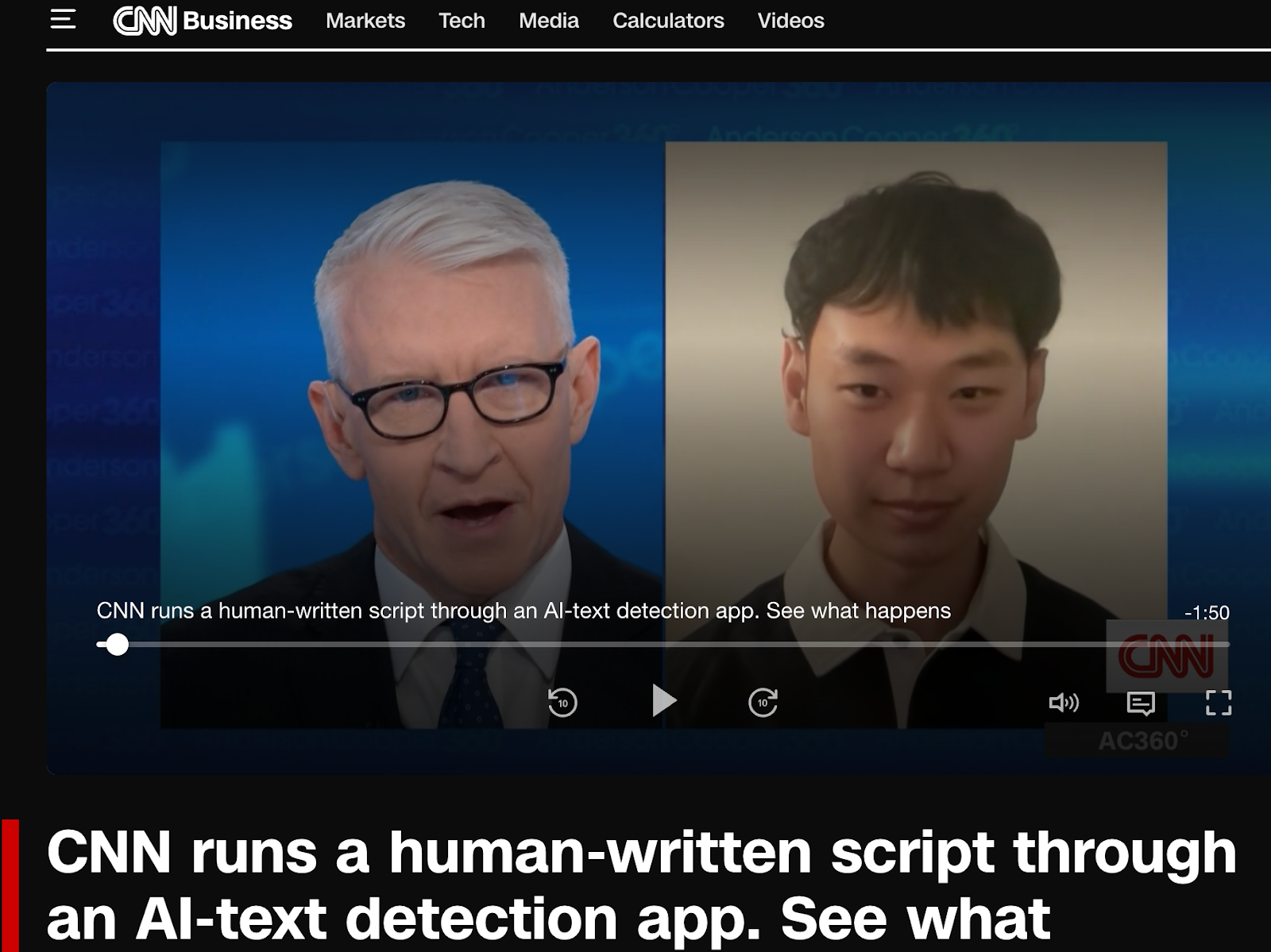
After GPTZero’s viral momentum, a copycat site, ZeroGPT, popped up on January 18th, 2023, capitalizing on brand confusion that even major media outlets, including Yahoo News and SCMP had by accidentally swapping the GPTZero name.
Specifically, ZeroGPT falsely claimed “Millions of users trust ZeroGPT’s detector” – however, as a brand-new tool, it had no major user base, which made this an untrue statement clearly aimed at borrowing GPTZero’s credibility.
GPTZero, on the other hand, has been built with a commitment to transparency, trustworthiness, and a mission around preserving what’s human. ZeroGPT’s tactics seem to be more about capitalizing on GPTZero’s credibility instead of creating its own.
Summary
GPTZero is the original AI detection tool and is continually refined to maintain the highest industry standards. While ZeroGPT can be used for fast, simple checks, GPTZero gives more in-depth reports that better meet the needs of larger organizations or those requiring high accuracy like education institutions.
Choosing GPTZero means choosing quality over cutting corners, particularly if integrity and detailed insights are top concerns.
FAQs
Are GPTZero and ZeroGPT the same company (or affiliated)? No. They are completely separate tools with similar names. The confusion comes from the similar naming (and the fact that both sit in the same “AI detector” category), but there’s no official relationship or shared ownership between them. GPTZero launched first, and ZeroGPT appeared shortly after, which is why people sometimes assume they’re connected.
Which one is more accurate for detecting AI text? If you need higher-confidence results (especially for longer, more complex writing) then GPTZero is the stronger option because of its benchmarking, reporting depth, and update cadence.
Can I use GPTZero or ZeroGPT for free? Yes. Both offer free access, with paid tiers for higher limits and more features. ZeroGPT leans heavily on an ad-supported model, which is why its free tier can feel “lighter weight” and more distraction-heavy. GPTZero’s free tier is typically cleaner, and paid plans add more advanced capabilities for people who need reliability at scale (like educators, teams, and organisations).