What Teachers Told Us at NCTE: Key Takeaways From Denver
Our Community Lead Mana Setayesh was at the NCTE Convention in Denver this year, and shares some of her main takeaways.

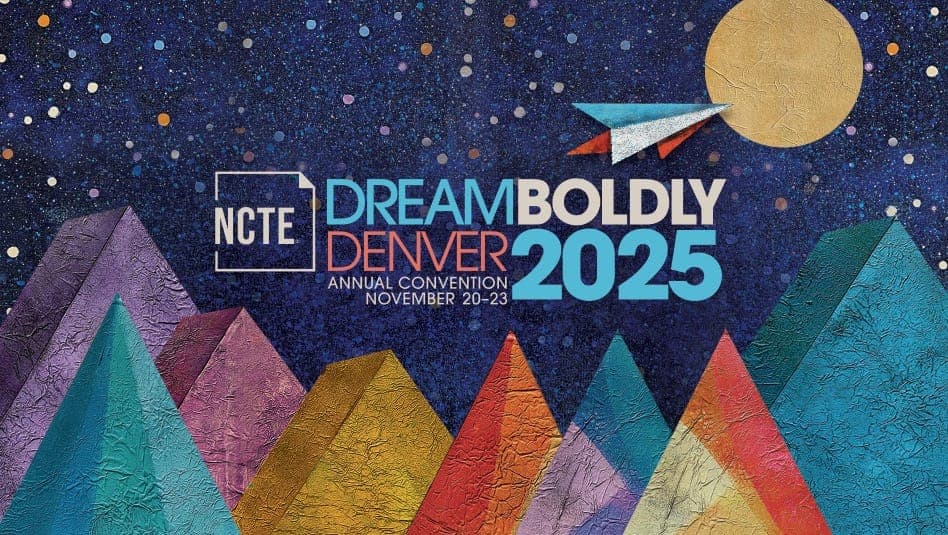
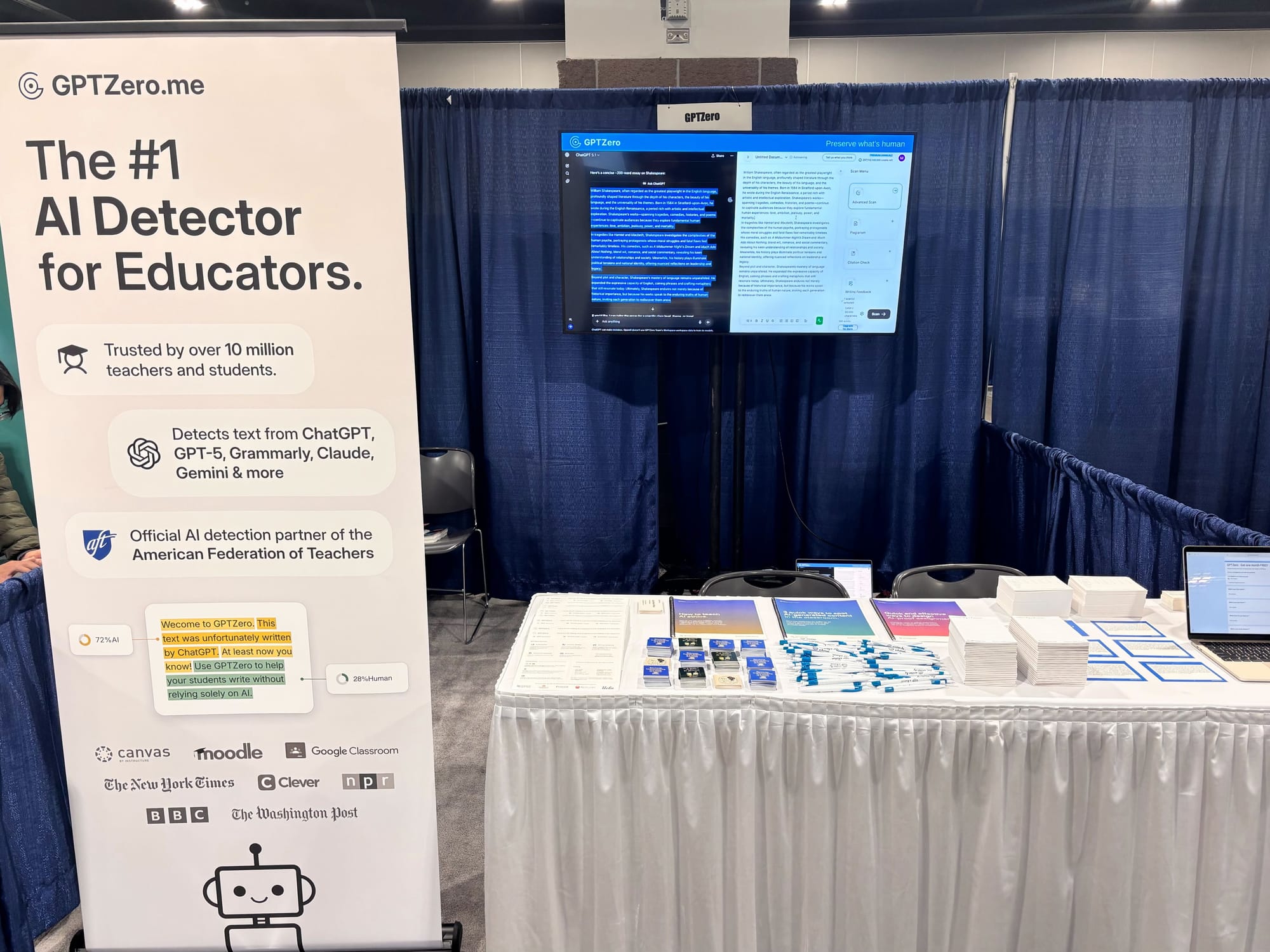
The NCTE (National Council of Teachers of English) held their Annual Convention in Denver this year, from November 20–23, with sessions, speakers, and events for educators at every level. It’s a conference known for bringing together educators in an inspiring way, and our new Community Lead, Mana Setayesh, was proud to attend on GPTZero’s behalf.
Here, she shares some of her main takeaways.
The first thing that I noticed is that teachers were very candid about what they’re seeing from students and where they feel confident (or not) in navigating AI. Teachers see more and more students relying on AI: they want to teach their students how to use it responsibly and have them still learn basic skills. This is a big reason why teachers love GPTZero and love that they can detect AI and start conversations with students about using AI in their writing and assignments.
One thing stood out: teachers aren’t after a blanket policy. Instead, they’re looking for practical ways to protect learning and build AI literacy. Many told me that GPTZero helps them do exactly that, as a starting point for reflective conversations with students.
There were also some concerns teachers raised on the spot. What surprised me was seeing that more teachers are pivoting to handwritten assignments. While it might seem quite old school, reverting to pen-and-paper work seems like a truly AI-proof way to proceed with homework.
I also heard about parents giving pushback when their kids are flagged for AI usage, which adds a level of emotional difficulty for teachers. How do you know when to insist upon the view that an assignment has likely been AI-generated, and when to hold back?
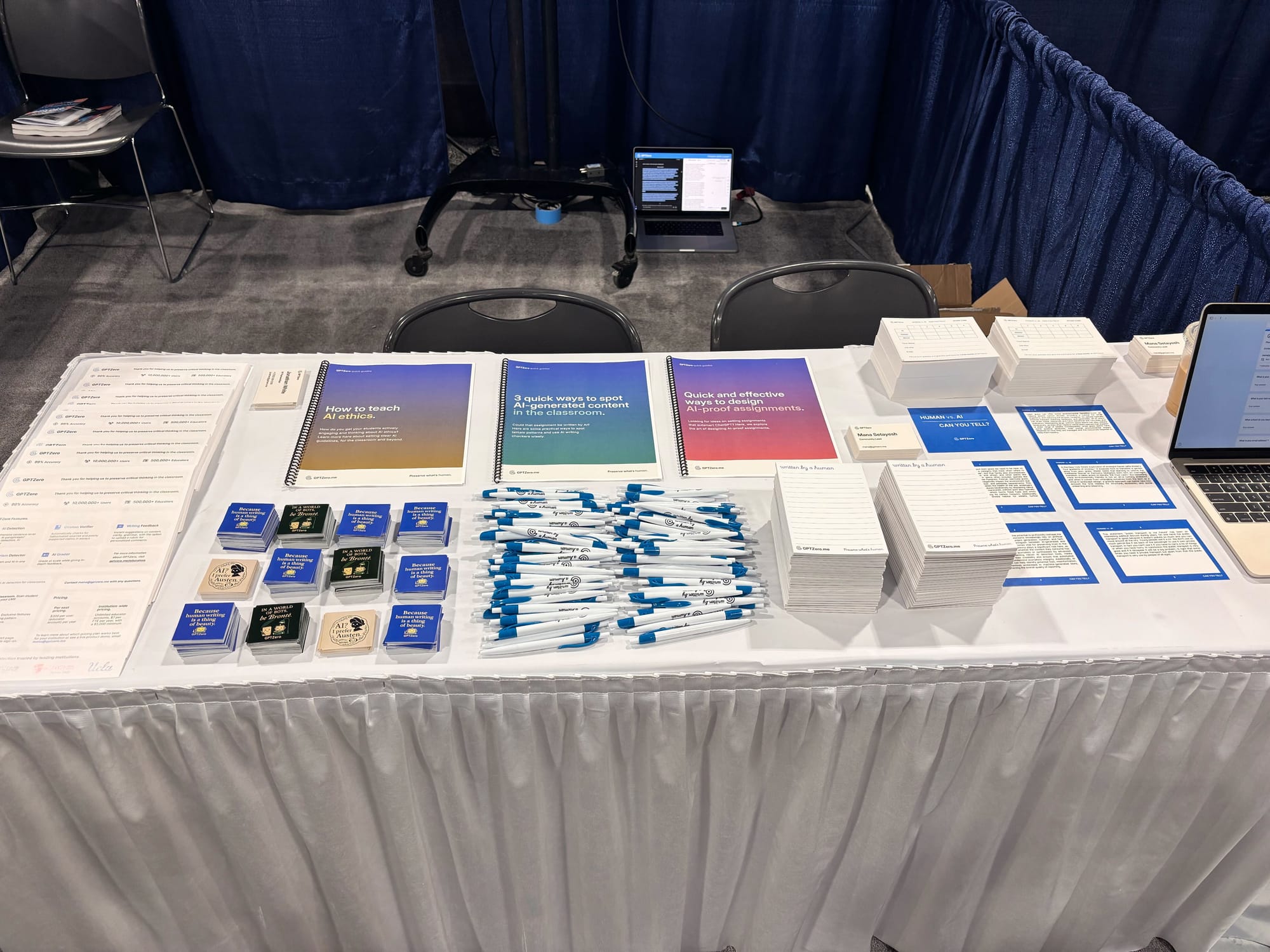
Also, some teachers thought they could detect AI themselves, but were unable to in a game that GPTZero ran. That’s not to say teachers aren’t using AI themselves - I was intrigued to see that teachers are incorporating AI into their assignments like talking to it or writing poetry back and forth.
Some of the most memorable moments came from the teachers who already use GPTZero and took the time to tell me how much they appreciate it. The teachers who use us really love us and that was great to see. Many were excited about how GPTZero’s Writing Report helps them explain academic integrity in an efficient and professional way.
There were teacher strategies shared among attendees too. For example, teachers who would take vocab words from students' papers and give them a vocab test to show that the student didn’t actually know those words. This struck me as such a simple (but reliable!) way to understand whether a student really wrote what they submitted.
What struck me the most was just how different every teacher’s approach is and how valid each one is in its own context. To sum up, they are navigating AI the best they can, and everybody has a different approach.
If you’re an educator navigating these same questions, you can explore our AI literacy resources (and our growing Ambassador Program).