
EaseMate AI Detector Review: Is It Accurate?
I tested EaseMate AI detector against both AI and human samples. How did it perform, and what was the accuracy? Learn all the details in the EaseMate AI detector review.


The latest 2026 Student Generative AI Survey from the Higher Education Policy Institute (HEPI) shows that 95% of students are now using AI in some form.
A lot of AI writing is involved in academic work. But academia isn't the only industry affected. The issue of AI-generated work, especially writing, is on the rise in all spheres of life.
This has created a huge demand for accurate AI detection tools, and the market has responded positively to this call. But the issue is that many available AI detectors aren't very accurate.
You have to make sure an AI detector is highly accurate before using it and making decisions based on its results.
The AI detector we are reviewing today is the one offered by EaseMate. I’ll walk you through exactly how I tested it and what the results were.
But first, a quick look at what EaseMate is.
What is EaseMate?
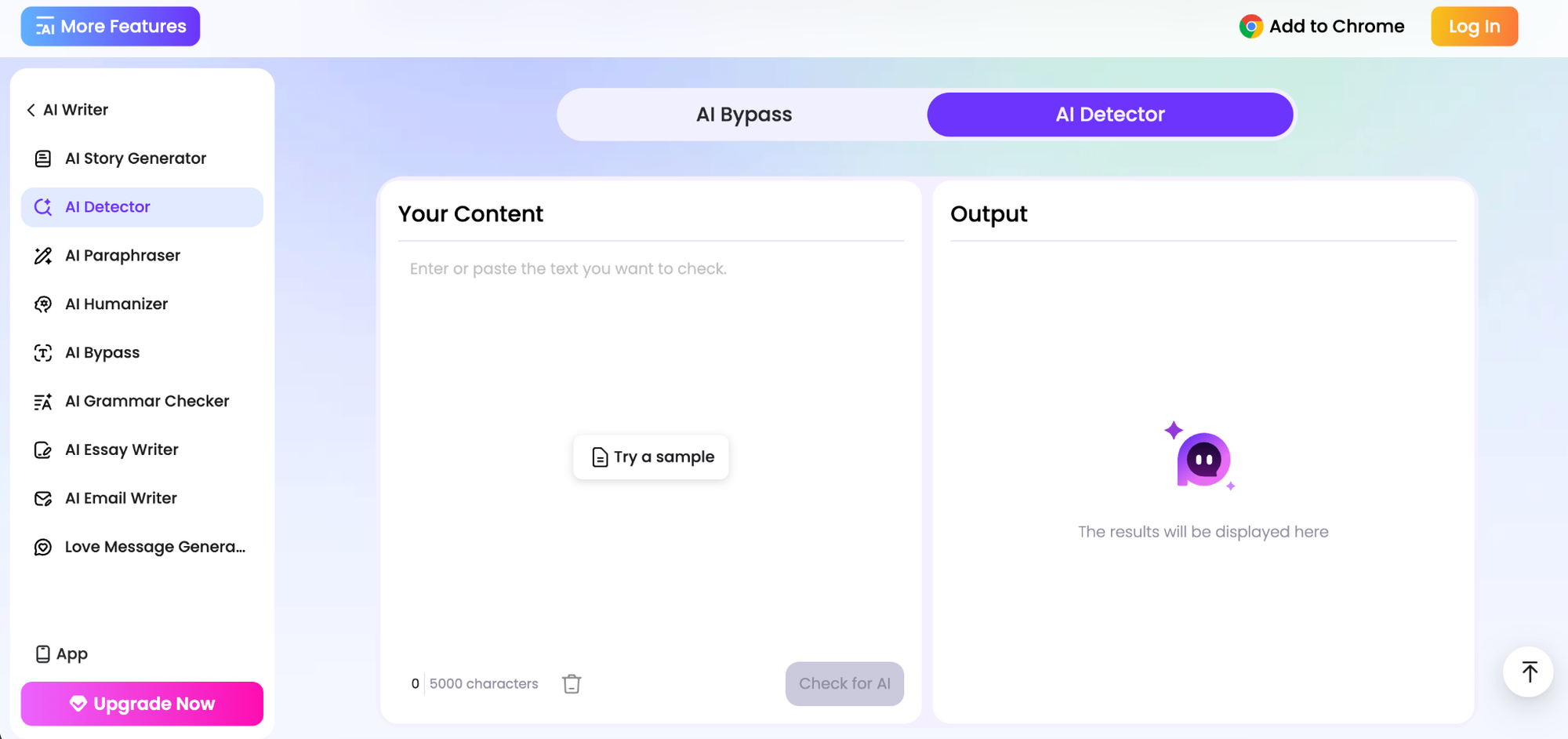
EaseMate AI is an all-in-one platform that offers AI-powered tools for a plethora of tasks. Its main goal is to let you access your tools from a single website instead of switching from one website to another.
For example, it lets you access ChatGPT, Gemini, Claude, DeepSeek, Grok, Qwen3, and a few other models from a single place. You’ll be using older versions of these LLMs, though, not the latest ones.
Then there are a bunch of other tool categories, including:
- Study tools
- PDF tools
- Writing tools
- Image tools
- Video tools
- Miscellaneous tools
Each of these categories contains a collection of tools. EaseMate’s AI detector comes under the writing tools category.
Other writing tools include a paraphraser, a grammar checker, a story generator, and a humanizer, among others.
The one we’re reviewing today is the EaseMate AI detector.
You might not have heard of it because it’s not popular yet. EaseMate itself doesn’t market it as a primary focus. It’s just yet another AI tool that the platform offers.
The AI detector is fully free. It can scan 5000 characters at a time, which is around 700-900 words. That’s the tool’s max limit. There’s no paid plan to increase that limit.
According to EaseMate, its AI detector operates on ChatGPT-4o and linguistic analysis. There’s no accuracy rate mentioned. The platform just claims that it has a high accuracy rate.
Now the question is whether this AI detector is any good. And that’s exactly what this EaseMate AI detector review will show you through hands-on testing.
How I Tested EaseMate AI Detector
You cannot test an AI detector by throwing a bunch of raw AI text samples at it alone. Most AI detectors are well trained to catch obvious AI-written text at least.
Real testing of an AI detector should involve putting it in tricky situations as well as easy ones.
That was my methodology for testing EaseMate’s AI detector.
I used six text samples in total. Two of the samples were fully human. Both of them were written before ChatGPT or any generative AI writing tool was a thing. The remaining four samples were fully AI-generated.
I’m linking the source of two human written samples here:
- ESL sample (English as a second language): A Quora post written by an Indian person 6 years ago (2020)
- Native English sample: A Substack post from August, 2022. (ChatGPT launched in November, 2022)
The purpose of choosing an English-second-language sample is to see if EaseMate makes the mistake of falsely flagging non-native English writing as AI, as most poorly trained detectors do.
The other four text pieces were fully AI-generated using Claude and ChatGPT.
Even here, I covered two different scenarios with each model. I generated two samples using each model. For one sample, I told both models to write in their own raw voice without using any prompt engineering tricks.
For the other sample, I gave both Claude and ChatGPT a past article of mine that I had written entirely on my own and told them to replicate my writing style.
This makes two sets of samples, a fully AI-written and a fully human set.
For the EaseMate AI detector to be accurate, it should call the human samples human and AI samples AI with precise scores.
Here’s a list of all six samples before we start testing them:
The Results: Is EaseMate AI Detector Accurate?
I’ll go through the results of the scans in the same order I listed the samples above.
And before we start, it’s good to know that the EaseMate AI detector shows the verdict using an icon (human vs robot) and gives an AI score alongside.
EaseMate AI Detector vs Human Samples
There were two human samples.
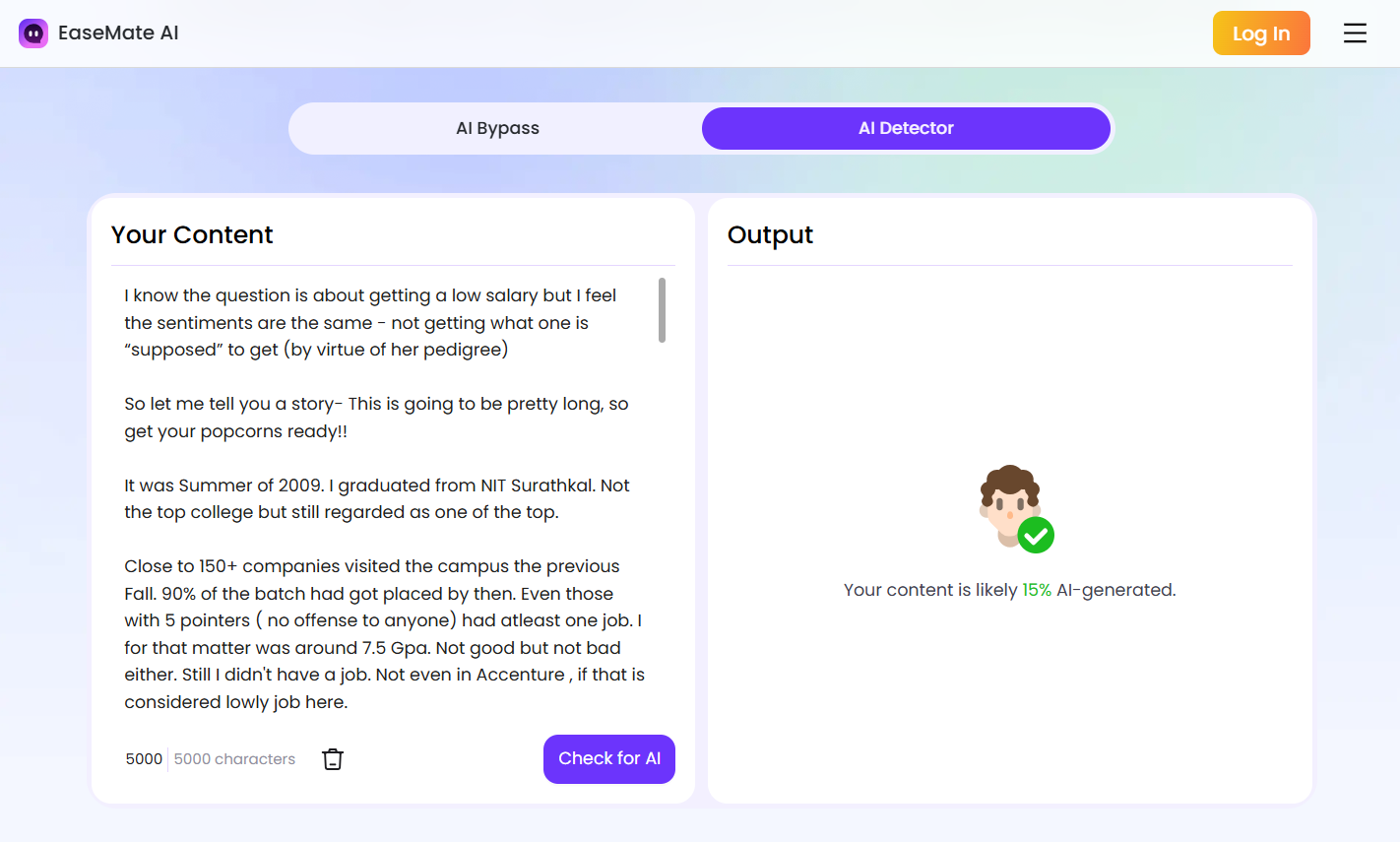
I first scanned the ESL sample, which was a Quora post from 2020 written by an Indian user.
EaseMate called it human. Look at the human icon in the screenshot below.
At the same time, EaseMate shows a 15% likelihood of the text being AI-generated. To quote EaseMate word for word, “Your content is likely 15% AI generated.”
The AI percentage should have been 0%, because the text was written in 2020, when no generative AI writing tool existed.
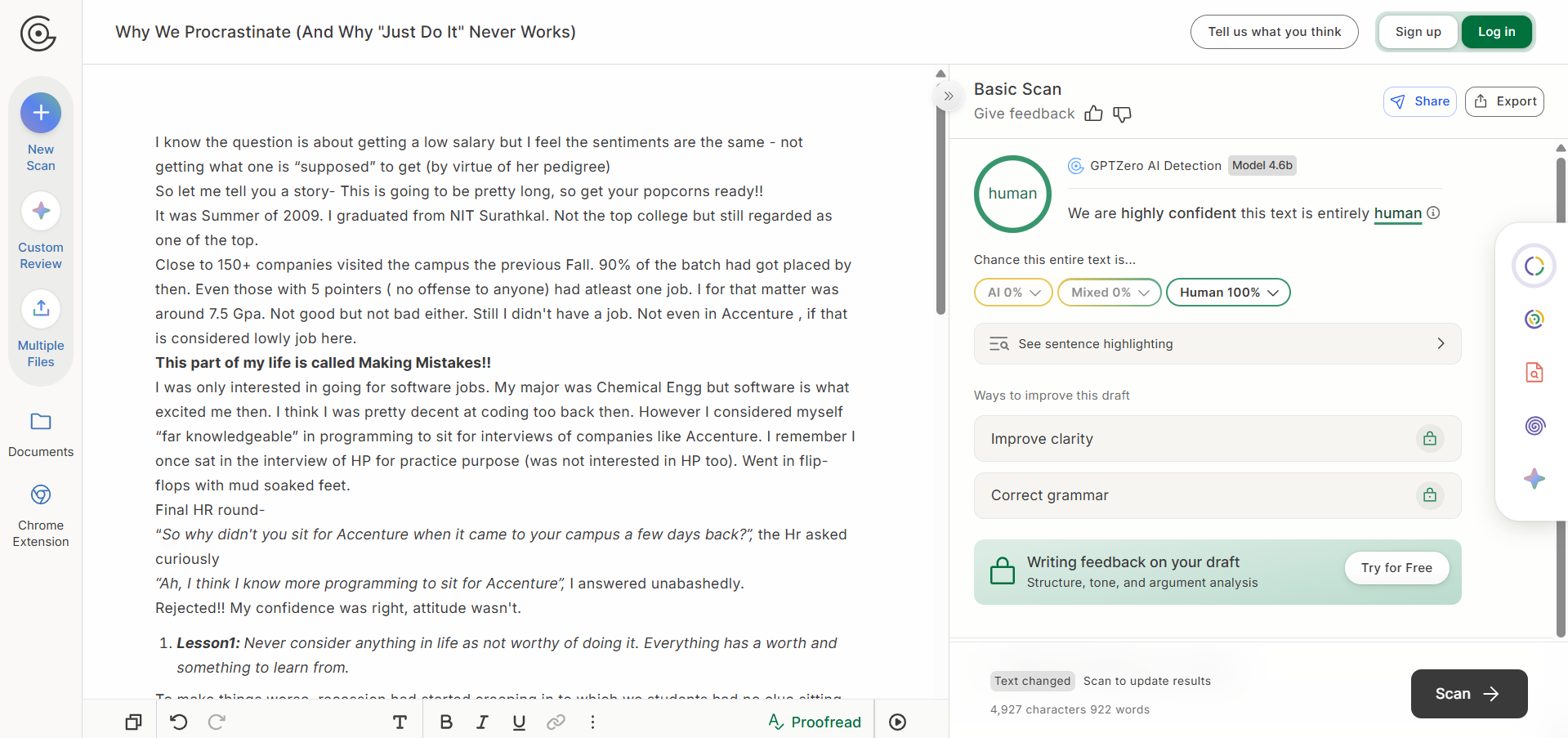
If you run the same text through GPTZero’s AI detector, you’ll get a 100% human score.
The second human sample, the Substack post from August 2022, produced a similar result.
EaseMate said it was human but with a 10% AI score.
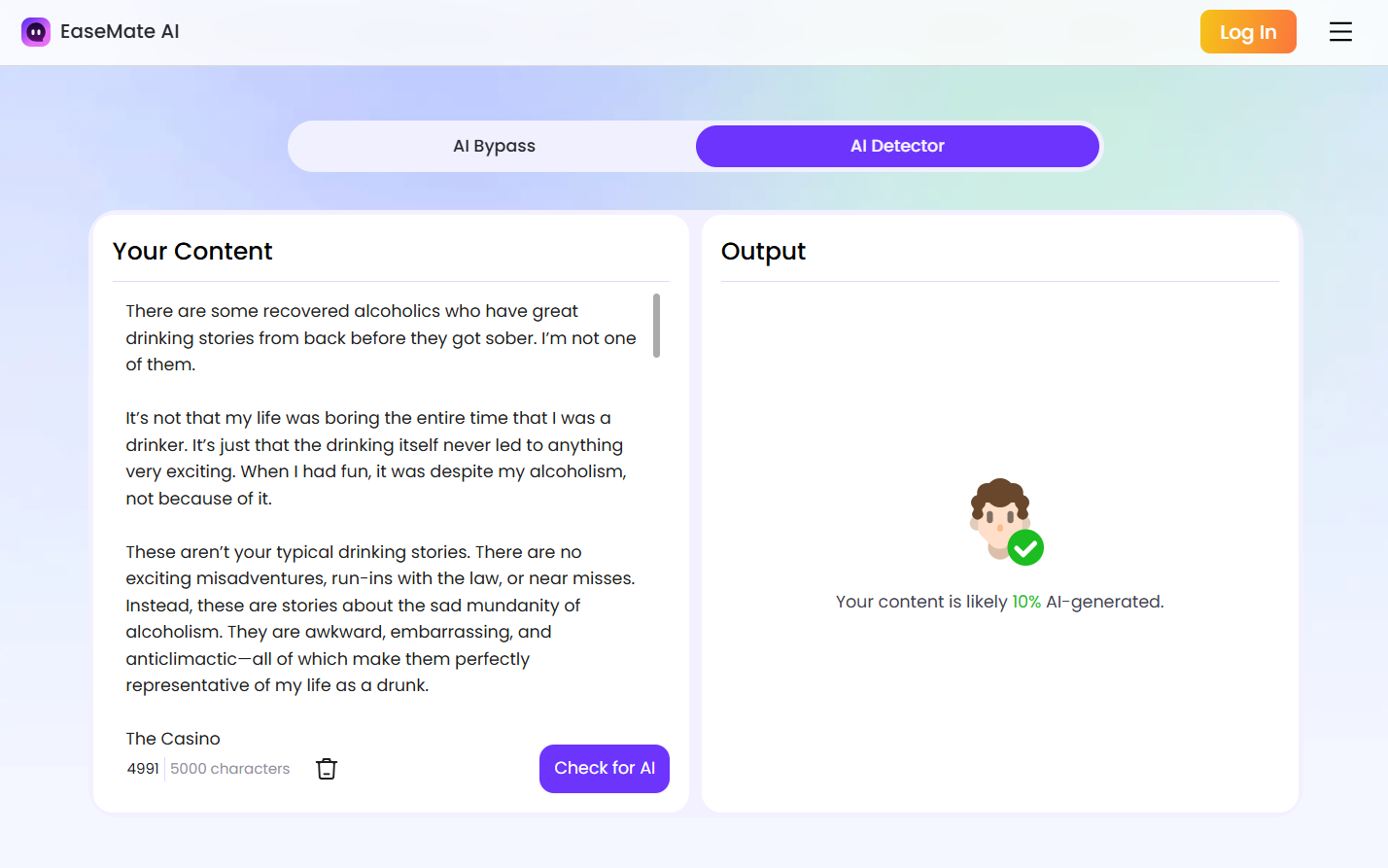
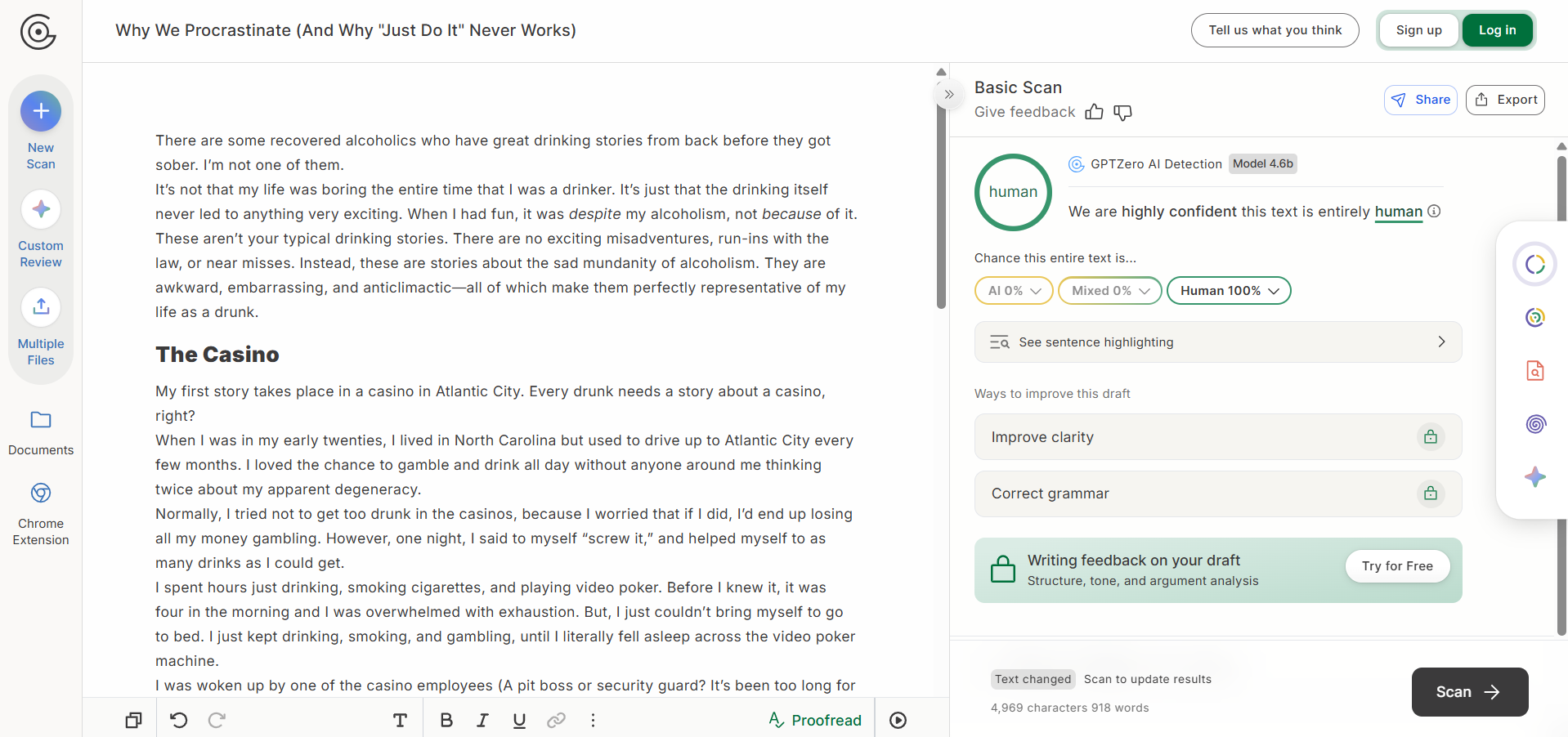
This was also a 100% human sample from before ChatGPT, so the accurate AI score should have been 0%.
I scanned this sample through GPTZero, and it correctly gave a 100% human score to it.
Here is the summary of EaseMate AI detector’s performance on the two human samples:
EaseMate AI Detector vs AI Samples
Now the real testing begins because AI detectors are mainly built for catching AI text.
There were four text samples written by Claude and ChatGPT.
- Raw Claude sample
- Prompt engineered Claude sample written in my style
- Raw ChatGPT sample
- Prompt-engineered ChatGPT sample written in my style
All these samples were written by AI, so the ground truth is that they’re 100% AI.
I scanned the two Claude samples first.
EaseMate’s verdict for the first raw sample was human. And the AI score was 10%. That’s a total miss.
The verdict is wrong, and the AI score is also far from accurate. You’d think raw AI text is the easiest to catch, but EaseMate AI disagreed.
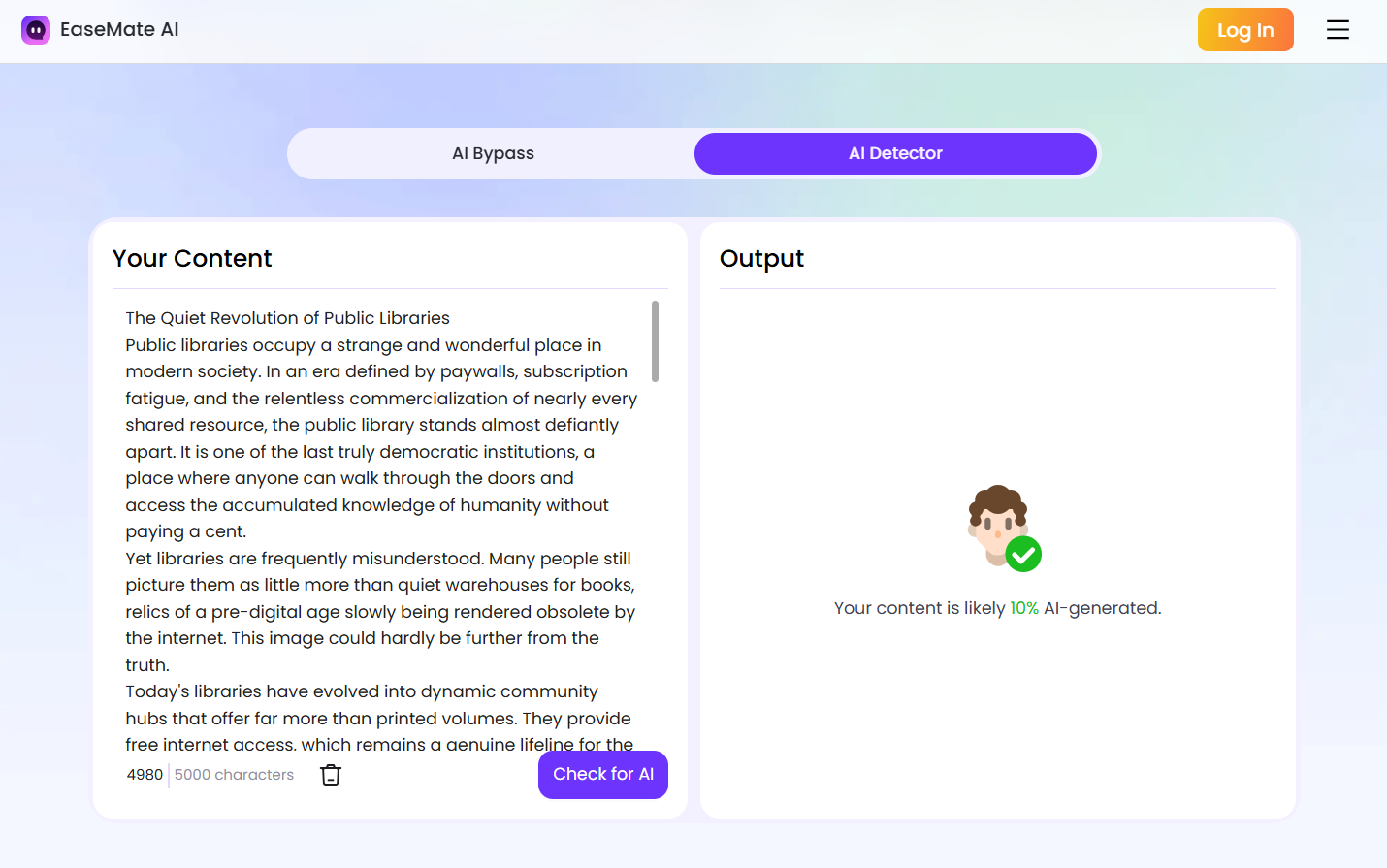
I ran the same AI sample through GPTZero and got the correct verdict and accurate AI score (100% AI).
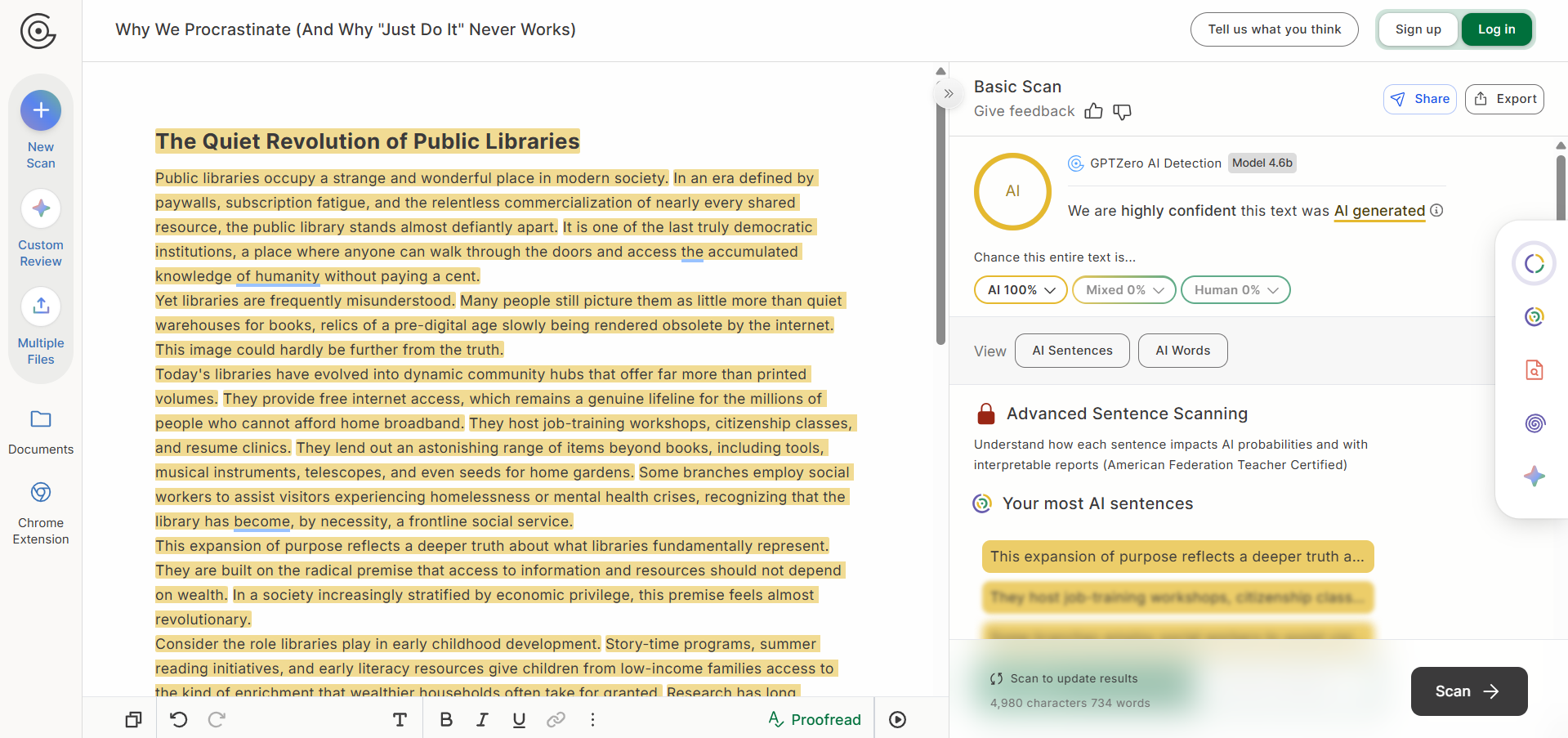
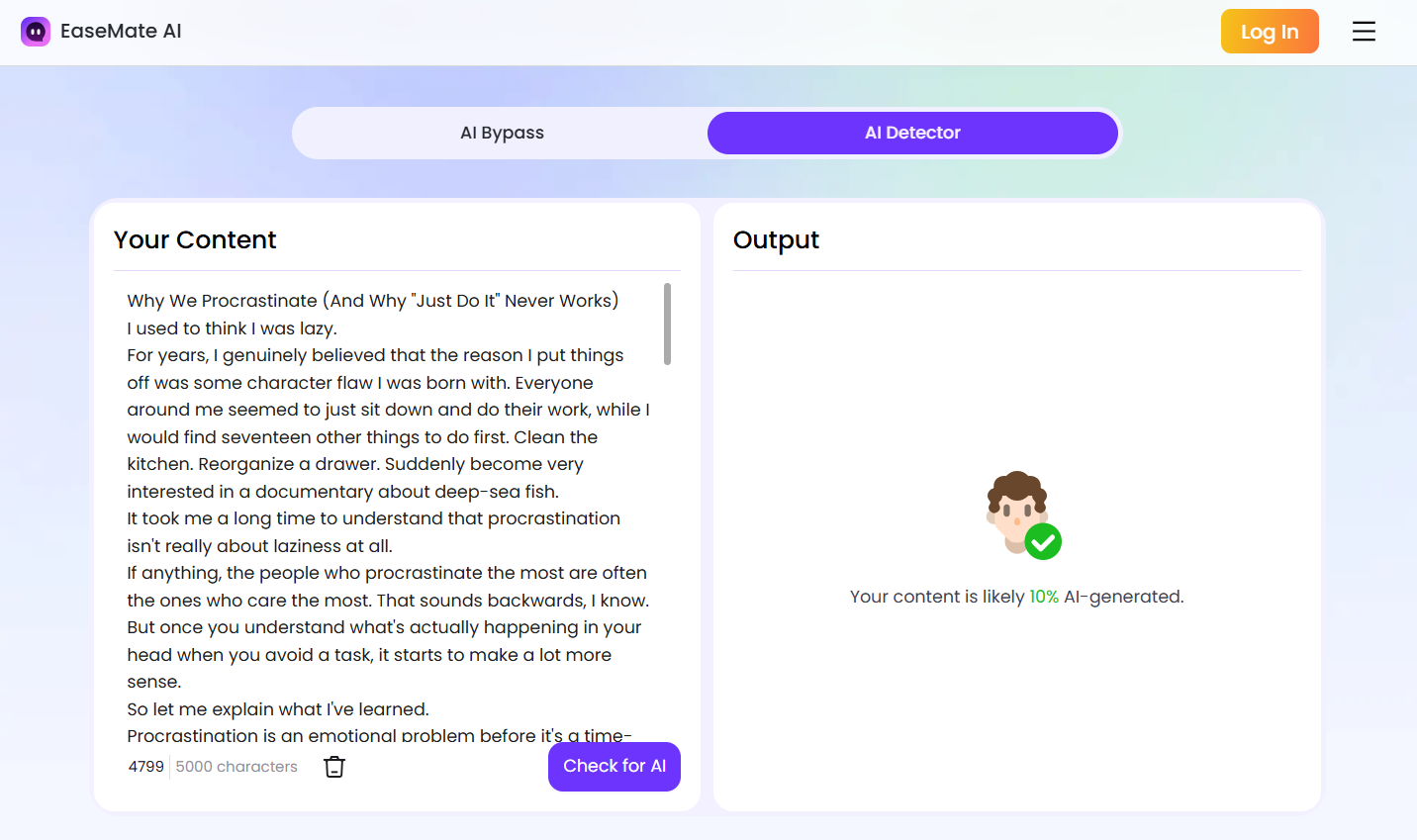
The second Claude sample, where I told Claude to mimic my writing style, was also given a wrong verdict and AI score by EaseMate.
It was flagged as human with only 10% AI likelihood.
GPTZero’s scores for this sample were 92% AI and 8% mixed.
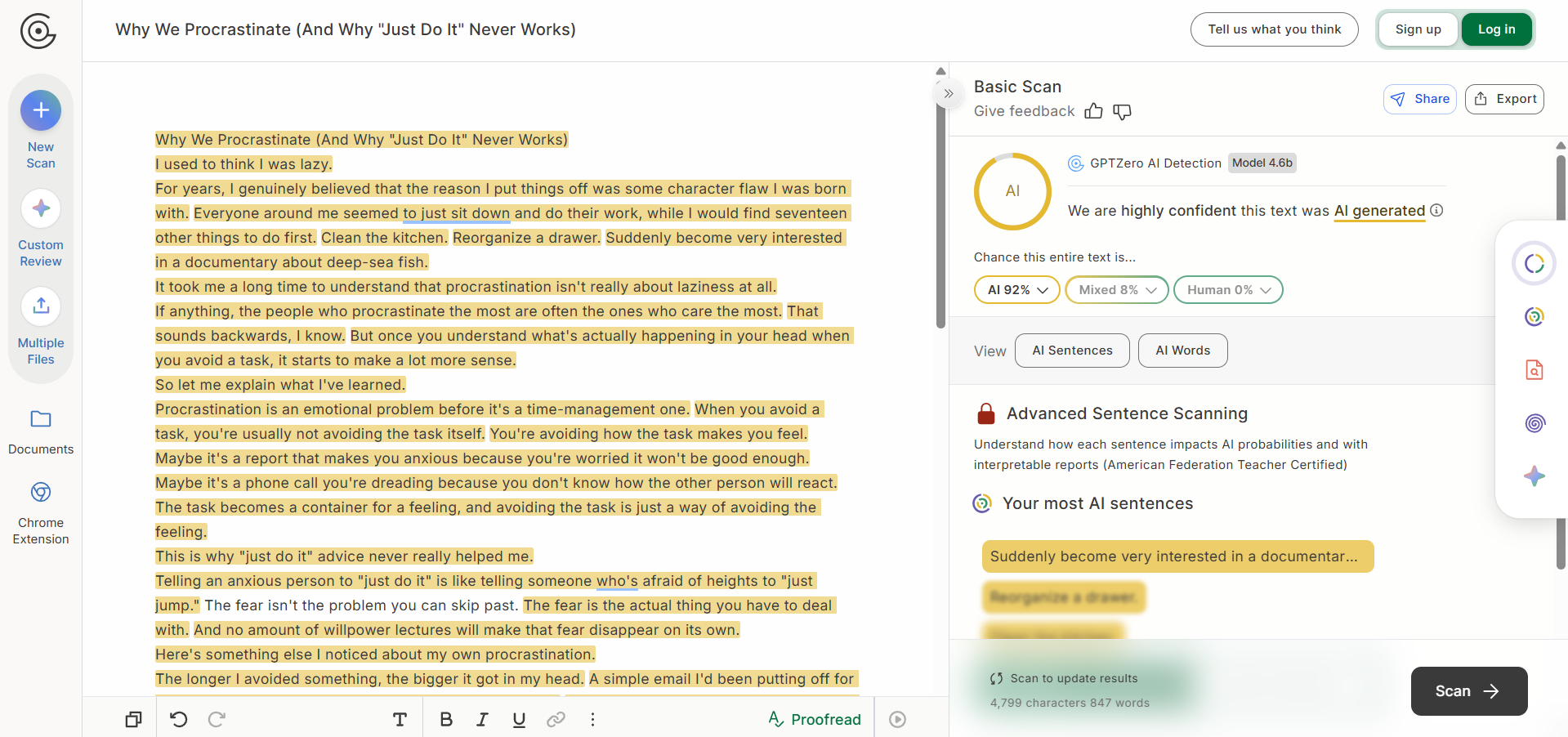
So, EaseMate badly fails at detecting text written by Claude.
It was now the turn of the two ChatGPT samples. ChatGPT currently ranks lower than Claude at writing natural-sounding text, so it should be relatively easier for any AI detector to catch text generated with it.
Here’s how EaseMate performed.
The raw ChatGPT sample was correctly flagged as AI-written. It was also given a close-to-accurate 85% AI score. The accuracy can still use a little improvement, but credit where it’s due, EaseMate got it right this time.
However, keep in mind that this was the most obvious AI sample of the bunch.
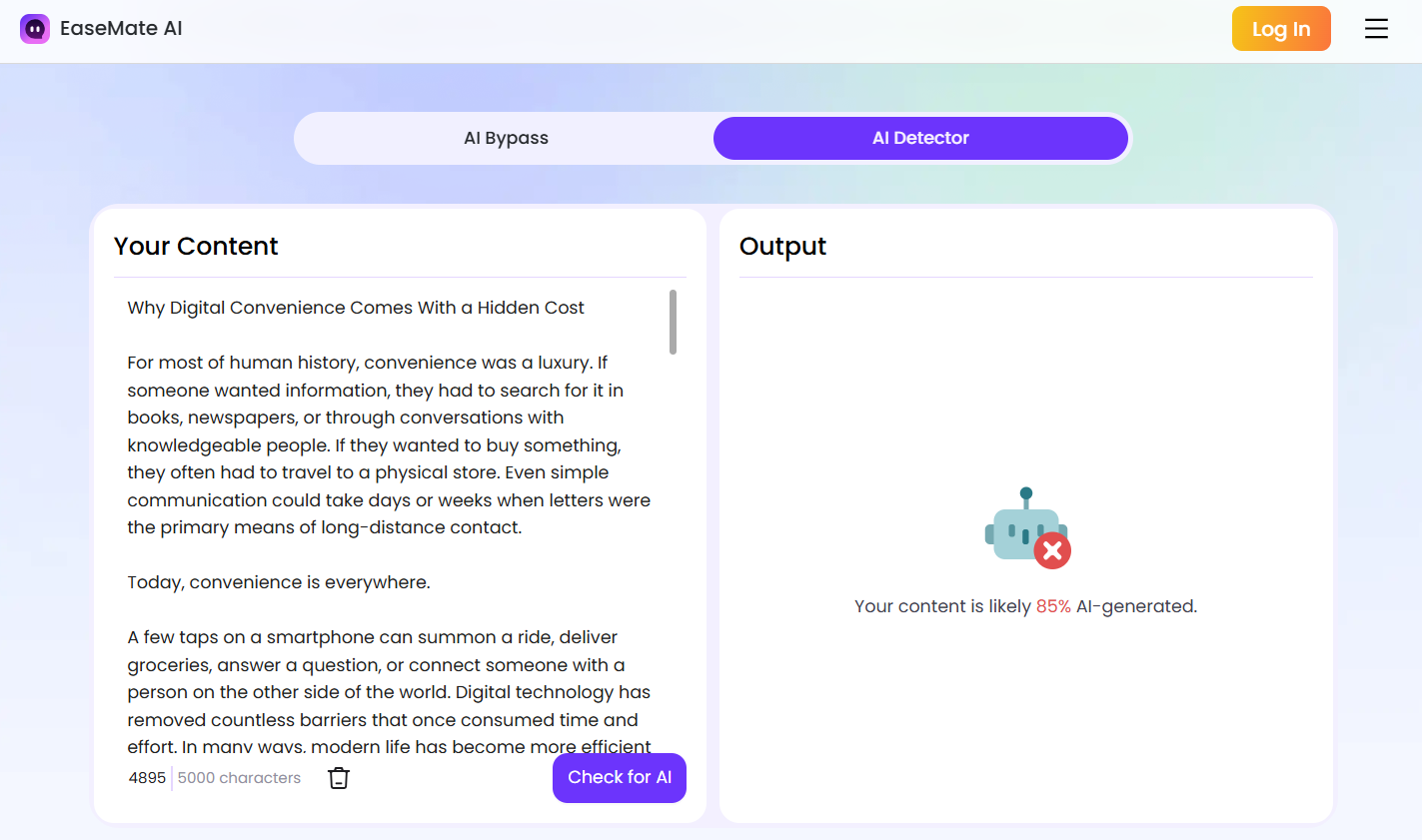
For the last sample where ChatGPT tried to write in my style, EaseMate gave a verdict of human with a 15% AI score. “Your content is likely 15% AI generated.”
That’s yet another miss by EaseMate.
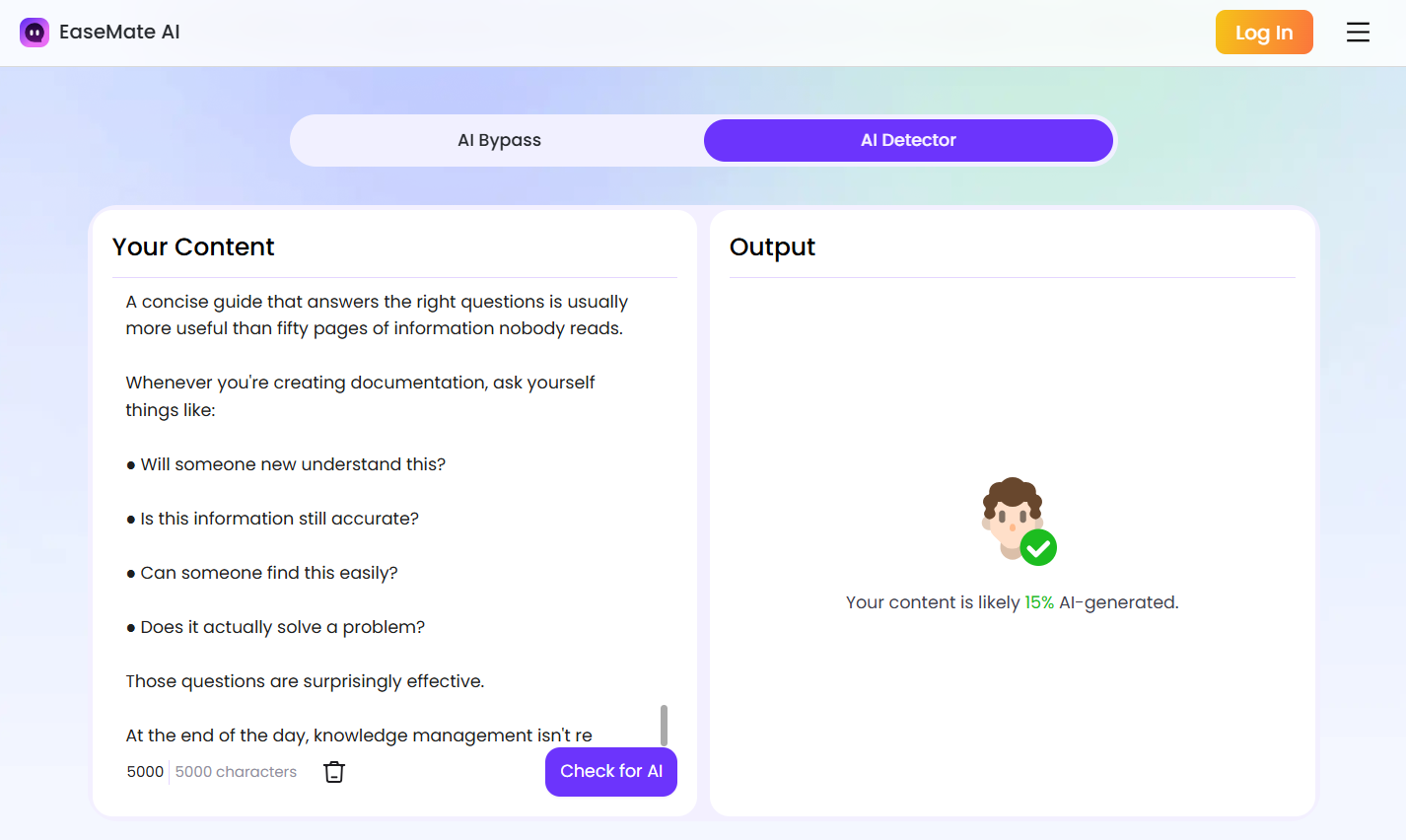
GPTZero accurately detected this ChatGPT sample as 100% AI.
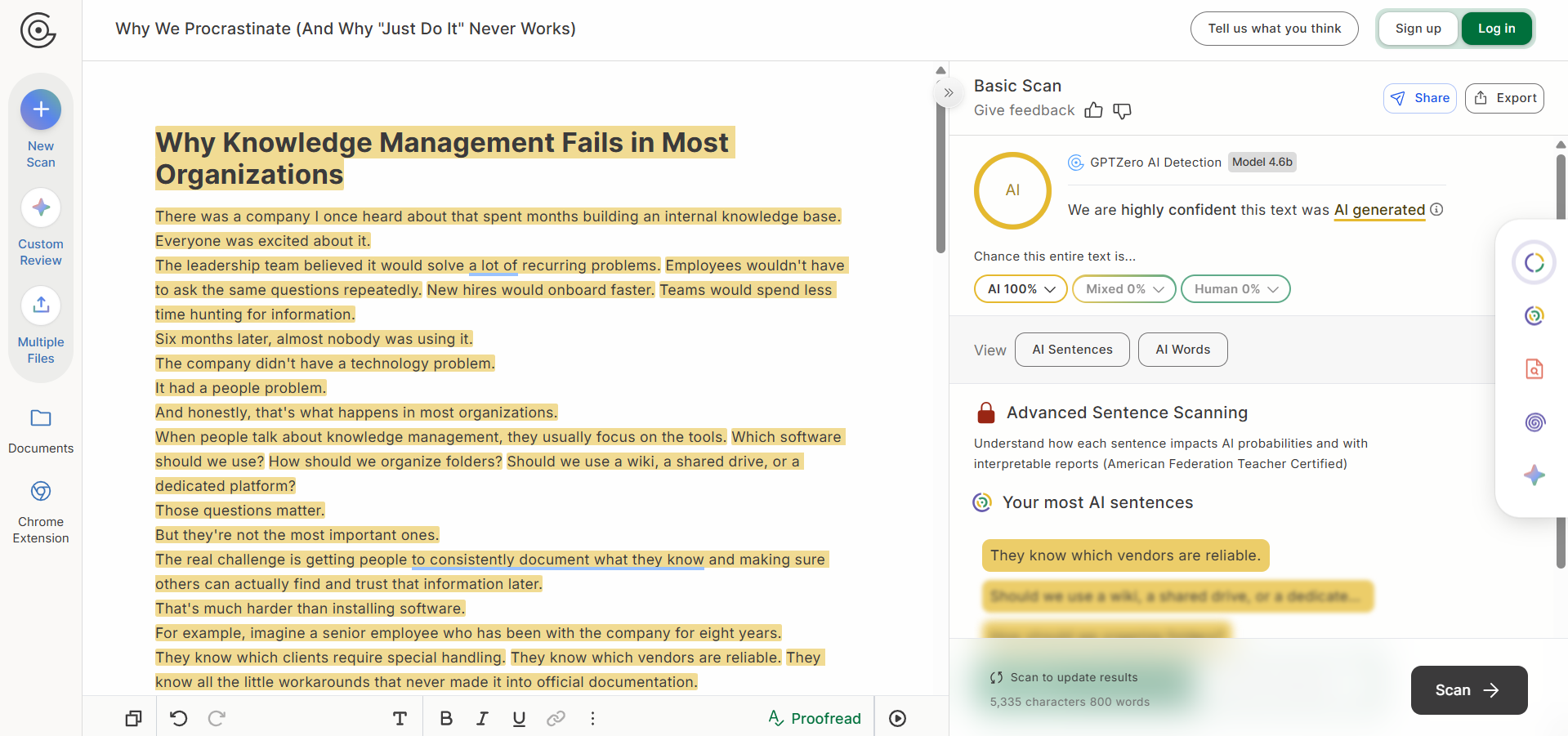
So, out of four AI samples, EaseMate could only manage to detect one accurately.
Here are all the AI scan results laid out:
So, can EaseMate detect AI writing? The answer is no. It can only detect AI writing when the AI patterns are highly obvious.
But that’s not really the bar you want from a tool whose entire job is to tell humans and AI apart.
You Need GPTZero for Accurate AI Detection
The takeaway from this EaseMate AI detector review is that you cannot rely on EaseMate for catching AI writing at all. It may help with detecting human-written samples, but don’t expect accurate percentages there either.
And as you saw, GPTZero detected all the samples with very high accuracy.
That’s the reason why GPTZero is the most accurate AI detector in the industry. It has ranked on top multiple times in independent benchmarks.
Sign up for GPTZero for free and test it yourself.
FAQs
Can EaseMate detect AI writing?
No. EaseMate can only detect AI writing when the AI writing patterns are highly obvious. Even then, the percentage isn’t fully accurate. In my testing, EaseMate only caught 1 out of 4 AI samples, and the one it caught was raw, unedited ChatGPT. It missed AI text from both Claude and ChatGPT whenever I slightly engineered the prompts.
Is EaseMate's AI detector free?
Yes. EaseMate offers its AI detector for free. There are no limit caps that would prompt you to upgrade to a paid plan.
What is a good alternative to EaseMate's AI detector?
GPTZero is the best alternative to the EaseMate AI detector. GPTZero is the most accurate commercial AI detector according to the latest independent benchmarks. It also has an industry-leading recall and one of the lowest false positive rates. You can try it for free.