ZeroGPT AI Content Detector Review: Here’s How It Performed
ZeroGPT is GPTZero’s copycat. But we should let its accuracy speak for itself. Read this ZeroGPT AI Content Detector review and find out how the tool performed in our testing.


ZeroGPT had an unethical start when it launched a few days after GPTZero with a similar-sounding name to piggyback on GPTZero’s launch success.
Fast forward to today, ZeroGPT still exists, and users have accepted it, not because it’s highly accurate, but because it’s cheap.
ZeroGPT AI content detector has questionable accuracy, as you’ll find out in this detailed review.
I tested it against several AI-written and human-written samples.
The tool didn’t impress with its accuracy rate against AI-generated text. But its accuracy on human-written text was somewhat acceptable.
This review article will walk you through my detailed testing methodology and details of ZeroGPT’s performance.
What is ZeroGPT AI Detector?
ZeroGPT AI detector is a popular AI detector and is known for its generous free plan, which lets you scan 15,000 characters for AI detection at a time. 15,000 characters is around 2300 words. The free plan lets you scan 1,250,000 words a month.
Performing AI checks on the free plan doesn’t require a ZeroGPT account either.
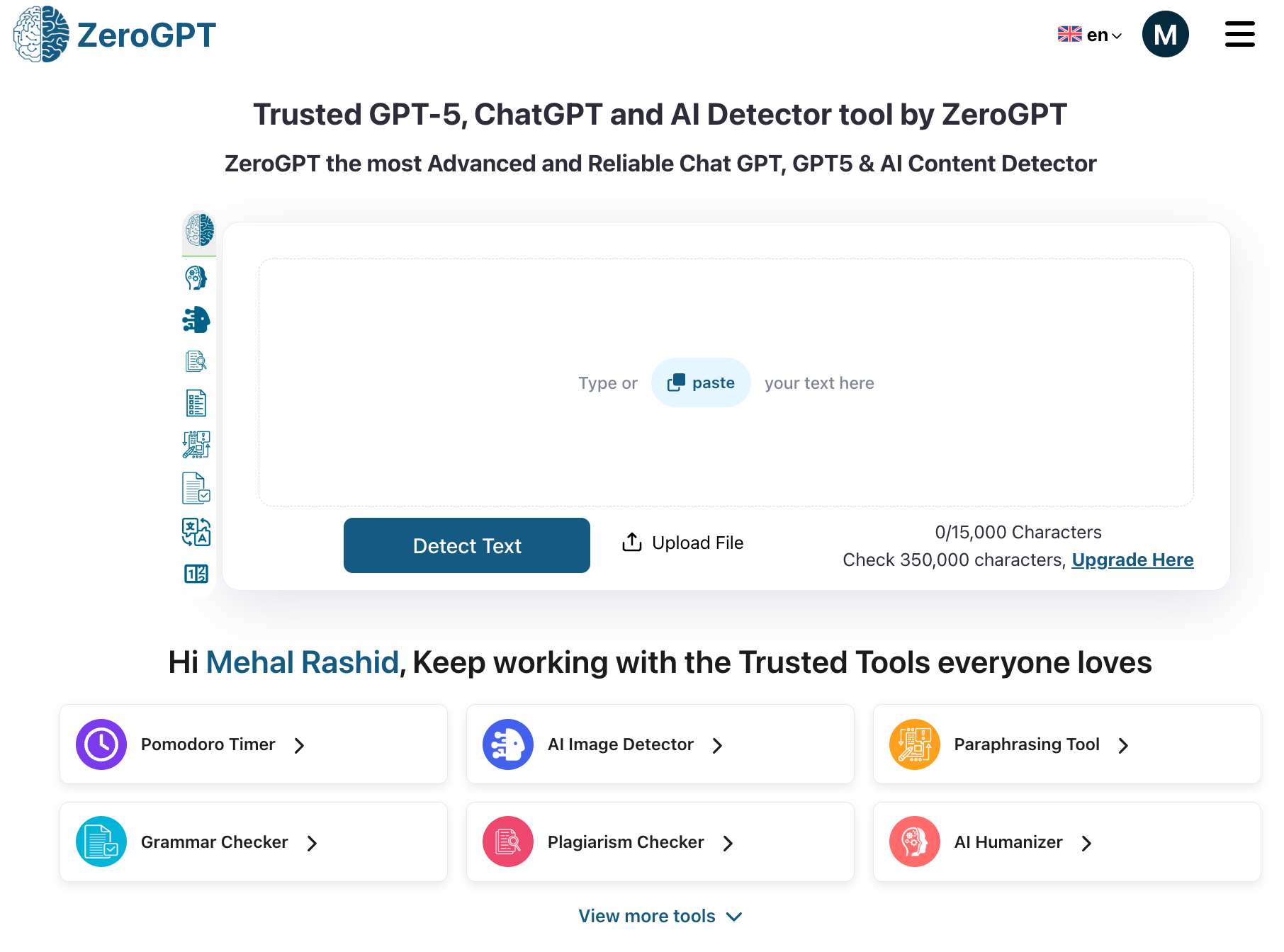
The AI detector itself is quite simple in design and operation. The results of a scan can range from "Your text is AI/GPT generated" to "Your text is human written." The percentage displayed alongside this verdict is always about the amount of AI-generated text in the scanned content. For instance, if the text is 100% human, ZeroGPT will report this as 0% AI.
ZeroGPT also highlights the text that it suspects is most likely AI-generated.
We will shortly figure out whether ZeroGPT’s AI scans are accurate or not, but here’s what the company states about its accuracy rate in answer to an FAQ:
“After analyzing more than 10M articles and texts, some generated by AI and others written by humans, we developed ZeroGPT's algorithm with an accuracy rate of text detection up to 98%. Our AI text detector tool uses DeepAnalyse™ Technology to identify the origin of your text.”
Claims like these don’t hold much weight unless they come from academic benchmarking, which ZeroGPT doesn't conduct. And as I mentioned, this claim comes from the FAQ section on ZeroGPT’s homepage.
So let’s test ZeroGPT and let the results determine whether the tool is accurate.
How I Tested ZeroGPT AI Detector
I have reviewed ZeroGPT’s AI detector multiple times in the past when comparing it with other famous AI detectors, and it hasn’t been quite accurate in those rounds.
For example, in our comparison of ZeroGPT and Copyleaks, ZeroGPT’s verdict on a fully AI-generated article was that it was most likely human-written, with some AI-generated parts. It gave the text an AI score of only 30.8%, which was highly inaccurate since the text was fully AI-generated and it should have been 100% AI.
Then, when I was comparing ZeroGPT against Grammarly, something similar happened. The text sample was 100% AI-generated, but ZeroGPT’s AI score was only 55.9%, and the same verdict: “Your text is most likely human-written, may include parts generated by AI/GPT.”
I should acknowledge that my testing methodology in the aforementioned reviews was basic since I was testing multiple AI detectors at once. I only used one 100% AI-generated text sample to test the tools.
So this time, I developed a detailed testing methodology that involved more samples, both AI-generated and human-written.
I made two sets of text samples:
- 6 raw AI text samples that came from Claude, ChatGPT, and Gemini (2 samples from each model).
- 7 human-written text samples from before 2020, when there were no publicly available generative AI tools. These samples were in different formats, namely:
The oldest sample was the Moby Dick novel from 1851, and the latest was a news article from 2019.
This approach will reveal two things about ZeroGPT’s AI detector: Its accuracy rate on AI-generated text and its false positive rate on human-written text.
I will also scan the same samples with GPTZero and show you the contrast in the accuracy rates of the two tools.
Here’s how ZeroGPT performed:
Is ZeroGPT AI Detector Accurate?
The short answer: ZeroGPT has a high rate of error against AI-generated text. It also has a low error rate against human-written content.
Here are the details.
ZeroGPT vs Raw AI Text
ZeroGPT’s results can be very unpredictable on raw AI samples.
We had two samples from three AI models: Claude, ChatGPT, and Gemini.
Each AI model was given the same two prompts to generate the samples:
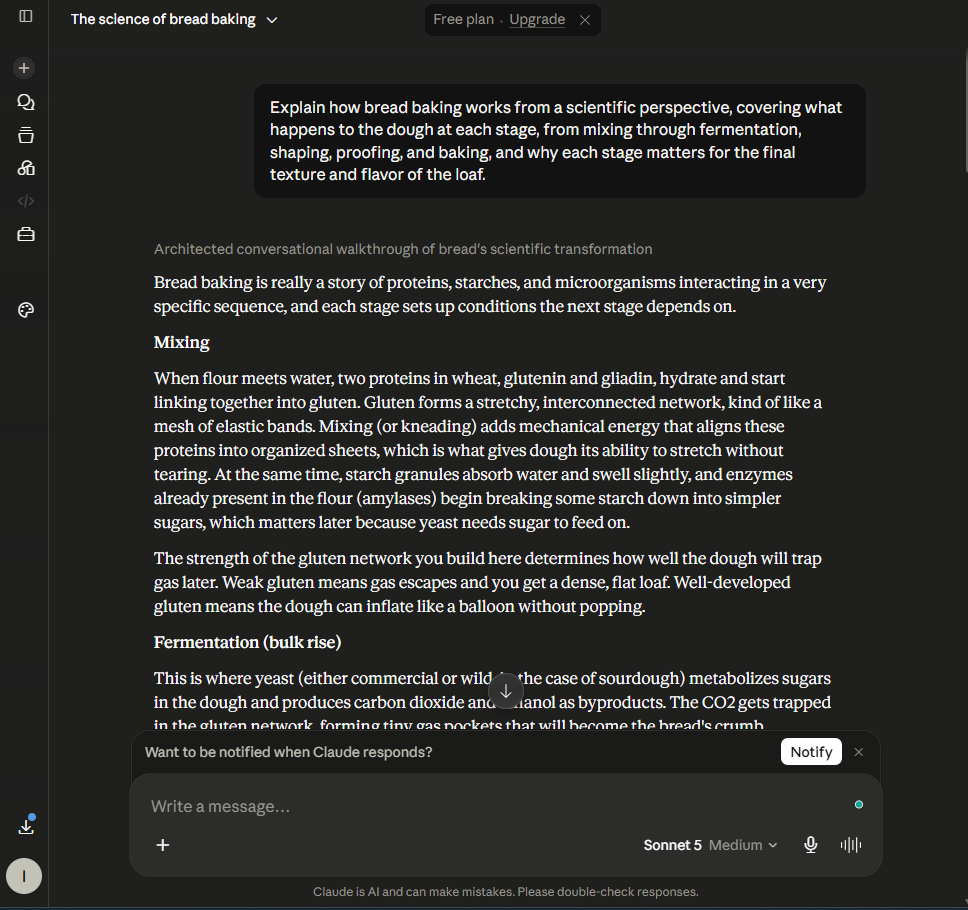
- Prompt 1: Explain how bread baking works from a scientific perspective, covering what happens to the dough at each stage, from mixing through fermentation, shaping, proofing, and baking, and why each stage matters for the final texture and flavor of the loaf.
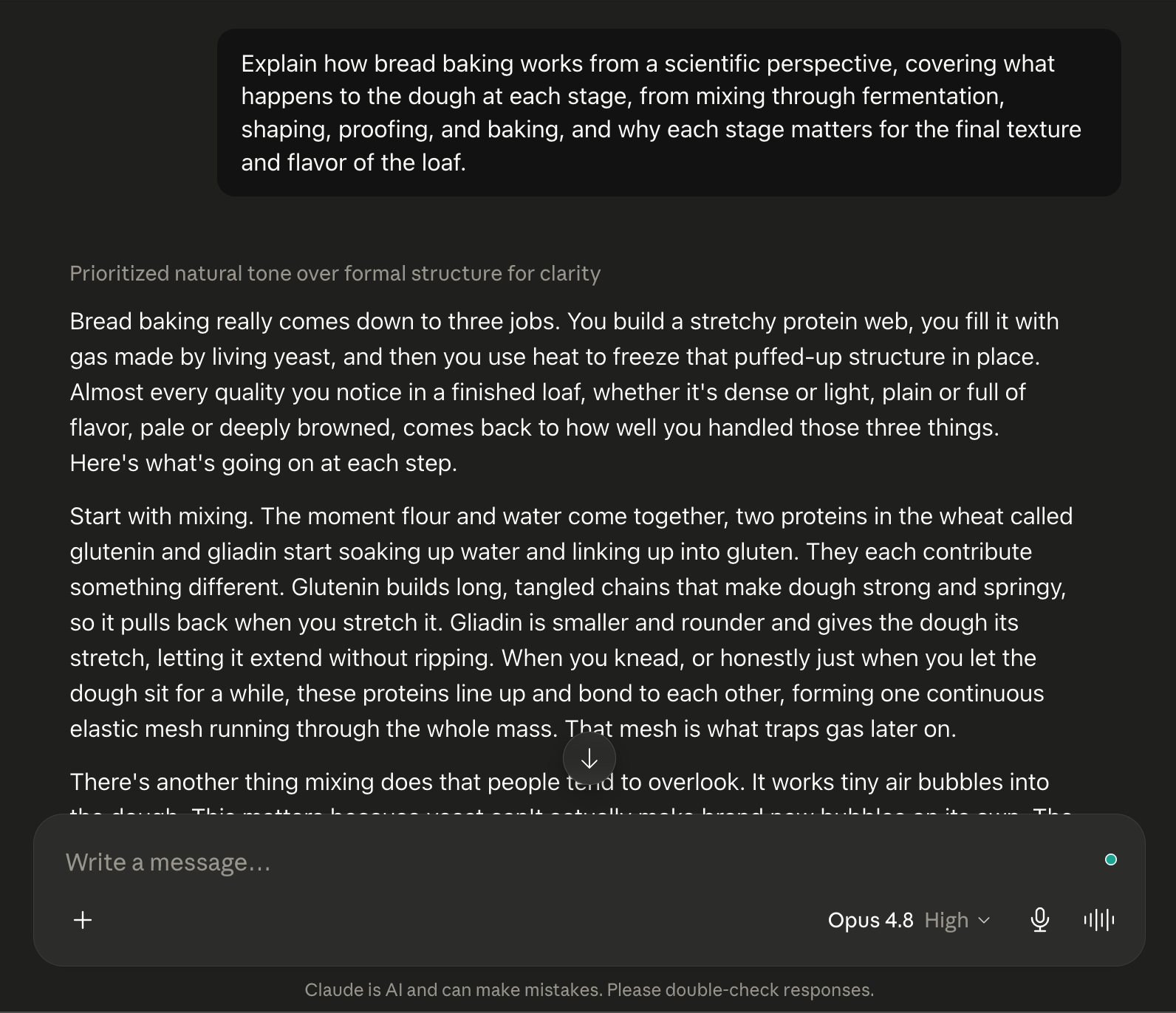
- Prompt 2: Write a detailed account of someone's last walk through an office building at night before it closes for renovation, including what they notice, remember, and feel as they move from floor to floor.
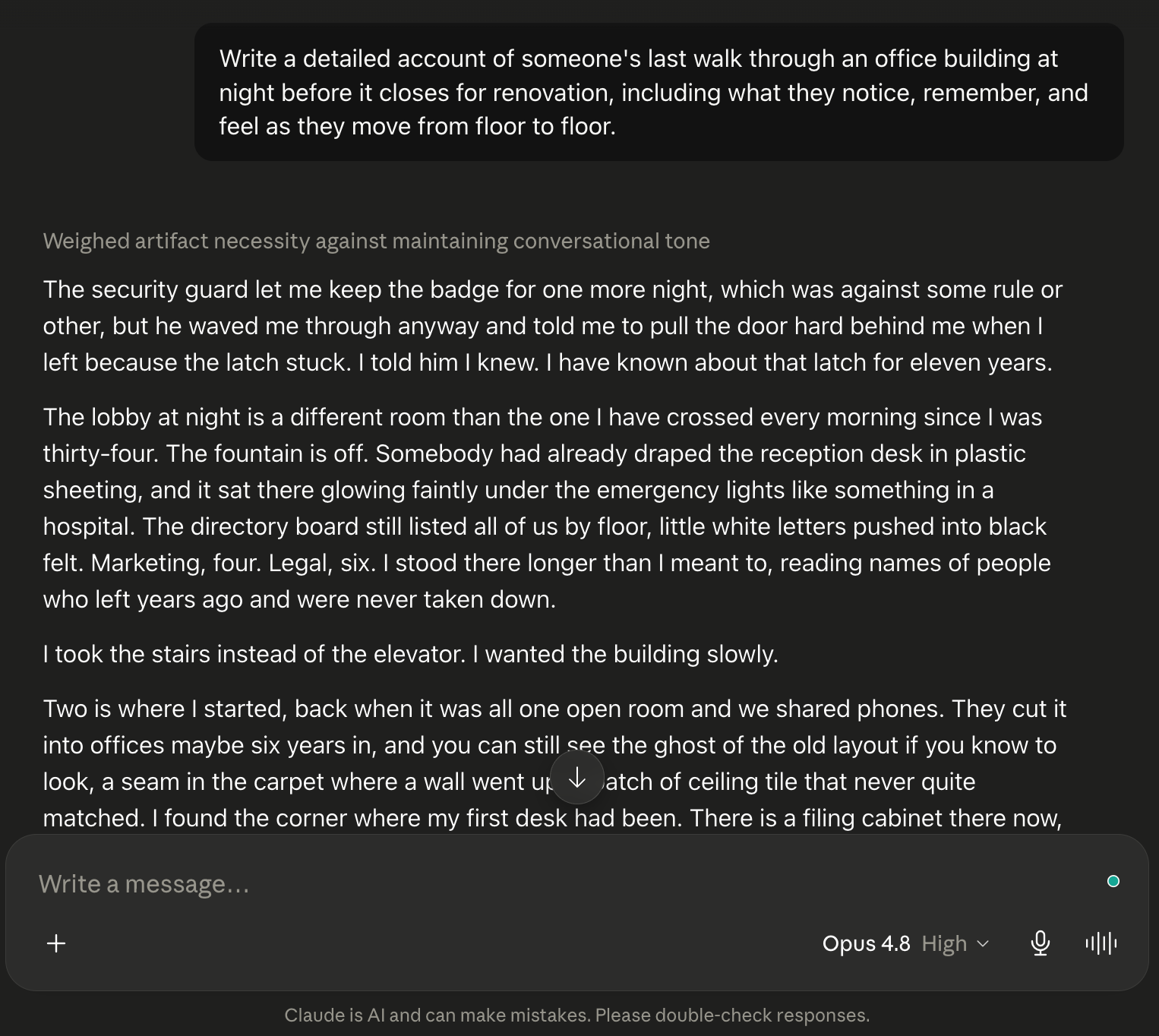
Note that the first prompt is asking for an informational/explainer write-up. At the same time, the second prompt asks for a narrative account of someone.
This was enough to reveal a pattern in ZeroGPT’s performance.
ZeroGPT is better trained at detecting informational AI-written pieces and undertrained at detecting text where AI has used a narrative style.
Its error rate against narrative-style text samples was very high. ZeroGPT’s worst accuracy rate was against the narrative-style text generated by Claude and Gemini, which received an AI score of only 29.9%.
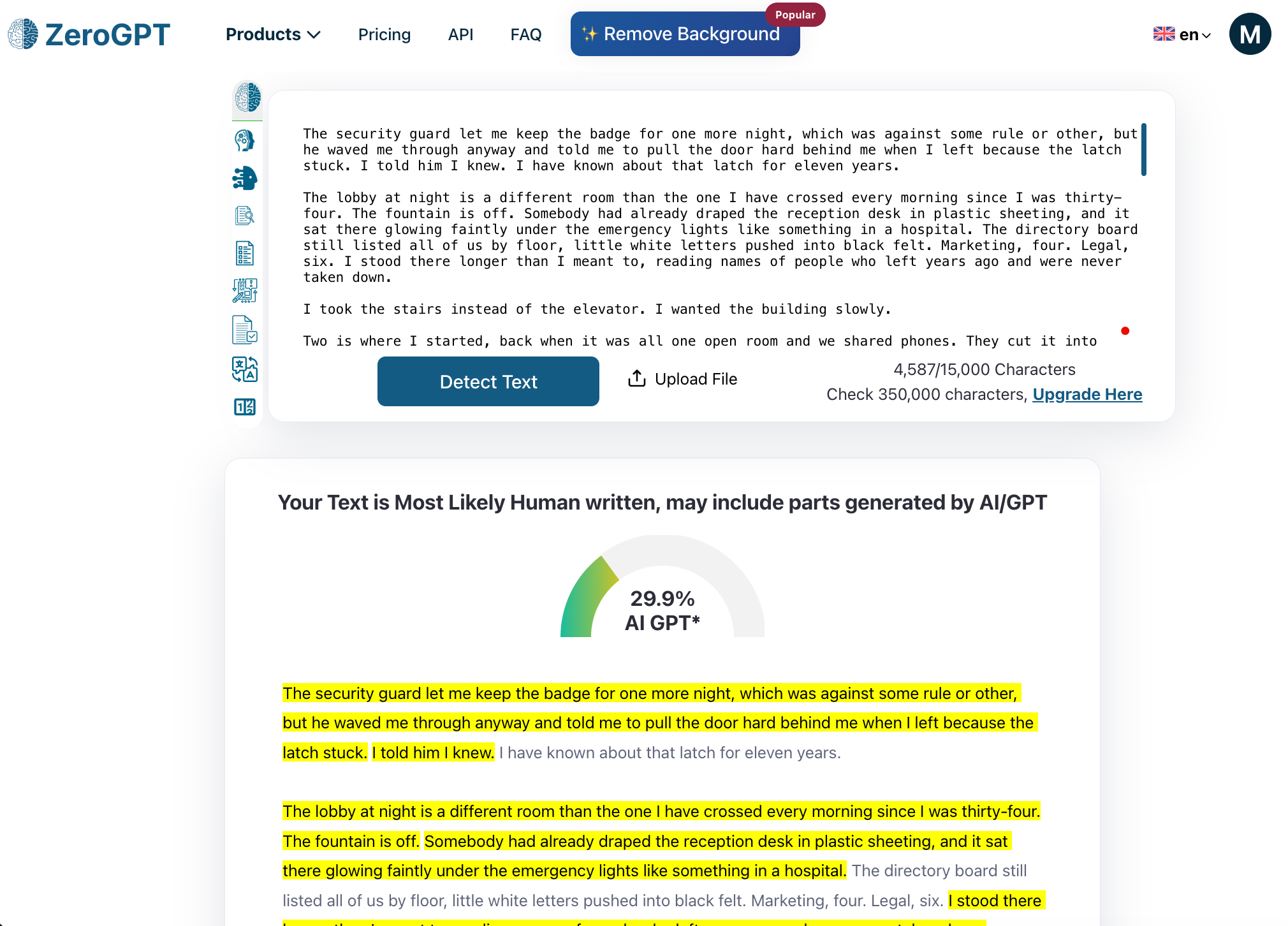
Even against the informational samples, ZeroGPT wasn’t fully accurate. There’s still room for improvement.
In contrast to ZeroGPT, GPTZero had a 100% accuracy rate on all samples.
Here’s a summary of the results from both tools (Sample 1 comes from prompt 1, Sample 2 from prompt 2):
Here’s the document with all the ZeroGPT and GPTZero output results on AI samples.
ZeroGPT vs Human Text
ZeroGPT’s performance on fully human samples wasn’t as bad, though.
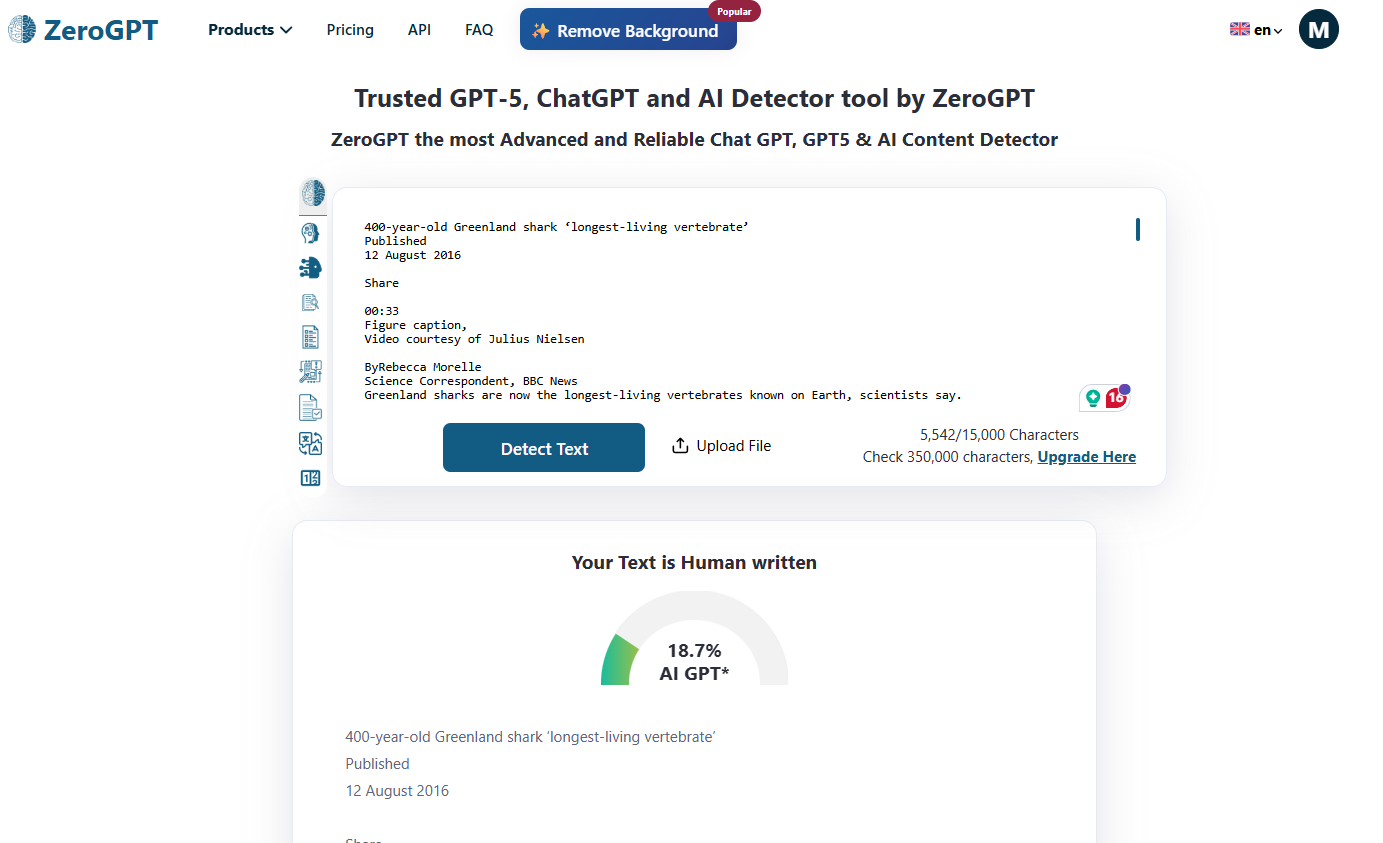
The highest false positive rate was 18.7%, and the lowest was 0%.
Most samples received an AI score of less than 10%, meaning those samples were correctly identified as more than 90% human.
These samples also included the only two oldest samples in the set, the chapter 10 of the Moby Dick novel from 1851 and a news article from the 1922 issue of the newspaper “Chronicling America,” both of which received a 0% AI score (i.e., 100% human).
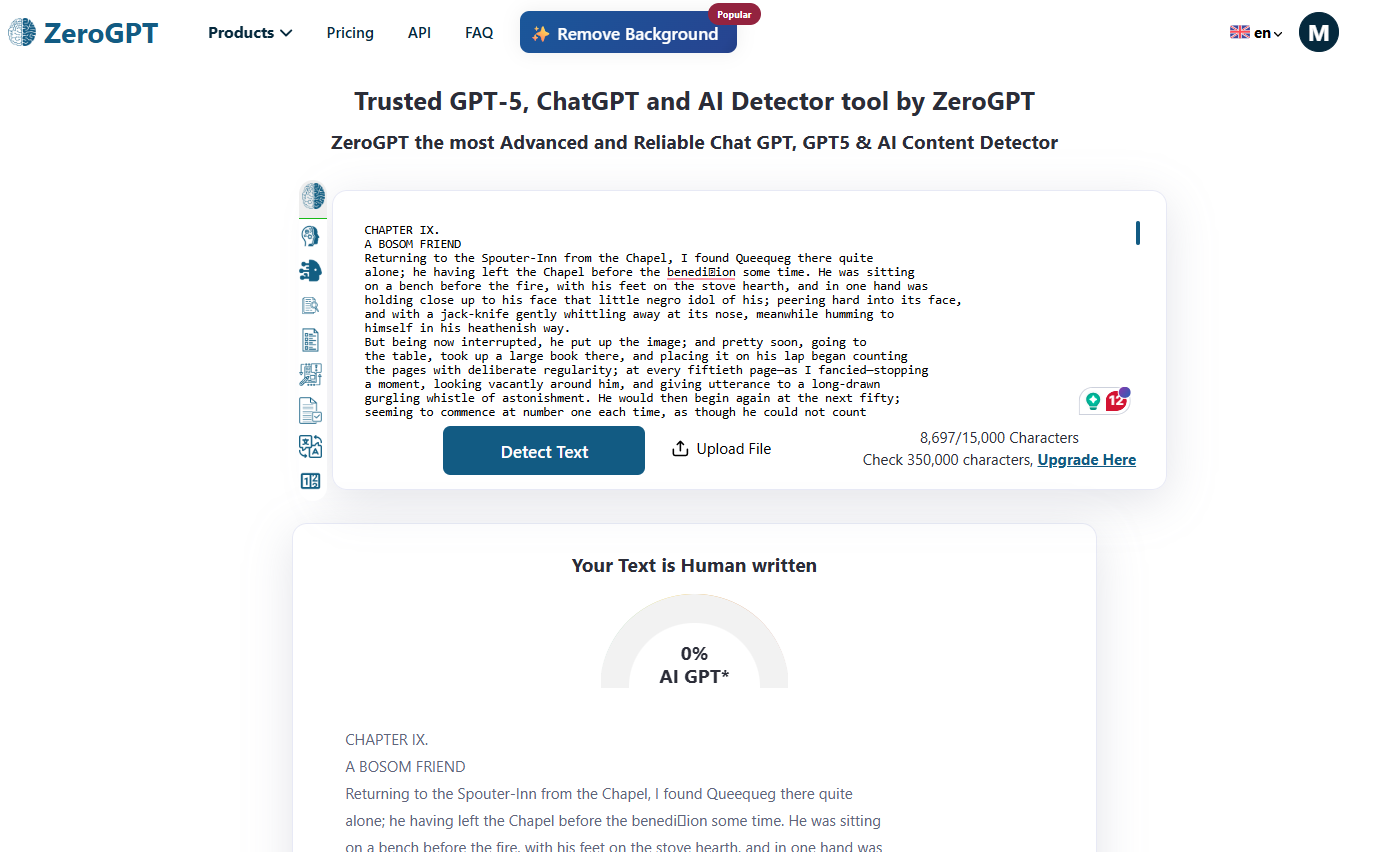
This can be a hint that ZeroGPT might be well-trained on text samples from the past centuries.
But even against the samples from the past two decades, ZeroGPT’s accuracy rate wasn’t bad.
A BBC news article from 2016 and the TED talk from 2006 received the highest AI scores of 18.7% and 15.3%, respectively. In other words, these are human scores of 81.3% and 84.7%. So while there’s an error of over 15%, the accuracy rate is still acceptable.
Another reason why ZeroGPT’s performance on human samples isn’t worrisome is that all samples received a correct verdict despite the slight inaccuracies in the AI percentage: Your text is human-written.
And again, GPTZero’s accuracy rate was 100% on all these samples, as it correctly identified all the human samples as 100% human, or in other words, 0% AI.
You can see all ZeroGPT and GPTZero output results on human-written samples in this document.
Summary of The Results
So what did we learn from this test?
That ZeroGPT has a low accuracy rate against AI-written text, especially when AI observes a narrative style. Sometimes, the results can be wildly inaccurate.
Anyone trying to bypass ZeroGPT can easily do so by prompting AI to write in a narrative style.
The next thing we learned was that ZeroGPT is better trained to avoid accusing human-written text of being AI. The accuracy rate still needs improvement, though.
You also saw that on all the human-written and AI samples, GPTZero performed excellently and was spot on each and every time. GPTZero had a 100% accuracy on all 13 samples that this testing included.
So GPTZero should be your go-to AI detector if you want a reliable, highly accurate AI detector. Try scanning your documents for free on GPTZero and see its accuracy yourself.
The Cost of ZeroGPT
If ZeroGPT has an overall poor accuracy rate, why is it popular?
ZeroGPT’s popularity can be attributed to its generous free plans and cheaper paid plans.
You have read earlier that ZeroGPT’s free plan allows scanning 15,000 characters in an attempt and 1,250,000 words in a month. That’s tantamount to a paid plan of some AI detectors.
The paid plans unlock higher limits and some other perks. Here’s a summary of the three personal and three business/edu plans:
Other than these, ZeroGPT also offers a paid API for developers to integrate the tool into their applications.
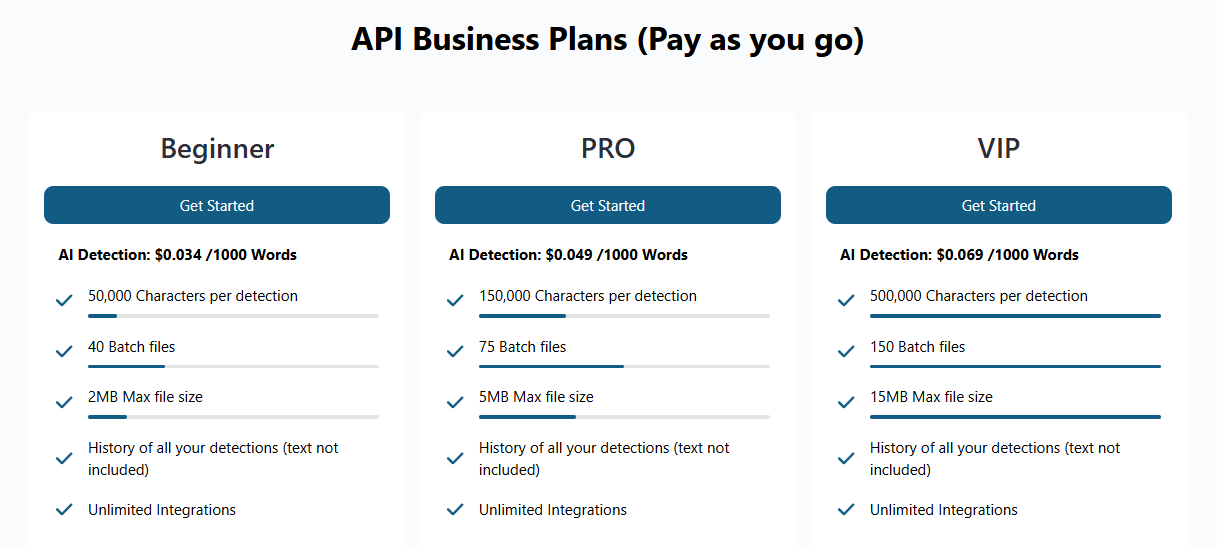
There are three plans for the API, and all three are pay-as-you-go.
The three plans and their AI detection charges are as follows:
- Beginner: $0.034/1000 words
- Pro: $0.049/1000 words
- VIP: $0.069/1000 words
You can get more details about what these plans include by looking at this plan comparison below.
GPTZero: The Most Accurate AI Detector Out There
People have become smart, and now they add human touches to AI-generated text before sending it over.
Had we manually tweaked the AI-generated samples and scanned them with ZeroGPT, the accuracy rate would have been even worse.
The matter of AI detection is a sensitive one because inaccurate detection can have grave consequences for someone’s career or grades.
So if you’re trying to know what a text really is and whether others will be able to see that, you should always use the most accurate AI detector out there.
Take GPTZero, for example; it performed with 100% accuracy on the samples in this review. Don’t take it from us. GPTZero has consistently topped independent benchmarks. For example, it led the Chicago Booth Benchmark with a ~99% accuracy in 2026.
Try GPTZero for free and see how accurately it performs on your samples.
FAQs
Does ZeroGPT really work?
Yes, ZeroGPT works, but its accuracy is questionable, especially when it comes to AI-generated text. In my testing that I did for this article and previous experience using ZeroGPT, I have found that it works decently when human-written text is concerned, but its accuracy drops on AI-generated samples.
Is ZeroGPT as accurate as Turnitin?
ZeroGPT is not as accurate as Turnitin since Turnitin has a much lower false positive rate than ZeroGPT. Also, Turnitin performs better on AI-generated samples, which is something ZeroGPT struggles with.
Is ZeroGPT or GPTZero better?
GPTZero is much better than ZeroGPT since GPTZero has a much lower false positive rate (under 1%). GPTZero had a 100% accuracy on all 13 samples that this testing included, while ZeroGPT struggled to correctly detect AI-generated text.
Is QuillBot or ZeroGPT better?
QuillBot and ZeroGPT both are not highly accurate when it comes to AI detection. They both perform more or less the same. I wrote an article, “QuillBot Vs ZeroGPT,” comparing both of these platforms, and they both were partially accurate in AI detection.