Detecting AI-Humanized Text: How GPTZero Stays Ahead
AI-generated content is becoming more widespread, and so too are “humanizers” that paraphrase AI text to dodge detection. Here, we show why GPTZero is best at identifying LLM texts that have undergone humanization attempts.

As AI-generated content becomes more widespread, so do approaches to evade AI detection. One of the most common methods is AI powered “Humanization” which is based on the principle of rewording AI-written text to evade detection.
This means someone could take an AI-generated text, put it through a “Humanizer” (a paraphraser), and end up with text that reads differently but is still very much AI-generated.
In this post, we show how GPTZero is the best AI detector for identifying LLM texts that have undergone humanization attempts.
Paraphrasing as an Adversarial Strategy
Modern paraphrasers (both open and closed source) are designed to:
- Rewrite AI text to sound more “human-like”;
- Diminish AI writing signals by reducing statistical patterns commonly found in AI generated text;
- Heavily alter both syntax and vocabulary with permissible grammatical inaccuracies to evade detection.
AI detectors that rely on surface-level features to distinguish Human and AI writing can easily be impacted by such adversarial paraphrasing techniques resulting in significant performance degradations.
This gap can be often exploited in forms of academic dishonesty, misinformation and content moderation — making reliable detection of “humanized” AI content more important than ever.
GPTZero’s Detection Approach
Our detector is built with adversarial robustness in mind. We have always treated AI Detection as a continuously evolving problem — improving our models and training strategies to detect more than just standard AI outputs.
We have built and maintained internal systems to simulate adversarial attacks on our model informed by evaluations on open-source and closed source real-world paraphrasing tools. Our model is then trained to focus on deeper semantic and structural signals beyond surface form to effectively tell AI paraphrasing attempts from purely AI generated text (see our AI paraphrased sub-class).
How GPTZero Compares
To assess our robustness against real-world paraphrasers, we collected representative AI humanized benchmarking data from 12+ open-source and close-source paraphrasing tools. The dataset consists of 1000 paraphrased examples equally distributed across paraphrasers with the original AI data sourced from several frontier model families such as GPT-5, GPT4o, GPT4.1, Claude and Gemini from domains such as news, academic writing, scientific text, student essays, social media, creative writing, reviews, instructional content and web text. (Academic and industry researchers may request access to our data here)
On this adversarial benchmark:
- GPTZero consistently flags originally AI-written but paraphrased text
- Competing detectors often detect paraphrased texts as Human written with the performance gaps widening with the intensity of the paraphrasing settings used.
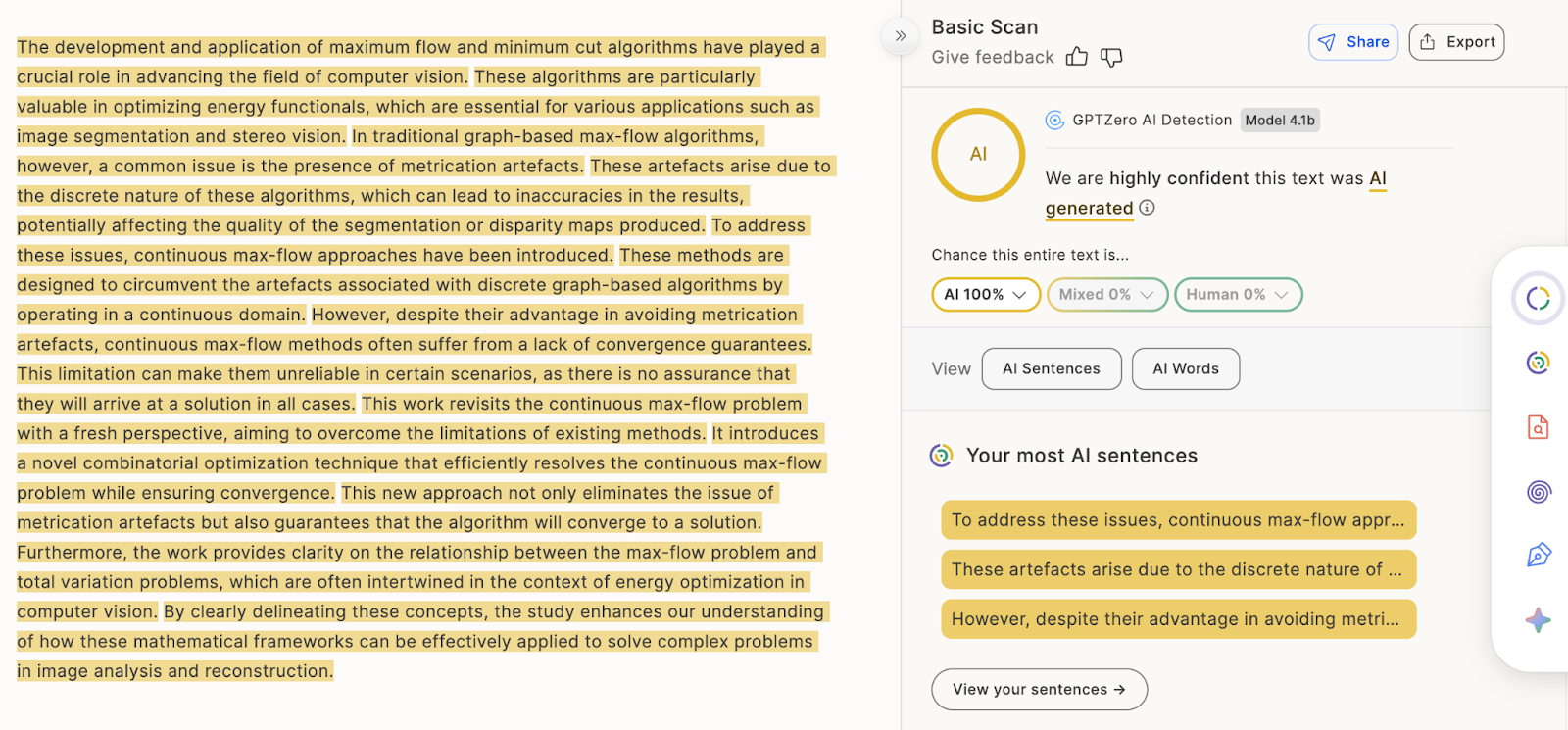
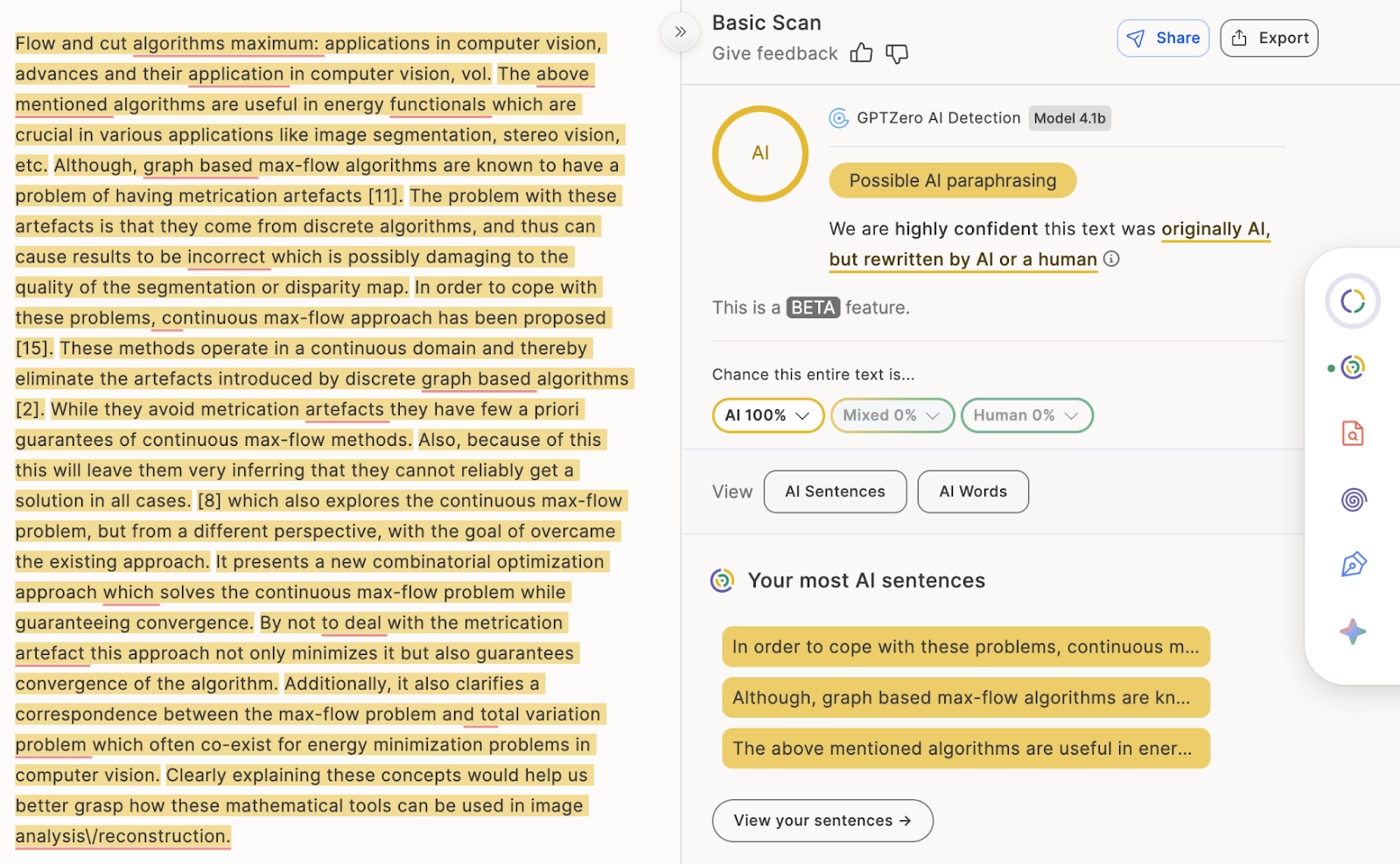
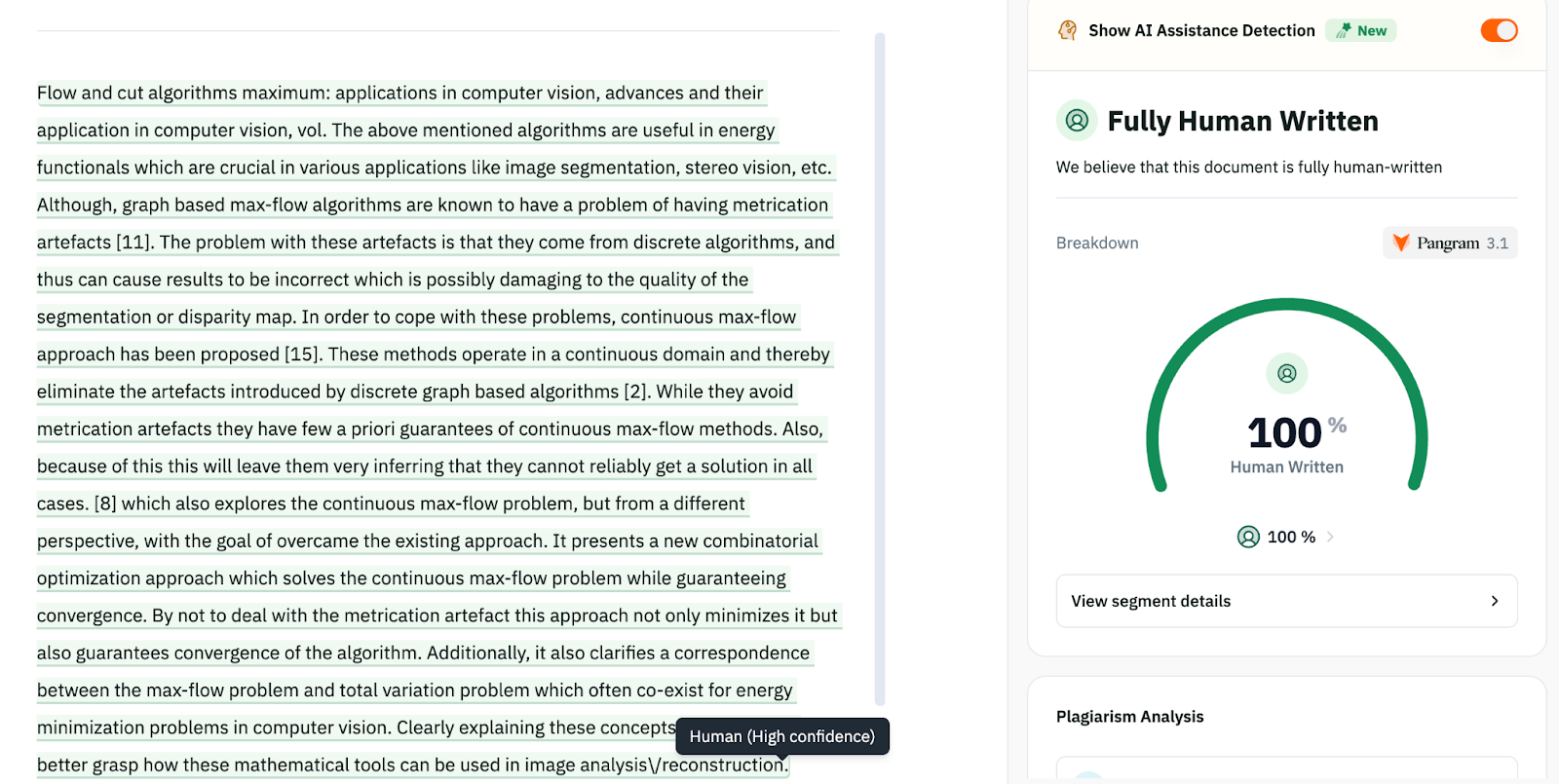
Fig 1: GPTZero (b) correctly classified an AI paraphrased text using an open-source paraphrasing tool Temp paraphraser (EMNLP 25) while pangram (c) detects it as “Human-written” with high confidence. The original ai text (a) is generated using gpt5.
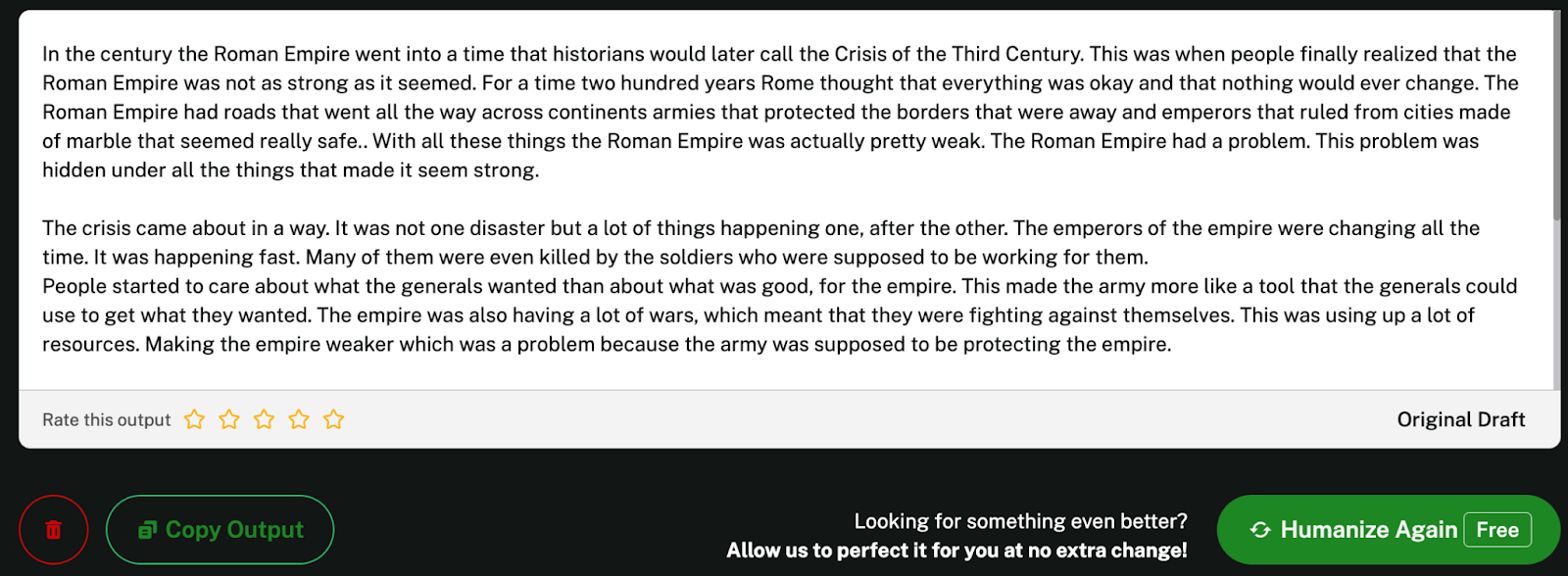
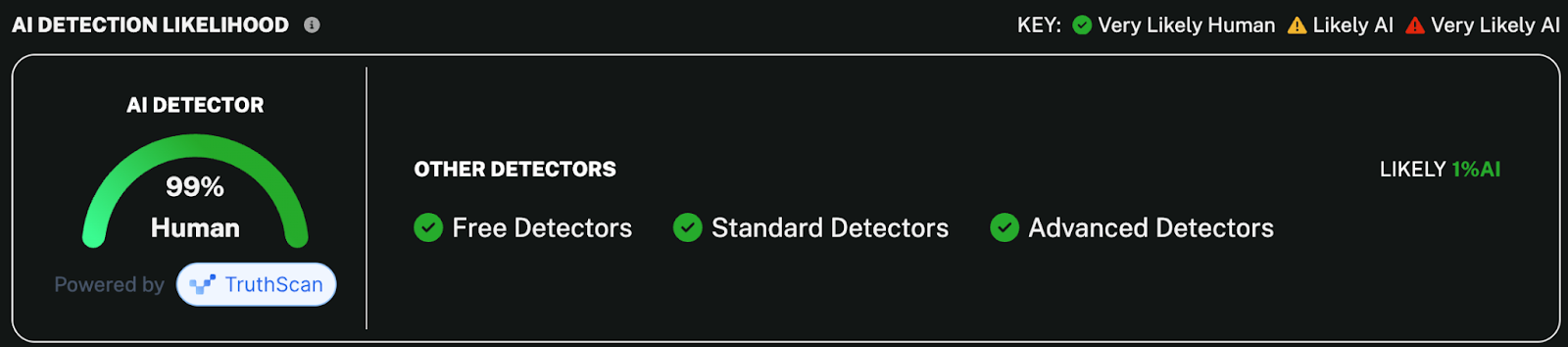
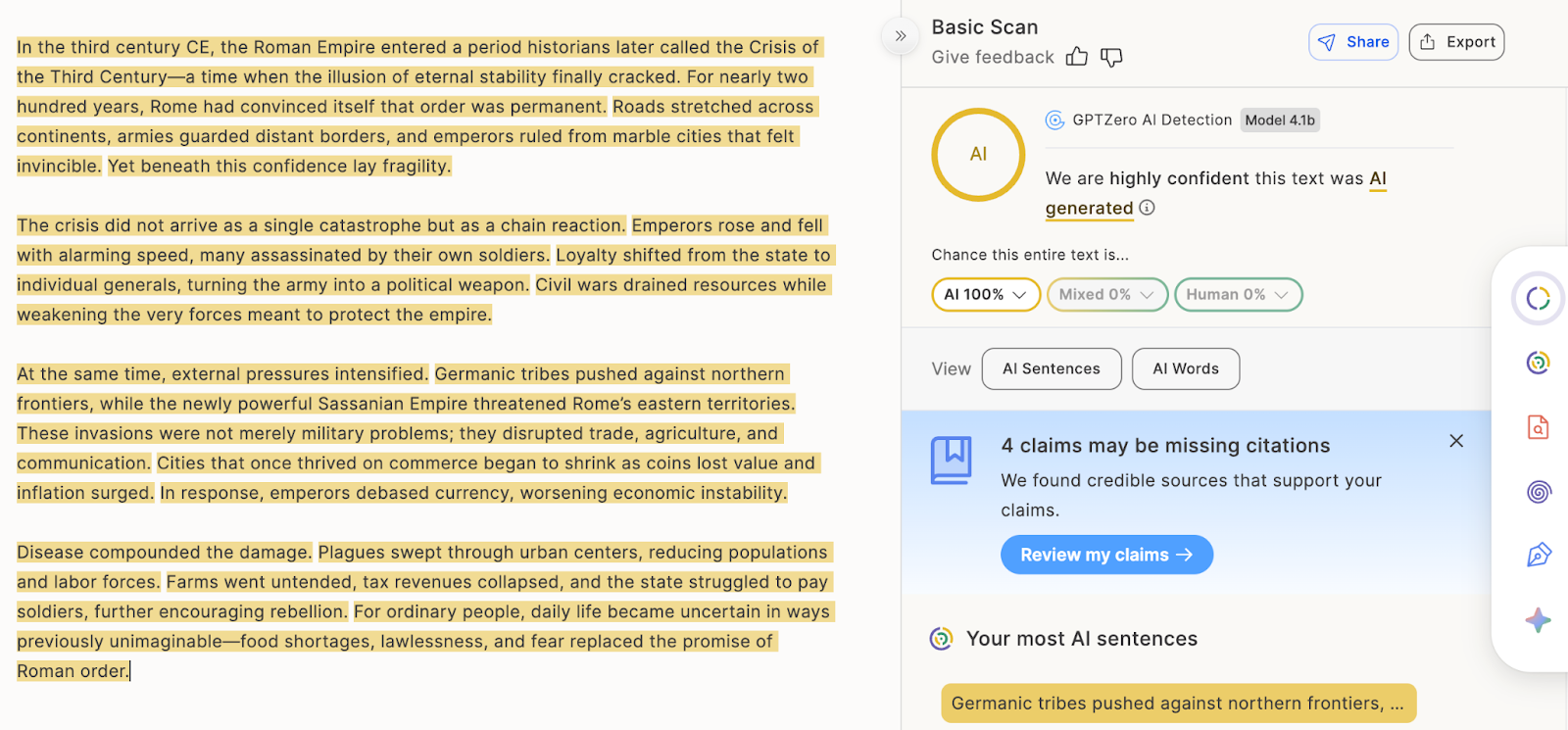
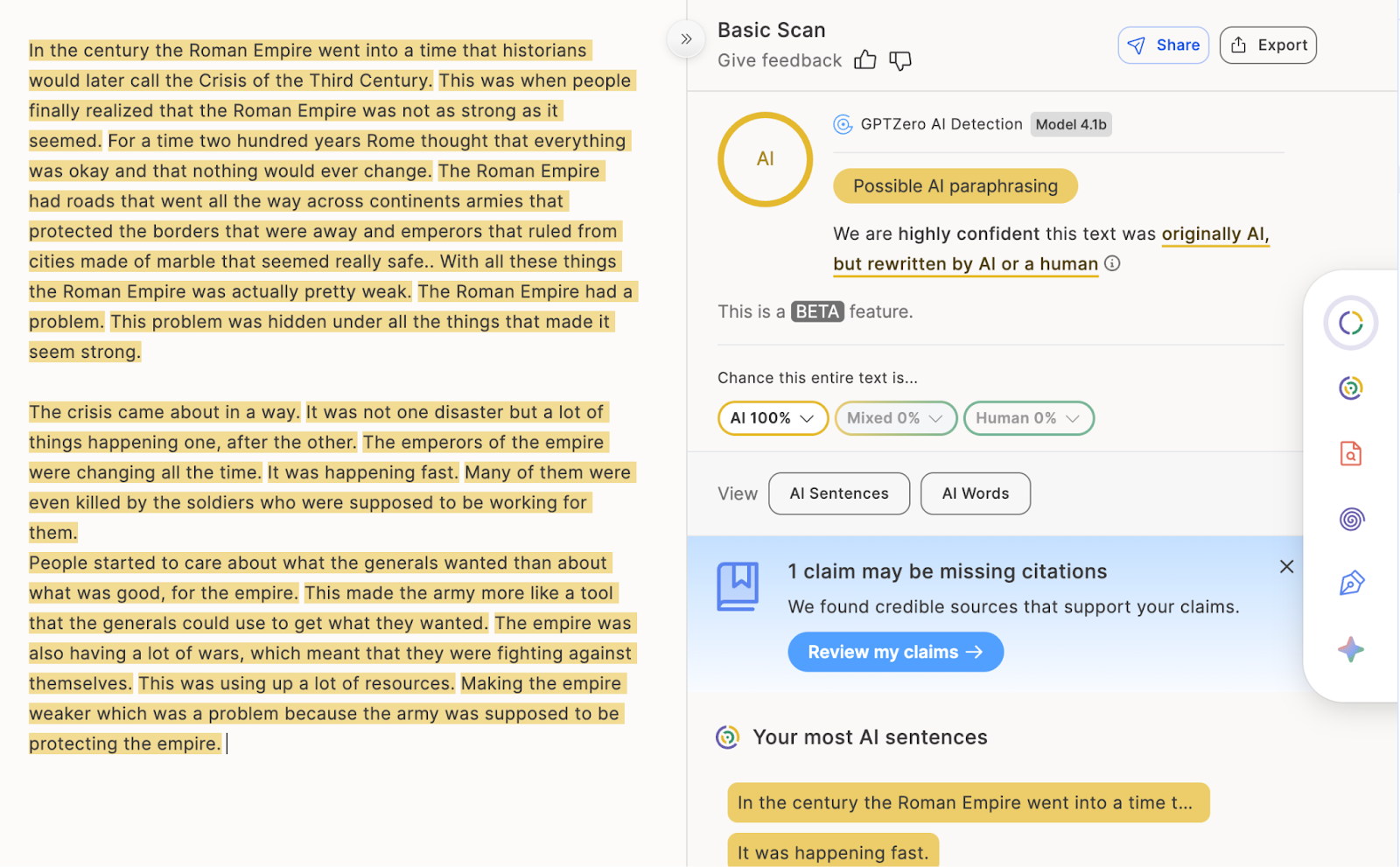
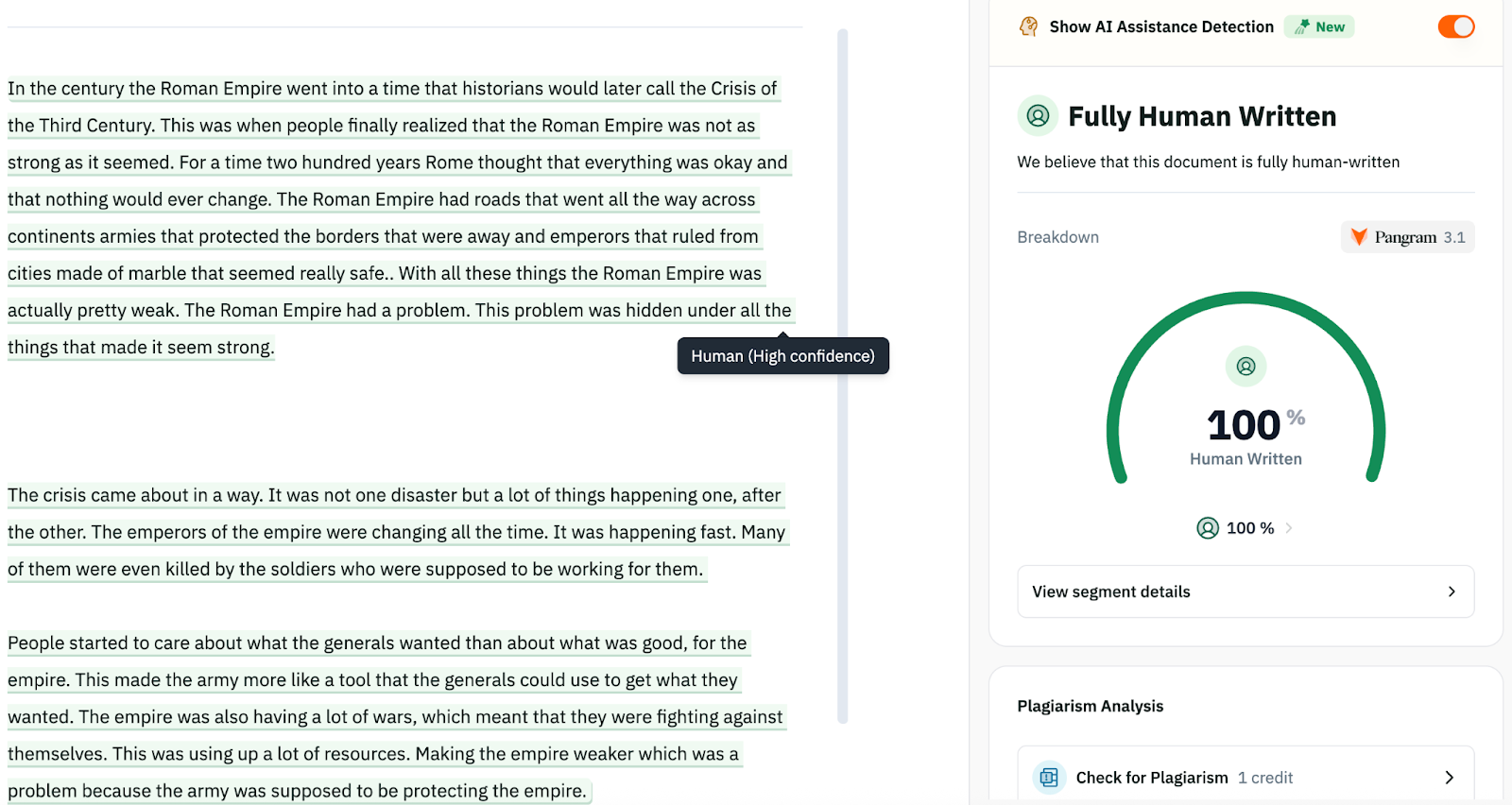
Fig 2: (a-b) A popular closed sourced bypasser generating AI-humanized text and falsely claiming bypass rates against GPTZero. GPTZero correctly flags the AI-humanized text (d) from original ai generated text (c), while pangram (e) incorrectly classifies it as “Human-written” with high confidence.
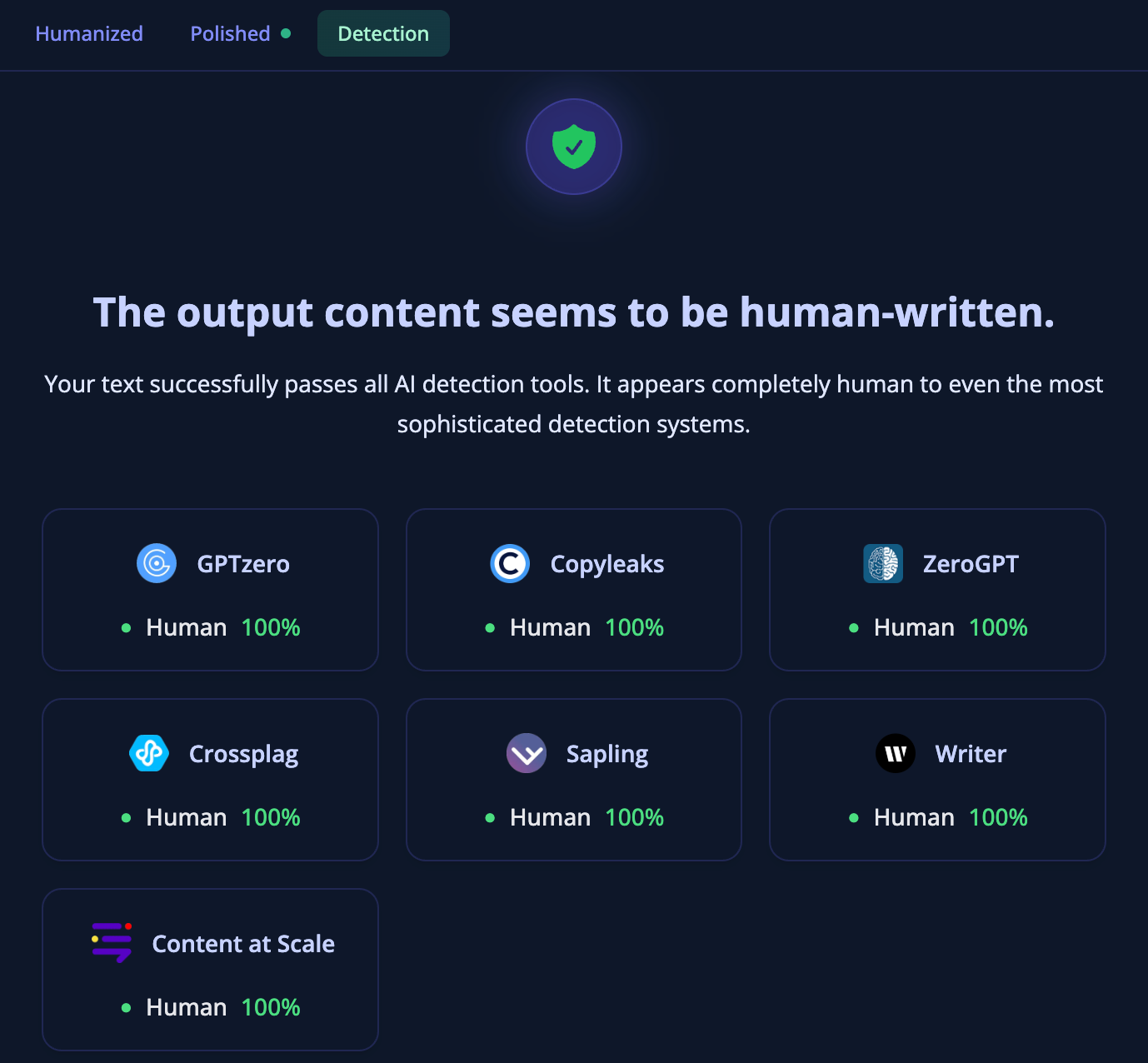
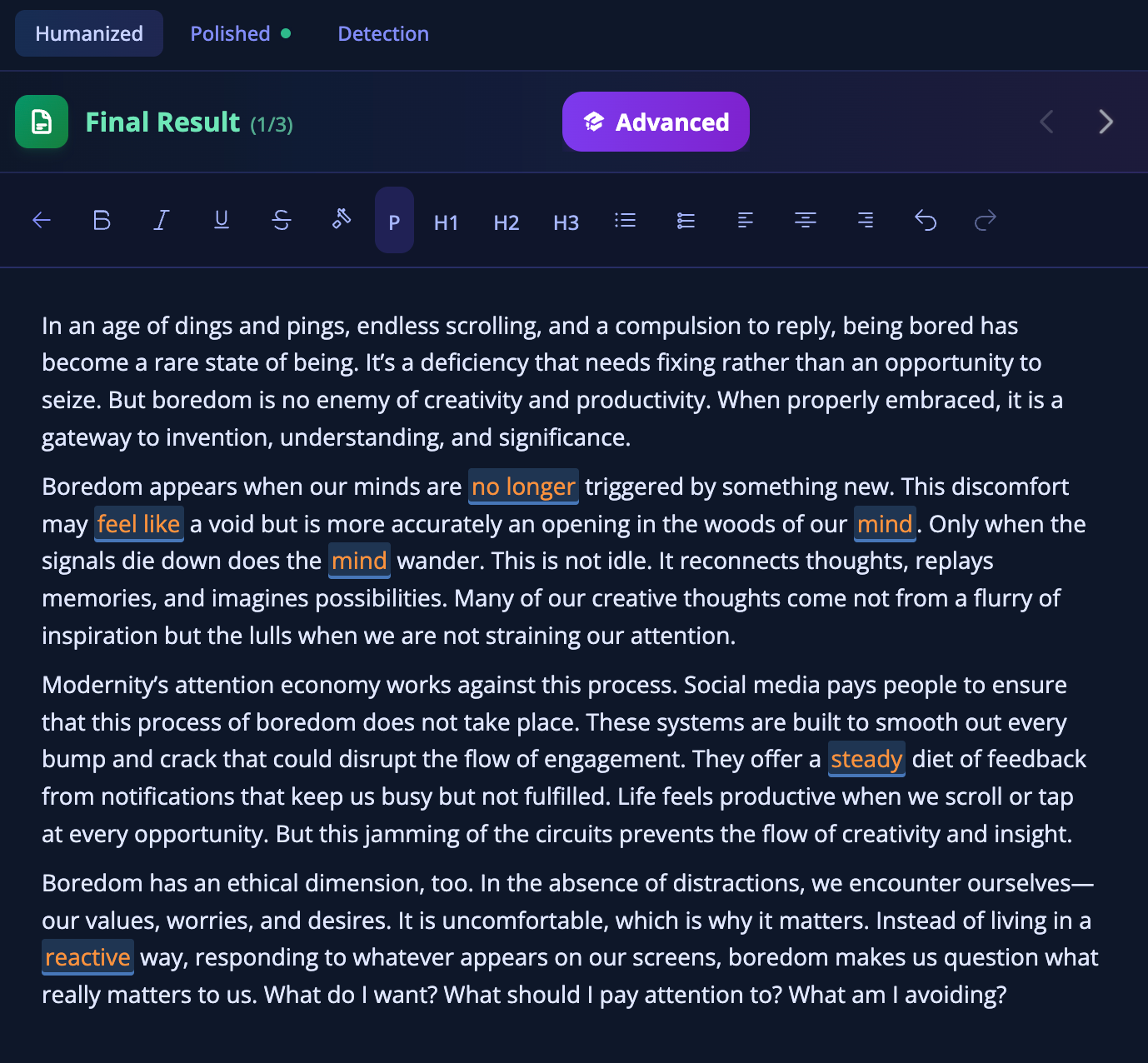
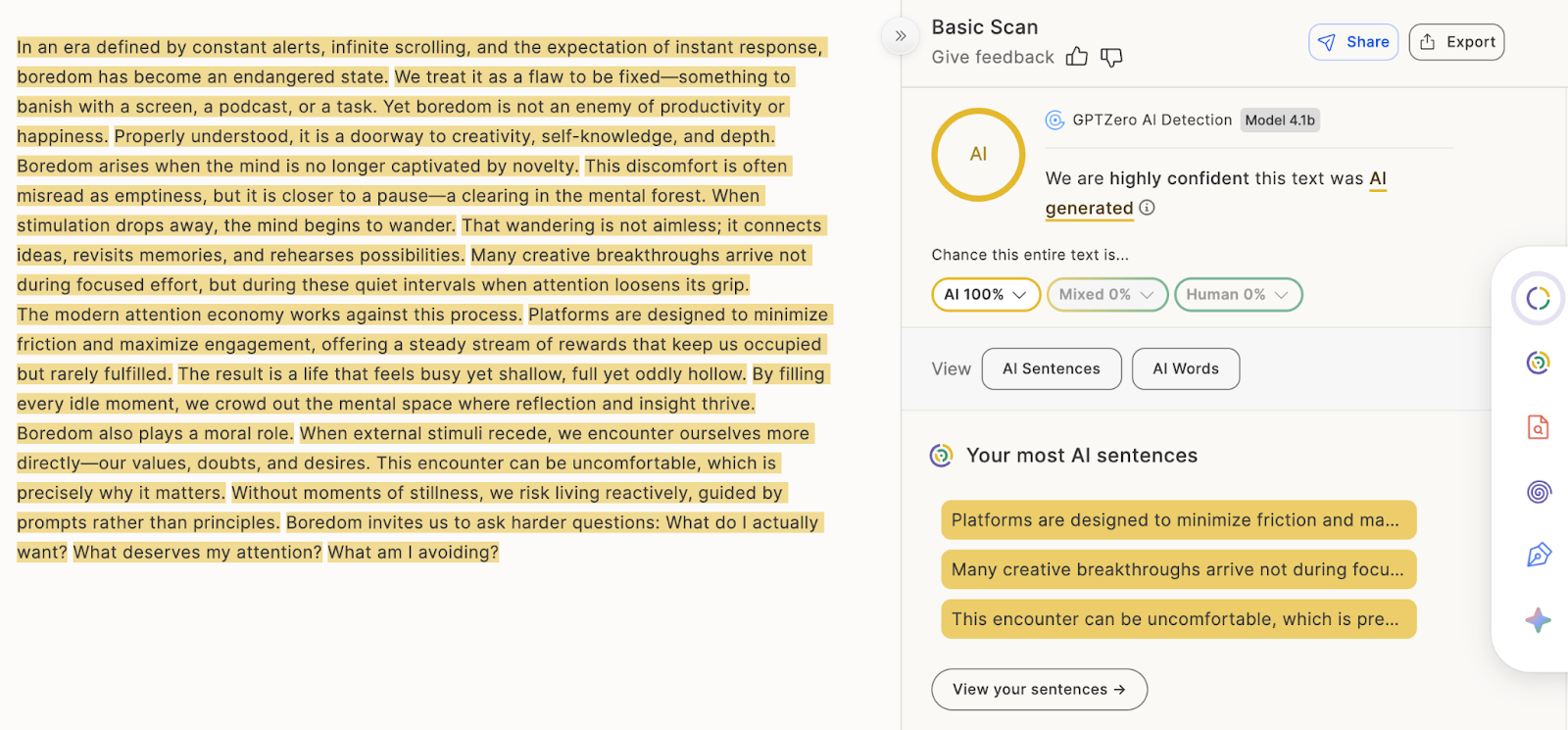
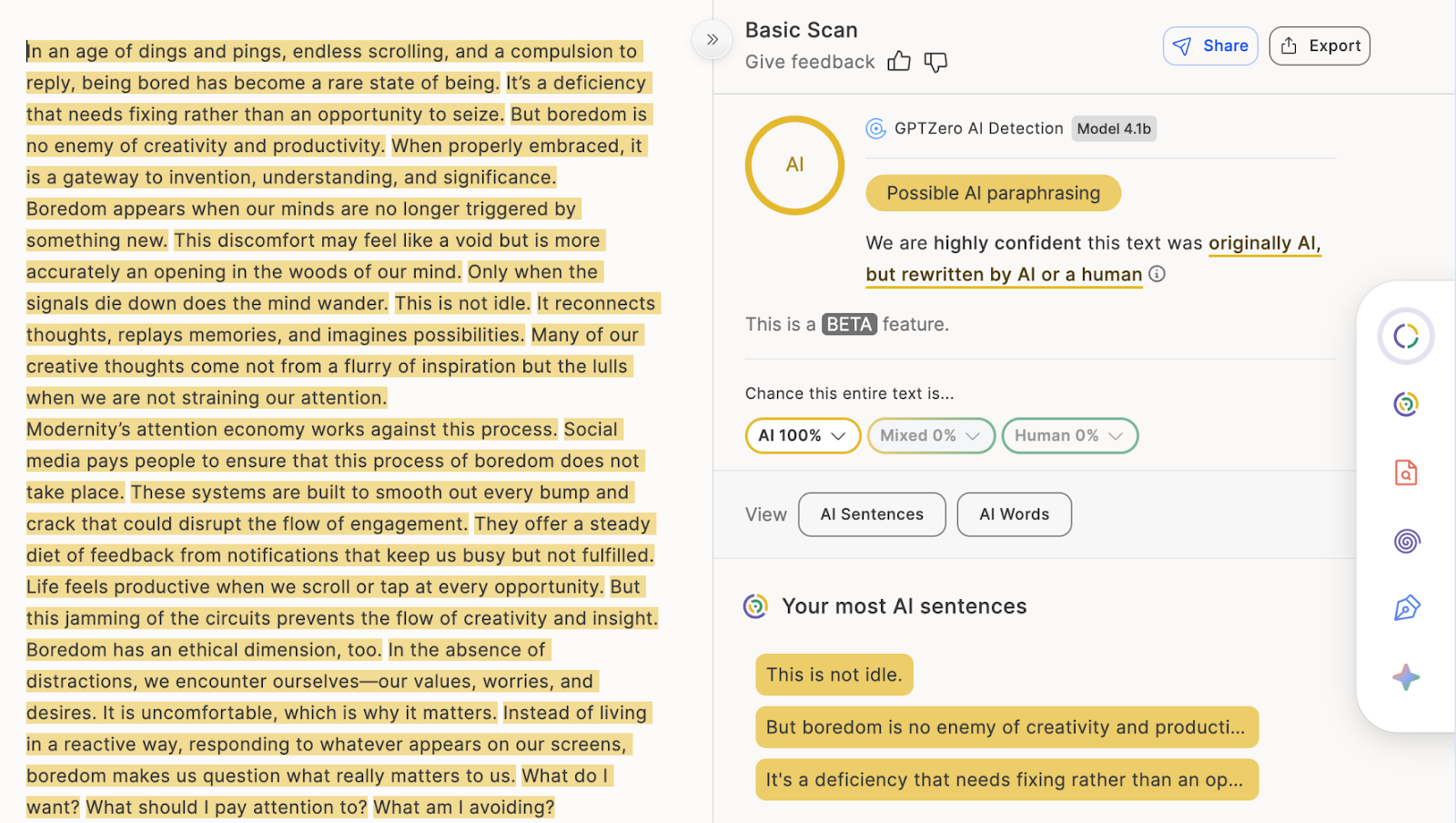
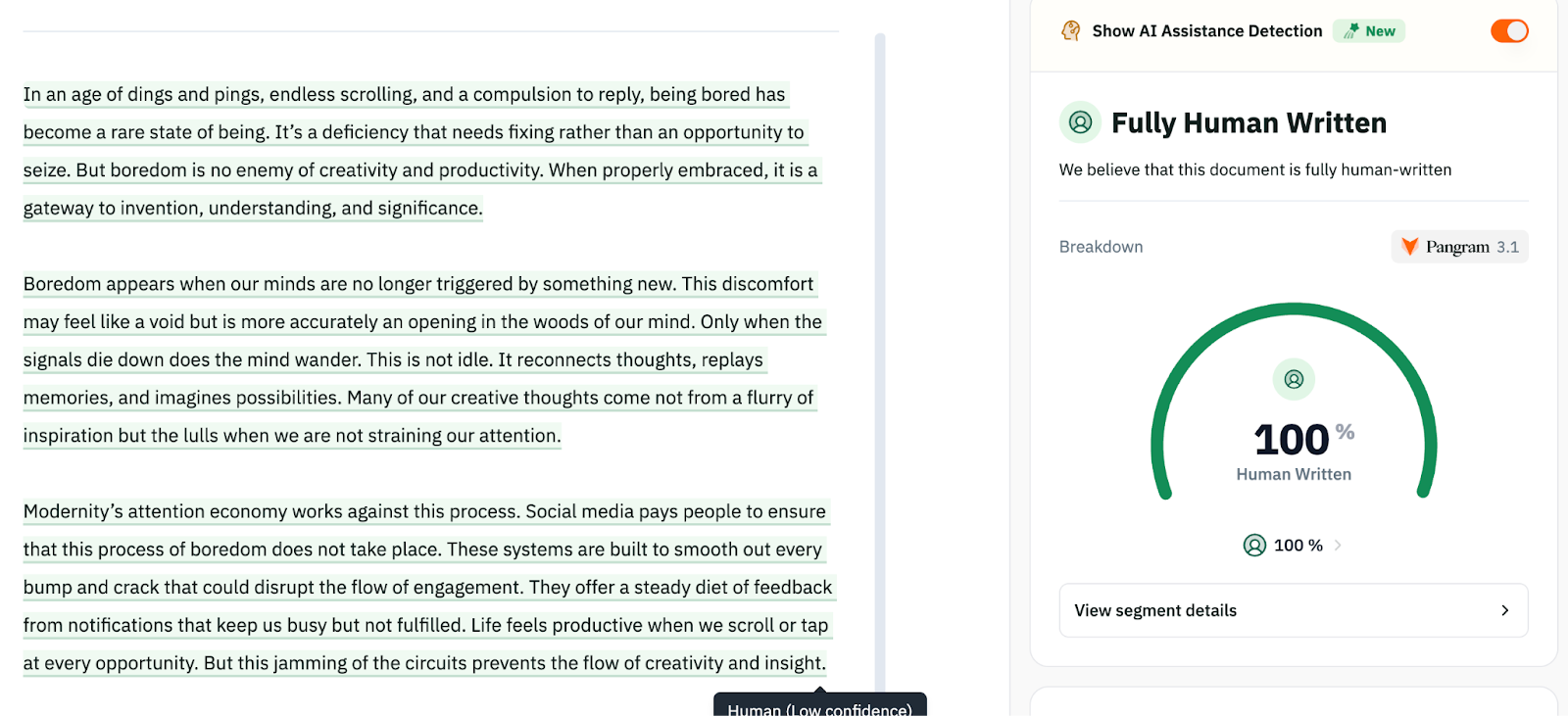
Fig. 3: Another popular closed sourced bypasser generating AI-humanized text and falsely claiming 100% humanization rates against GPTZero (a-b). GPTZero correctly flags the AI-humanized text (d) from a gpt5.2 generated text (c), while pangram incorrectly classifies it as “Human-written” with high confidence (e).
Quantitative Comparison against Competitors
To quantify these results, we evaluated our model against two competing AI detector services (Pangram and Originality.ai).
Key result: GPTZero achieved the highest detection rate (90%+) across all evaluated paraphrasing models despite these challenging data settings. We also consistently achieve 98%+ accuracy on the purely AI generated source documents from the frontier models.
Table 1: GPTZero (Model 3.15b) vs other AI detectors on a representative AI paraphrased benchmark (12+ paraphrasing tools across all available paraphrasing settings)
Looking Ahead
With paraphrasing tools becoming more capable, it's become a core requirement to evaluate AI detectors in adversarial settings. Our results clearly highlight the growing performance gap between detectors in detecting AI humanized text and how we lead the space in combating this.
We regularly invest in stress-testing our AI detector to keep it robust against constantly evolving AI paraphrasers and refining signals beyond surface form. We strive to remain the most reliable AI detector in an increasingly adversarial AI content ecosystem.