AI Reviewer: Let’s Talk About Responsible Grading with AI Tools
This week, we are relaunching AI Reviewer, giving teachers a smarter, better way to grade writing assignments, as well as share custom templates with students.



If you’re a teacher unsure about bringing AI grading tools into your classroom, that hesitation is understandable. Grading and giving feedback is a fundamental glue in your relationship with students, and AI grading (like many previous “miracle” grading solutions) can feel like “cheating” your students and yourself. However, while GPTZero’s AI Reviewer can certainly mark assignments for you, its best use is to improve the quality of your grading and feedback while saving you time and reducing marking-related frustration and pressure.
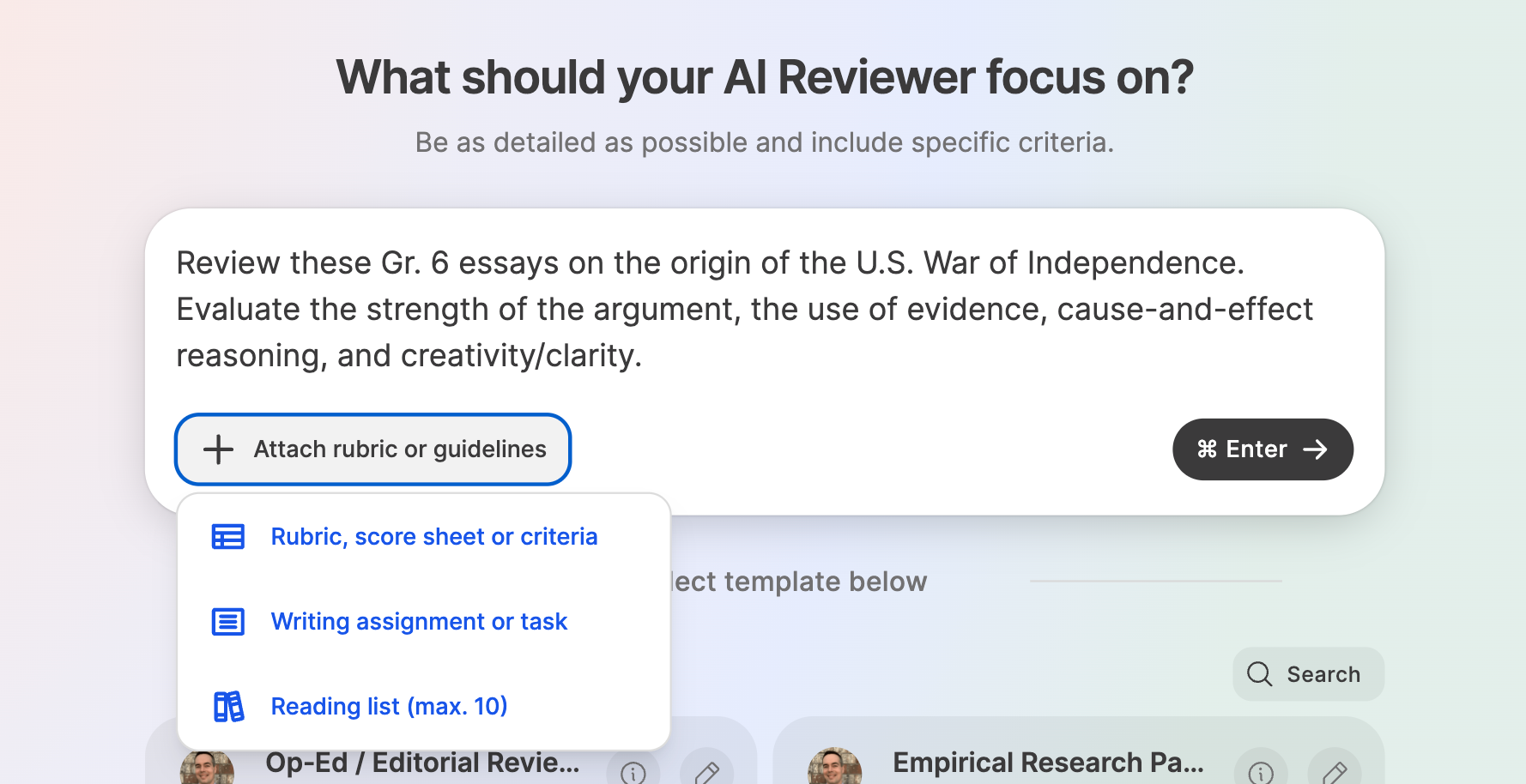
This week, we are relaunching AI Reviewer, giving teachers a smarter, better way to grade writing assignments using human- or AI-generated rubrics, as well as share custom templates with students. We know that an AI tool can’t simulate the relationships teachers build with their students, nor the insight that comes with real-world classroom experience. Instead, we hope our tool provides a second perspective on every single assignment, catching the details and providing the language that may escape teachers on their forty-second paper and third expresso in the wee hours of Monday morning.
In short, AI Reviewer is not a teacher replacement. It is a force multiplier. It is designed to help teachers generate rubrics, apply them to student writing, and produce structured feedback that a human teacher can review and then use. This distinction matters because of teachers’ (generally valid) concerns about autonomous AI grading.
The Grading Dilemma
Grading is one of the least common uses of AI by teachers, even among those who’ve adopted AI for other tasks! This could seem strange, as grading is a pain point for educators, and students are famously bad at reading and internalising feedback. If AI tools can save teachers time on a thankless task, why is uptake so low?
First, AI doesn’t have the best rep among teachers, who are rightfully concerned about hallucinations, mistaken plagiarism accusations, prompt injection, and data security. While GPTZero provides tools to detect hallucinations and AI writing, and refuses to sell or share student data, not all edutech tools have these same capacities or standards.
As mentioned above, teachers view grading and giving feedback as an essential way to understand and build relationships with their students. They also know that students are sensitive to teacher uses of AI, especially when it isn’t disclosed. AI use is increasing among students and teachers, but definitions of “cheating” are still ambiguous. This means students and teachers should be careful about disclosing their AI use and communicating red lines.
- Barry Lam, Philosophy Professor (as quoted in the New Yorker)
We don’t want to end up in the worst-case scenario where students and teachers use AI tools to write and then grade papers that no human ever actually reads. We don’t want students to feel betrayed by the discovery that teachers are using AI freely despite student restrictions, or that teachers are presenting AI-generated feedback as their own. And you don’t want to provide grades and feedback to students that are empirically wrong.
But just because an AI tool shouldn’t be used like a magic wand doesn’t mean it can’t save you time, make your grading more consistent, and increase the quality and diversity of your feedback.
Here are six pedagogically responsible (and GPTZero-approved) ways AI Reviewer can be used in your classroom.
1. To provide formative feedback prior to summative assessment.
Many educators have tried to neutralize the influence of AI tools in their classrooms by emphasizing the process of learning over the product of learning. The difficulty of this approach is that it multiplies the number of formative assessments required for each unique assignment. Using AI Reviewer to provide feedback on an earlier round of drafting, saves educators from needing to mark the same assignment multiple times. It also provides a second perspective on the same paper while preserving your attention for the final, summative assessment.
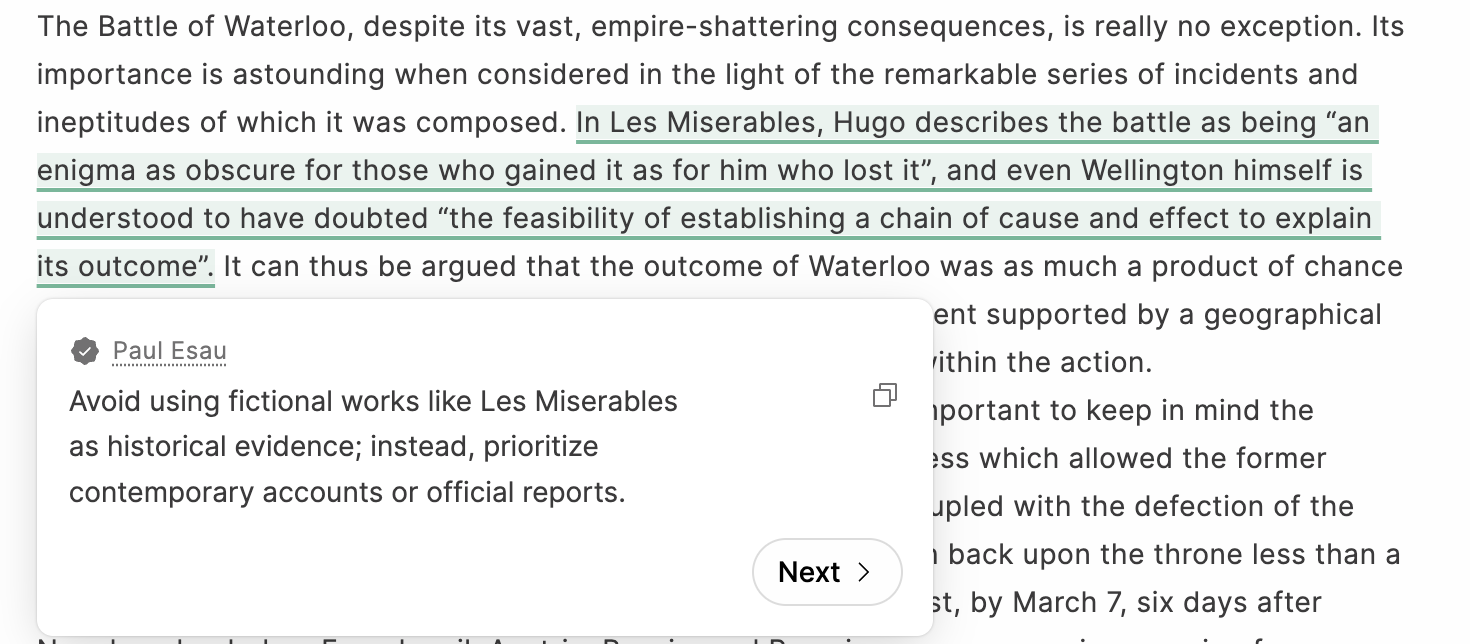
2. To grade lower-order rubric categories
Teachers can focus on the higher-order criteria by offloading spelling, grammar, citation formatting, and quote checking to AI Reviewer. This frees up your attention for the parts of student writing that most need human judgement: reasoning, use of evidence, interpretation, and why the student thinks Ronald Reagan was president during the Civil War.
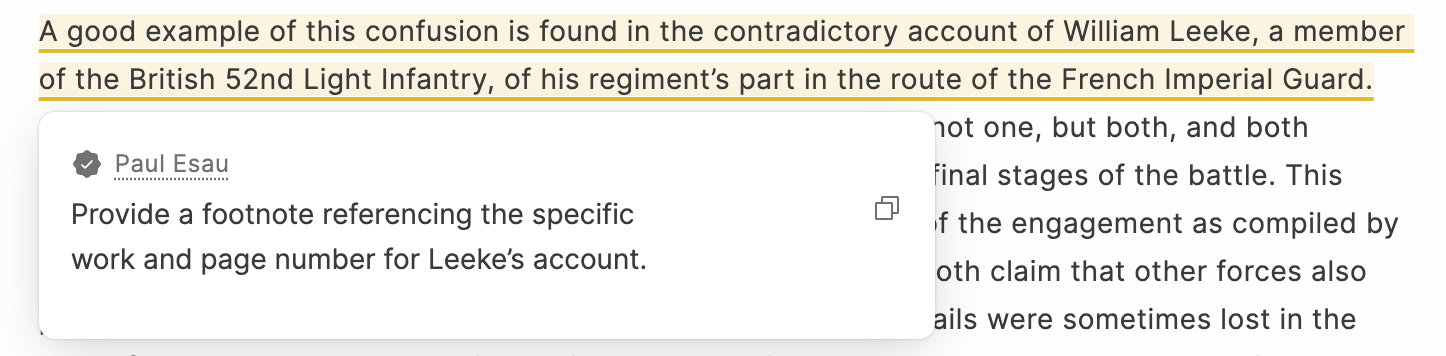
3. To provide more creative feedback and standardized grades than an overstressed teacher slammed by deadlines
Everybody knows that the “you” that grades the first essay in the stack is not the “you” that grades the fifteenth or thirtieth essay. AI Reviewer works like a safety net, helping ensure that you don’t miss obvious content issues or let your emotions cloud your grading decisions. When used well, AI Reviewer can support grading consistency and feedback clarity, taking pressure off of whichever “you” reports for duty.
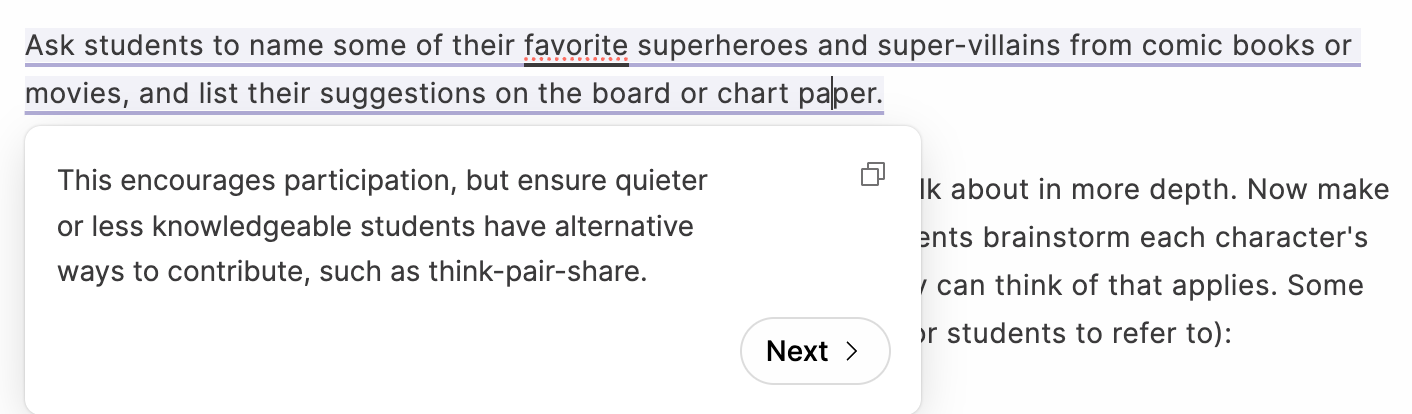
4. To help you mark assignments in unfamiliar subjects or domains
Sometimes the challenge is unfamiliarity, as you may be marking a genre, assignment type, or subject-area task that sits outside your comfort zone. In those cases, AI Reviewer can help in one of two ways. First, it can help generate an appropriate assignment rubric for you to modify that accounts for both the domain and your specific requirements. Secondly, it’s possible that one of GPTZero’s domain experts has already created an appropriate template for your assignment. For example, if you’re interested in policy briefs, comedy sketches, or college application essay preparation, we’ve already got you covered.
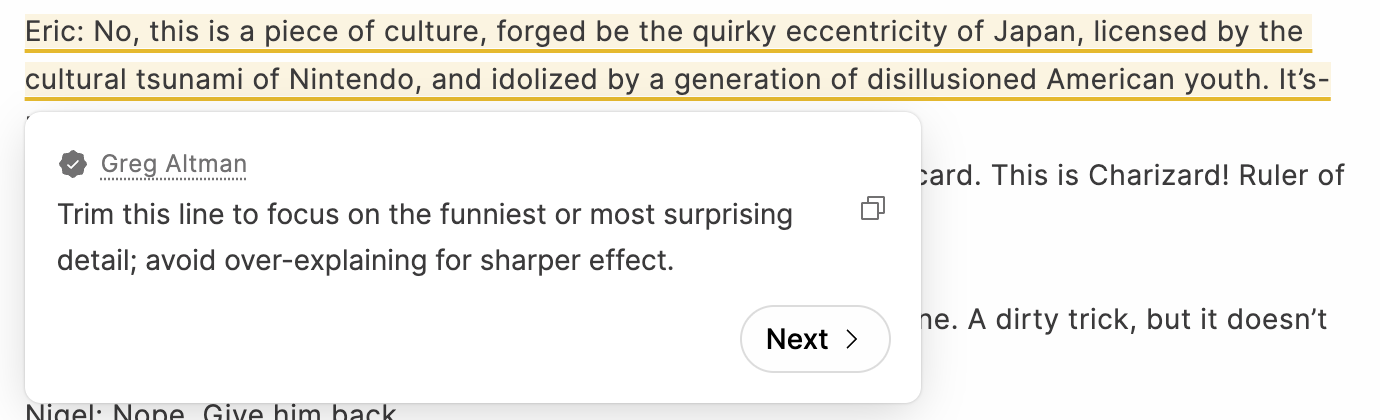
5. To allow teachers to share not only assignments and rubrics, but also a reviewer tool calibrated to their perspective and grading standards
This is one of the most practical use cases. Many teachers already have rubrics they trust. The problem is that those rubrics are often buried in folders, adapted inconsistently, or hard to share across teams and classrooms. AI Reviewer not only makes it easier to save, reuse, calibrate, and share strong rubrics, it also allows you to encode your marking style and perspective into the template! With AI Reviewer, you control almost everything — like if the rubric is graded strictly or generously, if the feedback is first- or third-person, or if the in-line annotations include suggested changes or just constructive comments.
6. To help teachers familiarize students with rubric creation and rubric use
Workshops that help students compare AI and human outputs, or critically evaluate AI outputs, are a key part of creating AI literacy. At the same time, student confusion over rubric requirements and application is an issue that obviously predates AI. Here at GPTZero, we’re excited about the ways educators could use AI Reviewer to teach students about the process of rubric creation and use, allow them to make their own rubrics and evaluate their writing, and, in the process, demystify the assessment process. Remember, the best grader for your classroom is you
Of course, all uses of AI tools by teachers or students require transparency, careful supervision, and clear communication. If students are required to disclose all their uses of AI tools, then teachers should model this behaviour by being clear about their use as well. AI-graded results should never be returned to students without teacher scrutiny, unless those results are clearly labelled as AI-generated and don’t significantly impact student grades.
AI Reviewer is an extremely powerful tool that we’re improving every day. It can (and will) improve your grading experience, the quality of your feedback, and the consistency of your marking. But it isn’t a substitute for a human teacher, and it can’t speak with the insight of classroom experience and personal relationship.
In other words, it can’t (and shouldn’t) replace you.
Try AI Reviewer today to create and share your own rubrics.